APRIL SERIES: COMMUNITY FACILITIES – Article 1
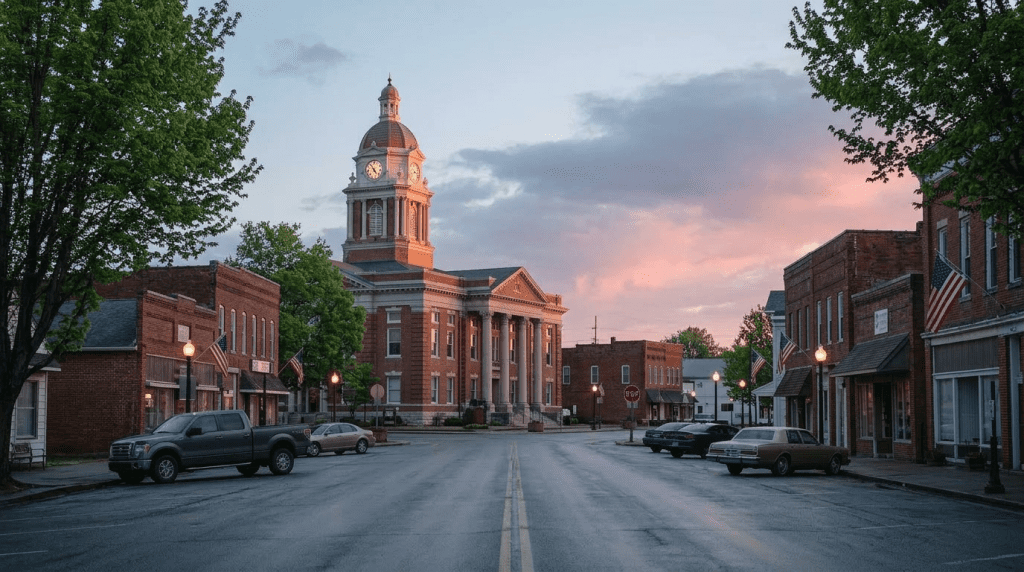
Community facilities are where self-government becomes visible. Courthouses, city halls, jails, libraries, and clinics are the places where decisions get made, services get delivered, and neighbors encounter “government” as something more than a line item on a tax bill. In many ways, these spaces form the backbone of rural civic infrastructure. Yet in many small towns, these same buildings are older than the people working in them, patched and repurposed so many times that routine operations now depend on workarounds and goodwill as much as on bricks and mortar.
That quiet mismatch between what facilities were built to do and what they are asked to do today sits at the heart of rural civic life. Shrinking tax bases, rising construction costs, and ever-stricter codes have turned capital projects into once-in-a-generation events, even as expectations for accessibility, technology, and public engagement keep climbing. The result is a hidden crisis of civic infrastructure: not dramatic enough to command national headlines, but serious enough to shape whether a community can hold court, respond to emergencies, or host a public meeting when it matters most.
At the same time, the story is not only about decline. Across rural America, local governments, libraries, and county sheriffs are quietly experimenting with new ways to right-size, share, and repurpose the spaces they already have. Historic buildings become modern civic hubs; small libraries evolve into digital living rooms; jails reorient around reentry instead of repeat bookings. These are not glamorous projects, and they rarely come with ribbon cuttings on the evening news, but they offer a practical roadmap for communities willing to rethink what their facilities are for and how they can work harder for the people who depend on them.
Opportunities and Challenges for Community Facilities
Community infrastructure covers the physical and digital systems that support everyday life—roads, water and sewer, energy, broadband; local government, health, and education facilities—and in many rural places these systems are both underfunded and full of potential for renewal.
Rural community facilities are essential services and core local infrastructure. These are the buildings and shared spaces that anchor daily life—courthouses, city halls. libraries, museums, schools, clinics, fire/EMS, senior centers, community centers, and similar public-service facilities—and rural areas face both persistent gaps and major funding opportunities around them.
While many of these grand old buildings have a rich heritage unique to their place, rural community facilities face a mix of financial, physical, and demographic pressures. There are capital funding gaps, limited space to provide necessary public services, and expanding expectations for technology. Sometimes basic ADA accessibility is an insurmountable obstacle. On the other hand, despite gaps, there is significant potential to renew and repurpose rural facilities when communities get creative.
We can bring new life back to our built heritage of community facilities, if we let go of what they were and focus on what the next generation needs for tomorrow.
The Hidden Crisis of Civic Infrastructure
Drive through rural America and you will find no shortage of aging courthouses, cramped city halls, and overcrowded jails. Many were built in the mid-twentieth century — or earlier — and have been patched, deferred, and stretched well past their intended lifespan. Across the country, rural civic infrastructure is showing its age in ways that are easy to overlook but increasingly difficult to ignore. The result is a quiet accumulation of problems that rarely rise to the level of a crisis until something breaks.
Deferred maintenance is the culprit most planners recognize immediately. A leaking roof becomes a mold problem. A failing elevator becomes an ADA violation. An outdated jail becomes a liability. Each deferred repair compounds the next, and the cost of inaction grows faster than any local tax base can absorb. What begins as a facilities issue gradually becomes an operational one, affecting how—and whether—services can be delivered at all. For those working in rural planning and governance, the challenge is not identifying the problem, but finding realistic pathways to address it.
What makes this crisis particularly difficult to address is that it is invisible to most residents until it is unavoidable. Unlike a pothole on Main Street or a broken park bench, a deteriorating courthouse foundation does not announce itself. By the time it does, the bill — and the political fight — can be enormous. Emergency repairs replace long-term planning, and communities are forced into reactive decisions that are almost always more expensive and less effective.
Compounding the challenge is a structural reality many rural communities face: the buildings have aged, but the fiscal capacity to replace or rehabilitate them has not kept pace. Revenues remain flat or decline, while construction and compliance costs continue to rise. Over time, this creates a widening gap between what communities own and what they can realistically sustain. For many small town government leaders, this gap is not theoretical—it shapes daily decisions about what can be maintained, what must be deferred, and what may ultimately be lost.
Rural communities aren’t just preserving buildings — they’re preserving governance itself. In that sense, the condition of these civic facilities is not just a technical concern, but a reflection of how well local government can continue to function.
Rural communities aren’t just preserving buildings — they’re preserving governance itself.
An Inventory of Community Facilities
In our comprehensive plans, Marvin Planning Consultants includes a chapter on Community Facilities with a brief description of public and institutional resources–County courthouses and city halls, yes, but also the county road office and city maintenance shop, fairgrounds, and regional public services like the Area Agency on Aging. We include a paragraph (or more) on community centers, local libraries, and the US Post Office, or the nearest if your community members have to travel to reach these institutions. In rural areas, we mention the USDA office, too. While this is a requirement of Nebraska statutes, community facilities are core infrastructure at any level.
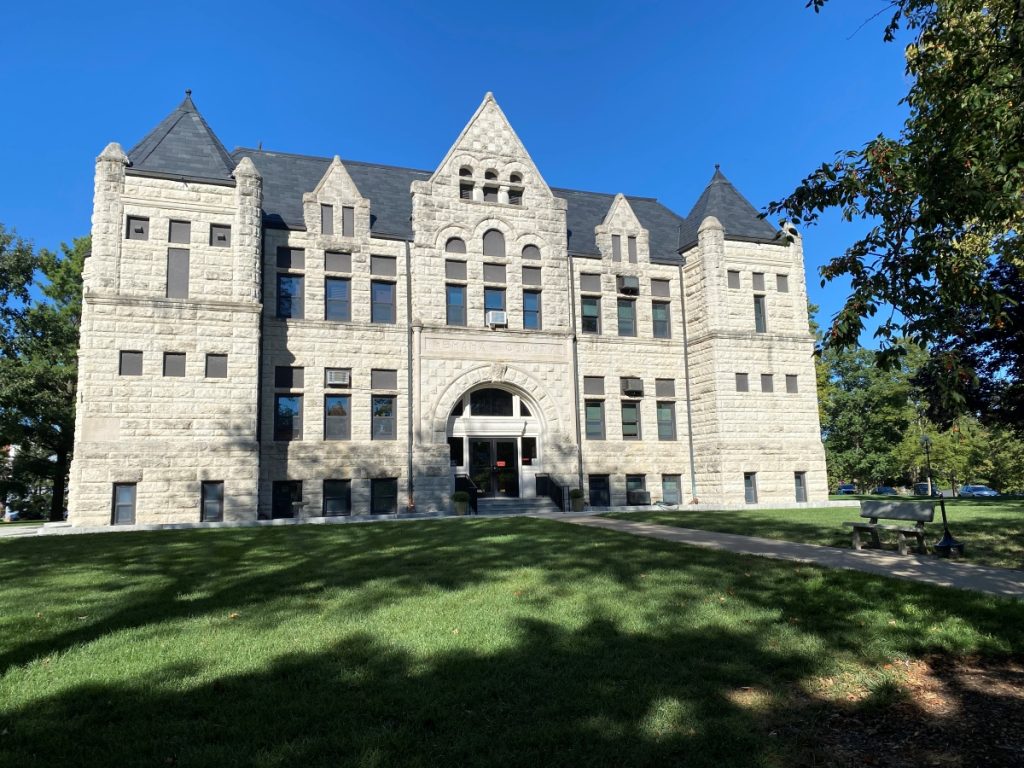
Our draft plan for Nemaha County, Nebraska, highlights the historic Nemaha County Courthouse, designed in the Romanesque Revival style by German-born architect George A. Berlinghof, built by W.M. Roles & Company in 1899, and added to the National Register of Historic Places in 1990. The Nemaha County Sheriff’s Office is located across the courthouse square in a separate Law Enforcement Center, a fairly common practice at least across the Midwest. The County also converted the former National Guard Armory into the Wellness Center, maintaining local access to the gym for sports practice space and an office for the County Emergency Management Dept. Community libraries are not forgotten either, including the Peru State College Library on campus.
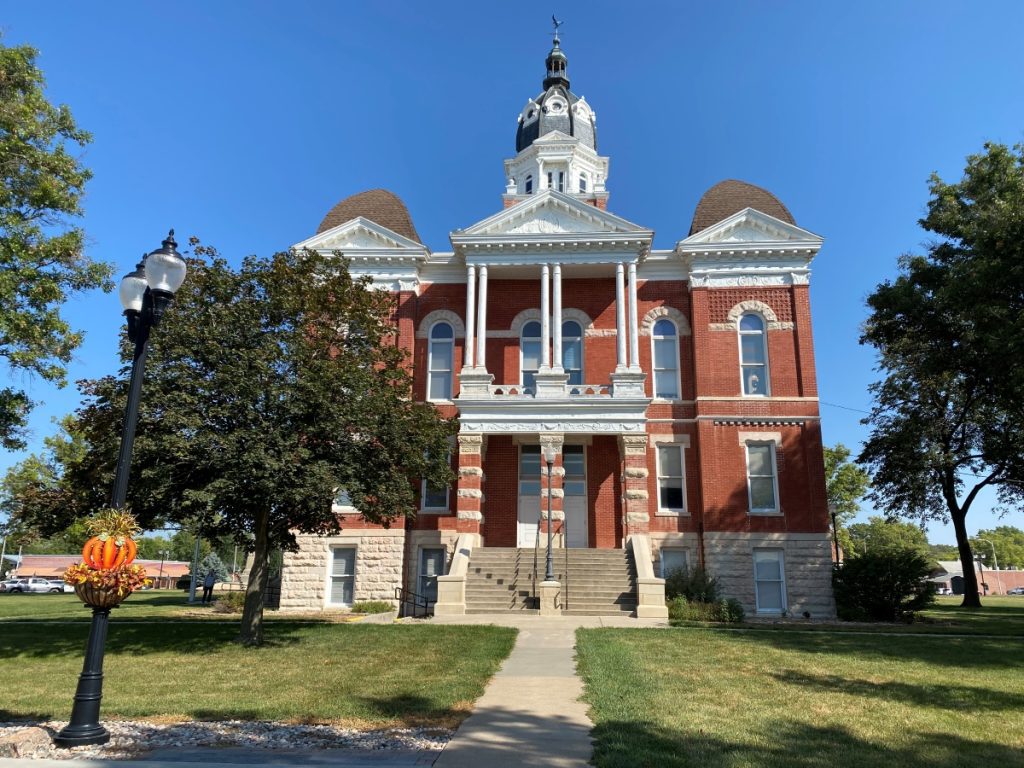
Our draft plan for Johnson County, next door to Nemaha County, includes the historic Johnson County Courthouse, the county’s second courthouse building, constructed in 1888-89. It is a two-story 91-feet by 68-feet red brick and limestone building designed
by William Gray with Romanesque Revival stylings. It has corner towers and a central dome with a weathervane, 110 feet above the courthouse square. The facility was also added to the National Register in 1990. In 2024, the County invested in substantial renovations to the roof and dome to stabilize the structure for future generations. Johnson County’s Sheriff’s Office is located across the courthouse square in a separate structure. There are public libraries in Tecumseh and Sterling, and community centers in three of the communities in the county.
Our plans also talk about historic sites and places, and education, which we will cover more in the next couple of installments here on JCShepard.com. Some plans include health care in their Facilities chapter, while we typically have an independent chapter on public health in plans for larger jurisdictions.

Right-Sizing Government Facilities
One of the most powerful tools available to small towns and rural counties is also one of the least glamorous: right-sizing. This means taking an honest look at the population you serve today — not the one you had in 1925 or even 1975 — and planning facilities accordingly. It requires a shift away from legacy assumptions and toward a more pragmatic understanding of how local government actually functions in the present, particularly within the constraints of rural infrastructures that were built for a different era.
Fifty years ago, a small‑town clerk’s office might have handled tax bills, council minutes, and dog licenses with a handful of people and a lot of paper. Today, that same office is juggling electronic records, online payments, HR compliance, public records requests, grant reporting, and a steady stream of state and federal mandates that didn’t exist when the building was designed. Planning, finance, IT, risk management, and public engagement all expect a level of professional staffing that many small towns and rural counties simply don’t have—and they expect it to fit into spaces laid out for rotary phones and carbon paper.
As I’ve noted before, one can tell a lot about a community by their public library. Places which value community invest in their civic infrastructure, including libraries. As public planners, we talk about libraries as a public resource, yet could we do more to leverage these resources for community improvement? Libraries are not only places to access books—they are spaces where diverse groups can meet, engage in meaningful conversations, and build trust… when not squeezed into a dull 1960s box with poor HVAC and inaccessible meeting rooms.
The result of these trends is a quiet but very real mismatch between the square footage on the floor plan and the work actually happening inside.
Simple ADA compliance, combined with modern expectations for public access and community engagement, have raised the bar for what counts as adequate public facilities. Meeting places need accessible parking and access, step‑free entrances, usable restrooms, and seating that allows residents with mobility, vision, or hearing disabilities to participate on equal terms. At the same time, hybrid meetings are becoming the norm, pushing even small towns to add reliable broadband, decent sound systems, cameras, and screens so residents can attend, watch, or comment remotely. In older council chambers and community rooms, that often means pairing physical retrofits—ramps, wider doors, better sightlines—with basic streaming and caption‑friendly technology, and if you’re not on the ground floor, elevators. This all must come about within the tight budgets and limited staff capacity typical of rural local government.
Right‑sizing civic facilities starts with being honest about that mismatch. The question is not just “How big was our community in 1975?” but “What work are we actually doing now, and what does it take to do it well?” In practice, that often means fewer, more flexible spaces designed for shared staff, co‑located services, and regional partnerships rather than every department having its own walled‑off suite. It means recognizing that the staffing requirements have multiplied even when headcount has not, and shaping buildings around collaboration, technology, and multi‑use rooms instead of trying to preserve a one‑to‑one match between old job titles and old offices. In that sense, right‑sizing isn’t about shrinking government; it’s about aligning limited people, growing responsibilities, and stubborn buildings so the basic work of local governance can actually get done.
New Ways of Doing Things
Shared services agreements between neighboring counties have become increasingly common and increasingly effective. The regional development organization might be able to provide shared services across a multi-county area. A regional jail serving three small counties may cost significantly less per inmate than three separate facilities. A shared administrative building for county health and social services can reduce overhead while improving coordination. The logic is straightforward; the politics, less so. Questions of control, identity, and geography often complicate what is otherwise a clear financial and operational case.
Even so, the pressure to collaborate is growing. As staffing becomes more difficult and regulatory requirements more complex, smaller jurisdictions are finding it harder to operate in isolation. Right-sizing, in this sense, is not just about space—it is about capacity, and about aligning civic facilities with the realities of how services are delivered today.
Multi-functional civic buildings represent another practical approach. When a community is too small to justify a dedicated city hall, library, and senior center, combining them into a single well-designed civic hub can serve all three purposes — and create a genuine community gathering place in the process. Done well, these buildings become assets rather than liabilities. They concentrate activity, reduce duplication, and make local government more visible and accessible in everyday life.
Perhaps most importantly, right-sizing forces a different kind of planning conversation. Instead of asking how to maintain every building a community has inherited, it asks which facilities are truly essential—and how they can be configured to serve multiple roles over time.

Innovative Models Worth Watching
Across the country, rural communities are finding creative answers to the facility challenge, often by rethinking what a civic building is meant to do in the first place. What emerges is not a single solution, but a set of evolving models that reflect a more flexible and resource-conscious approach to governance.
One of the most visible shifts is the growing use of co-located services. Combining city hall, the public library, and the county health office under one roof is no longer unusual in small towns. Communities in states like Iowa, Mississippi, and rural Oregon have embraced this model as a way to reduce operating costs while improving access. For residents, the change is practical: fewer trips, clearer points of contact, and a more intuitive relationship with local government.
- Shared utilities and maintenance reduce long-term operating costs
- Residents can access multiple services in a single visit
- Staff coordination improves when departments are physically closer
- Buildings begin to function as true civic hubs rather than isolated offices
At the same time, some communities are beginning to decouple services from physical space altogether. The rise of mobile and digital service delivery is reshaping how—and where—residents interact with government. Permitting, license renewals, and public records requests can increasingly be handled online, while mobile service days bring essential functions directly into outlying areas.
- Online services reduce the need for large administrative footprints
- Mobile offices extend access to residents in remote areas
- Rotating service schedules make better use of limited staff capacity
- Facilities can be smaller, more flexible, and less costly to maintain
A third model, gaining traction in places with strong local identity, is the adaptive reuse of historic structures. Rather than constructing new facilities, communities are rehabilitating existing buildings—old banks, shuttered schools, former post offices—and giving them new civic life.
- Historic tax credits can offset rehabilitation costs
- Projects often generate stronger community support than new builds
- Existing structures reinforce local identity and continuity
- Reuse avoids the financial and environmental costs of new construction
Taken together, these approaches point toward a broader shift. The question is no longer simply how to maintain existing facilities, but how to reimagine them—how to make them more flexible, more efficient, and more closely aligned with the realities of rural life today.

Funding Reality Check
Funding rural civic infrastructure is hard, and there is no point in pretending otherwise. The tools that exist are real, but they require time, expertise, and political will that many small communities are stretched to provide. In practice, the challenge is rarely the absence of funding options, but the capacity to navigate them while managing day-to-day operations.
The most commonly used mechanisms include:
- General obligation bonds, which require voter approval but typically offer the lowest borrowing costs. The political challenge of passing a bond in a community already skeptical of government spending should not be underestimated. Success often depends less on the financial case and more on whether residents trust that the investment is necessary and well-managed.
- USDA Rural Development grants and loans, which are specifically designed for communities that lack access to private capital markets. These programs can be transformative, but they are also complex and time-intensive to pursue. In many cases, they remain underutilized simply because smaller jurisdictions lack the staff capacity or technical expertise to apply.
- Community Development Block Grants (CDBG), administered at the state level, which can support public facility improvements in low- to moderate-income communities. While flexible, these funds are often competitive and require careful alignment with broader community development goals.
- State revolving loan funds and infrastructure banks, which vary widely by state but can offer below-market financing for qualifying projects. For communities that qualify, these programs can bridge the gap between immediate need and long-term affordability, though they still require a clear repayment strategy.
What ties all of these tools together is that none of them are passive. They require planning, coordination, and often a willingness to engage in processes that can feel out of reach for smaller communities with limited administrative capacity.
The political trade-offs are real. Asking residents of a declining community to vote for a tax increase or bond issue to build a new city hall is a genuine challenge. The most successful communities recognize that the issue is not just financial—it is narrative. Projects that are framed as government upgrades tend to struggle. Projects that are framed around service continuity, public safety, and long-term cost avoidance are far more likely to gain traction.
In that sense, funding is not just about assembling capital. It is about making a credible case that these facilities are not optional—that they are essential to a community’s ability to function today and remain viable in the future. The most successful campaigns frame the ask not as a government expense, but as an investment in the community’s ability to function — to process permits, hold court, keep people safe, and attract the employers that make future tax base growth possible.

Keeping the Lights On: Three Case Studies
The following case studies illustrate three of the core themes in this article: adaptive reuse of a historic civic building, strategic reinvestment in a small-town community facility, and a rethinking of how civic infrastructure functions in practice. Each example is grounded in real projects that demonstrate not just what is possible, but what is replicable under the right conditions.

Case Study 1: From Train Station to Courthouse — Tacoma, Washington
The Challenge
By the early 1980s, Tacoma’s Union Station—a beaux-arts landmark built in 1911—had become a liability. The last passenger train departed in 1984, and the copper dome deteriorated to the point where falling plaster posed a public safety risk. The building was both architecturally significant and functionally obsolete.
At the same time, the federal court system needed expanded facilities. On their own, neither problem had an obvious solution.
The Solution
In 1987, Congress authorized the U.S. General Services Administration to lease the abandoned building from the city of Tacoma for use as a federal courthouse. After three years of renovation — including the installation of 40,000 pounds of new copper to re-cover the dome and painstaking repairs to the rotunda’s plaster interior — the federal courts moved in in 1992. A three-story addition was constructed alongside the historic station, housing eight of the ten new courtrooms while allowing the original building to remain visually distinct.
The project cost approximately $42 million. A new courthouse of comparable size would likely have cost considerably more, and the city would have lost a landmark. Instead, the renovation also catalyzed a broader revival of downtown Tacoma: the surrounding Union Station Warehouse District was added to the National Register of Historic Places, and the area has since attracted two public museums and become one of the city’s most visited destinations.
| Location | Tacoma, Washington |
| Building | Union Station (1911), listed on National Register of Historic Places |
| Reuse | Federal courthouse with 10 courtrooms + public event space |
| Cost | ~$42 million (completed 1992) |
| Award | National Preservation Honor Award, 1994 |
| Learn more | gsa.gov — Tacoma Union Station |
Why It Matters for Planners
The Tacoma case is a textbook example of the “community win-win” that adaptive reuse can deliver. The court got a functional facility at below-market cost. The city preserved a landmark it could not otherwise afford to maintain. And the project anchored a broader revitalization of the surrounding downtown district. The key was having a public partner — the GSA — willing to invest in an existing building rather than defaulting to new construction, and a city willing to structure a creative lease agreement that made the numbers work. Read the full history at historylink.org.
Case Study 2: The Old Bank Becomes the Town’s Living Room — Minersville, Utah
The Challenge
Minersville, Utah, has a population of roughly 1,000 people and sits twenty miles from the nearest town. For decades, its public library operated on an annual book-buying budget of just $1,200 — a figure that illustrates the fiscal reality facing many small rural communities. The library had no room to grow, no modern equipment, and limited ability to serve as the community hub it aspired to be.
The Solution
In 1992, the town’s old bank building was donated to the community and the library was relocated to it — an early example of adaptive reuse solving a facilities problem at minimal capital cost. Over the following decades, the library’s leadership pursued an aggressive grant strategy to transform the space. A $300,000 Community Development Block Grant from the U.S. Department of Housing and Urban Development funded a physical expansion. A separate $50,000 USDA Rural Development Community Facilities grant equipped the expanded space with computers and furniture.
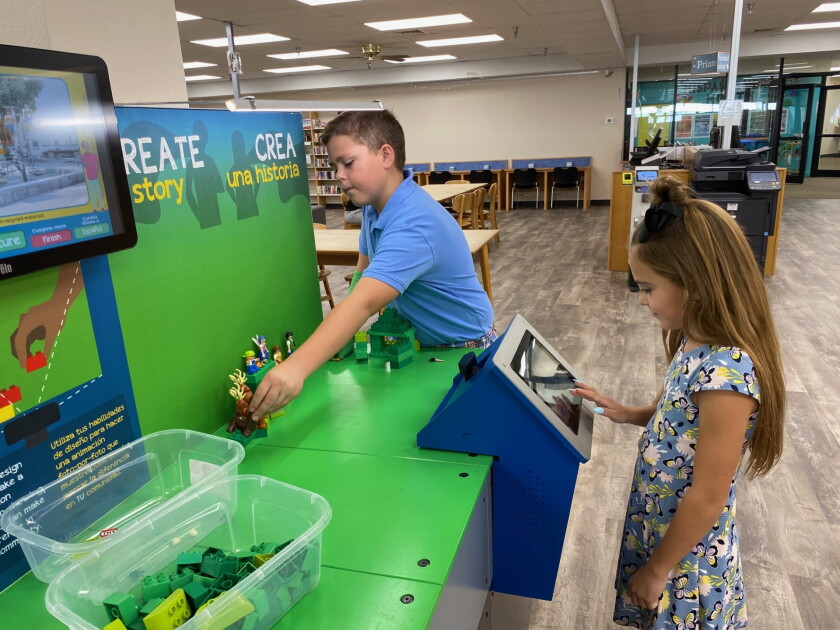
More recently, librarian Shannon Terry secured state library grants to add a 3D printer, virtual reality equipment, a LEGO station, and other maker-space tools to what she calls the “Minersville Mad House.” The library, open just six hours a day, now regularly draws 25 or more children aged 4 to 13. It doubles as a polling place, a community meeting space, and an educational resource for the entire region.
| Location | Minersville, Utah (pop. ~1,000) |
| Building | Adaptive reuse of donated 1992 bank building |
| Key funding | $300K HUD CDBG + $50K USDA Rural Development CF Grant |
| Result | Multi-use community hub: library, voting, events, maker space |
| Learn more | USDA Rural Development success story |
Why It Matters for Planners
Minersville is a model of what persistent grant-seeking can accomplish in a community that could never fund improvements through its tax base alone. The library stacked multiple funding sources — federal block grants, USDA Community Facilities funds, and state library programs — over many years to build a facility that now punches far above its weight. It also demonstrates how a single civic building can serve as library, polling place, community center, and youth program hub simultaneously, achieving the multi-use efficiency that right-sizing planners advocate for. Read the USDA success story at rd.usda.gov.
Case Study 3: Rethinking What a Jail Does — Sanpete County, Utah
The Challenge
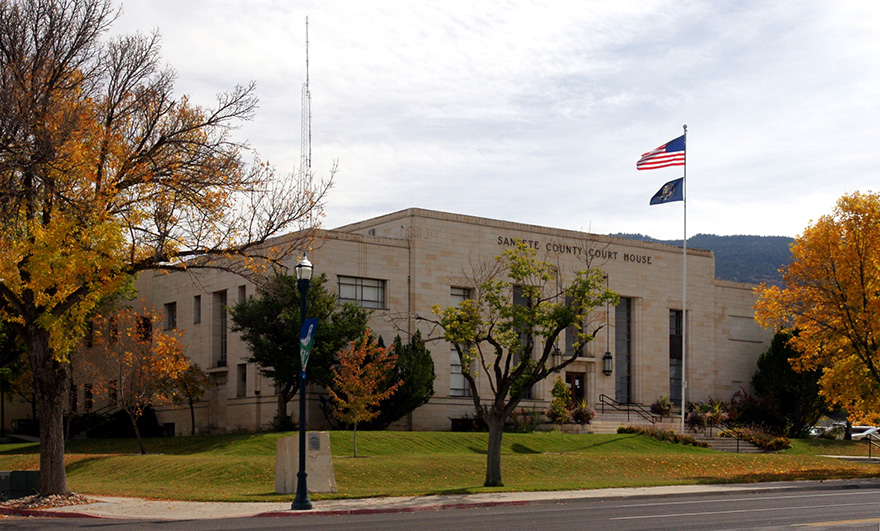
Sanpete County, in rural central Utah, faced a problem familiar to many small county jails: a revolving door. People with substance use disorders were being booked, released with nothing, and returning. In the 18 months before 2022, the county of about 28,000 residents recorded 599 repeat offender bookings. Officers knew the pattern well. As the clinical director put it, for years the approach was simply to release people and “cross our fingers.”
The Solution
In 2022, Intermountain Health — a regional health system that had received $1.5 million in HRSA Rural Communities Opioid Response Program grants — partnered with the Sanpete County Sheriff’s Office to embed a community health worker in the jail. The person hired, Cheryl Swapp, had no formal medical training. She was certified by the state of Utah as a community health worker and had previously worked with at-risk youth in an elementary school.
Her approach was personal and practical. She met with every incoming detainee to assess their addiction history and mental health needs. She built individualized transition plans. Nobody left the jail without a ride, a backpack with basic supplies, a list of local job openings, and enrollment in Medicaid. For people afraid to seek treatment in a small town where “everyone knows what car you drive,” she arranged telehealth appointments. She attended court hearings with people who were frightened to go alone.
The results were dramatic. In the 18 months after the program launched, repeat offender bookings fell from 599 to 236 — a 61 percent reduction. The program’s success was so clear that county commissioners voted to fund Swapp’s position permanently using opioid settlement money, ensuring it continues beyond the original federal grant term.
| Location | Sanpete County, Utah (rural, pop. ~30,000) |
| Facility | Sanpete County Jail, Manti, Utah |
| Key funding | $1.5M HRSA Rural Communities Opioid Response Program |
| Result | 61% reduction in repeat offender bookings over 18 months |
| Sustained by | County opioid settlement funds (post-grant) |
| Learn more | KFF Health News / Intermountain Health |
Why It Matters for Planners
This case study pushes the definition of “civic facility” in a useful direction. The jail itself did not change. What changed was how the facility operated — specifically, how it managed the transition between incarceration and community re-entry. The lesson for planners is that facility performance is not just a function of the building; it is a function of the programs and partnerships the building supports. In rural communities with limited service infrastructure, embedding health and social services directly into justice facilities can produce outcomes that neither system could achieve alone. Read the full story at kffhealthnews.org.

The Takeaway: Infrastructure Is Governance
It is tempting to treat civic facilities as an afterthought — the unglamorous infrastructure that sits behind the more visible work of economic development, housing, and transportation. But a courthouse that cannot safely hold a jury trial, a city hall that cannot accommodate a public meeting, or a jail that fails a state inspection is not a minor inconvenience. It is a failure of governance.
What the examples this week make clear is that the issue is not simply one of aging buildings, but of how communities choose to respond to them. In some cases, that response takes the form of reinvestment and adaptive reuse, as in Tacoma, where a historic structure became a functioning federal courthouse. In others, it is persistence and incremental funding, as in Minersville, where a small-town library evolved into a multi-use civic hub. And in places like Sanpete County, it is not the building that changes, but how it operates—transforming outcomes without expanding the physical footprint.
For planners working in rural communities, the challenge is to make this case clearly and persuasively — to elected officials, to voters, and to state and federal partners who can help shoulder the cost. The buildings matter not because they are monuments, but because they are the physical infrastructure through which democracy functions at the local level. They shape how services are delivered, how accessible government is, and how effectively communities can respond to change.
Keeping the lights on, quite literally, is how small towns stay in the business of self-governance. But the real task is broader than maintenance alone. It is about aligning facilities with function, ensuring that what communities build—and rebuild—continues to support the way they govern today and into the future.
This is the first article in our April series on Community Facilities. Next Sunday: Historic Structures & Districts — preservation as a planning and economic development tool.

Read More: Resources on Rural Civic Infrastructure and Community Development
For planners, local officials, and community leaders looking to go deeper, the following resources offer practical insights, real-world case studies, and policy guidance on sustaining civic facilities and strengthening rural governance.
Books
- Strong Towns: A Bottom-Up Revolution to Rebuild American Prosperity by Charles Marohn (Wiley, 2019)
A foundational read on why traditional infrastructure investment patterns are financially unsustainable—and how communities can shift toward more resilient models. - The Smart Growth Manual by Andres Duany, Jeff Speck, and Mike Lydon (McGraw Hill, 2009)
A practical guide to planning principles that can be scaled to rural communities, including facility planning, land use, and infrastructure efficiency. - Rural by Design: Maintaining Small Town Character by Randall Arendt – First Edition (APA 1994) and Second Edition (Routledge, 2019)
Focuses specifically on rural development patterns, conservation, and how built form—including civic spaces—supports long-term community character. The author notes the 2nd edition is more a supplement than an update. Either way, check your library–either edition is scarce and pricey. - Meet Me at the Library by Shamichael Hallman (Island Press, 2024)
A deep dive into how libraries foster democracy and social connection in challenging times.
Case Studies & Applied Practice
- U.S. General Services Administration (GSA)
Federal projects, including courthouse development and adaptive reuse, with detailed documentation on costs, design, and delivery. - USDA Rural Development
One of the most important funding and case study sources for rural civic facilities, including libraries, community centers, and public safety buildings. - KFF Health News
Strong reporting on rural health systems, jails, and community-based interventions—especially relevant for understanding how facilities function in practice.
Planning Organizations & Tools
- American Planning Association
Policy resources, reports, and best practices across planning disciplines, including public facilities and infrastructure. - National Association of Counties
Data, research, and guidance specifically focused on county-level governance and infrastructure challenges. - International City/County Management Association
Practical tools and case studies for local government management, including shared services and facility optimization.
Why These Matter
Taken together, these resources reinforce a central theme: rural civic infrastructure is not just a technical issue, but a strategic one. Communities that approach facilities as part of a broader system—linking governance, finance, and service delivery—are far better positioned to adapt and endure.
More from JCShepard(dot)com
In April, we are looking at Community Facilities, including historic sties and educational infrastructure, as part of the Comprehensive Plan process. I will also be participating in the American Planning Association’s annual National Planning Conference. This year #NPC26 is in Detroit, Michigan.
Unlock the Power of Libraries: Unite Communities, Inspire Democracy: my review last year of Meet Me At the Library: A Place to Foster Social Connection and Promote Democracy, by Shamichael Hallman for the STaR Small Town & Rural Planning newsletter.
Our March series on Economic Development:
- What is Economic Development in Modern America? A Field Guide for Small Towns and Rural Places https://jcshepard.com/2026/03/what-is-economic-development-in-modern-america/
- Understanding Your Rural Economy—Jobs and Income and Why Headlines Never Tell the Whole Story https://jcshepard.com/2026/03/understanding-your-rural-economy/
- From Retention to Renewal: How BRE and Entrepreneurship Power Real Economic Development https://jcshepard.com/2026/03/from-retention-to-renewal-bre-entrepreneurship-economic-development/
- Front Porches and Paychecks: Housing, Quality of Life, and Economic Development https://jcshepard.com/2026/03/housing-quality-of-life-and-economic-development/
- How Global Trade Can Make or Break Rural Economies https://jcshepard.com/2026/03/global-trade-make-break-rural-economies/
Our August 2025 series on Rural Development:
- Rethinking the Rural Economy: New Paths, New Possibilities for Growth
- Business Retention in Small Towns: The Quiet Powerhouse of Rural Job Growth
- From Main Street to the World: Rural Entrepreneurship in Action
- The Rural Comeback: How Small Town Innovation Sparks Growth
- The Canadian Perspective on Rural Resilience
2026: Bring Your Plans to Life – Monthly Themes Preview
RuralStrong Podcast (Season 1 Episode 36)
Now playing on Youtube (audio), Spotify, and Apple Podcasts (February 2026). Transcription on the blog here.
Rural-Ready Engagement: Practical Tools for Small Town Planners
 Watch the full replay: youtube.com/@Engaging-Communities (February 2026)
Community engagement can look very different in small towns and rural communities. This webcast was co-sponsored by the APA Community Engagement Interest Group and the Small Town & Rural Planning Division.
Popular posts on JCShepard.com
- The Planning Process—From Vision to Action in Small Towns and Rural America (January 2026)
- Reviving Rural America: Why Heritage Tourism Is a Game-Changer Now (September 2025)
- What is Economic Development in Modern America? A Field Guide for Small Towns and Rural Places (March 2026)
- Rural Housing Supply Crisis: Why Small Towns Are Running Out of Homes (February 2026)
- How Small Towns Succeed: A Proven Playbook for Rural Action (November 2025)
- The Rural Comeback: How Small Town Innovation Sparks Growth (August 2025)
- How Small Towns Can Build a Strong Outdoor Economy Without Selling Out (June 2025)
Check out The 12 Planning & Sustainability Books You Need in 2026 and browse through the Small Town & Rural Community guides on our Resources page.
(As an Amazon Associate, we may earn commissions from qualifying purchases. Check your local library or bookshop, too.)