
Palm Sunday marks the beginning of Holy Week—a time of reflection, humility, and hope. For centuries, communities have paused in this season to ask deep questions about leadership, sacrifice, and service. In that spirit, it feels like the right moment to take a fresh look at what public policy and good governance means, especially in a time when trust in public institutions feels increasingly fragile.
Public policy and good governance are crucial for societal well-being and development. Public policy provides a framework for addressing societal issues, allocating resources, and promoting the common good. Good governance, on the other hand, ensures that power is used responsibly and effectively, fostering accountability, transparency, and citizen participation.

The Foundations of Political Order
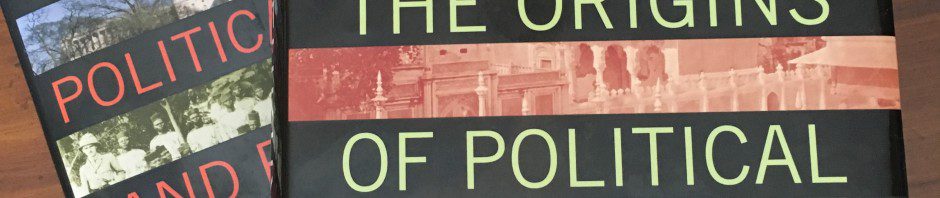
Nearly a decade ago, political scientist Francis Fukuyama published his two-volume work on Political Order and Political Decay. These books offered a sweeping view of how political institutions emerge, evolve, and sometimes collapse. Central to his argument are three pillars that support a stable political order: a capable state, the rule of law, and mechanisms for accountability.
A strong state is essential—not just for enforcing laws, but for delivering services and protecting the common good. The rule of law ensures those in power are subject to the same legal framework as the governed. And accountability, whether through elections, oversight, or civic engagement, keeps the system responsive to the people it serves.
But Fukuyama’s work wasn’t just about distant history. He warned that even advanced democracies could experience political decay—a slow erosion of institutions when they fail to adapt to changing social needs. Bureaucracies become rigid. Political systems become captured by elites. Trust in government begins to slip.
Sound familiar?

Order and Decay in Today’s Governance
We don’t need to name names or call out specific administrations to see that governance in America is under strain. Policy paralysis in Washington, partisan gridlock in statehouses, and the fraying of civic norms are all signs of deeper institutional fatigue. Voters across the spectrum feel increasingly alienated. Many have given up on the idea that government can solve real problems—or even function reliably. As Fukuyama noted, in “low-trust” states, criminal organizations such as the Mafia become the norm when government fails, or government leaders become corrupted. Many see the current Federal Administration well along this path.
This isn’t just a national issue. These trends ripple outward, affecting how decisions get made (or not made) outside statehouses or Congress–in rural counties, small towns, and regional centers. Federal funding that takes years to materialize. State programs that collapse under red tape. Local leaders caught between growing responsibilities and dwindling resources.
And yet, amid these challenges, we see signs of life.

Rural America and the Practice of Good Governance
If effective public policy and good governance means the competent and ethical use of public power for public ends, then rural communities may have the most to gain—and the most to teach. Small towns often operate with lean resources, but they’re closer to the people they serve. They have economies of “scope” rather than economies of “scale”. Relationships are more direct. Accountability is harder to dodge.
Some rural places are responding to governance challenges with creativity and resilience. Local governments are partnering with nonprofits and cooperatives to deliver services more efficiently. Civic leaders are rethinking engagement, drawing in younger voices and underrepresented groups. Others are modernizing outdated administrative systems—not flashy reforms, but the kind that quietly restore trust.
At its best, rural governance is pragmatic and people-focused. It relies less on ideology and more on relationships. That may not always make headlines, but it’s the kind of work that builds institutional strength from the ground up.

A Season for Reflection—and Action
Palm Sunday reminds us that leadership isn’t just about power—it’s about service, sacrifice, and the willingness to walk a harder path for a greater good. We may ask for projection of power but we need thoughtful servant leaders. That’s a message we need in public life right now.
As citizens, as planners, as community builders, we each have a role to play in shaping the institutions and policies which serve us. We can demand transparency, invest in local capacity, and help rebuild the trust that makes governance possible. It’s not easy work, but it’s necessary—and it starts close to home.
Effective public policy and good governance isn’t a partisan issue. It’s a community value. And in a season devoted to renewal and hope, that feels worth remembering.

Read More: Resources on Good Governance and Institutional Trust
If today’s reflections on public policy and political order sparked your interest, there’s a wealth of insight available for those looking to strengthen governance at every level—from federal agencies to rural town boards. Whether you’re a policymaker, planner, or concerned citizen, these resources explore how institutions can rebuild trust, adapt to change, and deliver better outcomes for the communities they serve.
Websites & Organizations
- The Governance Project – Stanford University
Research and policy tools on government effectiveness, accountability, and institutional capacity. - Partnership for Public Service
A nonpartisan nonprofit working to make the federal government more effective and trusted. - Council of State Governments (CSG)
Resources and policy innovation from across U.S. state governments. - International City/County Management Association (ICMA)
Guidance and case studies on ethical governance, public trust, and local administration. - OECD Governance Policy Issues
Good governance in the public and private sectors is fundamental to building sustainable economies. - Center for Rural Affairs
Policy analysis and community-driven governance support in rural America, based in Nebraska.
Books
- Political Order and Political Decay – Francis Fukuyama
- The Fifth Risk – Michael Lewis
A compelling look at the unseen infrastructure of government and the risks of institutional neglect. - Why Nations Fail – Daron Acemoglu & James Robinson
Explores the deep connection between inclusive institutions and national prosperity.
Reports & Studies
- Trust in Government 2023 (Pew Research Center)
Trends in public confidence and how they vary across demographics and levels of government. - Public Governance for Resilient Societies (OECD)
International guidance on transparency, responsiveness, and future-ready public administration. - Reimagining Government for the 21st Century (Brookings Institution)
Policy ideas for adapting U.S. institutions to modern challenges.
Practical Tools
- Harvard Kennedy School’s Ash Center – Resources on public innovation and governance reform.
- Open Government Partnership – International collaboration platform for transparency and citizen engagement.
- Civic Design Tools (Center for Civic Design) – Practical approaches to improving how government communicates and delivers services.
Looking for more insights on rural planning? Explore our recommended resources on sustainable land-use strategies:
The Best Books for Rural Development and Planning in 2025
(As an Amazon Associate, I earn from qualifying purchases.)