
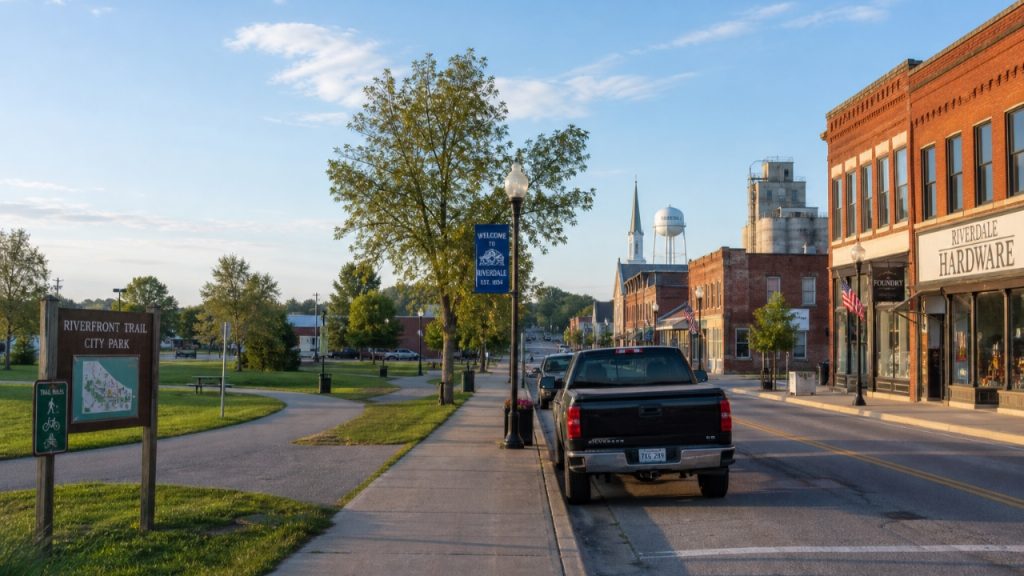
Turning Plans Into Action
The healthy choice should be the easy choice — not just for people who can afford to move.
Five weeks of argument, evidence, and case studies come down to this: what can a planner, commissioner, or engaged resident actually do on Monday morning? The answer is smaller and more actionable than most planning documents suggest.
Rural communities do not fail to improve because they lack good ideas. They fail because they mistake big fancy trends packaged by outside “experts” for local knowledge. The communities that make consistent progress are the ones who have learned to ask a different question. Not just “what do we want our community to become?” but also “what is the single highest-leverage thing we could do in the next ninety days with the budget and authority we already have?”
That reframe — from transformation to alignment — is the core argument of this final weekend in May. Large-scale change in rural communities almost never comes from a single bold intervention. It comes from dozens of small, consistent decisions — especially those made across health, land use, parks, food systems, and outdoor recreation — that gradually shift the conditions of daily life. A sidewalk that makes it possible to walk to school. Zoning by-right that lets a small farmer sell food at the edge of town. A trail maintenance budget that gets funded before the trail deteriorates past the point of use. A county fair that gets measured as economic infrastructure rather than managed as a frivolous relic of days gone by.
None of those decisions is transformational by itself. Together, over time, they may become.
This week, we bring the five threads of this series — public health, parks and recreation, Smart Growth and sustainability, and outdoor recreation — into a single community-level playbook. The actions are sequenced by time horizon, grounded in the evidence from the previous four weeks, and sized for the real constraints of rural local government: limited staff, limited budgets, and limited political appetite for anything that sounds like it requires a consultant.

First 90 Days: See What You Have
A common mistake in rural planning and economic development is skipping the inventory. Communities jump to solutions — a new trail, a new park, a downtown revitalization grant — before they have a clear picture of what already exists, who can reach it, and where the gaps actually are. The result is investment in the wrong places, at the wrong scale, solving problems that are symptoms rather than causes.
The first ninety days of any serious planning effort should be diagnostic. Not necessarily a comprehensive planning process — that can take years and often produce more documentation than action — but a focused, practical audit of the community’s existing assets and conditions across the five domains this series has covered. Most of what you need to know is already available. The County Health Rankings & Roadmaps, for example, can tell you how your county compares to peers on the health outcomes that planning can influence. The AARP Livability Index tells you where the built environment is falling short. A drive through the county on a Saturday morning tells you whether your recreational assets are maintained, accessible, and in use.
- Pull your County Health Rankings data — Focus on the behavioral health factors (physical inactivity, access to exercise opportunities, food environment) rather than clinical outcomes; these are the ones planning can move
- Search your comprehensive plan for five words — “food,” “trail,” “infill,” “recreation,” and “conservation.” Where they appear tells you what is already policy; where they are absent tells you where to start
- Drive your recreational assets as a visitor — Trails, campgrounds, fairgrounds, parks. Note what is hard to find, poorly maintained, or missing signage. This visitor friction audit costs nothing and reveals more than any consultant report
- Map your food access gaps — Where are the residents who are more than a mile from a grocery store or farmers market? That map is your food system planning baseline
- Identify your highest-value agricultural land — Which parcels on the edge of town are both most productive and most at risk of conversion? Start conversations about conservation easement strategies with that list
The audit does not need to be formal or published. Its purpose is to give the people responsible for planning decisions a shared picture of where the community actually is — not where the last comprehensive plan said it would be by now.
You cannot prioritize what you have not mapped. The audit is not the plan. It is the foundation that makes a plan worth writing.
First 90 Days: The Three No-Cost Moves
While the audit is underway, there are three actions that require no capital budget, no consultant, and no formal planning process — just a conversation and some decisions.
Call the school district
Ask one question: is there a joint-use agreement that allows community members to use school fields, gyms, and tracks outside of school hours? If the answer is no, or nobody knows, that is your first action item. A joint-use agreement doubles the effective recreational footprint of a community without building a single new facility. Legal templates exist. The conversation takes an afternoon.
Search the comprehensive plan for “food”
If the word does not appear in the land use or economic development chapter, draft one paragraph that adds it. Something as simple as “the City/County supports the development of local food infrastructure, including farmers markets, community gardens, and farm-to-school connections, as components of economic development and community health strategy.” One paragraph provides the policy basis for every subsequent administrative decision on local food — permits, leases, procurement policies — without requiring a plan amendment or a public hearing.
Document the county fair’s economic footprint
Total attendance, vendor revenue, hotel and restaurant spending during fair week, and emergency preparedness capacity. Present the number to your county board as the economic infrastructure argument, not the nostalgia argument. That reframe changes what budget conversations are possible.
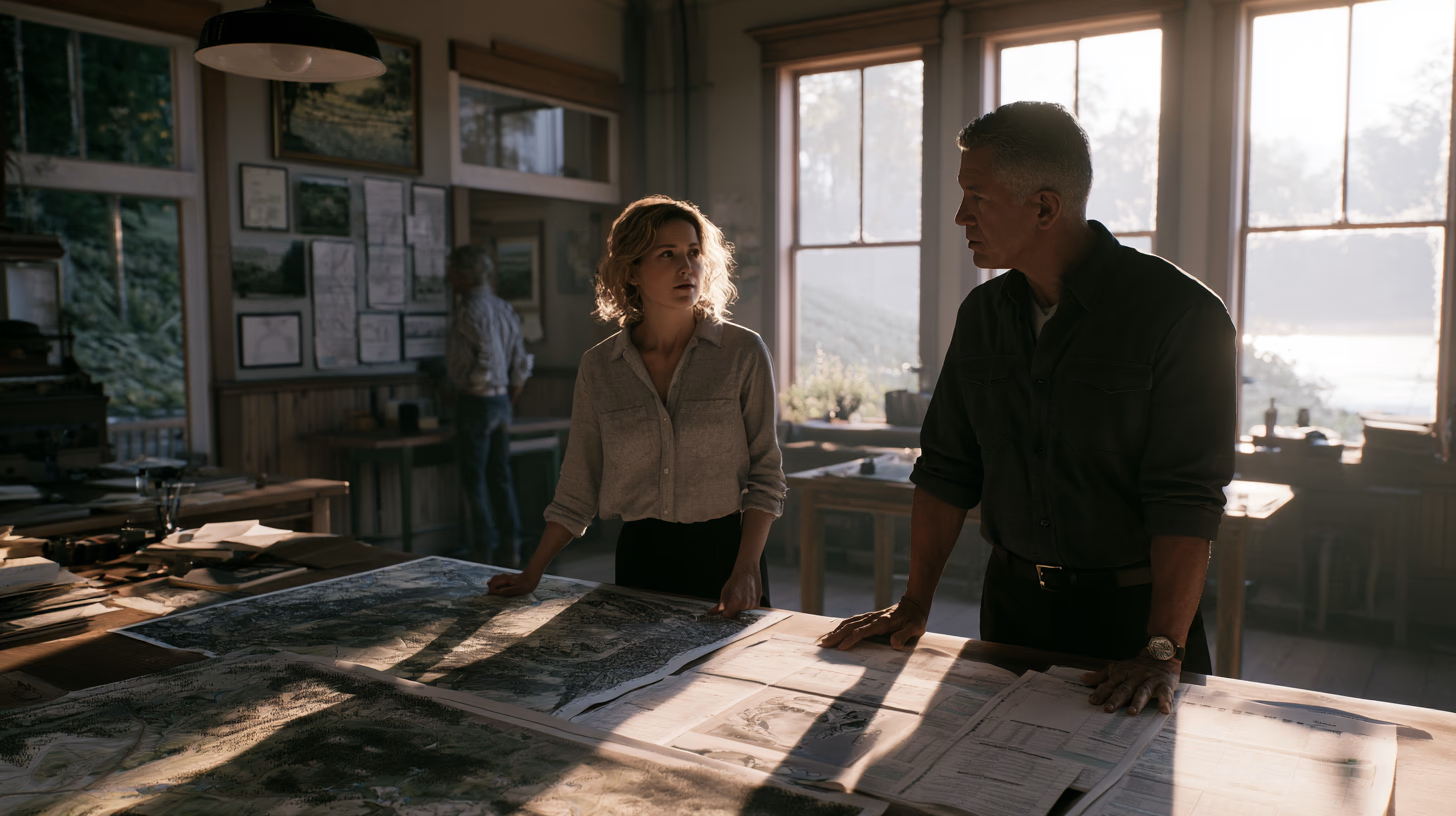
Next 12 Months: Write It Into the Plan
The comprehensive plan may be the most underused tool in rural planning. Not because communities don’t have one — most do — but because most comprehensive plans are written as aspirational documents rather than operational ones. They describe desired futures without specifying the decisions that would produce them, and they are rarely consulted between adoption and the next update cycle.
The most valuable thing a planning commission can do in the next twelve months is not necessarily to write a new plan. It is to amend the existing one in three specific ways that will change your decision process for the next decade.
- An outdoor recreation economic development goal — One sentence in the economic development chapter: “The City/County supports outdoor recreation as a year-round economic sector and will prioritize investment in trail networks, campgrounds, and wildlife access as economic infrastructure.” This single goal can provide the policy basis for LWCF grant applications, capital improvement priorities, and budget arguments that would otherwise lack a planning foundation.
- A preferred development area map — Not a hard urban growth boundary, but a designated area on the more general future land us map where decisionmakers will prioritize infrastructure extension and by-right infill approval. Everything outside that area bears the full cost of service extension. This is the planning tool that makes the fiscal case for compact development without requiring anyone to say “Smart Growth” in a public hearing.
- An agricultural land protection policy — A clear statement that the County will not rezone agricultural land piecemeal for residential development, combined with a minimum lot size for agricultural zones that protects commercial farms and ranches. This costs nothing to adopt and does more to slow farmland conversion than any easement program alone.
Next 12 Months: Build the Grant Pipeline
Rural communities chronically underfund their planning and capital programs, then wonder why they fall behind. The federal and state grant landscape for exactly the investments this series has described — trails, parks, farmland conservation, local food infrastructure, public health — is substantial and largely underutilized by smaller counties. The barrier is not eligibility. It is the absence of the plan language that makes applications competitive.
A comprehensive plan that explicitly names outdoor recreation as an economic development goal makes LWCF applications stronger. A plan that references agricultural land protection makes ACEP and RCPP matching fund applications more competitive. A plan that connects food access to community health creates the policy basis for USDA Community Facilities grants. The amendments described above are not just planning documents — they are grant application foundations.
- Land and Water Conservation Fund (LWCF) — $900M/year permanently, administered by states; funds trails, campgrounds, boat launches, and park development at 50% match. Start at your state’s lead LWCF agency
- USDA Agricultural Conservation Easement Program (ACEP) — Federal matching funds for farmland easements through NRCS; state offices administer local cycles. A county easement fund of $250K matched with ACEP can protect several farms per year
- USDA Community Facilities — Direct loans and grants for essential community facilities including recreational facilities; rural communities under 20,000 population are priority eligible
- Transportation Alternatives Program (TAP) — Federal funding administered by state DOTs for trails, sidewalks, and safe routes to school; competitive but accessible to counties with plan support
- Community Development Block Grant (CDBG) — HUD-administered; funds a wide range of community development activities including parks and recreational facilities in low-to-moderate income communities
- ARC and EDA programs — For Appalachian and distressed communities specifically; outdoor recreation and trail infrastructure are explicitly eligible under both programs’ economic development frameworks
The key insight about grant strategy is sequencing. A community that has done the audit, amended the plan, and documented the economic case for its recreational assets is in a fundamentally stronger position than one that applies cold. Grant reviewers can tell the difference between a project with a policy foundation and one without. The work described in the first ninety days and the first twelve months is what makes the next round of applications competitive.

Long-Term: Make the Healthy Choice the Easy Choice
The animating idea behind this entire series is borrowed from public health policy: the healthy choice should be the easy choice. Not the only choice, not the mandated choice — but the one the built environment, the land use pattern, and the community’s infrastructure make naturally easier than the alternative.
In practice, this means designing communities where walking to school is possible, where fresh food is available within a reasonable distance for people who cannot drive, where recreational opportunities are accessible to residents who cannot afford a gym membership or a fishing boat, and where the working landscape that gives a county its agricultural identity is protected from the kind of incremental development that erodes it before anyone quite realizes what has happened.
None of that happens from a single decision. It happens from a long sequence of small decisions, made consistently over years, that gradually shift the default conditions of daily life. The long-term work of rural planning is not spectacular. It is the unglamorous maintenance of the conditions that make the short-term wins possible — keeping the trail funded, holding the agricultural zoning line, updating the comprehensive plan before it becomes irrelevant, and building the institutional relationships that make cross-sector collaboration possible without having to reinvent it every time a new commissioner is elected.
The communities worth learning from are not the ones that had a brilliant idea. They are the ones that kept showing up — to the budget meeting, the plan amendment hearing, the grant application deadline — year after year, until the conditions changed.
Long-Term: The Four Alignment Moves
Across all five weeks of this series, four structural moves appear repeatedly in the communities that have made durable progress. They are not programs or projects. They are governance and planning practices that make everything else more likely to work.
Connect health data to planning decisions
County Health Rankings, the AARP Livability Index, and local health assessment data should be standard reference material in planning commission meetings, capital improvement discussions, and budget presentations — not one-time inputs to a comprehensive plan update. The communities that have made the strongest case for trail investment, park maintenance, and walkable infill development are the ones that have learned to speak the language of health outcomes to elected officials who respond to it. A commissioner who is unmoved by “Smart Growth principles” may be moved by “our county ranks in the bottom quartile on physical inactivity and this trail addresses it directly.”
Build the cross-sector table
The planning problems this series has described — food access, recreational infrastructure, land conservation, compact development — do not belong to any single department or organization. They sit at the intersection of planning, public health, parks, economic development, agriculture extension, and the nonprofit sector. The communities that make consistent progress have a standing cross-sector table where these connections are maintained — not a formal committee that meets quarterly to share updates, but a working group with a shared agenda and the authority to bring recommendations to elected bodies. It does not need to be large. Five to eight people with the right institutional seats is enough.
Institutionalize the maintenance budget
Capital investment without operational funding is a guarantee of future failure. A trail that is built but not maintained degrades within a decade. A campground that is opened but not staffed provides a bad visitor experience and eventually closes. A farmers market venue that is designated but not managed never attracts consistent vendors. Every capital project in this planning domain needs an explicit answer to the question: where does the ongoing maintenance budget come from? Special assessment districts, dedicated recreation levies, development impact fees, concession agreements, and public-private partnerships are all viable answers. The answer “general fund, subject to annual appropriation” is not.
Plan for the pressures that come with success
Trail towns that attract visitors attract housing pressure. Communities that build recreational identity attract amenity migrants who drive up rents. Agricultural counties that protect their working landscape attract agritourism visitors who need roads, parking, and services. Success in rural economic development creates secondary pressures that the planning framework needs to anticipate. Workforce housing zoning, community land trusts, campground capacity management, and agricultural road maintenance programs are not afterthoughts — they are what separates communities that manage growth well from ones that are surprised by it.

The Full Playbook
Five weeks of argument distilled into a single sequence. These are not the only actions worth taking — they are the ones with the highest return relative to the resources and political capital required, in the order that makes each subsequent action more likely to succeed.
- Pull County Health Rankings data and identify the behavioral health factors planning can move
- Search the comprehensive plan for “food,” “trail,” “infill,” “recreation,” and “conservation”
- Drive recreational assets as a visitor — document the friction points
- Map food access gaps relative to existing grocery and market locations
- Identify highest-value agricultural parcels at risk of conversion
- Call the school district about joint-use agreements for fields and gyms
- Document the county fair’s full economic footprint — attendance, vendor revenue, regional spending
- Amend the comprehensive plan: add an outdoor recreation economic development goal
- Amend the comprehensive plan: designate a preferred development area for infill priority
- Amend the comprehensive plan: add one paragraph on local food systems in the economic development chapter
- Adopt an agricultural land protection policy — no piecemeal rezoning, meaningful minimum lot sizes
- Build a grant pipeline: identify which LWCF, ACEP, TAP, and CDBG cycles your projects are eligible for
- Explore trail town designation if your community sits along a regional corridor
- Bring health data into regular planning commission and budget presentations
- Build a standing cross-sector table: planning, public health, parks, economic development, extension
- Fund maintenance before capital — every new facility needs an explicit operational budget answer
- Evaluate campground and recreational facility management models; consider concession agreements where public capacity is limited
- Pursue agricultural conservation easements strategically — prioritize productive parcels adjacent to town centers
- Plan for housing pressure, workforce needs, and crowding before recreational success creates them
A Note on Where to Start
If you have read all five weeks of this series and are now wondering where to begin, the answer is simpler than the playbook above might suggest. Start with the thing in front of you. If your county fair is coming up in two months, start there — document the economic footprint, make the infrastructure argument, propose a maintenance line item. If your comprehensive plan is up for its five-year review, start there — propose the three amendments. If you have a trail that is falling into disrepair, start there — find out what the maintenance backlog actually costs and what it would take to fund it.
Momentum is important. Pick something you can get behind and give it a go.
The communities that make consistent progress are not the ones that started with the most ambitious plans. They are the ones that started with the most honest assessment of what was in front of them, and made the next right decision from there.
That is what Monday morning looks like.
Large-scale change in rural communities comes from dozens of small, consistent decisions — made across health, land use, parks, food, and recreation — that gradually shift the default conditions of daily life. Transformation is the accumulation of alignment.
Pick one item from the First 90 Days list. Just one. Pull the County Health Rankings for your county, search your comprehensive plan for the word “food,” or make the call to your school district. The sequence starts wherever you start it.
- Week 1 — Public health and livability: tools, data, and what local government can do
- Week 2 — Parks and recreation: from fairgrounds to trail networks as county assets
- Week 3 — Sustainability and Smart Growth: land conservation, local food, and compact development
- Week 4 — Outdoor recreation (Memorial Day): economic development, identity, and health
- Week 5 — A community-level playbook: turning plans into action (this article)

The essential baseline for any rural health and planning audit. Ranks every county in every state on health outcomes and health factors — including the built environment factors that planning can directly influence. Free, updated annually.
Community-level scoring across housing, neighborhood, transportation, environment, health, engagement, and opportunity. Particularly useful for identifying specific built environment gaps and benchmarking against comparable communities.
ORR promotes the growth of the outdoor recreation economy and outdoor recreation activities. They educate decision makers and the public on balanced policies that conserve public lands and waterways and enhance infrastructure to improve the experience and quality of life of outdoor enthusiasts everywhere.
The most practical single resource on rural Smart Growth implementation — infill, agricultural land protection, downtown revitalization, and natural resource stewardship. The companion document to this entire series.
America’s primary matching grant program for parks, trails, and recreation infrastructure. Permanently funded at $900M/year. Start at your state’s lead LWCF agency — they administer local eligibility and application cycles.
Federal matching funds for agricultural land easements. A county easement fund of $250K–$500K matched with ACEP funding can protect several farms per year. State NRCS offices administer local application cycles.
The most persuasive case for incremental, fiscally sound development in small towns and rural communities. Essential reading for making the compact growth argument to elected officials who respond to fiscal arguments rather than planning theory.
Planning toolkits, economic impact studies, funding guides, and the TrailNation Playbook — the most practical resource available for rural communities building or maintaining trail systems from scratch.
The book that makes the fiscal case for everything this series has argued for — incrementalism, maintenance over expansion, compact development — in a voice that lands with the county commissioners and city managers who most need to hear it.
An unparalleled resource for practicing planners, members of local boards and commissions, students in degree courses, those teaching them, and young professionals.
Ta Enos’s 2025 literary memoir about personal reinvention and place-based rural development, centered on the Pennsylvania Wilds movement, pairs her own story as former journalist rooted in rural, with the 20‑year evolution of a distressed Appalachian region building the Outdoor Economy to chart a different future. JCShepard.com book of the month for May 2026.
More from JCShepard(dot)com
Related posts:
- November 2025: Wins for Active Living: Simple Infrastructure to Unlock Rural Health
- July 2025: The New Rural Playbook: Planning Trends That Matter
- June 2025: How Small Towns Can Build a Strong Outdoor Economy Without Selling Out
Our April 2026 series on Community Facilities:
- Rural Civic Infrastructure Is Driving a New Future for Small Town Communities
- Historic Preservation and Rural Economic Development: A Rural Growth Strategy
- Good Governance and Trust in Rural America
- How Education as Infrastructure Is Powering Rural Economic Growth
2026: Bring Your Plans to Life – Monthly Themes Preview
RuralStrong Podcast (Season 1 Episode 36)
Now playing on Youtube (audio), Spotify, and Apple Podcasts (February 2026). Transcription on the blog here.
Rural-Ready Engagement: Practical Tools for Small Town Planners
 Watch the full replay: youtube.com/@Engaging-Communities (February 2026)
Community engagement can look very different in small towns and rural communities. This webcast was co-sponsored by the APA Community Engagement Interest Group and the Small Town & Rural Planning Division.
Dynamic Decisions Podcast (Season 2 Episode 15)
“Stop Chasing Smokestacks. Grow What You Have” now playing on Youtube (audio), Apple Podcasts, Spotify (May 2026). Other listening links here.
Popular posts on JCShepard.com
- The Planning Process—From Vision to Action in Small Towns and Rural America (January 2026)
- Reviving Rural America: Why Heritage Tourism Is a Game-Changer Now (September 2025)
- What is Economic Development in Modern America? A Field Guide for Small Towns and Rural Places (March 2026)
- Rural Housing Supply Crisis: Why Small Towns Are Running Out of Homes (February 2026)
- How Small Towns Succeed: A Proven Playbook for Rural Action (November 2025)
- The Rural Comeback: How Small Town Innovation Sparks Growth (August 2025)
- How Small Towns Can Build a Strong Outdoor Economy Without Selling Out (June 2025)
Check out The 12 Planning & Sustainability Books You Need in 2026 and browse through the Small Town & Rural Community guides on our Resources page.
(As an Amazon Associate, we may earn commissions from qualifying purchases. Check your local library or bookshop, too.)
.
