
The fields of urban and rural planning, community development, and sustainability are evolving faster than ever. Whether you’re a seasoned professional or just starting your journey, the right planning books and sustainability books can offer fresh insights, practical tools, and long-term vision. This curated list is a mix of casual and academic reads—including new releases from late 2025—is designed to inspire and prepare you for the opportunities and challenges that lie ahead. Plus these books make great holiday gifts or an excuse to visit your local library.

Community Development Books & Rural Innovation Books
In rural towns and underserved communities, innovation doesn’t always start in city halls—it begins in church basements, cafés, and community gardens. These books explore how everyday people are transforming their places from the ground up, with practical strategies, inspiring stories, and a fierce belief in local potential.
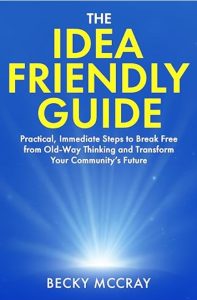
- The Idea Friendly Guide: Practical, Immediate Steps to Break Free from Old-Way Thinking and Transform Your Community’s Future
- Becky McCray
- The Idea Friendly Guide is a practical, plain-language handbook for small towns and rural communities that want to move beyond cheerleading and actually change how people respond to new ideas and to each other. It stresses that being open to new ideas—more than big events or outside investments—is what makes small towns resilient, and it links that directly to planning: plans only matter if people use them, stay open, and keep taking small, community-led steps. Brand new December 2025.
- Our book review.
- From Possibilities to Reality: Save Your Small Town with these Uniquely Do-able Ideas, Projects, and Success Stories
- Deb Brown
- Packed with actionable ideas and real-world success stories, this book is a treasure trove for anyone committed to revitalizing rural America. From Possibilities to Reality is a practical workbook of small, do‑able ideas to help people in small towns improve their community using the resources they already have. It collects real projects and success stories to show that ordinary residents—not just officials or big funders—can start change with simple actions and build momentum over time.
- Our book review.
- The Case for Rural America
- J. Tom Mueller
- This concise, new book argues that rural places are vital to the country’s future and can thrive if policy and practice change course. The author offers a critique of conventional redevelopment efforts for failing to explain why rural America is worth saving and proposes broad social policies to help preserve rural places (interesting case, not necessarily an endorsement).
- The Overlooked Americans: The Resilience of Our Rural Towns and What It Means for Our Country
- Elizabeth Currid-Halkett
- While published in 2023, this book is new to us. The book argues rural America is far less distressed and far less culturally alien than the prevailing political and media narratives suggest. Drawing on quantitative data and hundreds of hours of interviews, the author (a public policy scholar) makes the case that many rural communities are doing as well as, or better than, urban areas on several economic and social measures and that rural and urban residents share more core values than is usually acknowledged.

Sustainability, Policy, & Planning Books
As cities grow and environmental challenges mount, planners and policymakers are rethinking what makes a place livable and resilient. This section features essential reads that tackle climate resilience, equitable zoning, green infrastructure, and the civic identity of place—all through the lens of smart, sustainable urban design.
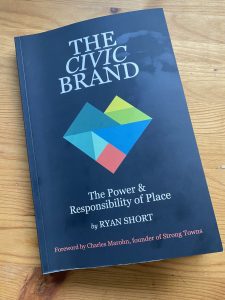
- The Civic Brand: The Power & Responsibility of Place
- Ryan Short
- In this new book, Short examines how cities and towns can build strong, authentic brands that reflect their values and attract investment. The author discusses how communities can use “place branding” as a tool for shaping better cities and towns, not just for making logos and slogans. It treats branding as a civic responsibility: a way to unite residents, guide policy, and build pride in place so communities become more resilient, equitable, and lovable.
- An Even Better Way to Zone: Achieving More Affordable, Equitable, and Sustainable Communities
- Donald L. Elliott
- This brand new (December 2025) edition offers fresh perspectives on zoning reform to create communities that are inclusive, affordable, and sustainable. In An Even Better Way to Zone, Don updates and extends his 2008 book A Better Way to Zone rather than replacing it. The first book lays out general principles for making zoning more predictable and livable, while the new one reframes those ideas around today’s central policy goals of affordability, equity, and sustainability.
- Reviving Rural America: Toward Policies for Resilience
- Ann M. Eisenberg
- How have U.S. laws and policies—especially around infrastructure and governance—actively produced rural decline? This book calls for substantial public reinvestment and better government–community relationships to rebuild rural places as a shared national commons.
- Proudly Made: A Story of Reinvention in the Big Woods and Small Towns of the Pennsylvania Wilds
- Tataboline Enos
- Ta Enos’ s 2025 literary memoir about personal reinvention and place-based rural development, centered on the Pennsylvania Wilds movement. It pairs her own story as former journalist rooted in rural and as a new mother, with the 20‑year evolution of a distressed Appalachian region using nature‑based tourism and local entrepreneurship to chart a different future.

Off-Grid Living & Energy Innovation
Sustainability isn’t just for cities. We spent some time in 2025 looking at energy innovation in the US and across the world. In rural areas all over, a quiet revolution is underway—merging renewable energy, agriculture, and self-sufficient lifestyles. These books explore the future of living off-grid, designing for energy independence, and building communities that thrive in harmony with the land.
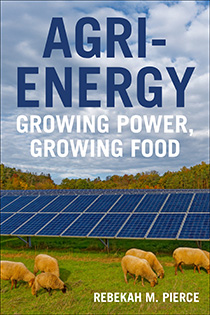
- Agri-Energy: Growing Power, Growing Food
- Rebekah Pierce
- Pierce explores the intersection of agriculture and renewable energy, offering practical solutions for sustainable food and power production from a writer who actually works with agri-voltaics on her own farm. It explains how we can combine solar, wind, and other renewables with grazing or cropping on the same land to keep farms profitable, maintain food production, and support rural economies, using real-world case studies and step‑by‑step guidance on design, management, and partnerships. Brand new November 2025.
- Living Off Grid: 50 Steps to Unplug, Become Self-Sufficient, and Build the Homestead of Your Dreams
- Ryan Mitchell
- A step-by-step guide for anyone dreaming of a self-sufficient lifestyle, from energy independence to homesteading. Mitchell walks you through 50 key decisions for unplugging from utilities, becoming more self‑sufficient, and building an off‑grid homestead that fits your budget and life, based on his own personal experiences.
- Book review from September 2025
- Rural Renaissance: Revitalizing America’s Hometowns through Clean Power
- L. Michelle Moore
- A practical guide to clean energy development in rural communities, covering energy efficiency, renewables, and electrification. The book walks local leaders, co‑ops, and residents through five “pathways” to a rural clean energy future—efficiency upgrades, community-scale renewable power, resilient microgrids and storage, electric vehicles, and broadband—showing how any town can start now, use existing policies and funding, and design projects that keep benefits local while advancing equity and long-term community vitality.
- The Equitably Resilient City: Solidarities and Struggles in the Face of Climate Crisis
- Zachary Lamb & Lawrence Vale
- Challenges traditional planning approaches around the world and offers strategies for building cities that are both equitable and resilient.
Plus a couple more to look up at the academic library
- Planning Rural Landscapes: Green Infrastructure and Ecosystem Services Nexus
- Edited by Natália Cunha, Manuela Magalhães
- Bridges different issues, from landscape to ecosystems, planning to implementation, and policies to local community willingness.
- Rural Futures: Innovation, Resilience, and Sustainable Development (forthcoming January 2026, ask at your local academic library)
- Edited By Pushan Kumar Dutta, Sonal Trivedi
- Promises to explore the multifaceted issues shaping rural areas today, around the world.
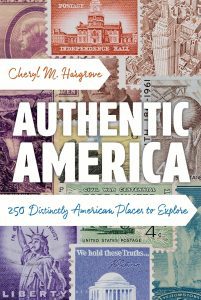
Bonus Book Forthcoming January 2026: Authentic America: 250 Distinctly American Places to Explore by Cheryl M. Hargrove (Bloomsbury Academic, hardcover and ebook). In commemoration of the nation’s 250th anniversary of independence in 2026, this book explores what makes America distinctive from other countries–its ideals, ingenuity, culture, and creativity.
I would be remiss if we didn’t mention another book much discussed recently, although it is at-best planning-adjacent. New York Times bestseller Abundance by Ezra Klein and Derek Thompson was both touted and pilloried in the halls of public policy and amateur politicos.
Abundance is not about urban planning per se, but its core argument—that America’s systems have become too good at blocking new things and too bad at building what people need—translates directly into small‑town and rural revitalization debates. It offers a vocabulary and political frame (the “abundance agenda”) that rural leaders might adapt to argue for more housing, infrastructure, and clean energy in their own communities instead of just defending against change.
On my to-be-checked-out-from-the-library list, though there are several higher on the to-be-read stack at the end of 2025.

Why These Books Matter
The books on this list reflect the diversity and dynamism of today’s planning and sustainability fields. From rural revitalization to urban resilience, from zoning reform to off-grid living, these titles offer both inspiration and practical tools for planners, policymakers, and community leaders.
As you plan for the year ahead, consider adding a few of these to your reading list. Each one has the potential to spark new ideas, deepen your understanding, and help you make a greater impact in your work.
What’s on your reading list for 2026? Are there any books you’d add to this collection? Let’s keep the conversation going!
Did you miss the 2025 reading list? You can find it here: Unlock the Future: 12 Powerful Urban Planning Books for 2025
(As an Amazon Associate, we may earn commissions from qualifying purchases. Check your local library or bookshop, too.)