

If you don’t know where you want to get to then, as the Cheshire Cat told Alice in Wonderland, “it doesn’t matter which way you go”.
In rural and small-town America, the challenges are familiar: aging infrastructure, shifting demographics, and limited budgets. But the real story isn’t about what’s missing—it’s about what communities are doing with what they have.
Community planning offers a process to meet those challenges where they live. A good planning process is about more than musty old codes and big ticket infrastructure projects. It’s about strengthening what makes small towns thrive: a high quality of life, resilient local economies, and a deep sense of place. Planning in these communities isn’t removed or theoretical—it’s personal, participatory, and deeply rooted in relationships.
To kick off January, we’re going to discuss why the important part of planning IS the planning, sketch out a clear planning process, preparing your community for a planning project, how small town & rural planning compares to urban and suburban processes, forming a community vision and implementing that vision, and some quick takeaways for both planning professionals and rural leaders. We will be expanding on community engagement throughout the month.

Why the Process Matters More Than the Plan Itself
Planning school tells us the comprehensive plan is a long‑range guide to physical, social, and economic development of a community. Most comprehensive plans look 20 to 30 years out, with 5-10 year implementation plans.
In small towns and rural counties, the comprehensive plan functions as a public playbook, similar to a business plan for the community. It maps out where growth belongs, what stays rural, and how to keep services and tax base in balance.
A good comprehensive plan is the basis for any size community’s long-range planning and development. The comprehensive plan also serves as the rational basis for implementation, most commonly through zoning and subdivision regulations.
Community vision and engagement build the foundation of any planning process in the people who will bring it to life. Assessment and baseline analysis documents local conditions and provides a basis for development policy and actions. The comprehensive plan then documents the planning process. Implementation and regular review is the key to a successful plan.
The value of planning is not how thick the plan is, but how clear, grounded, and trusted the process is—and whether people actually use it at the hearing table.

The Comprehensive Planning Process in Plain Language
Six stages from vision to action
A planning process is not just a checklist of tasks; it is the way a community tests its stories, assumptions, and big ideas against reality. For small towns and rural counties, that reality includes limited staff, tight budgets, and neighbors who will see the outcome every day. The framework below lays out six stages from vision to action, set out with that context in mind.
1. Define purpose and scope
Before anyone opens a spreadsheet or draws a map, the community needs a clear answer to a simple question: What do we want to accomplish with this planning project?
- Clarify the kind of planning effort you are launching. Is it a full comprehensive plan update? A focused revision of land use, housing, or hazard mitigation topics? Does it need to be a joint city–county effort or a stand‑alone city/village plan?
- Spell out the specific problems and opportunities on the table: integrating a new hazard mitigation plan, aligning zoning and subdivision regulations with real development patterns, addressing housing and workforce gaps, supporting downtown and main street, or planning for new infrastructure investments.
- Agree on the planning horizon and update rhythm. Most comprehensive plans look out about 20 years, but the work is punctuated by annual reviews and a more thorough 8–10‑year update. That expectation should be clear at the start so nobody thinks the plan is a “once and done” project.
A well‑defined scope sets realistic expectations for planners and local leaders, and it gives residents an honest picture of what this round of planning will and will not do.
2. Inventory and analysis
Every plan stands on two kinds of information: the numbers and the stories. Both matter.
Start with baseline data.
- This should include population trends and projections, household and housing characteristics, employment and income, tax base, existing land use, transportation networks, water and sewer systems, community facilities, natural resources, and known hazards.
- The City of Burwell, Nebraska, for example, has just over 1,000 residents and is the only incorporated community in Garfield County. We compiled data from the US Census Bureau’s Decennial Census since the town was founded. We relied on the Census Bureau’s American Community Survey (ACS) for the most recent population, housing, and some employment statistics. Since detailed economic statistics are not typically available for small towns, we pulled in county-level jobs and income data from the US Bureau of Economic Analysis (BEA).
- Use a geographic information system (GIS) to collect, analyze, and display data. If you don’t have one, check with other local agencies or area colleges who may be able to help.
Pair the quantitative picture with “soft data.”
- That includes lived experience and local knowledge from people who know how things really work on the ground: farmers, business owners, public works staff, emergency managers, school leaders, health care providers, and long‑time residents.
- This is essential in rural places, where daily life is tightly woven and the metrics alone rarely tell the whole story. In Burwell, we put out a community-wide survey, held a town hall, and met one-on-one and in focus groups with Main Street businesses, local leaders, and high school students.
The inventory and analysis stage is not about proving a pre‑written narrative. It is about being honest enough that the community can make informed choices in the next stages.
We’ll discuss data and public engagement more through the rest of this month.
3. Community vision and public engagement
Visioning and engagement are where the planning process either earns trust or loses it.
Build a planning team who can listen and translate.
- In some communities, that means forming a dedicated advisory committee that includes elected officials, planning commissioners, staff, and citizens from different sectors. In others, the planning commission itself takes on the steering role, with ad hoc input from key stakeholders.
- The “right” model is the one that fits your hometown’s culture and capacity—as long as it is clear who is guiding the process and who is listening.
Use multiple ways to reach people.
- Public meetings, workshops, and open houses still matter, but so do surveys, focus groups, kitchen‑table conversations, and just showing up where people already gather.
- You will not get the best ideas by asking people to come sit in council chambers; you have to go find them in the community and listen.
Translate broad input into a short list of themes.
- As comments and stories accumulate, identify 4–6 recurring themes—like housing, aging infrastructure, protecting working lands, downtown vitality, hazard resilience, or youth opportunities.
- Those themes help tie the many chapters of a comprehensive plan together and create a bridge to early wins that show the plan is already doing work, not just waiting on a shelf.
In rural America, participation is personal—people see one another at the grocery store and at ball games—so a respectful, relational engagement process pays off for years after the ink is dry.
Watch for more on this topic over the next couple weeks.
4. Goals, policies, and map of the future
Once the community has a sense of itself—data and stories, vision and values—it is time to put direction on paper.
Turn the vision and analysis into goals and objectives.
- For each major element of the plan—land use, housing, economic development, community facilities, transportation, natural resources, hazard mitigation—think ahead about drafting clear goals and a handful of specific objectives that reflect local priorities.
- Goals should be broad enough to last, objectives specific enough to guide later decisions and actions.
Draft the future land use map and system plans.
- The future land use map is the physical expression of the plan: it shows where the community expects different types and intensities of development over the planning horizon.
- In rural counties, that includes categories that recognize agriculture as a primary land use (and distinguish between agricultural, transitional, and rural residential areas) as well as growth areas around towns and key corridors.
- Supporting plans for transportation, utilities, parks and recreation, and environmental resources should align with that map so the community is not promising growth where it cannot afford services.
This stage is where the plan becomes visibly real—people can point to a map or a policy and see themselves, their land, and their future in it.
5. Action plan and tools
A plan without an action section is just a well‑illustrated wish list. Implementation is key.
For each major topic, keep in mind to identify specific actions that move the community from “what we want” to “what we will do.”
- That might include updating zoning text and subdivision standards, prioritizing capital projects (streets, water, sewer, broadband, public facilities), establishing joint planning or service agreements, launching housing or façade programs, or adopting hazard mitigation projects.
Assign a lead and likely partners to each action.
- In small towns and rural counties, this is where reality checks come in: who can actually carry this out—city staff, county road department, utility district, development corporation, school district, regional planner, NRD/NRCS, or volunteer committee?
Match actions with tools and resources.
- Note what legal authorities (zoning, subdivision, annexation, floodplain administration), financial tools (local budgets, CIPs, grants), and community assets (civic groups, local institutions) are needed.
- This connects the plan’s ambitions with the mechanisms that can make them happen.
A practical action plan respects limited capacity. It is better to have a short, focused list that gets used than a long catalog that overwhelms everyone involved.
6. Adoption, implementation, and monitoring
The last stage is really three intertwined habits: adopting the plan, using it, and keeping it alive. Again, implementation is key.
Adoption and legal standing.
- The plan should be adopted through the appropriate statutory process—planning commission recommendation, public hearings, and governing body adoption by resolution or ordinance, depending on local practice and state law. This is not just a formality; it is what makes the plan the official policy guide behind zoning, subdivision, and capital decisions.
Intentional implementation. After adoption, the plan needs to show up on agendas:
- Staff reports that cite relevant goals and maps when reviewing rezonings, plats, and conditional uses.
- Boards and councils that ask “Is this consistent with our plan?” before voting.
- Capital budgets and grant applications that reference plan priorities and maps.
Monitoring and updates.
- Build in regular check‑ups—ideally an annual planning commission and board/council review to ask:
- What actions have been completed or started?
- What is stuck and why?
- What has changed in population, economy, hazards, or regulations that the plan did not anticipate?
- Over a longer cycle—eight to ten years—plan for a more thorough update, with room to amend specific pieces sooner when major opportunities or shocks appear.
In small towns and rural counties, the planning process only really works when the plan becomes part of the community’s rhythm: a reference at every big decision, a measuring stick for new ideas, and a living document that can adapt as conditions and priorities evolve.

Getting Ready: Preparing Your Community for the Planning Process
Getting a community ready to plan is like getting a crew ready for harvest. If you do not line up people, equipment, and expectations ahead of time, the work will still happen—but it will be harder, messier, and you will leave some value in the field. This section looks at what it takes to prepare your town or county before the comprehensive planning process really gets rolling.
Set Expectations Early
Before diving into maps and data, take time to explain, in plain language, what this planning effort is about.
Be honest about what the plan is—and is not.
- A comprehensive plan is a long‑range policy guide, not a guarantee of funding, not a wish list that magically becomes reality, and not a substitute for leadership.
- It can shape zoning, subdivision, and capital decisions; it will not, on its own, fix housing, fill main street, or keep every high school graduate from moving away.
Define how the plan connects to everyday decisions.
- Explain that the document will sit behind rezonings, plat approvals, capital improvement programming, annexation discussions, and hazard mitigation projects.
- When people see that link, they are more likely to invest their time and trust in the process.
Establish a realistic timeline and clear expectations for participation.
- Lay out major milestones—kickoff, inventory and analysis, early engagement, draft goals and maps, public review, formal adoption—and invite leaders, staff, residents, and partners to see where they fit.
- Emphasize that volunteer and staff input is not a formality; it will shape long‑term policy and where money gets spent.
Consider a regional effort.
- Many areas form joint regional planning commissions to combine efforts for planning and development.
- Even in areas with independent jurisdictions, a regional approach can be more efficient and effective.
Set ground rules up front.
- Decide how meetings will be run, how agendas will be set, and how information will be shared.
- Talk openly about how disagreement will be handled and how dissenting or minority views will be acknowledged in the record and, where appropriate, in the plan itself.
- In small towns and rural counties where everyone knows everyone, this kind of procedural clarity helps keep relationships intact when tough topics come up.
When expectations are clear, fewer people feel blindsided later, and the plan is more likely to be seen as legitimate even by those who disagree with pieces of it.
Build a Planning Team Who Reflect the Community
No one board, staff person, or consultant can carry a planning process alone—especially not in a rural setting where roles overlap and capacity is thin.
Start with the formal players.
- That typically includes the planning commission, county board or city council, and whatever staff you have: city clerk, zoning administrator, public works, economic development director, or part‑time planner.
- In many Nebraska counties and cities, a regional or contract planner provides technical support and helps keep the process moving.
Add informal leaders and everyday experts.
- Schools, health care providers, the ag community, main‑street business owners, emergency management, utility providers, faith and civic groups, and youth voices all see different facets of the same place.
- They bring the “soft data” of lived experience, heritage, and local priorities that make the numbers make sense.
Consider a joint advisory committee for a regional impact.
- For municipal plans, reach out to the surrounding planning area which may be impacted by future growth an annexation.
- For county or area-wide plans, an advisory group that includes municipal representatives, utilities, and key partners can help align plans and reduce surprises later.
The goal is a planning team that mirrors the community’s diversity—not just demographically, but across geography, sectors, and viewpoints. When people can see themselves at the table, they are more likely to see themselves in the final plan.
Gather the Tools Before You Start
A good planning process does not start from scratch; it starts from what your community already knows and has committed to.
Inventory existing plans and strategies.
- Pull together housing studies, downtown or main‑street plans, economic development strategies, hazard mitigation plans, capital improvement programs, transportation studies, recreation and trail plans, watershed or NRD plans, and any adopted strategic plans.
- A comprehensive plan can knit these separate documents into a single framework instead of reinventing them. Hall County, Nebraska, population 63,000, is home to the City of Grand Island and several smaller municipalities, located along the Platte River. While it is a metropolitan statistical area, most of the county land use is production agriculture or river habitat. The project brought together information from local community plans, housing plans, economic development plans, public health plans, hazard mitigation plans, the Metropolitan Planning Organization (MPO), and others.
Identify key data sources and responsibilities.
- Decide early who will be responsible for gathering and interpreting baseline data and how that data will be shared with the planning team and public. Common sources include:
- Census and American Community Survey data, plus projections from the state demographer.
- State DOT traffic counts and functional classification maps.
- Natural Resource Districts (Nebraska) or Natural Resources Conservation Service for soils, water, and conservation information.
- Local utilities for service areas, capacities, and planned upgrades.
- School districts for enrollment trends and facility plans.
- Regional economic development organizations and workforce boards for jobs and industry trends.
Plan intentionally to blend quantitative data with community “soft data.”
- Rural planning is strongest when hard numbers and local experience are both at the table. That means building in time and tools—interviews, focus groups, advisory meetings—to gather insights about what is working, what is not, and what people see coming that has not yet shown up in the statistics.
By the time you “officially” start the planning process, you want your people, information, and expectations lined up. That preparation will not solve every problem, but it will make it far more likely that the work ahead produces a comprehensive plan that your community can understand, defend, and use.
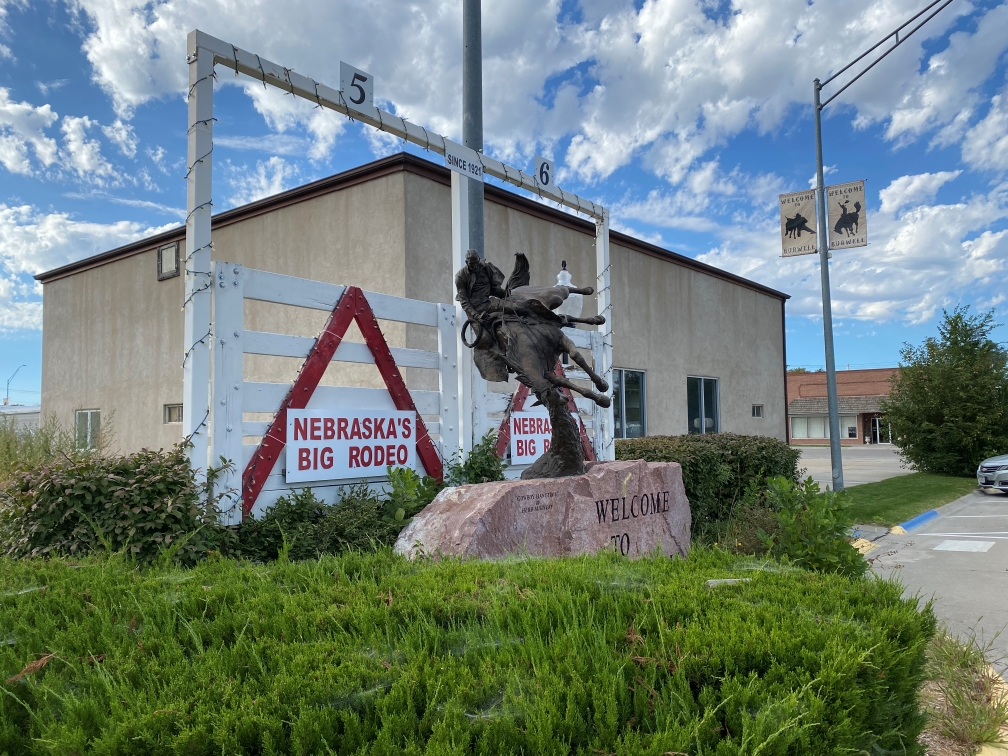
Small Town & Rural vs. Urban & Suburban: Same Playbook, Different Field
Comprehensive planning runs on the same basic engine everywhere—land use, transportation, community facilities, utilities, etc. The difference between a big city and a small county is not the rulebook; it is the field you are playing on and the tools you have to work with.
Common Framework, Different Constraints
For the most part, state law does not write one set of requirements for Grand Island and another for a Sandhills county. The statutory elements are the same—land use, transportation, community facilities, and, increasingly, energy and hazard mitigation—whether a plan covers a metro area or a rural county of 5,000 people.
The divergence shows up in the conditions on the ground.
Capacity
- Urban and suburban jurisdictions typically have entire departments for planning, engineering, and economic development.
- Small towns and rural counties may have one part‑time zoning administrator, a multi‑hat clerk, and a regional or contract planner on call.
- Volunteer planning commissioners and council members carry a lot of the load, which limits how much analysis and outreach can be done in‑house.
Market dynamics
- In growing metros, planners wrestle with growth management, infill vs. greenfield, and redevelopment pressure.
- Rural communities are more likely to face slow growth or outright decline, older housing stock, and limited developer interest, punctuated by intense pressure when a single big project shows up—a plant, a feedlot, a wind or solar farm, or a wave of short‑term rentals.
- The stakes of getting that one decision right can feel very high.
Fiscal reality
- Cities with a large tax base can sometimes absorb a few missteps in infrastructure or land‑use decisions.
- Rural counties and small towns operate on thin margins: one over‑extended road, water line, or subdivision can strain maintenance budgets for years.
- That makes “where we grow” and “how much we promise to serve” central questions, not afterthoughts.
The lesson for planners and local leaders is simple: the comprehensive planning framework travels well, but it needs to be sized and paced to the capacity and constraints of the place.
Rural planning priorities
Within that shared framework, small towns and rural counties often lean into a different set of priorities than their urban cousins.
Ag‑first planning
An agriculture‑first framework starts by recognizing working farmland and ranchland as more than “vacant land awaiting development.” It distinguishes between areas where agriculture is the highest and best use and areas where non‑farm residential and business growth may be appropriate.
- Plans like Thayer County, Nebraska, which I highlighted the first of the year, set up separate categories—General Agriculture, Agriculture Transitioning to Towns, Rural Residential—to protect core production areas while still allowing some rural housing and non‑farm uses in the right locations.
- At the same time, this is a local political choice. Many rural landowners prefer to prioritize individual property rights and “live and let live,” even if that leads to scattered houses in the middle of row crops.
- A good plan is honest about that tension and clear about which side the community is choosing, and why.
Town‑centered growth
Most rural counties are not interested in becoming urban service providers—and they cannot afford to be.
- Town‑centered growth means steering most new homes and businesses into cities and villages where water, sewer, streets, schools, and emergency services already exist, and where annexation can eventually align land use and services.
- County plans that discourage leap‑frog subdivisions and large‑lot sprawl in the countryside are not anti‑growth; they are pro‑fiscal sanity.
Successful rural plans recognize that maintaining one more gravel lane or lifting one more bus route can be a real burden when there are only so many graders, deputies, and dollars to go around.
Hazard‑aware planning
For many rural communities, hazard risk is not theoretical; it shows up as flooded basements, washed‑out roads, wind‑damaged roofs, and field erosion.
- Making hazard mitigation a core element of the comprehensive plan—rather than a stand‑alone document on a shelf—helps integrate FEMA‑style mitigation strategies with land use, infrastructure, and emergency management decisions.
- When floodplains, stormwater trouble spots, high‑wind exposure, wildfire risk, and critical facilities are mapped and discussed alongside land‑use designations and capital plans, communities are better positioned to reduce damage and to qualify for mitigation funding when they pursue safe rooms, drainage improvements, or utility hardening.
Rural plans that put agriculture, town‑centered growth, and hazard awareness near the top of the priority list are not ignoring other issues; they are focusing on the levers that matter most in their context.
Engagement style: personal vs. institutional
Planning engagement feels very different when most people you meet share a first‑name basis and multiple roles.
- In many urban and suburban settings, engagement can feel distant and procedural—public hearings in formal chambers, open houses in big meeting rooms, online comment forms managed by staff or consultants.
- Small town and rural engagement is naturally relational and overlapping. The farmer asking about a zoning change might also be the fire chief. The shopkeeper giving input on downtown parking might also serve on the school board or church council. People carry their whole network of roles into the room.
- For small towns at the fringe of growing metros, there is often a need to do both at once: navigate metropolitan planning processes and state requirements while still operating in a world of coffee‑shop conversations and county‑fair introductions.
A gentle reminder for all of us in the planning trade: you will not get the best ideas about your community at your desk or by waiting in the council chambers. To put it plainly—planners and local leaders have to go to where people actually live, work, worship, and gather, listen with intent, and bring those “soft data” insights back into the plan.
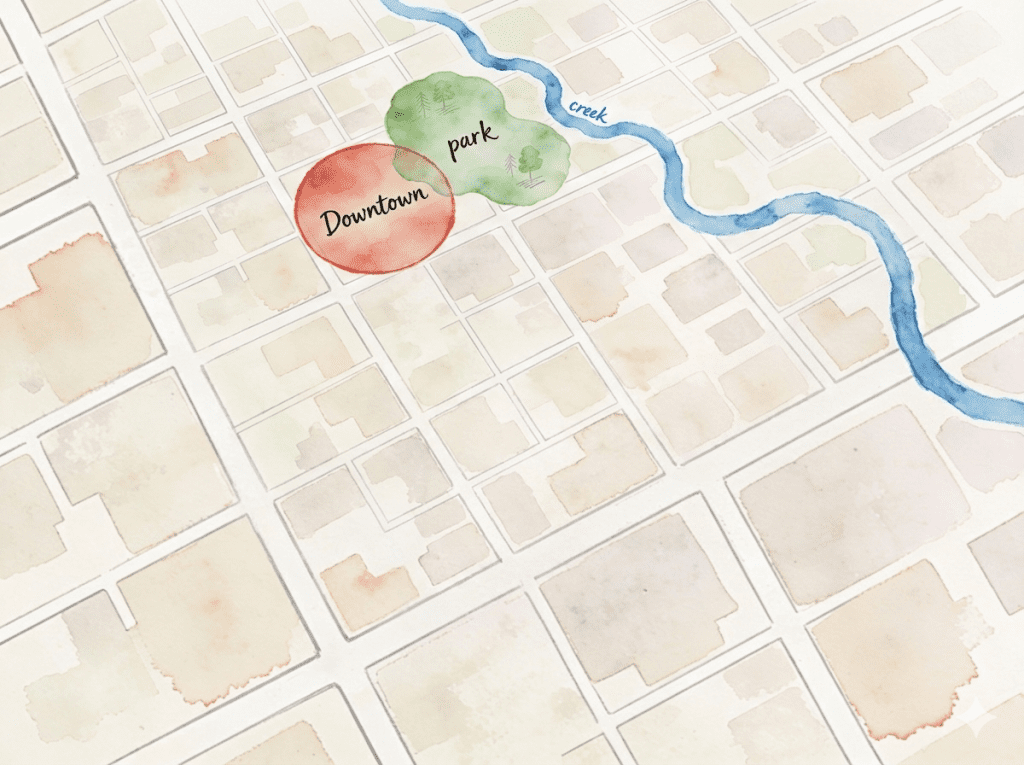
Forming a Vision That People Recognize as Their Own
In every good planning process there is a moment when somebody asks, out loud or under their breath: “Whose future is this, really?” The vision section of a comprehensive plan is where you answer that question. In small towns and rural counties, the answer has to sound like the people who live there, or the rest of the plan will always feel a bit off.
Vision and values in rural planning
A community vision should be a compelling, shared statement of long‑term direction, grounded in the values that actually drive decisions in your place—heritage, stewardship of the land, opportunity for the next generation, resilience in the face of hazard and change.
The raw material for that vision comes from the early stages of the planning process:
- Use your inventory and engagement work to pick up on repeated themes, not just one‑off comments. When the same concerns and hopes show up in surveys, town‑hall notes, interviews, and casual conversations, those are the building blocks of the vision.
- Keep the language local. A vision written in grant‑speak or consultant jargon may be technically correct and still land flat. A line that sounds like it could have been said at the café or on the tailgate has a better chance of sticking.
- Aim for a statement which is concrete, understandable, and inspiring but realistic. It should be strong enough to motivate action (“this is why we’re doing the hard work”) and specific enough to guide everyday choices on zoning, budgets, and projects (“does this decision move us toward the vision or away from it?”).
Here at JCShepard.com, we try to emphasize that when a vision aligns with community values, residents develop a real sense of ownership and optimism about the future. That is exactly what you need when you start asking people to make trade‑offs.
Process for visioning
Visioning is not a single meeting where you wordsmith a paragraph. It is a process of listening, testing, and refining.
Use a mix of formats through the process. These might include workshops, town meetings, scenario exercises, small‑group conversations, and one‑on‑one talks can help draw out what people cherish and what they are willing to change. Some voices will show up at formal meetings; others you will only hear from if you go to them.
Be sure to ask questions that go beyond “what don’t you like?” to get at values and aspirations:
- What do you never want to lose about this place?
- What needs to be different for your kids or grandkids to choose to live here?
- When you think about a bad outcome 20 years from now, what does that look like?
As themes emerge, distill them
Find 4–6 core value phrases you can carry through the plan.
- Examples might include:
- Protect working lands and natural resources.
- Keep towns strong and vibrant.
- Stay safe and resilient in the face of storms and change.
- Create opportunity for the next generation.
- Honor our heritage while embracing practical innovation.
These value phrases become touchstones you can use later to evaluate options and resolve conflicts. When a controversial project comes along—a subdivision on the edge of town, a wind farm, a new highway alignment—you can ask, “Which option does a better job of protecting working lands?” or “What keeps our main street stronger over time?” rather than arguing about personalities and anecdotes.
Vision and engagement are big enough topics to carry their own series; this post sketches the framework, and later pieces can dig into specific tools and examples.
Tying vision to identity and history
In our recent plans, the introductions start with history for a reason: people understand their present and imagine their future through stories.
Use a brief, planning‑relevant history
Explain today’s landscape and community structure. Include local assets such as trails and pioneer routes, railroad lines and depots, dams and reservoirs, CCC camps, large employers, military installations, big rodeos, or regional trade centers—whatever actually shaped the pattern of towns, roads, and farms people see today.
Keeping the local history section short, often part of the introductory chapter, is never easy for me!
Treat that story as context, not nostalgia.
The point is not to romanticize the past, but to answer questions like:
- Why is the town here, and why are some corners growing or shrinking?
- How did agriculture, industry, tourism, or transportation shape what is on the ground?
- What does that history suggest about where certain types of growth make sense—or do not?
- What does that history suggest need to be protected and conserved for future generations?
Link the vision explicitly to the major elements of the plan:
- For land use, spell out what the vision means for protecting working lands, focusing growth in towns, and managing development along key corridors.
- For housing, connect aspirations about affordability, aging in place, and attracting young families to strategies for rehab, infill, and new construction.
- For economic development, show how the community wants to build on its existing base—agriculture, industry, main street, tourism—rather than chasing every shiny object.
- For public facilities and transportation, tie long‑term investments in streets, water, sewer, parks, schools, and emergency services back to the core values of safety, stewardship, and opportunity.
When you form a vision this way—rooted in local values, shaped by real engagement, informed by history, and tied directly to plan elements—people can read it and say, “That sounds like us.” And when it comes time to make hard decisions, that same vision gives planners and local leaders a common reference point that is bigger than any one project or personality.
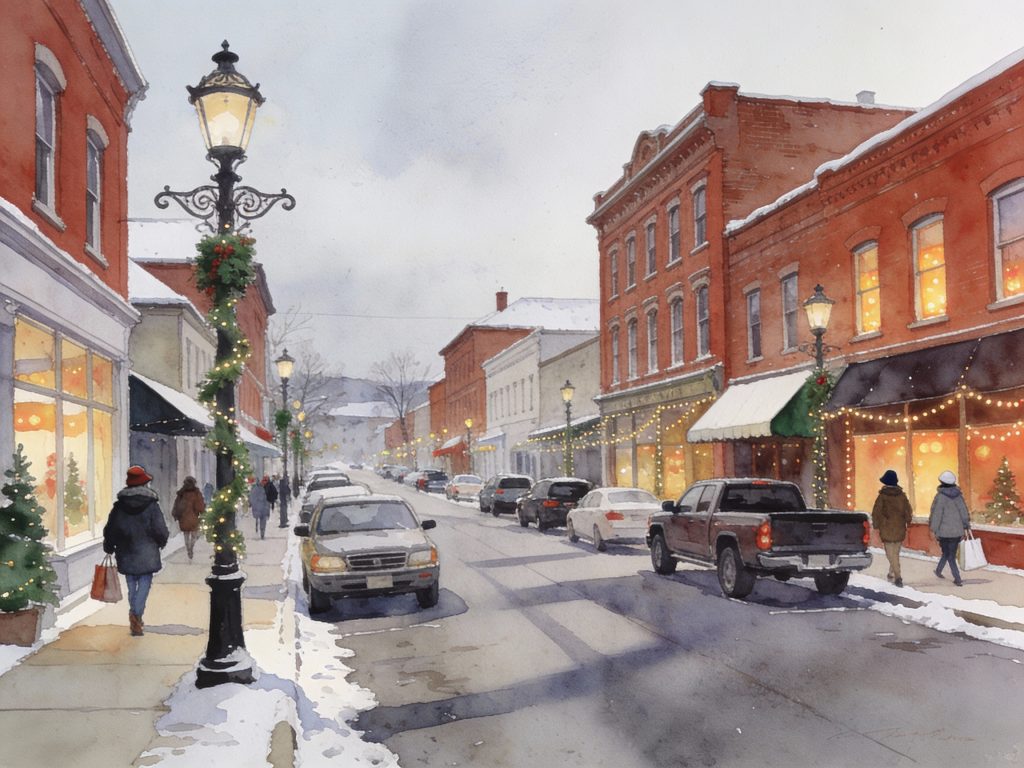
Turning Vision into Practical Implementation Strategies
A vision without an implementation strategy is just a nice speech. The real test of a comprehensive plan is whether it helps planners and local leaders turn that shared picture of the future into ordinances, budgets, and projects that actually happen.
Think about the end goals: An implementation framework people can use
As you draft the plan, especially in the later chapters, keep asking: How will someone use this five years from now at a planning commission meeting or in a budget workshop?
For each major element—land use, housing, economic and community development, community facilities, natural resources, hazard mitigation, transportation—the planning team should work toward a consistent structure:
Identify a handful of clear goals.
These should reflect the values and vision you have already articulated: protecting working lands, keeping towns strong, improving housing options, strengthening main street, staying safe and resilient, and so on.
List specific actions that would move the needle on those goals.
For each action, name the responsible party (or parties), a realistic timeframe, and potential funding or support sources. Typical comprehensive plans take this approach in their implementation‑oriented chapters, which makes it easier to track who is on the hook for what.
Mix near‑term and longer‑term efforts:
Think about how to include short‑term, capacity‑matched actions that your current staff, boards, and partners can realistically pull off in 1–3 years—code updates, targeted studies, small‑scale infrastructure fixes, pilot programs.
Then, add longer‑term or aspirational actions that may require new funding, staff, or partnerships. These stretch goals help signal direction and attract partners, but they should not obscure the immediate work that needs to get done.
An implementation section that is readable, concise, and clearly assigned is more likely to be used by future councils and commissions that were not in the room when the plan was written.
Linking actions to tools
Every action in the plan should be connected to one or more tools that your community actually has—or can reasonably obtain.
Regulatory tools
- Zoning updates to align districts, permitted uses, and development standards with the future land use map and policy direction.
- Subdivision ordinances to manage how new lots, streets, and utilities are laid out and paid for.
- Floodplain and other special‑area regulations to keep people and property out of harm’s way and maintain eligibility for programs like NFIP.
Financial tools
- Capital improvement programs (CIPs) that schedule and fund streets, utilities, facilities, and parks in line with plan priorities. The City of Burwell included a CIP in our project to immediately implement the Comprehensive Plan.
- Utility plans and rate structures that support maintenance and strategic extensions rather than over‑extension.
- Grant strategies, including state and federal programs, revolving funds, and local incentives such as TIF (where available), façade grants, or housing rehab funds.
Programmatic and partnership tools
- Main street, downtown, or tourism programs that can implement place‑based strategies in existing business districts.
- Housing rehabilitation, infill, or new construction programs coordinated with nonprofits, lenders, and developers.
- Hazard education and preparedness campaigns, interlocal service agreements, and joint planning bodies that cross city–county or county–county lines.
The key is to be explicit. When an action is proposed, the plan should hint at how it is likely to be accomplished in a small town or rural setting, not leave that as an exercise for the next generation.
Integrating hazard mitigation and resilience
Hazard mitigation is often treated as a separate, FEMA‑driven exercise. The better model is to integrate it into the heart of the comprehensive plan.
We typically include a dedicated hazard mitigation chapter with specific references from the hazard mitigation plan. The idea is to spell out local strategies, especially for regional multi‑jurisdictional hazard plans. This helps local staff and leaders see how local action items relate to the overall planning program. It helps keep mitigation from being an afterthought.
Mitigation actions—safe rooms and storm shelters, drainage and stormwater improvements, burying or hardening utilities, emergency operations planning—should show up in multiple places: land use policies, infrastructure and capital planning, public safety, and implementation tables.
This integration pays off in three ways:
- It aligns local land use and infrastructure decisions with risk reduction, which can reduce long‑term damage and service disruptions.
- It strengthens applications for hazard mitigation funding by showing how proposed projects support broader community goals and adopted policies.
- It normalizes resilience as part of everyday planning rather than an occasional special project.
We don’t really know what FEMA will look like next week, let alone 20-years from now. It’s a good time to be prepared.
Establishing monitoring and update habits
A plan has to survive contact with reality. That requires habits, not just hopes.
Annual review practice
Build in a yearly joint session of the planning commission and governing body to review the implementation tasks: what has been accomplished, what is underway, what stalled out, and what new issues have emerged.
Use this review to adjust priorities, retire outdated actions, and add new ones where the community’s needs or opportunities have shifted.
Plan update cycle
Commit in writing to a full update roughly every 8–10 years, with the understanding that some communities may move faster or slower depending on change and capacity.
Define clear triggers for earlier amendments—major new industries, big infrastructure projects, boundary changes, significant hazard events, or state/federal policy shifts.
Embed a culture of consistency
Encourage boards, councils, and staff to ask at each major decision: “Does this match the plan we adopted? If not, do we change the project, the plan, or both?”Over time, that question normalizes the idea that the comprehensive plan is not just a report; it is the community’s agreed‑upon measuring stick.
In small towns and rural counties, where leadership often changes and institutional memory can be thin, practical implementation strategies and predictable review habits are what keep a good plan from fading into the background—and what help the next generation of leaders pick it up and carry it forward.

Takeaways for planning professionals and rural leaders
The planning process is where small towns and rural counties quietly decide what kind of future they are willing to fight for. The tools may look technical—maps, ordinances, capital plans—but the real work is about people, trust, and choices that add up over time.
For planners
Translate theory into small‑team practice.
The comprehensive planning cycle you learned in school—inventory, analysis, vision, goals, implementation—still applies, but it has to fit communities with one part‑time administrator and a volunteer planning commission. Think in terms of phased data collection, targeted engagement instead of sprawling processes, and template‑based chapters that can be updated without starting from scratch.
Treat “soft data” as real data.
In rural communities, lived experience, heritage, and local priorities are essential inputs, not noise to be filtered out. Build your process to capture that—through advisory committees, interviews, coffee‑shop conversations—not just to check boxes on participation. When the numbers and the stories disagree, dig into why; do not assume the spreadsheet is always right.
Use real rural examples to show how plans work.
Pay attention to concrete examples of comprehensive plans in action: agriculture‑first land use frameworks, town‑centered growth strategies, hazard mitigation integrated into land use and infrastructure, and implementation chapters with real action tables. Use these examples with local boards and commissions to show that a plan can be a daily decision tool—“Here’s how Thayer County handles animal feeding operations,” “Here’s how Burwell ties annexation to infrastructure”—not just a document sitting on a shelf.
Design for use, not just adoption.
Write with future staff and elected officials in mind—the people who will be looking for a clear map, a short policy, or a straightforward action list when you are no longer in the room. Clarity beats cleverness (something I need to remember). Cross‑references, diagrams, and checklists beat long prose when someone is trying to apply the plan at 10:30 p.m. in a public hearing.
For small town & rural leaders
Look at planning as an investment, not a hoop to jump through.
A comprehensive plan done well can feel like a big lift for a small community—but it is one of the few tools you have to step back from case‑by‑case firefighting and decide, together, where you want to go. Treat the process like you would treat strategic planning for a business or co‑op: time‑consuming, yes, but necessary to align people, policies, and dollars.
Use the plan in public, on purpose.
Bring the plan to meetings. Put the future land use map on the wall. Ask staff to reference relevant goals and policies in their reports. When you make a motion on a rezoning, subdivision, or budget priority, say which part of the plan you are relying on. That practice helps your board, your staff, and your residents see the plan as the shared playbook, not just another binder in the clerk’s office.
Lean on the plan when you say “yes” as well as when you say “no.”
A good plan gives you a defensible, transparent way to approve proposals that do fit—whether that is a subdivision is the right place, a project that protects prime farmland, or a proposal that goes above and beyond to mitigate impacts on neighbors. It lets you say, “We’re not against growth; we are for the kind of growth we agreed on in this plan.”
Remember why this matters.
Small towns and rural counties do not have much control over global markets, federal policy, or demographic trends. What you do have is the ability to line up your limited local resources with the future you actually want, rather than drifting into the future someone else chooses for you. A thoughtful planning process, and a plan you actually use, is one of the most powerful tools you have to make that happen.
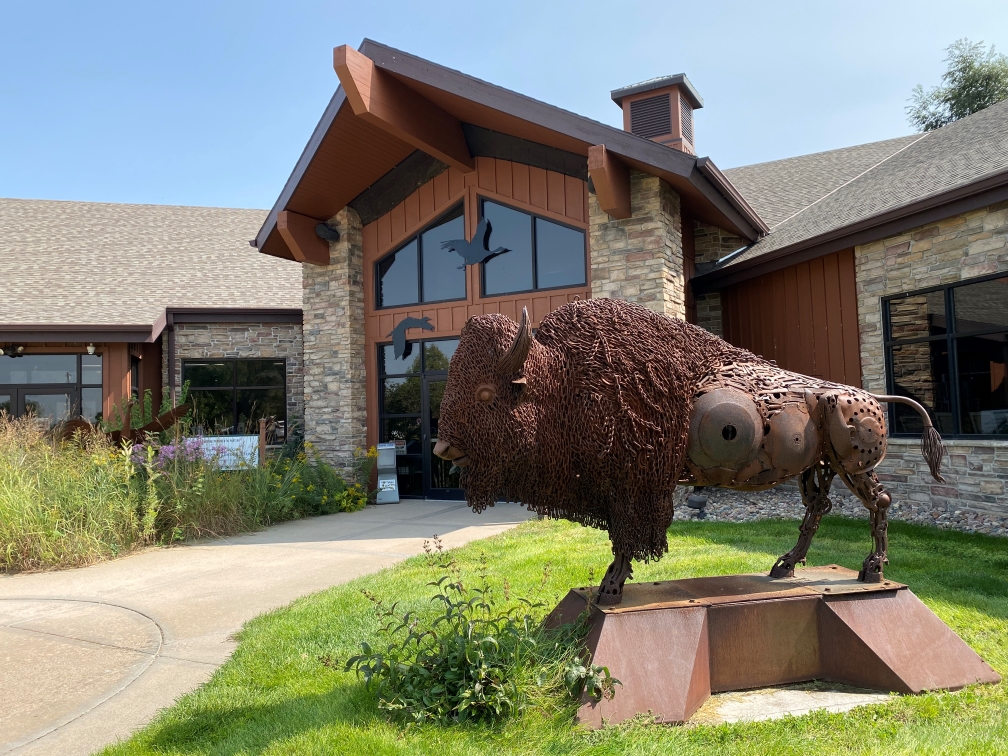
Closing Thought: Planning That Sounds Like Your Place
Small towns and rural counties do not need less planning; they need planning that looks and sounds like them—rooted in local history, honest about constraints, and serious about implementation, not just inspiration. That means a plan that knows why the town is where it is, why the economy works the way it does, and how thin the margin is on roads, water lines, and school enrollments.
A good planning process is the bridge between kitchen‑table “what if” conversations and public decisions that can stand up in a hearing, in a budget workshop, and in the court of community memory years later. It connects the soft data of lived experience with the hard data of population, housing, and infrastructure, and then it puts both to work in maps, policies, and project lists people can actually use.
The goal is simple and hard at the same time: write a plan your residents recognize as their own, and then have the courage to use it when it is inconvenient, when the room is tense, and when saying “not here” or “not yet” is the right call. If you can do that, the comprehensive plan stops being a requirement to check off and becomes what it was meant to be all along: a shared playbook for the future of your place.
Coming Next:
Week 2: Community Engagement and Public Participation
Week 3: Ideas to Spark Community Engagement
Week 4: Putting Vision into Practice
2026: Bring Your Plans to Life – Monthly Themes Preview

A Few Books About Planning
Foundational Classics
- The Death and Life of Great American Cities by Jane Jacobs: A critique of mid-20th-century urban renewal, emphasizing vibrant street life and mixed-use neighborhoods. Our January 2026 book of the month.
- The Image of the City by Kevin Lynch: Explores how people perceive and navigate urban environments, focusing on legibility.
- The City in History by Lewis Mumford: A comprehensive history of urban development.
- Design of Cities by Edmund Bacon: A classic on the design principles of urban form.
Contemporary & Practical Reads
- Strong Towns: A Bottom-Up Revolution to Rebuild American Prosperity by Charles Marohn: Advocates for fiscally sound, community-focused development. Our December 2025 book of the month.
- Walkable City: How Downtown Can Save America, One Step at a Time by Jeff Speck: A guide to creating walkable, vibrant urban spaces.
- The High Cost of Free Parking by Donald Shoup: Examines the economic and social impacts of parking policy. We lost the author last year, so it’s a good time to refresh ourselves on this topic.
- Rural by Design: Planning for Town and Country 2nd Edition by Randall Arendt: The update to Arendt’s classic of conservation design covers a lot of new material in form-based codes, visioning, sustainability, low-impact development, and more.
History & Social Justice
- Crabgrass Frontier: The Suburbanization of the United States by Kenneth T. Jackson: A classic history of American suburbs.
- The Power Broker: Robert Moses and the Fall of New York by Robert A. Caro: A biography of a powerful figure in urban development.
- Arbitrary Lines: How Zoning Broke the American City and How to Fix It by M. Nolan Gray: A critique of modern zoning practices. I don’t agree with many of ideas, in particular my experience in an HOA has soured me on covenants for all time, but he is a good writer.
Planetizen’s Top 20 Urban Planning Books (Of All Time)
Looking for more now?
- The New Rural Playbook: Planning Trends That Matter
- Planning with Purpose: Emerging Trends in Rural and Small Town Planning
- Thriving Together: Proven Strategies for Sustainable Rural Economies in 2025
- Wired for Change: Rural America and the Energy Economy of Tomorrow
Check out The 12 Planning & Sustainability Books You Need in 2026 and browse through the Small Town & Rural Community guides on our Resources page.
(As an Amazon Associate, we may earn commissions from qualifying purchases. Check your local library or bookshop, too.)
.
2 Comments
John – I enjoyed reading this article. My small planning consultancy (ONH Planning for Good) has been following much the same approach here in the UK using the formal planning policy platform for community-led planning provided by Neighbourhood Plans. I am speaking at the Consortium for Scenario Planning Conference in Salt Lake City next month on how our approach has worked for small towns here. Your thoughts are therefore timely! Regards, Neil Homer (MD)
Neil- Thanks for clicking through to the long read here. Looks like you have a healthy practice there in the UK. Lincoln Land Institute’s Consortium for Scenario Planning pulls together a lot of interesting material–would love to attend one of their conferences some day! I’m planning to write a bit about scenario planning later this month here.
https://www.lincolninst.edu/events/2026/consortium-scenario-planning-2026-conference/