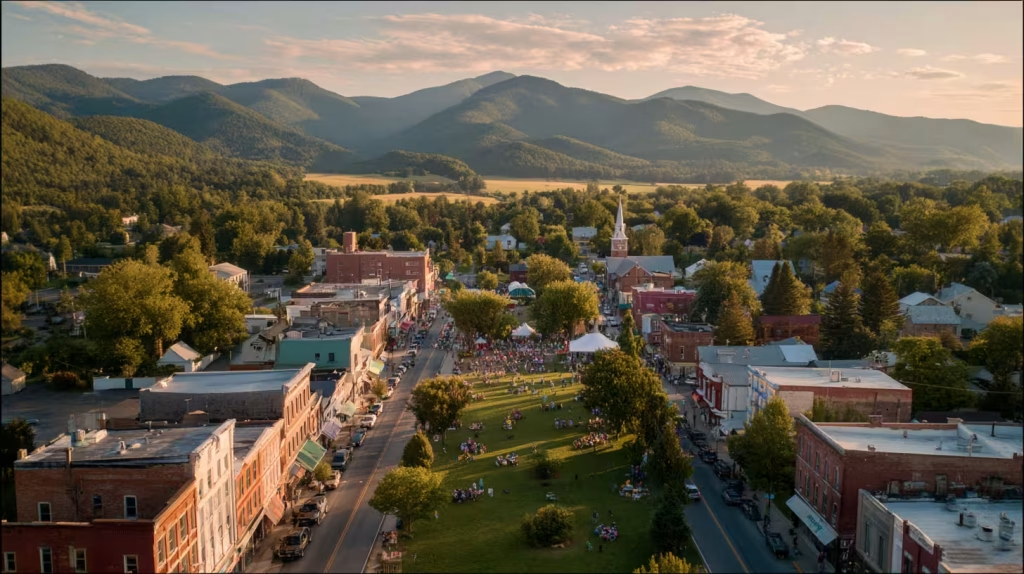
In rural and small-town America, the challenges are familiar: aging infrastructure, shifting demographics, and limited budgets. But the real story isn’t about what’s missing—it’s about what communities are doing with what they have.
Today, rural and small town planning is more than land use codes and infrastructure maintenance. It’s about strengthening what makes small towns thrive: a high quality of life, resilient local economies, and a deep sense of place. Planning in these communities isn’t removed or theoretical—it’s personal, participatory, and deeply rooted in relationships.
This article explores five core trends shaping rural and small town planning practice in 2025:
- Community Visioning and Collaboration
- Quality of Life as a Planning Priority
- Economic Diversification for Resilience
- Resource Constraints and Creative Solutions
- Enhanced Civic Engagement
Each section offers practical insights, real-world examples, and concrete next steps—for planners, elected officials, and engaged citizens alike.
In a time of growing disconnection and complexity, rural communities are reminding us that planning can still be authentic, grounded, and hopeful. Whether you’re launching a new visioning process or navigating tight resources, these strategies are designed to help you plan with purpose—and with people at the center.

Community Visioning and Collaboration
In rural America, planning is not just a technical exercise—it’s a community act. Unlike in metropolitan regions, where engagement can feel abstract or bureaucratic, small town planning is inherently personal and rooted in daily interactions. The people affected by decisions often know each other, have shared histories, and interact daily in overlapping roles—farmer and fire chief, shopkeeper and school board member.
This closeness creates a powerful opportunity: to move beyond consultation and toward collaborative visioning—a practice where residents are not just asked for input, but are actively involved in shaping the community’s future from the outset.
Why Visioning Matters
Visioning helps communities articulate:
- What they value and want to preserve (heritage, landscape, identity)
- What needs to change (infrastructure gaps, housing needs, local services)
- What aspirations they hold (youth opportunity, economic vitality, environmental stewardship)
It provides a strategic compass for decision-making, helps align limited resources, and forms a compelling narrative for grants, partnerships, and public buy-in.
Effective Approaches to Visioning
Small towns across the country are using creative, inclusive approaches to spark engagement and surface ideas that might otherwise go unheard. Among the most effective:
- Community Design Workshops (Charrettes):
Community Design Workshops (Charrettes): These events bring together residents, planners, architects, and facilitators for interactive sessions, often using large maps, sketches, and visual prompts. This collaborative environment encourages creative thinking and collective problem-solving. In one evening or weekend, a town can generate dozens of ideas for reimagining a main street, redesigning a park, or guiding future growth. - Multi-Generational Listening Sessions:
In many rural communities, elders carry institutional memory, while youth hold fresh ideas and a stake in the future. Separate listening sessions for different age groups—followed by shared synthesis—can build understanding across generations and make young people feel their voices matter. - Walkshops and Participatory Mapping:
Instead of static meetings, some communities take their planning outside. Residents walk together through neighborhoods or natural areas, noting what works, what doesn’t, and what could be. This method grounds planning in lived experience—especially powerful in places where oral history and landscape are tightly intertwined. - Inclusive Advisory Committees:
To ensure sustained input and accountability, towns are forming cross-sector planning groups that reflect the full spectrum of the community—farmers, renters, business owners, tribal members, elders, youth, and civic leaders. These committees help shape outreach, review proposals, and steward the vision long after a plan is adopted.
Case Example: Visioning in Practice
Take the town of Lanesboro, Minnesota—a rural arts and heritage destination. Facing shifting demographics and economic uncertainty, local leaders launched a visioning initiative in partnership with a regional nonprofit. Through a series of storytelling nights, design workshops, and student-led interviews, they developed a community plan rooted in shared values and renewed energy. The process strengthened social bonds and led to tangible outcomes—like arts funding, trail expansion, and new housing options.
The Deeper Impact
Done well, visioning goes beyond the plan itself. It:
- Builds trust among residents and institutions
- Elevates overlooked voices, especially in communities with social or racial divides
- Strengthens civic identity, making it easier to organize around future challenges
- Increases resilience, by anchoring change in shared values
Especially in small towns with limited resources, this kind of deeply embedded planning creates more than a vision—it creates a community of practice that can adapt and respond over time.
Putting Vision into Practice: Next Steps for Planners, Citizens, and Leaders
For Planners:
- Map your networks: Identify existing community groups, informal leaders, and trusted gathering spaces. These are your entry points for authentic engagement.
- Design with, not for: Create processes that are iterative, visual, and inclusive. Use tools like community asset mapping, future scenario games, and “dot-voting” to surface priorities in a shared language.
- Document and revisit: Capture stories, ideas, and visuals from visioning sessions in a clear, living format. Revisit these often—not just when the next comp plan is due.
For Citizens and Community Members:
- Speak up and stay involved: Don’t wait for an invitation. Ask how you can participate in local planning or help organize a visioning session for your neighborhood or school.
- Bring others with you: Encourage neighbors—especially those not usually heard—to join the process. Trust is built when participation feels truly shared.
- Stay curious: Ask questions about zoning, development proposals, or budget allocations. Your lived experience is a key planning resource.
For Decision Makers (Elected Officials and Administrators):
- Champion engagement: Provide political and logistical support for community-led visioning. Fund facilitation, translation, childcare, and meals to make participation easier.
- Act on input: Make sure the community’s vision translates into budget decisions, policy directions, and staff priorities. Public trust grows when engagement is seen to matter.
- Celebrate small wins: Highlight progress through local media, social platforms, and public events. This reinforces momentum and community pride.

Quality of Life as a Planning Priority
In today’s rural planning landscape, the question isn’t just “How do we grow?”—it’s “How do we make life better for the people who are already here?” Quality of life has emerged as a core planning priority, not as a byproduct of economic development, but as a goal in itself—vital for attracting residents, retaining families, and aging with dignity.
This shift is especially important in small towns, where demographic trends and resource limitations demand strategic choices. Communities are learning that investing in well-being, beauty, and connection can be just as powerful as chasing industry or infrastructure.
What Does ‘Quality of Life’ Mean in a Rural Context?
For rural communities, quality of life often centers on:
- Access to nature and open space
- Safety and neighborliness
- Opportunities for culture, recreation, and education
- A strong sense of place and identity
These aren’t luxuries—they’re the fabric of everyday life. And increasingly, they’re central to strategies for economic vitality, health equity, and social cohesion.
Key Strategies and Examples
1. Parks, Trails, and Green Space
Natural amenities do double duty: they promote physical health and mental well-being and support tourism and conservation. In Kansas, the development of community trails connecting small towns has increased local walking rates and sparked new hospitality businesses.
2. Festivals and Cultural Events
Rural festivals—from county fairs to cultural heritage days—build identity, bring in visitors, and strengthen local pride. In Kentucky, one town revived its downtown by linking public art installations to a seasonal music series, drawing hundreds of people each weekend.
3. Placemaking and Beautification
Simple upgrades like sidewalk repairs, murals, flower boxes, and public art can transform underused areas into vibrant gathering spaces. Towns in the Upper Midwest have revitalized main streets by rethinking lighting, signage, and storefront activation—often with volunteer labor and modest grants.
4. Community Infrastructure
Upgrading libraries, schools, and community centers isn’t just about buildings—it’s about supporting programs that bring people together. Mobile makerspaces, pop-up clinics, and multi-generational learning hubs are breathing new life into familiar spaces.
The Long-Term Impact
Quality-of-life investments are multiplier projects. They:
- Boost mental and physical health
- Foster civic engagement and community pride
- Support local businesses and tourism
- Make towns more attractive to both remote workers and retirees
- Enable people to live in place, across the lifespan
These efforts aren’t about competing with cities—they’re about strengthening rural advantages and making life fuller and more fulfilling for those who call these places home.
Practical Next Steps
For Planners and Designers:
- Use walkability audits and public life studies to identify underused spaces with potential for low-cost improvements.
- Integrate quality-of-life indicators into comprehensive plans and capital improvement budgets—not as extras, but as essentials.
For Community Members:
- Advocate for small but visible changes, like benches, shade trees, or pop-up markets that build momentum.
- Volunteer or lead projects through civic groups, arts councils, or youth organizations.
For Local Officials and Funders:
- Bundle quality-of-life projects with infrastructure (e.g. trail networks alongside stormwater improvements).
- Apply for flexible funding sources—like CDBG, USDA RD, and creative placemaking grants—that support integrated planning.
Quality of life is not just a byproduct—it’s a core strategy for building resilient rural communities. When we plan for joy, connection, and dignity, we’re not just making places more livable—we’re making them truly worth staying in, moving to, and building on.

Economic Diversification for Resilience
For generations, agriculture, mining, and manufacturing have formed the backbone of rural America. These industries built towns, supported families, and shaped community identity. But in 2025, many rural leaders recognize that resilience means evolution—and that a diversified economy isn’t a departure from rural tradition, but a continuation of it.
Economic shocks, demographic shifts, and global market dynamics have made it clear: communities that rely on a single employer or sector are vulnerable. Whether it’s a plant closure, a price crash, or a labor shortage, the risks are real. That’s why more small towns are rethinking their economic strategies—not by rejecting their roots, but by building on them creatively.
Diversification Is a Rural Tradition, Too
Diversification doesn’t mean turning rural areas into mini-versions of cities. Instead, it’s about amplifying what’s already local and authentic, while creating new pathways for prosperity. A diversified rural economy:
- Supports multiple income streams
- Creates jobs across skill levels
- Offers youth more reasons to stay or return
- Helps communities adapt to change with greater confidence
Core Strategies and Rural Examples
Local Entrepreneurship and Small Business Support
Main Street is making a comeback—but it needs nurturing. Towns that provide micro-grants, startup coaching, and shared retail spaces are seeing new life in old buildings. In Iowa, regional “rural entrepreneur academies” help residents turn side gigs into sustainable livelihoods, from farm-based soaps to mobile tech services.
Tourism and Place-Based Marketing
From heritage trails and scenic byways to agritourism and craft markets, rural places have stories—and landscapes—worth sharing. In northern New Mexico, small towns are coordinating cultural festivals and artisan tours, boosting seasonal income and preserving local traditions.
Remote Work Infrastructure
The rise of hybrid and remote work has opened doors for rural areas to attract knowledge workers who value quality of life over city lights. Towns investing in reliable broadband, co-working hubs, and community networking events are drawing new residents and diversifying their local economies. Vermont’s “Stay to Stay” program is a model worth watching.
Renewable Energy and Creative Industries
Some rural regions are rethinking distributed energy and industry together. Solar farms on marginal land and agrivoltaics on productive agricultural land, small-scale biomass operations, or community wind projects not only provide revenue—they can also reinforce local control over energy futures. Meanwhile, creative sectors like artisan foods, music, design, and digital media are finding room to grow in small-town settings.
Not Reinventing, But Reimagining
Diversification doesn’t mean losing rural identity. It means reimagining how that identity can serve a 21st-century economy:
- A dairy town that adds agritourism
- A logging region that builds outdoor recreation
- A mining community that becomes a hub for clean energy innovation
These evolutions are rooted in pride, practicality, and a commitment to place.
Next Steps: Building a Broader Base
For Economic Developers and Planners:
- Conduct a local asset inventory—skills, spaces, stories—to identify untapped economic potential
- Create a business support ecosystem that links entrepreneurship training, access to capital, and market access
- Integrate economic diversification goals into comprehensive plans, regional strategies, and capital budgets
For Community Members:
- Support local businesses—buy local, promote local, volunteer with business networks
- Start something! Even small-scale side hustles can grow into community assets
- Tell your town’s story—authentic branding starts with the people who live it
For Decision Makers and Funders:
- Invest in broadband and remote work infrastructure as core economic development tools
- Fund pilot projects in renewable energy, culture, or tourism with high community visibility
- Foster regional collaboration to link talent, customers, and capital across town lines
Economic diversification is more than a buzzword—it’s a lifeline for rural resilience. By investing in variety, creativity, and community-driven enterprise, rural America isn’t just surviving—it’s shaping a more dynamic, sustainable future.

Resource Constraints and Creative Solutions
In most small towns, planning departments don’t fill a floor—they fit in a single office. Budget lines are slim, technical support is limited, and staff often juggle multiple roles. But what these communities lack in resources, they often make up for in resourcefulness.
Across rural America, constraints have become catalysts for creativity. Faced with challenges, communities are finding smart, collaborative ways to do more with less—transforming planning from a bureaucratic process into a community-powered endeavor.
Planning Without a Big Budget: What Works
Effective planning doesn’t always require consultants, complex models, or six-figure budgets. What it does require is trust, coordination, and a willingness to work differently. Some of the most successful rural initiatives are built not on capital—but on connections.
Inter-Municipal Service Agreements
When one town doesn’t have a planner and another does, why not share? From planning services to road maintenance, small communities are formalizing cooperative agreements to reduce duplication and stretch capacity. In upstate New York, several counties have created a shared GIS and planning team that serves multiple jurisdictions with tailored local support. In Nebraska, neighboring counties may share a Zoning Administrator.
Volunteerism and Grassroots Leadership
When formal structures fall short, informal ones step up. In rural Oregon, a retired engineer led a volunteer team that mapped sidewalk gaps and coordinated with city hall to develop an accessible streetscape plan. Students at a high school in Nebraska designed a community garden plan adopted into the town’s land use update. These aren’t exceptions—they’re increasingly part of the model.
Public-Private Partnerships (P3s)
Rural governments are forming creative partnerships with local businesses, foundations, and nonprofits to co-fund and co-deliver key initiatives. Whether it’s a downtown mural series funded by a bank, or a library renovation supported by a family foundation, shared investment spreads risk and builds community buy-in.
Strategic Grant Writing and Regional Collaboratives
Grants are powerful, but often out of reach for towns lacking staff time or expertise. Enter regional collaboratives: small towns pooling their efforts to hire shared grant writers, coordinate applications, and align projects with broader state or federal goals. In the Southeast, several towns used a joint CDBG application to fund wastewater upgrades across county lines.
The Cultural Side of Resourcefulness
Beyond tactics, rural creativity often reflects a deeper culture of collaboration:
- People wear multiple hats: One person may be mayor, church treasurer, and volunteer EMT.
- Success is social: Projects often advance through informal conversations as much as formal meetings.
- Trust matters: Relationships and local reputation carry as much weight as credentials.
Understanding this dynamic is key for state agencies, funders, and planners working in rural areas—it’s not just about doing more with less, but doing differently with what’s already there.
Next Steps: Building a Culture of Creative Planning
For Local Planners and Administrators:
- Identify peer communities for shared service agreements and planning collaboration
- Create a “civic asset map” of volunteers, retirees, educators, and civic groups who can contribute to planning projects
- Develop a grant calendar and regional team to coordinate applications and reporting
For Community Leaders and Citizens:
- Join or start a community task force around a key issue (e.g. housing, parks, mobility)
- Help create do-it-yourself data—photo surveys, resident interviews, mapping days—that inform planning
- Offer your time and talent—skills in design, outreach, storytelling, or construction can move plans into action
For State and Federal Partners:
- Provide flexible funding for planning staff, training, and match-free programs
- Simplify grant requirements for small communities or offer bundled regional support
- Recognize and replicate bottom-up models that succeed in rural contexts
Planning in rural America isn’t easy—but it’s often more nimble, relational, and grounded than large-scale systems allow. With creativity and collaboration, small towns prove that constraints aren’t a barrier to vision—they’re the fertile ground from which the most resilient ideas grow.

Enhanced Civic Engagement
In rural America, civic engagement is not just an aspiration—it’s a way of life. In towns where residents bump into the mayor at the grocery store and serve on committees alongside their neighbors, public participation tends to be direct, relational, and rooted in trust. Planning is personal because the outcomes are immediate and visible.
But meaningful engagement doesn’t happen by default—it requires intentional effort, especially in an era of demographic shifts, digital change, and growing skepticism toward institutions. To keep planning processes inclusive and effective, rural communities are investing in people, not just plans.
What Makes Rural Engagement Unique?
Rural communities often benefit from:
- Tight-knit social networks that help spread information quickly
- Lower barriers to participation, since decision-makers are more accessible
- Strong place attachment, where residents feel deeply invested in outcomes
However, challenges persist—like underrepresentation of youth, newcomers, or marginalized groups, and the risk of burnout among long-time volunteers. Successful engagement in small towns therefore hinges on broadening the circle and creating entry points for new voices.
Tools and Tactics for Deeper Participation
Leadership Academies
Many towns are launching local training programs for emerging leaders—focused on planning basics, civic processes, and public speaking. These academies often target underrepresented groups, such as young adults, renters, or residents of unincorporated areas. In Mississippi, one town’s “Rural Civic Fellows” program led to new candidates for council and advisory boards within two years.
Youth Councils and School-Based Projects
Giving young people a voice in planning isn’t just symbolic—it’s strategic. Scouting organizations have long encouraged their members to engage in civic leadership and improvement. Today, towns in Vermont and Tennessee are involving students in visioning processes, mapping exercises, and peer surveys to understand what makes youth feel included. These programs also build the next generation of civic leaders.
Multilingual and Culturally Relevant Outreach
As rural America becomes more diverse, planners are adapting by using multilingual materials, trusted community ambassadors, and culturally relevant engagement strategies. In parts of the Midwest, for example, outreach around housing and transit is now being delivered through local Latino churches and radio stations.
Blended Engagement Models
Digital tools like surveys, online maps, and virtual town halls expand access—especially for busy parents or shift workers. But they work best when paired with in-person events, door-to-door outreach, and facilitated dialogue. In Appalachia, a regional planning agency used “kitchen table kits” to help neighbors host informal planning conversations at home.
The Deeper Impact: Building Civic Culture
True engagement is about more than input—it’s about belonging. When residents feel heard and see their ideas reflected in decisions, trust grows. When young people see themselves as shapers of place, they’re more likely to stay. And when a community learns to plan together, it’s better prepared to weather change.
At a time when public trust is fragile, rural towns can set an example—by making engagement genuine, relational, and lasting.
Action Steps for Stronger Engagement
For Local Planners and Officials:
- Develop a community engagement plan that identifies goals, timelines, and diverse outreach methods
- Track participation data to monitor representation gaps and adjust strategies
- Allocate small budgets for engagement supports like childcare, transportation, food, or stipends
For Community Members and Groups:
- Host a planning conversation in your own space—at a church, café, or community hall
- Join an advisory board or civic initiative—even temporarily—to bring your perspective into local decisions
- Encourage young people, newcomers, and neighbors to participate, especially if they’ve never been asked
For State Agencies and Funders:
- Support local capacity by funding engagement coordinators, especially in underserved areas
- Provide training for equitable engagement techniques and trauma-informed facilitation
- Recognize and reward innovative community engagement practices through grants or awards
In the end, civic engagement isn’t a checkbox—it’s the cornerstone of rural resilience. When people see themselves in the process, they’re more likely to stand by the outcomes—and stand up for their communities when it counts.

Conclusion: The Power of Purposeful Planning
As rural communities navigate the complexities of the 21st century, one truth stands out: progress doesn’t always begin with funding—it begins with intention. Across the country, small towns are showing that purposeful planning, rooted in local voices and values, can lead to meaningful, lasting change.
From visioning sessions in fire halls to broadband strategies led by volunteer committees, rural communities are redefining planning—not as a response to decline, but as a proactive investment in people and place.
Whether you’re a planner drafting your next comprehensive plan, a mayor balancing limited resources, or a resident eager to make your town better, the strategies outlined here are tools you can use—starting today.
Call to Action
What’s one small step your community can take this month to move forward together?
- Host a walkshop through your downtown
- Invite youth to share their ideas for the future
- Start a community asset map with neighbors
- Review your local plan and ask: does it reflect who we are?
And most importantly: share your story. Rural innovation deserves a bigger spotlight—tag
@jcshepard.com on Bluesky (@JohnCShepard on Twitter yeah, I’m still there for now); or use #PlanningWithPurpose to show how your community is planning boldly, creatively, and together.
Let’s keep the exchange going.
“Cities have the capability of providing something for everybody, only because, and only when, they are created by everybody.”
Jane Jacobs

Planning with Purpose: Resources for Action and Inspiration
Recommended Books & Reports
- Strong Towns: A Bottom-Up Revolution to Rebuild American Prosperity – Charles Marohn
The original guide to building places that work. - The Overlooked Americans: The Resilience of Our Rural Towns – Elizabeth Currid-Halkett
A data-rich look at rural America, countering common misconceptions about homeownership, income, civic engagement, and well-being. - The Lies of the Land: Seeing Rural America for What It Is—and Isn’t – Steven Conn
Explores external forces shaping rural life, from industrial agriculture to corporate change. - Rebuilding the American Town: Design and Strategy at Small Scale – Gamble & Heyda
Case studies of small-town revitalization, focusing on design, civic engagement, and entrepreneurship. - Hometown Advantage: The Fight for Independent Retail – Stacy Mitchell
The importance of local businesses and the Main Street economy. - Dirt Road Revival: How to Rebuild Rural Politics and Why Our Future Depends on It – Chloe Maxmin & Canyon Woodward
On political engagement and reform in rural communities. - Rural by Design: Planning for People and Place, 2nd Edition – Randall Arendt (expensive but worth it, check your library!)
Classic guide to rural planning and livability.
Online Tools & Networks
- American Planning Association
A membership organization which seeks to elevate and unite a diverse planning profession as it helps communities, their leaders, and residents anticipate and meet the needs of a changing world.
planning.org - Citizens’ Institute on Rural Design (CIRD)
Design support, toolkits, and case studies for rural placemaking and community-led design.
rural-design.org - Community Engagement in Rural Planning – Maptionnaire
Maptionnaire is a community engagement platform that facilitates public participation in planning processes, including rural planning, through the use of interactive digital maps.
www.maptionnaire.com/blog/citizen-engagement-rural-planning - Community Facilities Programs – USDA Rural Development
Grants, loans, and technical assistance for rural infrastructure (libraries, rec centers, schools).
rd.usda.gov - Project for Public Spaces
Inspiration and tools for placemaking and strengthening public spaces.
pps.org - National Rural Health Association
Resources for health and well-being in rural areas.
ruralhealthweb.org - Rural Community Assistance Partnership (RCAP)
Technical assistance and networks for rural communities.
rcap.org - Smart Growth America
Strategies for sustainable growth and redevelopment in small towns.
smartgrowthamerica.org - Strong Towns Membership Organization
Community-driven approach for resilient small towns, with practical articles and tools.
strong towns.org
Looking for more insights on rural planning? Explore our recommended resources on rural resilience and land-use strategy:
The Best Books for Rural Development and Planning in 2025
(As an Amazon Associate, we may earn commissions from qualifying purchases. Check your local library or local bookshop, too.)