

Diary of Orrin Brown, Springfield, Georgia
Thursday–Jan. 26th
We received orders last night to be ready to march at 6.30 AM, we left camp about 7 AM. We passed through where the town of Springfield used to stand about 1 PM but the place was almost entirely distroyed by the yanks on the other compaign. It was a beautifull situation for an inland town. We went into camp about one mile from the town. Our Regt. went on picket to night. We had a freezing cold night last night and there has been a cold chilly wind blowing today all day. We drew rations just after dark tonight consisting of 3 days of Hardtack Sugar, and coffee and 2 days of salt poark. Read 4 Chapt. in Testament today.
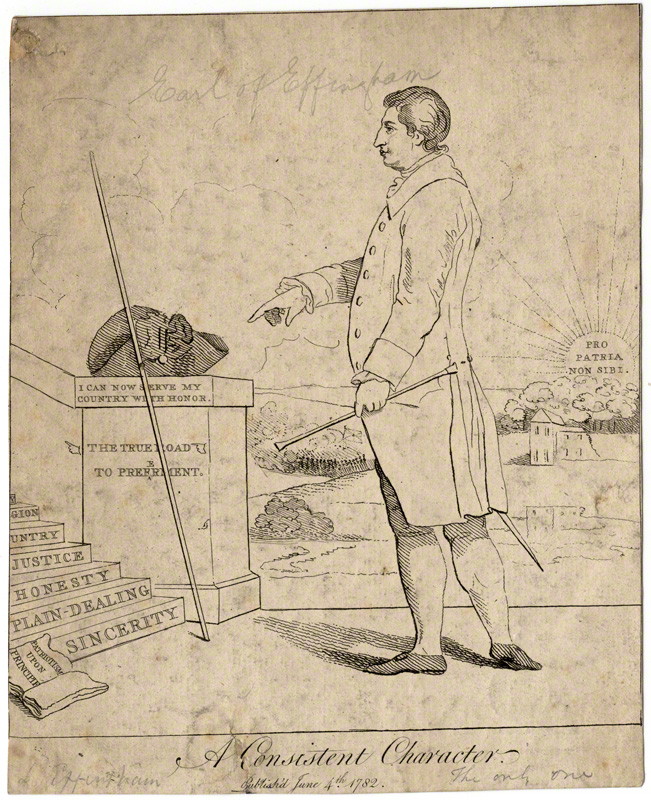
Springfield was the site of the great tragedy at Ebenezer Creek on December’s march, which had led to Secretary of War Stanton’s visit in January, and indirectly to Sherman’s proposal that became known as 40 Acres and a Mule. Springfield is the county seat of Effingham County, which had a population of just 4,755 in 1860. One of the original counties of Georgia, after the Revolution the county was named for the 3rd Earl Effingham, a British Army officer who resigned his commission in 1775, rather than serve in the English army operations against American revolutionaries. Thomas Howard, Lord Effingham, died at the age of 45 while serving as Governor of Jamaica, a rare politician who lived by his own ethics and morals.
Read More:
- Sherman’s March Through the Carolinas by John Gilchrist Barrett (Univ North Carolina Press, 1956)
- Fierce Patriot: The Tangled Lives of William Tecumseh Sherman by Robert L. O’Connell (Random House, 2014)
- The March to the Sea and Beyond: Sherman’s Troops in the Savannah and Carolinas Campaigns by Joseph T. Glatthaar (New York University Press, 1985)
- The Memoirs Of General William T. Sherman by W.T. Sherman (Library of America, 1990)
(As an Amazon Associate, we may earn commissions from qualifying purchases. Check your local library or bookshop, too.)
.
