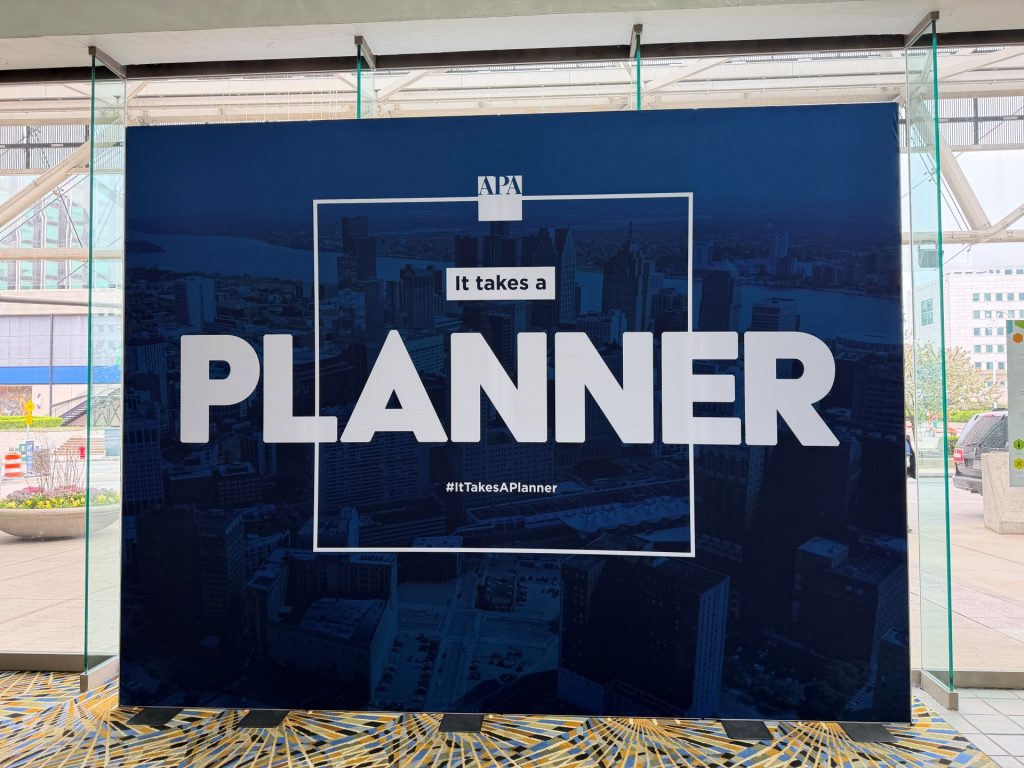
Detroit is a city that is moving from surviving the rust belt to showing resilience to rebuild for the future. For a few spring days this week, more than 4,000 planners and community volunteers descended on this river town for the American Planning Association’s National Planning Conference—#NPC26—turning downtown Detroit into a temporary campus for people who think professionally about how places spring up, fall apart, and come back again. We met in hotel ballrooms and on the river front, walked Woodward’s odd angles, and rode buses past factories-turned-tech hubs, all with one big question in mind: what can a “shrinking city” teach the rest of us about rebuilding resilient communities?
Detroit happens to be a particularly good classroom. This is a city that began as a French outpost on a narrow strait, reinvented itself as the Motor City and the Arsenal of Democracy, then became a global symbol of deindustrialization, white flight, and municipal bankruptcy. It is also, very much, a river city again—reorienting toward the Detroit River, restoring landmarks, reinvesting in downtown and Midtown, and wrestling honestly with the gaps that remain in the neighborhoods between.
As a planner and history buff with family ties that once ran through this place, I came to #NPC26 looking for theory and best practices. What I found in Detroit was something messier and more useful: a living case study of how planners and citizen volunteers, working together, can nudge a big, bruised city from survival toward renewal.
The American Planning Association holds the National Planning Conference each year for practicing planners and community volunteers all over the US and from overseas. APA hold the NPC in a different big city each year—the 2026 edition (hashtag #NPC26) was in Detroit, Michigan, this year, with over 4,000 in attendance.
Detroit: From River City to Motor City and Back Again
Detroit is a river city with a layered history: a French fur-trade outpost that became the “Motor City,” the home of Motown, and now a comeback story in the making.
Detroit sits on the Detroit River between Lake St. Clair and Lake Erie, directly across from Windsor, Ontario, making it the largest U.S. city on the Canadian border. The city itself has about 640,000 residents, while the metro area has 4.3 million+ residents. The six-county Detroit-Warren-Dearborn Metropolitan Statistical Area (MSA) ranks as the 14th-largest metropolitan area in the United States.
On July 24, 1701, Antoine de la Mothe Cadillac founded Fort Pontchartrain du Détroit on the river as a French military and fur-trade post. “Détroit” (strait) referred to the narrow waterway linking Lake Huron and Lake Erie, making it a strategic choke point for trade and war. After the French and Indian War, the British took the fort in 1760 and shortened the name to Detroit, facing local resistance like Pontiac’s siege of Detroit in 1763.
Under Jay’s Treaty, Britain finally ceded Detroit to the United States in 1796, and it became part of the Northwest Territory. (The British did retake the town during the War of 1812.) Detroit served as a gateway to the interior, with settlers and traders passing through as the U.S. pushed west around the Great Lakes. My own ancestors came west by way of the city, ahead of and just after Michigan achieved statehood in 1837. Detroit served as Michigan’s territorial and then state capital until 1847, when the capital moved to Lansing (by way of the Village of Byron).
Paris of the West
A huge fire in June 1805 destroyed most of the small town, prompting a chance to redesign it. Territorial judge Augustus B. Woodward proposed a geometric street plan inspired by Washington, D.C., built around radial avenues, grand boulevards, and circular plazas. Though his full scheme was never completed, elements remain in the spoke-like pattern and odd angles downtown, which you still see where streets like Woodward, Jefferson, and Michigan intersect. That plan laid the framework for later grand avenues and helps explain why older maps of Detroit look so different from the strict grids of newer neighborhoods. It’s a grand effect, if a bit confusing.
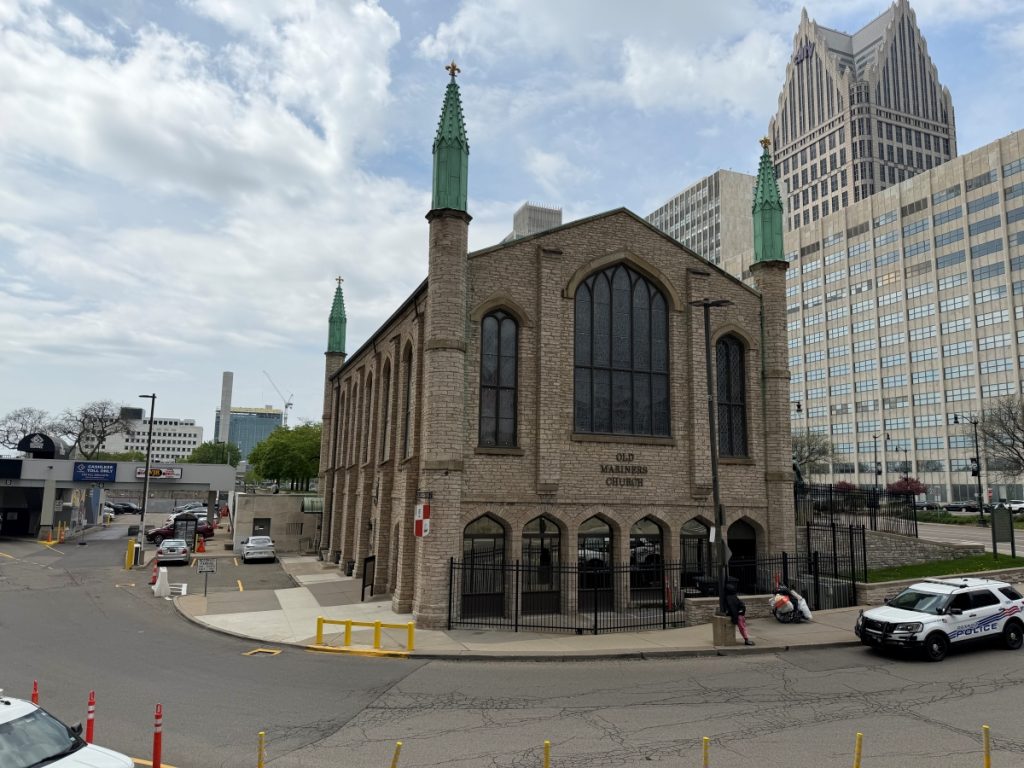
Fun Fact: The Mariners’ Church of Detroit, immortalized in the song Wreck of the Edmund Fitzgerald, was built in 1849. In 1955, the massive stone structure was moved to make way for the Detroit Civic Center plaza and sits atop the entrance to the Detroit-Windsor tunnel.
Before the Civil War, Detroit’s position opposite British Canada made it a key last stop on the Underground Railroad; many enslaved people crossed the river to freedom. Detroiters also played a significant role in the Civil War itself, with units like the 24th Michigan Infantry suffering extremely high casualties at Gettysburg and being commemorated later in Campus Martius monuments.
After the Civil War, Detroit grew as a shipping, rail, and manufacturing center, using its position on the lakes and river to move grain, lumber, and finished goods. Immigrants from Germany, Ireland, and later southern and eastern Europe added to a growing workforce and dense working-class neighborhoods.
By the late 19th century, industrial wealth translated into grand architecture: mansions along Woodward and East Jefferson, cultural institutions like the Detroit Museum of Art (forerunner of the Detroit Institute of Arts), and ornate commercial buildings. Electric street lighting, wide boulevards, and monumental buildings earned Detroit the nickname “Paris of the West.”
Motor City
Detroit’s transformation into the “Motor City” began in the early 1900s with pioneers like Henry Ford, Ransom Olds, and others experimenting with automobiles. Ford founded his company in 1903, and introduced the moving assembly line at Highland Park in 1913, which revolutionized mass production and cut car prices dramatically.
The city became home to the Big Three—Ford, General Motors, and Chrysler—and auto manufacturing drew enormous numbers of workers from the rural South, Canada, and Europe. Between 1900 and 1930, Detroit’s population exploded, reaching the fourth-largest in the U.S. by 1920. My wife’s great-grandparents moved to Detroit to find work after the first World War.
During World War II, Detroit’s factories converted to war production, earning the title “Arsenal of Democracy” as plants produced tanks, aircraft engines, and other military equipment. In fact, Detroit’s early auto boom turned the city into the command center of a broad Great Lakes manufacturing region. Ford, General Motors, and Chrysler anchored design, engineering, and corporate decision‑making in Detroit while plants and suppliers spread into surrounding counties and nearby states. By mid‑century, the Big Three coordinated a dense cluster of parts makers, tool-and-die shops, and logistics firms across Southeast Michigan and Ontario.
By mid-century, the city was a global industrial powerhouse, with dense urban neighborhoods, strong unions, and a thriving downtown shopping and theater district. The city’s factories drew over a million new residents—immigrants and Black migrants from the South—who came to Detroit for auto jobs, while many others worked in plants in Dearborn, Highland Park, Hamtramck, and beyond but still saw Detroit as their commercial, cultural, and civic center. Through the 1950s, Detroit functioned as the region’s dominant marketplace for finance, specialized services, union leadership, and innovation related to autos.
Postwar Detroit was prosperous on paper, but racial segregation, redlining, and discriminatory employment and housing practices created stark divides between white and Black residents. Federal highway construction and suburban development encouraged middle-class (especially white) families and businesses to move out of the city, a pattern often called “white flight.” Auto industry restructuring, automation, and plant relocations eroded the city’s job base in the 1970s, contributing to rising unemployment, poverty, and vacant housing as much of the state of Michigan slipped into Rust Belt malaise.
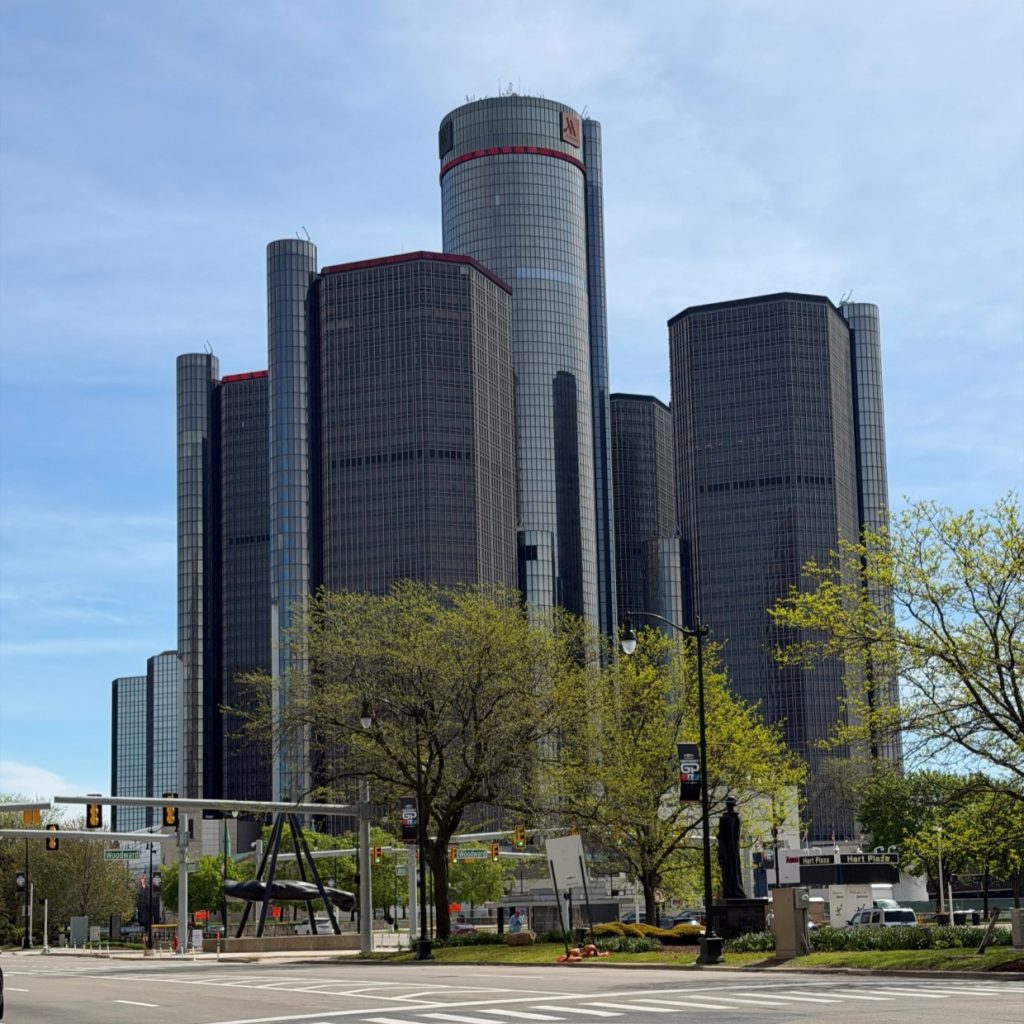
Detroit became an emblem of the “shrinking city” phenomenon, studied for how to manage decline while preserving historic buildings, neighborhoods, and cultural institutions. The Renaissance Center (commonly known as the Ren Center) developed and funded by a consortium led by the Ford Motor Company, came to symbolize the challenges of urban renewal and modernist design turning its back on the city. Long-standing financial problems culminated in Detroit’s 2013 municipal bankruptcy, the largest in U.S. city history, which led to restructuring of debts and services under state oversight.
River City Revival
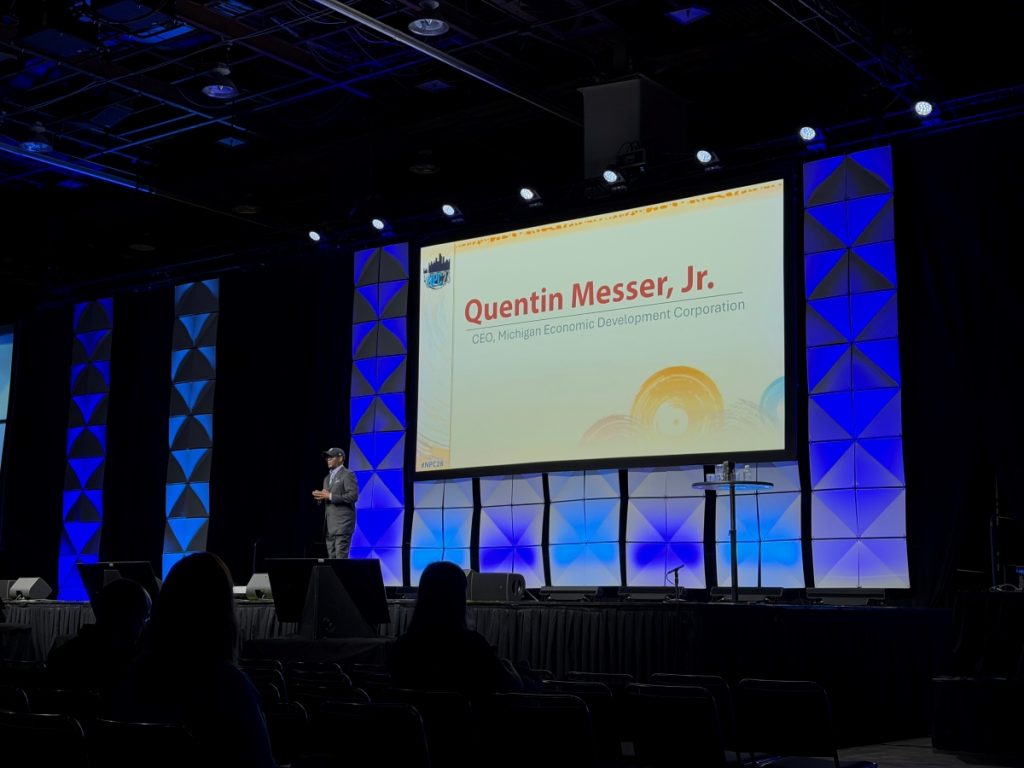
After bankruptcy, public, private, and philanthropic efforts focused on stabilizing core neighborhoods, restoring historic structures, and attracting residents and businesses. Downtown and Midtown saw significant reinvestment in early skyscrapers, theaters, and warehouses, many converted into offices, apartments, and cultural spaces. At the conference, we heard from Mayor Mary Sheffield, and Quentin Messer, Jr, CEO of the Michigan Economic Development Corporation. At the Economic Development Division reception we heard from Kevin Johnson, CEO of the Detroit Economic Growth Corp., with some honest comments about the hard work to get here, and hard work to come.
Detroit today still functions as the strategic and symbolic center of one of the world’s key automotive and mobility clusters. Recent analysis points out that the Detroit region produces about 1.7 million vehicles annually, hosts around 25–26 OEM headquarters and tech centers, and accounts for roughly 55% of U.S. automotive R&D investment—far more than any other region. Detroit itself, along with nearby cities like Dearborn and Auburn Hills, remains where major decisions about vehicle platforms, electric drivetrains, software, and mobility services are made, even when the actual plants are spread across multiple counties and states.
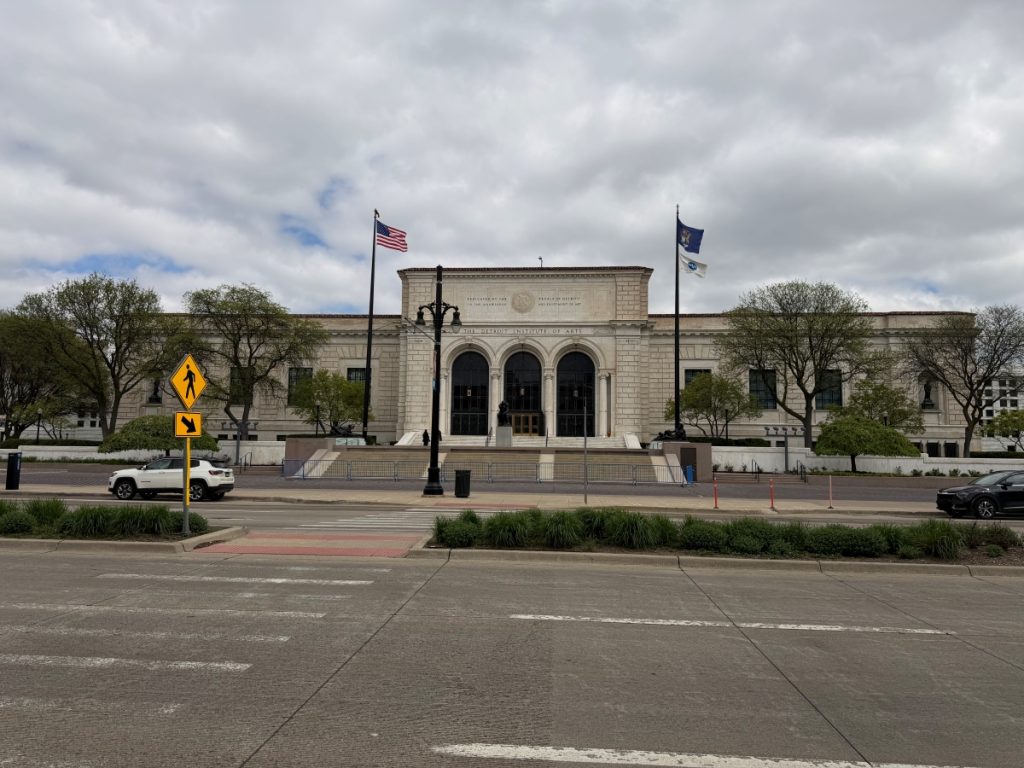
Local efforts have also worked to build on the city’s arts and cultural heritage. Preservation groups and local historians have worked to stabilize and restore key sites—from early churches and schools to landmarks like the Detroit Public Library and old ballrooms—capturing the architectural layers of the city’s past. Detroit is famous for Motown Records—“Hitsville U.S.A.” on West Grand Boulevard is now the Motown Museum, preserving the small studio where many 1960s hits were recorded. The city has a strong arts scene, with the Detroit Institute of Arts (next to the campus of Wayne State University and the main branch of the Detroit Public Library) often cited as a top museum.
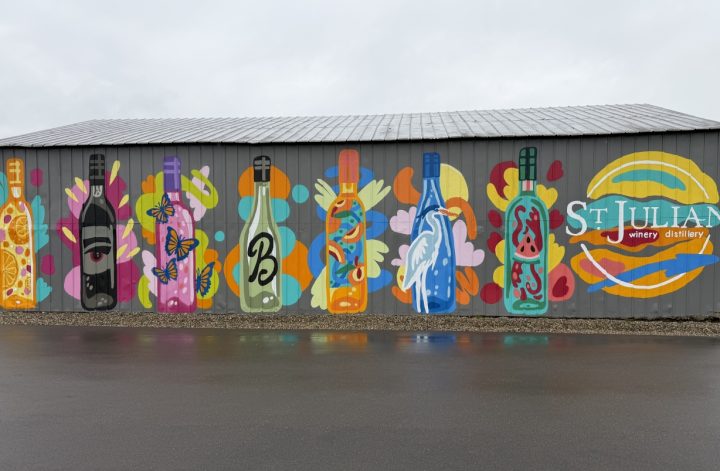
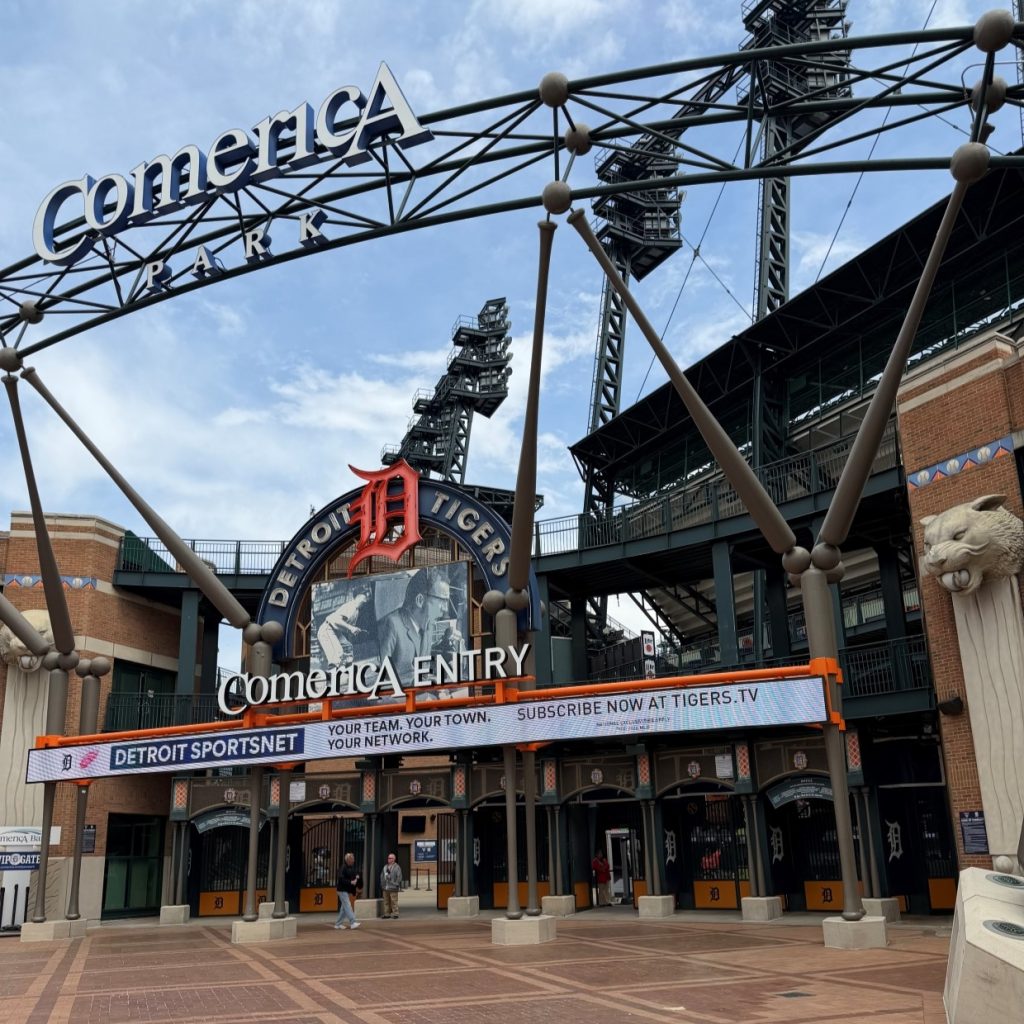
The city has a wide array of street art and community art initiatives, particularly around Eastern Market and Midtown. Detroit is becoming known for its resilience and ongoing revival: abandoned factories and warehouses are being converted into lofts, breweries, tech hubs, and artist spaces, especially in Midtown, Corktown, and Downtown. Detroit also has a big sports culture, for example. The Tigers had played at the corner of Michigan and Trumbull Avenues in Detroit’s Corktown neighborhood since 1896, They moved up to the newly-constructed Comerica Park in 2000, providing an anchor for all four major pro teams (Lions, Tigers, Red Wings, and Pistons) downtown.
A Vision… with Continued Challenges
Detroit still faces deep challenges, including uneven recovery between neighborhoods, persistent poverty, and debates over development, displacement, and the future of vacant land. In 1994, casino gambling opened just across the river in Windsor, Ontario, drawing large numbers of Detroit-area visitors. At the same time, Detroit was dealing with long-term economic decline, job loss, and a shrinking tax base. In November 1996, 51.5% of Michigan voters approved Proposal E, a citizen-initiated law authorizing up to three commercial casinos in the City of Detroit.
The original vision was to cluster all three permanent casino-hotel complexes along the east riverfront, between the Renaissance Center (then GM headquarters) and Belle Isle, creating a dense tourist “casino row.” However, escalating land prices, community pushback, and complicated negotiations eventually led the city and state to shift away from the riverfront cluster idea. In the early 2000s, the riverfront land that had been assembled for casinos instead became part of the broader Detroit RiverWalk redevelopment.
Detroit’s casinos did bring money and jobs. In the latest full-year data, Detroit’s three casinos generated on the order of $100+ million for the State of Michigan and roughly $140–150 million for the City of Detroit in gaming-related taxes. They also brought a set of chronic challenges: risky dependence on gambling taxes, problem gambling and debt, labor and equity tensions, and some localized crime and quality‑of‑life issues. There is current debate about whether they genuinely strengthen the city or just paper over deeper problems. I’ve seen similar results from casino gambling in places like Deadwood, South Dakota, and Colorado’s mountain towns. Not my cup of tea.
While Downtown Detroit has seen a dense wave of big, highly subsidized projects, and residential growth, neighborhood development is more scattered—strong in a few “hotspot” areas but much thinner and slower across most of the city. The downtown blocks continue to attract large-scale, capital‑intensive projects: arena district build‑out, new hotel and residential towers, major corporate and institutional investments. The Downtown Detroit Partnership’s 2025 update notes hundreds of new residential units under construction, ongoing office and hotel redevelopment, and continued growth in dining, retail, and events programming. These projects are typically backed by tax increment financing (TIF), Downtown Development Authority (DDA) tools, brownfield incentives, and state support, which concentrate public resources in the core.
The neighborhoods are a different story, with a mix of hot spots and others which continue to deal with disinvestment and apparent disinterest. I drove by one block north of downtown with a rehabbed historic school and new construction… and one block away (a block with family ties) another modest family home was lost to fire just recently. Sounds a bit like the challenges of small towns in rural areas outside some of our major metro areas?
Rebuilding a Resilient City
While Detroit is a big, brawny city with its own rich history and unique challenges, it offers some ideas for places of all sizes. The National Planning Conference put many of those ideas into a context for us to apply back at home.
Planners and community volunteers have been central to Detroit’s recovery by reshaping land use, guiding investment, and doing the on-the-ground work in the city’s neighborhoods. They are effectively co-producing the city’s future, especially after bankruptcy, rather than just reacting to it.
Professional planners in Detroit have led long-term frameworks to deal with population loss, vacant land, and uneven investment. After bankruptcy, the city’s planning leadership emphasized creative funding, neighborhood-focused plans, and deep community engagement instead of top‑down megaprojects.
Volunteer efforts have materially changed large swaths of the city, especially around blight removal, beautification, and safety. Programs backed by the city call residents to clean up dumping sites, plant trees and flowers, and maintain public spaces, explicitly tying this to community pride and neighborhood stability.
Foundations like Kresge have also backed neighborhood-scale projects through initiatives such as Kresge Innovative Projects: Detroit (KIP:D), which has committed almost $10 million to resident-led and neighborhood organization projects since 2014. These funds often pay for planning, design, and implementation of things like park redesigns, storefront improvements, or community centers, all rooted in local priorities.
Fun Fact: The Kresge Foundation was established in Detroit by Sebastian Spering Kresge, whose retail empire, the S.S. Kresge Co., became the K-Mart stores we all used to know and shop the Blue Light Specials.
Planners rely on this ecosystem to test and evaluate what actually helps residents—focusing limited dollars on strategies that show measurable gains in mobility, safety, or quality of life. It means that community volunteers aren’t working in isolation; their efforts get amplified by grants, technical help, and policy shifts that planners help design.
Lessons to Consider
Other communities can learn from Detroit that recovery is possible, but only when they treat it as a long-term, community-wide project rather than a single program or “silver bullet.” Detroit’s experience suggests several concrete lessons.
Lesson 1: Treat the city as a network, not just a government
Analysts looking at Detroit’s bankruptcy emphasize that the turnaround came from a network of actors—city government, businesses, foundations, universities, and neighborhood groups—not from City Hall alone. While local government struggled with debt, civic and private actors invested billions into key districts and supported a shared physical and economic vision.
For other places, that means:
- Map your anchor institutions (hospitals, colleges, major employers) and bring them into the same room regularly.
- Build standing coalitions, not one-off task forces, so projects like transit, housing, or downtown reuse survive elections.
Lesson 2: Have a long-term framework, not just isolated projects
Detroit’s “Detroit Future City” Strategic Framework gives a 50‑year view of land use, economic growth, and neighborhoods, aligning many projects under one big picture. That framework helps prioritize where to invest scarce dollars, how to reuse vacant land, and which sectors (like digital and creative jobs, advanced manufacturing, and entrepreneurship) to back for inclusive growth.
Other communities can:
- Develop a clear, public long-range plan that honestly reflects population trends and economic realities.
- Use that plan to decide where to concentrate infrastructure upgrades, rehab, and business support instead of spreading resources too thinly.
Lesson 3: Diversify and reuse, especially in downtowns
Detroit’s revival has leaned heavily on diversifying its downtown economy beyond traditional office space and cars. Private and public partners have converted old office towers to housing, created “innovation districts,” invested in entertainment and public spaces, and reclaimed the riverfront as an asset.
Transferable ideas include:
- Convert underused office or industrial buildings into housing, mixed-use, or innovation space when the market for legacy uses has collapsed.
- Reclaim waterfronts or central corridors for public space, walking, and biking to make your core more attractive to residents and visitors.
Lesson 4: Center equity and inclusion from the start
Newer playbooks for inclusive recovery stress that you cannot “go back to normal” if the old normal excluded large parts of the community. Detroit’s current strategies increasingly emphasize neighborhood-level investment, small business support, and connecting residents—especially in long-disinvested areas—to new jobs and services.
For other communities, this means:
- Set explicit equity goals (for example, by neighborhood or demographic) in recovery plans and track them over time.
- Pair physical investments (streetscapes, parks) with workforce training, small-business aid, and affordable housing measures so existing residents can stay and benefit.
Lesson 5: Combine outside support with local initiative
Research on distressed U.S. communities argues that national and state policies matter—through targeted aid, infrastructure investment, and job-training—but that they must be matched by local leadership and citizen action. Detroit’s recovery has used federal aid, state tools, and philanthropy, but relied on local groups to implement neighborhood projects and maintain momentum.
Key takeaways:
- Advocate for higher-level support that is explicitly targeted to persistently distressed areas, using transparent metrics like unemployment and income growth.
- At the same time, empower neighborhood groups and volunteers with small grants, training, and technical help so they can turn funds into visible improvements and stronger local networks
An Unfinished Story
Detroit is not a finished comeback story, and that may be why it’s such a useful place for planners and community volunteers to study. It carries the full weight of American urban history—Indigenous land, imperial outpost, industrial powerhouse, civil rights battleground, freeway “renewal,” disinvestment, bankruptcy, and now a messy, uneven revival that is still being argued over at block club meetings and planning commission hearings. Walking the riverfront or riding the street car down Woodward during #NPC26, you could see both sides at once: billion‑dollar megaprojects framed by cranes and glass, and, just a few miles away, streets where residents and neighborhood organizations are still fighting for basic services, clean lots, and a share of the investment.
For me, that juxtaposition is the real lesson to take home. Detroit shows that plans and capital alone don’t make a resilient city; what matters is how those tools are used, who gets to shape them, and whether the work reaches the people who stayed through the hard years. The frameworks, coalitions, mini‑grants, and block‑by‑block cleanups we heard about in Detroit aren’t blueprints to copy line for line, but they are powerful reminders that recovery is a long, collective project, not a one‑time fix. If a big, battered river city can slowly stitch itself back together—with planners, pastors, block captains, and foundation program officers all pulling in roughly the same direction—then there’s hope for our own communities, too, whether we’re working on a small‑town main street or a fast‑growing metro fringe.
Resources
- Check out the American Planning Association at https://www.planning.org/
- Michigan Economic Development Corporation at https://www.michiganbusiness.org/
- Detroit Economic Growth Corporation at https://www.degc.org/
- City of Detroit Planning and Development Department at https://detroitmi.gov/departments/planning-and-development-department
- Detroit Public Library at https://detroitpubliclibrary.org/
- Detroit Historical Society at https://www.detroithistorical.org/
- Detroit Institute of Arts at https://dia.org/
- Pure Michigan (State Tourism) at https://www.michigan.org/
.
More from JCShepard(dot)com
Our April series on Community Facilities:
- Rural Civic Infrastructure Is Driving a New Future for Small Town Communities
https://jcshepard.com/2026/04/small-towns-rural-civic-infrastructure/ - Historic Preservation and Rural Economic Development: A Rural Growth Strategy https://jcshepard.com/2026/04/preservation-rural-economic-development/
- Good Governance and Trust in Rural America https://jcshepard.com/2026/04/good-governance-and-trust-in-rural-america/
- How Education as Infrastructure Is Powering Rural Economic Growth
https://jcshepard.com/2026/04/education-as-infrastructure-economic-growth/
Our August 2025 series on Rural Development:
- Rethinking the Rural Economy: New Paths, New Possibilities for Growth
- Business Retention in Small Towns: The Quiet Powerhouse of Rural Job Growth
- From Main Street to the World: Rural Entrepreneurship in Action
- The Rural Comeback: How Small Town Innovation Sparks Growth
- The Canadian Perspective on Rural Resilience
2026: Bring Your Plans to Life – Monthly Themes Preview
RuralStrong Podcast (Season 1 Episode 36)
Now playing on Youtube (audio), Spotify, and Apple Podcasts (February 2026). Transcription on the blog here.
Rural-Ready Engagement: Practical Tools for Small Town Planners
 Watch the full replay: youtube.com/@Engaging-Communities (February 2026)
Community engagement can look very different in small towns and rural communities. This webcast was co-sponsored by the APA Community Engagement Interest Group and the Small Town & Rural Planning Division.
Popular posts on JCShepard.com
- The Planning Process—From Vision to Action in Small Towns and Rural America (January 2026)
- Reviving Rural America: Why Heritage Tourism Is a Game-Changer Now (September 2025)
- What is Economic Development in Modern America? A Field Guide for Small Towns and Rural Places (March 2026)
- Rural Housing Supply Crisis: Why Small Towns Are Running Out of Homes (February 2026)
- How Small Towns Succeed: A Proven Playbook for Rural Action (November 2025)
- The Rural Comeback: How Small Town Innovation Sparks Growth (August 2025)
- How Small Towns Can Build a Strong Outdoor Economy Without Selling Out (June 2025)
Check out The 12 Planning & Sustainability Books You Need in 2026 and browse through the Small Town & Rural Community guides on our Resources page.
(As an Amazon Associate, we may earn commissions from qualifying purchases. Check your local library or bookshop, too.)