

Meet Me At the Library: A Place to Foster Social Connection and Promote Democracy, by Shamichael Hallman
“A community is not a machine,” writes Eric Liu, in his introduction to Shamichael Hallman’s book, Meet Me at the Library (Island Press, 2024). “A community is a garden: a complex adaptive ecosystem in which all kinds of life is striving to thrive [and] Gardens require gardeners. There are no better gardeners of our democracy than public librarians.”
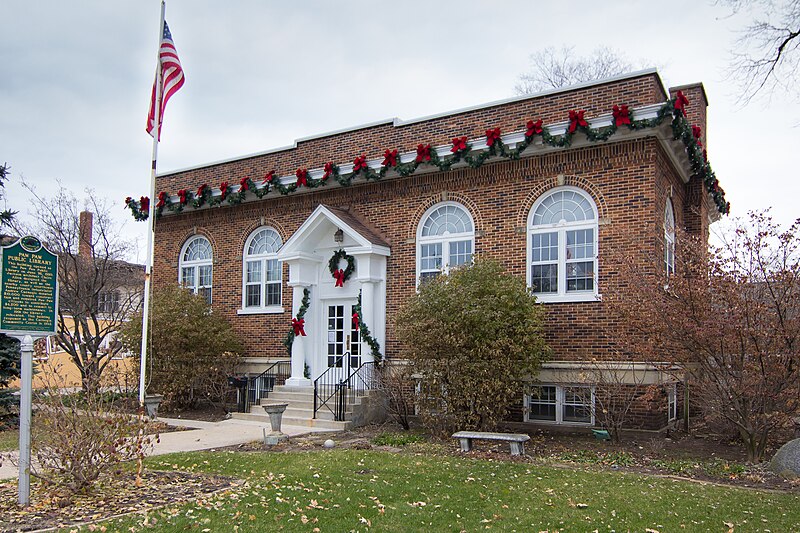
In this reviewer’s opinion, one can tell a lot about a community by their public library. Places which value community invest in their civic infrastructure, including libraries. As public planners, we talk about libraries as a public resource, yet could we do more to leverage these resources for community improvement?
Hallman presents a powerful vision of libraries as vital hubs for community connection, social equity, and democracy. This inspiring and thought-provoking book walks readers through how libraries are adapting to address some of the most pressing issues of our time, from loneliness and division to inequity and civic disengagement. Drawing on his own experience in Memphis and examples from across the United States, Hallman builds a case for libraries as dynamic spaces where society can heal and grow. While the author’s experience is in large, urban cities, the lessons learned can be valuable to anyone who cares about their own community.
This book starts off with the idea of libraries as critical infrastructure in the health of democracy. Libraries are not only places to access books—they are spaces where diverse groups can meet, engage in meaningful conversations, and build trust.
Loneliness and polarization have reached epidemic levels in communities of all sizes. Hallman argues that libraries offer an antidote by creating inclusive, neutral spaces for people to reconnect. Programs like community dialogues, book clubs, and workshops break down barriers and foster understanding.
A Culture of Connection
“Cultivating a culture of connection is vital to creating the changes we wish to see in our society.” Belonging is at the heart of community well-being. Libraries meet this need by designing spaces and programs that reflect the diverse needs of their patrons.
You local library is one of the few 3rd places where people can come together without having to buy something. They also give people a variety of opportunities to become involved in their community. Hallman writes, “…libraries empower individuals to participate more fully in civic life… By fostering a sense of belonging and mutual support, public libraries play a vital role in strengthening the social fabric of communities and promoting a culture of active citizenship.”
Libraries are more than knowledge centers—they are places of social innovation. Hallman highlights how libraries bring people together across divides, fostering a shared sense of purpose and community identity. For example, many communities large and small now include “makerspace” centers in their libraries, where students of all ages can try out 3D printers, laser cutters, commercial sewing machines, or digital editing equipment. One library has a fully-outfitted multimedia studio for audio or video production. The library of books has become the library of things.

Partnerships for Community
Hallman provides examples throughout this book of partnerships and collaborative efforts to expand the reach and impact of libraries in all types of communities. One featured library system serves Mesa County—urban Grand Junction’s metro area which also includes a large rural area on Colorado’s west slope. Mesa County Library System is working to serve an increasingly diverse urban population as well as changing demands of rural patrons.
As small town & rural planners, we can be the ones to reach out to our public libraries and facilitate similar efforts with schools, non-profit organizations, and local small business. On a professional level, we can make sure to involve the library staff and boards in comprehensive planning processes—reach out and use their expertise, not just ask them to place a draft Comp Plan document on a shelf. In many places, a library meeting space can be a more welcoming option for community meetings than stuffy old Town Hall or County Courthouse. On a personal level, libraries are often looking for volunteers to help out or lead programs.
Looking Ahead and Lesson Learned
Looking ahead, libraries—like their communities—must continue to adapt to the rapidly changing world, where technology, social dynamics, and economic realities evolve at a breakneck pace. Hallman envisions a future where libraries act as hubs of equity, innovation, and civic engagement, redefining their role in a digital and interconnected society
The Afterword by Bridget Marquis provides a reflective conclusion on the importance of libraries as civic infrastructure, calling for continued investment and advocacy to support these vital institutions. It is a new way of working, Marquis writes. A work in progress.
Hallman’s writing is accessible and deeply empathetic, making the reader feel the urgency of his vision while offering hope and inspiration. The book’s structure—progressing from challenges to solutions—keeps the narrative engaging and actionable. Real-world examples like Mesa County (Colorado) Library’s programs and the transformation of the Cossitt Library in Memphis ground Hallman’s ideas and lessons learned in tangible successes.
This book offers many observations and examples which may be immediately useful to small town and rural planners. While most examples are from large, urban libraries, it is not so long nor technical a “lay reader” such as your reviewer cannot find time to read and draw lessons, even for the smaller place I live and those where I work.
In an increasingly divided and disconnected work, Meet Me at the Library reminds of the essential role libraries play in building trust, promoting equity, and fostering community. Let your library help you build a better small town & rural community.
Read More: Resources for Strengthening Communities Through Libraries
Discover additional resources to help libraries in rural and urban areas foster connection, inclusivity, and democracy. These websites, books, and reports offer practical guidance for leveraging libraries as hubs of community engagement and social innovation.
Websites
- Public Library Association
https://www.ala.org/pla
Provides resources and professional development tools for enhancing public libraries’ impact. - Urban Libraries Council
https://www.urbanlibraries.org
Focused on empowering libraries to be leaders in building equitable and sustainable communities. - Libraries Transform (ALA)
https://www.librariestransform.org
A campaign showcasing the transformative role of libraries in society. - Global Libraries Initiative (Gates Foundation)
https://www.gatesfoundation.org
Supports innovative library programs that expand access to information and technology.
Books
- “Meet Me at the Library” by Shamichael Hallman
A deep dive into how libraries foster democracy and social connection in challenging times. - “Palaces for the People” by Eric Klinenberg
Explores how libraries and other shared spaces strengthen communities and combat social division. - “The Library Book” by Susan Orlean
A compelling history of libraries and their enduring role in civic life. - “Better Together: Restoring the American Community” by Robert D. Putnam
Examines ways to rebuild social capital, with libraries as a central theme.
Reports and Studies
- “Libraries and Civic Engagement” (Institute of Museum and Library Services)
A report on how libraries create opportunities for civic participation and community growth.
https://www.imls.gov - “The Economic Value of Public Libraries” (American Library Association)
Demonstrates the measurable impact of libraries on local economies and quality of life.
https://www.ala.org - “From Outreach to Engagement” (Urban Libraries Council)
A guide to transforming library programs to build stronger, more inclusive communities.
https://www.urbanlibraries.org
Online Communities and Tools
WebJunction
https://www.webjunction.org
A free resource for library staff training and community building.
Library Journal
https://www.libraryjournal.com
Offers news, reviews, and resources for library professionals and advocates.
Project Outcome (PLA)
https://www.projectoutcome.org
Provides tools to measure and share the impact of library programs.
As an Amazon Associate, I earn from qualifying purchases. A version of this review first appeared in the APA Small Town & Rural Planning newsletter, Winter 2025.
Looking for more insights into cultural development? Explore our list of The Best Books for Rural Arts and History in 2025 here:
Unlock the Future: 12 Powerful Books for Rural Arts and Preservation