

Small Town & Rural Comprehensive Planning:
JCShepard.com’s Theme for 2026
Comprehensive planning in small towns and rural counties is not a big complicated urban process writ small. It is about neighbors deciding what kind of place they want to be in the future… and then putting that promise in writing so the next subdivision, the next hog barn, or the next wind project all get measured against the same yardstick.
In 2026, we’re going to take a closer look at small town and rural planning. As we mentioned last year, this site is a bit of a sandbox, so expect the unexpected, as we’ve been doing since coming online back in January 2009. Most of my experience is in the United States, but I’m also interested in what folks are doing wherever I can read their plans.
Each month of the next year, we will discuss a theme around one or more elements of the planning process and the plan itself. We’ll also look near and far for examples of putting the plan and planning process to work—implementation is the watchword.
What a rural comprehensive plan really is
In planning school, the comprehensive plan is defined as a long‑range guide to physical, social, and economic development, usually with a 20–30 year horizon. For 2026 that would be 2046 or 2056, which really isn’t that far away in the big picture of urban development.
Out in the real world, it feels more like a public playbook: a local policy guide, much like a business plan, that covers where growth belongs, what should stay rural, and how to keep basic services running without breaking the tax base.
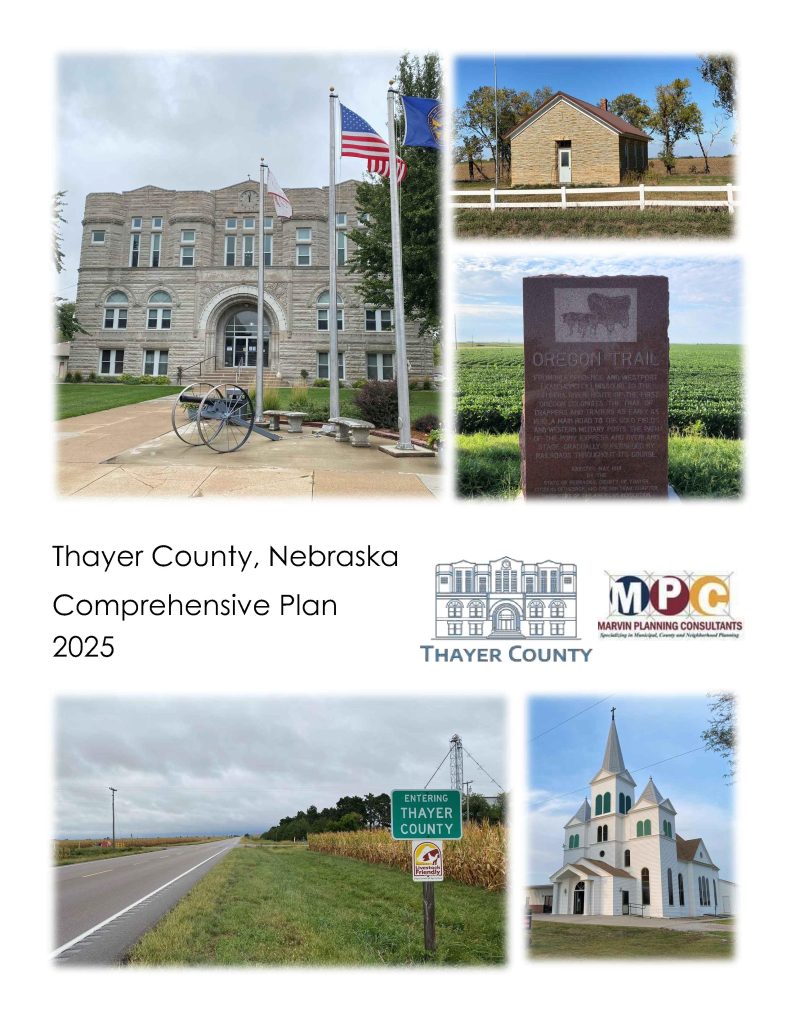
Let me use the Thayer County, Nebraska, Comprehensive Plan as a model of a plan actually at work in rural mid-America. The Plan, and associated zoning and subdivision regulations, drafted by our team at Marvin Planning Consultants, were recommended by the Planning Commission and adopted by the Thayer County Board of County Commissioners in May 2025.
The Thayer County, Nebraska Comprehensive Plan 2025 says it plainly: this is the county’s primary policy guide on the “location, character, and type of growth and development” over the next 20 years, built as a local initiative under state law—not a federal program dropped from above. It is meant to promote orderly growth, help citizens and commissioners make better informed decisions, provide a guideline for future development locations, and serve as an information and management tool for county leaders.
The foundation: process and structure
Every good comprehensive plan has two sides: process and product.
- As a process, the planning team pulls together data and maps, but also stories from town‑hall meetings, advisory committees, and surveys where people talk about strengths, weaknesses, and the kinds of change they can live with.
- As a document, the plan becomes the adopted guide that holds up zoning, subdivision regulations, floodplain rules, and capital budgets when decisions hit the county board agenda.
Thayer County’s plan follows a classic structure: Introduction and Community Engagement, then chapters on Population, Housing, and Economic Development; Community Facilities, Parks and Recreation, and Public Safety; Communications/Utilities/Energy, Natural Resources and Environment, and Hazard Mitigation; Land Use and Transportation; and Implementation. Other plans may include certain items of local interest. Others will streamline the data for a more strategic planning approach.
Municipal plans will typically have more specific detail, as well as discussion of annexation and municipal services. This chapter list is not an academic exercise; it is a rural checklist of things which need to work if people are going to keep living there.
Core elements: Land use, housing, transportation, and more
Whether in a metro area or a rural area like Thayer County with 5,000 residents, certain elements show up in almost every plan.
- Land use: A future land use map and policies for where homes, businesses, farms, industry, and open space belong over the long term.
- Housing: Existing stock, vacancies, affordability, and strategies to meet future needs—an especially sore point in rural Nebraska, where older homes and limited new construction collide.
- Economy and natural resources: Jobs, tax base, agriculture, and the land and water that underpin the whole thing.
- Community facilities: Water, sewer, schools, parks, health care, law enforcement, and emergency services that keep people safe and make daily life workable.
- Transportation: Roads, freight, transit (if you’re lucky), and increasingly walking and biking, coordinated with how and where the county grows.
In Thayer County, like most of our countywide plans, we add an explicit Hazard Mitigation chapter, tying in FEMA’s planning and the community’s local experience with tornadoes, floods, hail, and winter storms. That chapter lays out mitigation actions keeping the comp plan synchronized with the regional hazard mitigation plan. In a place where a single storm can wipe out roofs, crops, and power lines, that is core land‑use policy.
The rural twist: ag first, town‑centered growth
What sets small‑town and rural comprehensive planning apart is not the table of contents so much as the priorities between the lines. Thayer County’s plan is explicit: agriculture is the economic base, and land‑use policy is built around keeping working ground working.
The land‑use framework divides the county into distinct rural categories, where agriculture is the highest and best use compared to transitional areas closer to cities and towns. Some other counties further downstream will explicity protect fragile river corridors, while other counties buffer parks and open space.
At the same time, the plan directs most new development into cities and villages where urban infrastructure already exists, discourages leap‑frog subdivisions, and supports annexation where appropriate. That “town‑centered” stance recognizes the basic math: counties cannot afford to chase scattered roads, culverts, and school bus routes. Most of the counties we work with have no interest in competing with their villages and cities as an urban service provider. Let each do what they do best.
Community voice and local story.
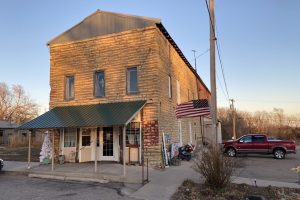
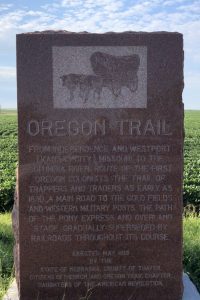
One hallmark of our view of planning is respect for local history and local voice, and the Thayer County plan leans into both. The introduction walks us from the Oregon Trail along the Little Blue River, to the Pony Express, railroads that named towns in alphabetical order, Civilian Conservation Corps camps, and wartime military airfields. The plan treats that story of heritage not as nostalgia but as context for today’s choices on land use, conservation, and economic development.
Community engagement was built on an advisory committee of county, city, and village representatives, plus town‑hall meetings around the county and a survey that captured input from farmers, business owners, retirees, and young families. People identified production agriculture, small‑town lifestyle, local businesses, schools, and health care as strengths; they pointed to housing shortages, aging infrastructure, workforce gaps, childcare needs, and changing expectations as weaknesses. Those comments show up later in the goals and action steps—in other words, the process actually moved the product.
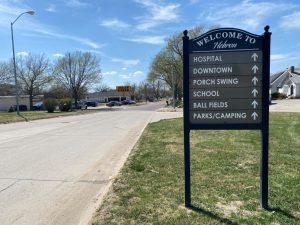
From vision to action (and back again)
The importance of the plan is in the planning… and the doing. On paper, many comprehensive plans are “advisory,” but in practice they carry real weight. State laws often expect zoning and development approvals to be consistent with an adopted plan, and elected officials rely on that plan when weighing rezones, plats, and conditional uses. Thayer County doubles down on that connection in its Implementation chapter:
- The plan is framed as one tool in a broader toolbox that includes zoning, subdivision regulations, capital improvement programming, and floodplain administration.
- The County commits to reviewing the plan annually—we’re doing that to kick off 2026—and updating it roughly every 10 years, or sooner if major, unanticipated changes occur.
- Development proposals are expected to line up with the plan’s goals or trigger a conversation about whether the plan should be amended.
That mindset—treating the plan as a living document rather than a consultant report—is where small‑town and rural comprehensive planning lives or dies. The maps and tables help, but the real work happens when a planning commission asks, “Does this match the plan we just adopted?” and a county board replies yes or no accordingly.

Why this matters for small towns and rural areas
For rural communities, comprehensive planning is less about chasing trendy buzzwords and more about survival, if not growth and development. It gives a structure to questions that otherwise show up one permit at a time:
- How do we protect prime farmland and still leave room for new homes, businesses, and local energy?
- How do we keep towns strong enough that schools, clinics, and main‑street businesses can survive?
- How do we face hazards—floods, wind, drought—not as isolated disasters but as part of how we lay out land uses and infrastructure in the first place?
If there is a lesson from places like Thayer County, it is this: small towns and rural counties do not need less planning; they need planning that looks and sounds like them. A good comprehensive plan respects the history, protects the land, listens to the people who show up on cold Tuesday nights at the courthouse, and still has enough spine to say: here is where we grow, here is what we keep, and here is how we get from today to the future we can live with.
⁂
JCShepard.com Monthly Themes for 2026
- January: An Introduction to Small Town & Rural Planning and Community Engagement
- February: Population and Housing Trends
- March: Economic Development
- April: Community Facilities / Historic Sites / Education
- May: Public Health / Parks & Recreation
- June: Communications, Utilities & Energy
- July: Natural Resources
- August: Public Safety & Hazard Mitigation
- September: Land Use
- October: Transportation
- November: Implementation
- December: Reflections

Planning and Community Engagement for Small Towns & Rural Counties
This month, we’ll start with discussion of the idea previously presented in this overview—every good comprehensive plan is as much about process as product.
- The planning process should inform how we bring plans to action, as well as expressing where we want that action to take us.
- Public participation is essential, in small towns as well as urban areas. Transparency and accountabiity are essential in any size community; engagement not only results in a better plan, but can also promote community ownership of public policy.
- We need to meet people where they are—mix it up with new online tools as well as getting out from behind our desks in-person, out in the community.
- Communications are key. If you are fortunate enough to still have traditional media (local newspapers and radio), then use them!
The Planning Process—From Vision to Action in Small Towns and Rural America, 4 January 2026
Note that while I’m illustrating planning stuff with Thayer County’s plan, I’m speaking for myself–don’t blame them or my boss at Marvin Planning Consultants.

Looking for more?
- The New Rural Playbook: Planning Trends That Matter
- Planning with Purpose: Emerging Trends in Rural and Small Town Planning
- Thriving Together: Proven Strategies for Sustainable Rural Economies in 2025
- Wired for Change: Rural America and the Energy Economy of Tomorrow
Check out The 12 Planning & Sustainability Books You Need in 2026 and browse through the Small Town & Rural Community guides on our Resources page.
(As an Amazon Associate, we may earn commissions from qualifying purchases. Check your local library or bookshop, too.)
Log on this weekend for our first installment for the new year of bringing your plans to life!
.