

Part IV in our November series on Implementation and Your Comprehensive Plan
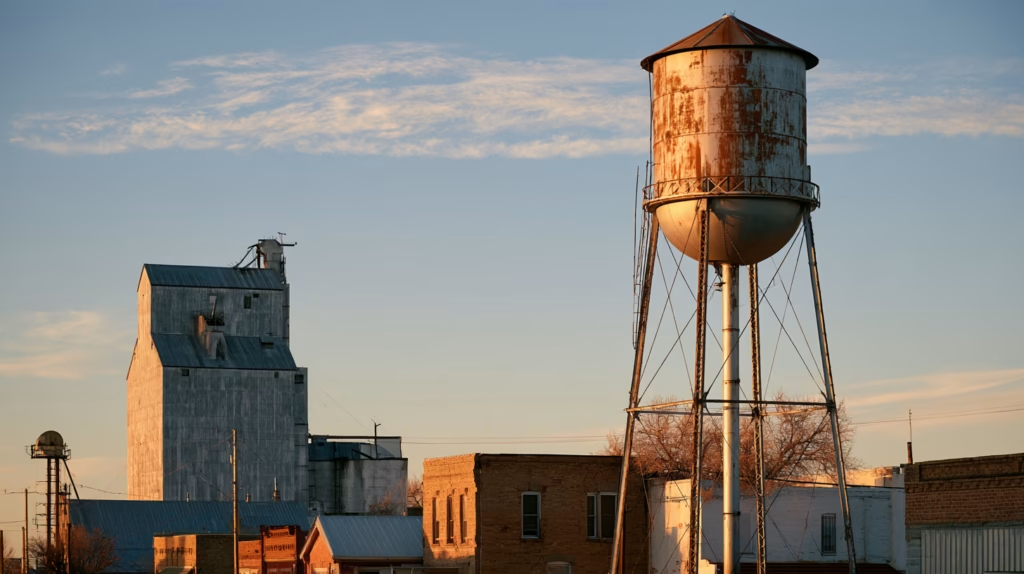
Sooner or later, every small town has a water tower moment. The engineer’s inspection comes back, and the tower, or the lift station, or the bridge on the county road, or the roof on the city hall, needs major work within a few years. The estimate is larger than anything the council has dealt with in a decade. Someone asks whether it was in the plan. Someone else asks whether there is a plan.
That moment is where the comprehensive plan either proves its worth or reveals that it was never connected to anything important. All year, we have argued that the plan has to reach into the systems that actually run a community. Last week, we said every goal should be tested against the map, the code, and the budget. This week, we take the budget test seriously. The tool for that is the capital improvements program, or CIP.
A CIP is not glamorous. It is a schedule of the major physical investments a community expects to make over the next several years, with estimated costs and a plan for paying for them. But in a small town, it may be the single most important implementation document there is. Roads, water and sewer lines, parks, public buildings, and equipment are where most of a community’s long-term money goes, and they shape where growth happens and what it costs. In April, we wrote about how rural civic infrastructure is shaping a new future for small towns. In May, we argued that parks are infrastructure, too. The CIP is where those ideas get a price tag and a place in line.
The stakes are not small, and they are not getting smaller. The American Society of Civil Engineers’ 2025 Report Card for America’s Infrastructure gave the nation’s drinking water systems a C-, wastewater a D+, stormwater a D, and roads a D+, and estimated a $3.7 trillion gap between what is needed and what is being invested over the next decade. EPA’s 7th Drinking Water Infrastructure Needs Survey puts the 20-year need for drinking water alone at $625 billion, roughly two-thirds of it for the pipes that carry water to homes and businesses. Those are national numbers, but they are built from thousands of local systems, and most of those systems belong to small towns. When the National League of Cities surveyed municipal leaders for its Municipal Infrastructure Conditions 2025 report, nearly 90 percent named rising material and labor costs as a major obstacle, 84 percent named insufficient capital budgets, and 65 percent named inadequate grant or loan availability, according to ASCE’s summary of the findings.
Many small communities don’t have a CIP at all. Others have one that is really a wish list with dollar figures attached. Neither one helps much when the water tower moment arrives. Here is how to build one that does.
Throughout this article, we’ll draw on a real example: the first capital improvement plan for the City of Burwell, Nebraska. Burwell is a town of about 1,000 people on the North Loup River, the county seat of Garfield County, the gateway to Calamus Reservoir, and the home of Nebraska’s Big Rodeo since 1921. In 2024, Burwell did something few towns its size attempt at once: they adopted a new comprehensive plan, revised zoning and subdivision regulations, a five-year strategic plan for the City Council, and its first CIP, all as parts of a single coordinated effort. That comprehensive plan went on to receive the 2025 Daniel Burnham Award for a Comprehensive Plan from APA Nebraska and the planning process was recognized with a 2025 Vernon Deines Award of Merit from APA’s Small Town and Rural Planning Division. The Burwell example is useful here not because it is perfect, and we’ll be candid about where it is still a first edition, but because it shows what a working CIP looks like at a scale most of our readers will recognize.
A note on our role: John Shepard managed the multi-firm consulting team for the Burwell project, working with Marvin Planning Consultants and MSA Professional Services. The Burwell Capital Improvement Plan, FY2025–2029, was prepared by Rian Harkins, AICP, a planner and independent consultant to the team. The observations below are our own.
Part One: Connect the Plan to the Budget
Before a community can decide which projects deserve its money, it needs a shared understanding of how a need moves from a planning document to an actual expenditure, and of where those needs come from in the first place. That foundation has three parts: keeping the plan, the program, and the appropriation distinct; grounding the program in needs and asset risks; and weighing alternatives before anything is built.
Distinguish the Plan, the Program, and the Appropriation
Much of the confusion around capital spending in small communities comes from using one word for three different things. When someone says “it’s in the plan,” they might mean any of the following:
| Document | What it does | Time horizon | What it commits |
| The plan | Identifies the community’s long-term needs and where investment should go: the comprehensive plan, plus utility, transportation, and parks master plans | 10 to 20 years | Direction, not money |
| The program | Schedules specific projects, estimates their costs, and identifies likely funding sources: the CIP | Typically 5 to 6 years, updated every year | Intent and sequence |
| The appropriation | Actually authorizes spending for the coming year: the capital budget adopted with the annual budget | 1 year | Real money |
Each layer has a different job. The plan says why and where. The program says what, when, and roughly how much. The appropriation says yes, now. A healthy system moves projects down through those layers in order: a need identified in the plan becomes a project in the program, and when its year comes, the project gets funded in the budget.
Problems start when the layers get skipped or confused. A project that shows up in the budget without ever appearing in the plan or the program is usually a response to a crisis or to whoever lobbied hardest that year. A program that never gets funded is a wish list. And a plan that never feeds the program is, as we said last week, a promise without a delivery date.
The practical rule is simple. The first year of the CIP should become the capital budget. The later years should be honest about what is likely, not just what is wanted. And every project in the program should be able to point back to a need identified in the plan.
This three-layer structure is not our invention. The Government Finance Officers Association, whose multi-year capital planning best practice is the standard reference for local finance officers, describes the same progression: identify needs, determine their financial impacts, prioritize them, and then build a comprehensive financial plan that carries the first year into the adopted budget. The Massachusetts Division of Local Services’ Capital Improvement Planning Guide, written for the state’s many small towns, draws the same line between a capital program covering five to ten years and a capital budget that funds only the upcoming year. Washington State goes further. Under its Growth Management Act, as the Municipal Research and Services Center explains, the comprehensive plan must include a capital facilities element with at least a six-year financing plan, and if the money falls short, the community has to reassess its land use plan. MRSC’s shorthand for that principle is one we like a great deal: if there’s no math, you’re not planning.
Most states, including ours, ask much less. Nebraska’s comprehensive plan statute requires a plan to address community facilities, including their “location, type, capacity, and area served,” along with transportation and energy, but it does not require a capital improvements program. The one place Nebraska law does require municipalities to schedule capital work is streets: cities and villages must adopt a one- and six-year street improvement plan, and under Neb. Rev. Stat. § 39-2119, the one-year plan requires a public hearing, which may be held together with the budget hearing, and must be certified to the state Board of Public Roads Classifications and Standards. A community that fails to certify can see its highway-user revenue held. That makes the street plan the one piece of capital programming that nearly every Nebraska town already does, and a natural foundation on which to build the rest.
In Burwell: Naming the Layers
Burwell’s CIP takes this distinction seriously from its first pages. It defines the CIP as two things at once: a capital budget for the upcoming fiscal year and a capital program that looks five to ten years ahead. Its adopting policy states plainly that inclusion in the CIP is not final approval of a project. Projects in the first year are those suitable for the current budget, and the later years are reviewed every year and may be amended as needs and resources change.
The CIP also traces its roots back to the comprehensive plan. Chapter 15 of the 2024 Burwell Comprehensive Plan lists the CIP among its immediate implementation actions, directs that it be coordinated with the city’s One- and Six-Year Road Plan, and gives the City Council the decisive role through its annual budget. The plan’s action tables carry a simple but important column for each action: does it belong in the CIP, yes or no? That one column is the plan-to-program link in its most practical form. When the plan says the city should proactively extend public utilities to areas identified for future growth, the reader can see immediately that this is a capital commitment, not just a policy, and should expect to find it in the program.
The strategic plan the Council adopted in 2024 adds a third connection. Its five priorities, Health and Safety, Housing, Economic Development and Growth, Quality of Life, and Affiliated Organizational Support, cite specific comprehensive plan actions by number and are reviewed annually. The Council’s goals, the comprehensive plan, and the CIP’s ranking criteria all point at one another. In a city where the City Administrator also serves as the planning, public works, and finance staff, that cross-referencing is not bureaucracy. It is how one person keeps three documents pointed the same direction.
Start With Needs and Asset Risks, Not Projects
Last week, we said a goal should be written around a need, not a preferred project. The same principle applies to capital planning, with one addition: in a CIP, the most important needs often come from what the community already owns.
Most small towns have far more invested in existing infrastructure than they will ever spend on new projects. Water mains laid in the 1950s. A wastewater plant built with federal grants in the 1970s. Streets, culverts, bridges, a swimming pool, a fire station, a fleet of trucks. All of it is aging on its own schedule, whether or not anyone is watching. A CIP that starts from a list of new projects, while ignoring the condition of what is already in the ground, is planning for the future while the present quietly wears out.
So the starting point is an inventory. It doesn’t need to be sophisticated. For each major asset, a small town should be able to answer a few questions:
- What is it, and where is it?
- How old is it, and how long should it last?
- What condition is it in? A simple good, fair, or poor rating is a reasonable place to start.
- What happens if it fails? A failed water main under Main Street is a different kind of problem than a cracked tennis court.
That last question is the heart of asset risk. Risk combines how likely something is to fail with how bad the consequences would be. In August, in our series on public safety and hazard mitigation, we argued that risk is planned: decisions made today determine the risks a community carries tomorrow. Capital planning is where that becomes concrete. The highest priorities are usually not the newest ideas. They are the assets that are both likely to fail and critical when they do.
The water sector has built a well-tested framework around exactly this idea. EPA’s Asset Management: A Best Practices Guide organizes the whole practice around five questions: What is the current state of my assets? What level of service do my customers and regulators require? Which assets are critical to sustained performance? What are my best minimum life-cycle cost strategies? And what is my best long-term funding strategy? EPA defines critical assets in the same terms we used above, as those with a high risk of failure and major consequences if they do fail. For very small systems, EPA also offers free tools, including the Check Up Program for Small Systems and related handbooks, designed for a town with a part-time operator and a spreadsheet, not a utility with an asset management department. Its guidance for local elected officials is shorter still, and worth handing to a new council member.
The same discipline applies well beyond pipes. GFOA’s capital asset management best practice recommends that every government keep a complete inventory of its capital assets, set condition standards, and report on their condition, in plain language, at least every three years. The point is not paperwork. The ASCE report card notes that only about 30 percent of water utilities nationwide have fully implemented an asset management plan, which means most communities are making capital decisions without knowing which of their assets are closest to failure. In a small town, the inventory may live in the head of a longtime public works superintendent. Writing it down, before that person retires, may be the most valuable capital planning step a council ever takes.
In Burwell: A Century of Water, and What Comes Next
Burwell’s water system is a good illustration of how much history sits in the ground. According to the comprehensive plan, the town built its first municipal water system in 1902, served by a 100-foot brick tower, and replaced it with a steel tower in 1913. The first cement sewer lines went in by 1909. Today, the city draws from three wells and stores water in a 150,000-gallon tower. Both the wells and the tower are identified in the plan as critical facilities.
The plan’s inventory is candid about the weak points. Only the North Well has backup power. Parts of the east side and outskirts are served by four-inch mains and dead-end lines that may not deliver adequate fire flow. The system needs looping, and lead service lines need to be replaced. The SCADA controls that monitor and run the wells and tower are nearing the end of their useful life. None of these is a new idea, and none would win a ribbon-cutting. Together, they are the system’s risk profile.
That profile is exactly what the CIP picks up. Its water and wastewater section schedules backup power for the South Well, electrical upgrades at the wells, an eight-inch main on Railway Street to serve the water tower, and a multi-year program to replace one-, two-, three-, and four-inch mains with eight-inch lines, along with sewer upgrades organized by quadrant of town. Those projects total $850,000 in the first year and rise to about $1.4 million by FY2029. They came from the condition of the existing system, not from a list of new amenities, which is precisely where a small town’s CIP should start.
Compare Alternatives Before Committing to Construction
Once a need is clear, resist the urge to go straight to a construction estimate. Most needs have more than one answer, and the cheapest building is often the one you don’t have to build.
For each significant need, compare at least a few options before a project goes into the program:
- Do nothing, for now. What happens if we wait five years? Sometimes the answer is acceptable. Often it shows how much delay will cost.
- Repair or rehabilitate. Can the existing asset be extended for ten or twenty years at a fraction of the cost of replacement?
- Operate differently. Can a change in maintenance, scheduling, or management reduce the need? Can the community share the asset with a neighbor, the county, or the school district?
- Replace or build new. And if so, at what size? Building for growth that never arrives leaves the next generation paying to maintain capacity it doesn’t use.
This comparison doesn’t have to be an engineering study. For most decisions, a one-page summary of the options, their rough costs, and their trade-offs is enough to have an honest conversation with the council and the public. It also protects the community from the most expensive mistake in capital planning: committing to a project before anyone asked whether there was a better way.
Right-sizing belongs in that conversation, too. In our April piece on rural civic infrastructure, we argued that small towns should plan facilities for the population they serve today, not the one they had in 1925 or 1975. Burwell’s population peaked decades ago; the comprehensive plan documents a 21 percent decline between 1980 and 2020, to 1,087 residents. That doesn’t mean the town shouldn’t invest. It means each investment should be sized to a realistic future, with room to expand where the plan expects growth, rather than to a past that isn’t coming back.
There is also a practical reason to document alternatives: most outside funders require it. In Nebraska, communities seeking state or federal money for water and sewer projects go through the Water Wastewater Advisory Committee’s common pre-application, a joint process used since 1995 by the state revolving fund programs, the Department of Economic Development’s CDBG program, and USDA Rural Development. The pre-application requires a preliminary engineering report, and the committee’s procedure contemplates meeting with the community and its engineer to discuss the project’s scope, “including technical aspects and alternatives considered.” A town that has already compared its options on paper walks into that meeting a step ahead.
Burwell’s CIP builds the same expectation into its own process. Every project submitted for the program is supposed to include, among other things, the alternatives considered and a risk assessment, alongside the justification, schedule, cost estimate, and relationship to other projects. That is a small-town version of the same discipline the state and federal agencies will ask for later.
Part Two: Make the Commitments Credible
A CIP is a public document, and in a small town it may be the clearest statement of how the community intends to spend its money for years to come. Residents, businesses, and lenders will read it as a promise. That makes transparency more than good manners. It is what makes the program believable.
GFOA’s capital planning policies best practice makes the same point from the finance officer’s side of the table. It recommends that every government define what counts as a capital project, establish a process for reviewing and ranking requests, give the public a role, and assess its fiscal capacity, so that the capital plan is something the community can actually carry out rather than a list of unfunded hopes.
Four practices make that promise credible: pricing the full obligation, building a believable financing plan, disclosing uncertainty, and sequencing investments so that each one sets up the next.
Price the Entire Obligation, Not Just Construction
The construction estimate is the number everyone sees. It is rarely the number that matters most. Every new asset brings years or decades of operating, staffing, insurance, energy, and maintenance costs, and eventually the cost of replacing it. Over the life of a building, a pool, or a treatment plant, those ongoing costs commonly add up to more than the original construction. The Whole Building Design Guide, maintained by the National Institute of Building Sciences, notes that operations and maintenance costs are often about three times a building’s construction cost and can account for 60 to 80 percent of its total life-cycle cost.
A small town that builds a new community building with a grant, without asking who will heat it, clean it, staff it, and fix the roof in twenty years, has not received a gift. It has taken on an obligation. The CIP should show, for every project, both the up-front cost and an estimate of the annual operating and maintenance cost it adds to the budget. If a project reduces operating costs, for example by replacing a failing pump that runs up the electric bill, that belongs in the picture too. GFOA’s multi-year capital planning guidance makes the same recommendation, asking governments to project the operating and maintenance impact of each capital project as part of the plan, not after the ribbon is cut.
In Burwell: Where a First Edition Shows
This is one place where Burwell’s first CIP shows that it is a first edition, and we think it is worth saying so plainly, because most small towns will face the same tension. The city’s capital policy does the right things on paper. It defines life-cycle cost and useful life, calls for life-cycle costs to be considered, and asks each project request to describe its operating budget impact. But the project tables themselves carry only capital costs. The CIP notes that operating and maintenance impacts are not included in the project figures and are instead handled in the annual operating budget.
That is a common and understandable choice for a city with one administrator and no finance department, and it kept the first CIP achievable. It also means the operating side of projects like a new park south of I Street, a library expansion, or $1.5 million in swimming pool improvements in FY2029 will need to be estimated and added as those projects move closer to the budget year. The project sheet later in this article includes a line for that estimate. We would expect it to fill in as Burwell’s program matures, and we’d encourage any town building its first CIP to start the habit early, even if the figures are rough.
Make the Financing Plan Credible
A list of projects with a funding source marked “grants” is not a financing plan. Grants are real, and for rural communities they are often essential, from state revolving loan funds for water and wastewater to USDA Rural Development and Community Development Block Grant programs. But they are competitive, they come with match requirements and timelines, and they rarely cover operating costs.
A credible financing plan says, for each project, what combination of sources the community expects to use: general fund revenue, utility rates, a local sales tax, special assessments, borrowing, grants, or partnerships. It shows what borrowing would do to annual debt payments and, for utility projects, to customer rates. And it is honest about which projects depend on money the community does not yet have.
GFOA recommends that capital planning rest on a long-term financial plan looking at least five years ahead, so that the capital program and the operating budget are tested against the same revenue forecast. For a small town, that forecast may be simple: what the property tax levy, sales tax, utility rates, and state aid are likely to produce, and how much of that can reasonably be set aside for capital each year. The point is to know the size of the pie before slicing it.
The outside sources are worth understanding in some detail, because each one has its own rules. USDA Rural Development’s Water and Waste Disposal Loan and Grant Program serves towns of 10,000 or fewer and offers fixed-rate loans with terms of up to 40 years, with grants combined with loans when needed to keep user costs reasonable. Projects must be financially sustainable, which means the community has to show how it will pay for operations and repayment. Nebraska’s state revolving funds work through an annual Intended Use Plan, and a project generally must appear on the state’s priority planning list to be eligible for funding. CDBG funds are awarded competitively through the Nebraska Department of Economic Development. And for economic development projects, Nebraska’s Local Option Municipal Economic Development Act, known as LB840, allows voters to approve local sales or property tax revenue for an economic development program. Every one of those sources rewards a community that has already done the planning, priced the project, and lined up its share of the cost.
In Burwell: Naming the Sources, Including the Gaps
Burwell’s CIP sets a modest but meaningful financial target: the city should aim to dedicate between 2 and 5 percent of its General Fund to capital projects each year. It defines a capital project as one with a useful life of at least five years and sets dollar thresholds, $50,000 for infrastructure, facilities, and land, and $20,000 for vehicles and equipment, so that routine purchases stay in the operating budget and the CIP stays focused on major commitments.
For each category, the CIP names the sources it expects to use. Street projects, the largest share of the program, rely mainly on the state highway allocation, with Safe Routes to School, Transportation Alternatives, Recreational Trails, and CDBG identified for sidewalks and trails. Housing and downtown projects point to the Nebraska Investment Finance Authority and the Department of Economic Development, and the comprehensive plan recommends renewing the city’s LB840 program. The economic development section includes a $10,000-a-year line for grant match, which the CIP describes as seed money. That is a small number with an outsized effect. It means the city doesn’t have to scramble for its share each time a grant opportunity opens.
Just as important, the CIP is honest about the gaps. The water and sewer section, totaling about $6 million over five years, does not yet identify specific funding sources; it points instead to the state revolving funds, CDBG, and USDA Rural Development as the likely partners. The fire department building is scheduled for land acquisition and design, but its construction year is left blank. Those blanks are not failures. They are disclosures, and they tell the Council and the public exactly where the next round of financing work needs to happen.
| Category | FY2025–2029 total | Share of program | Primary sources identified |
| Streets and sidewalks | $9,695,000 | 43% | State highway allocation; Safe Routes to School; Transportation Alternatives; CDBG |
| Water and wastewater | $6,050,000 | 27% | Not yet identified; SRF, CDBG, and USDA Rural Development suggested |
| Economic development and housing | $2,795,000 | 12% | NIFA; Nebraska DED; local grant match |
| Parks and trails | $2,350,000 | 10% | Recreational Trails; Transportation Alternatives; Land and Water Conservation Fund; foundations |
| Fire and public safety | $1,092,000 | 5% | Dedicated local sales or property tax suggested as match |
| City facilities | $805,000 | 4% | Not yet identified; foundations, local funds, and grants suggested |
| Total | About $22.8 million | 100% |
Source: Burwell Capital Improvement Plan, FY2025–2029, compiled by JC Shepard from the CIP’s category tables. Fire and public safety includes the police vehicle scheduled for FY2029 and Volunteer Fire Department building and apparatus needs. Percentages rounded.
For a city of about 1,000 people, $22.8 million over five years works out to more than $20,000 per resident. No one expects Burwell to pay for all of it from local revenue, and the CIP doesn’t pretend otherwise. What the table shows is the scale of the conversation the community needs to have, and which parts of it depend on partners. That is what a credible financing plan is supposed to do.
Make the Uncertainty Visible
Cost estimates five years out are educated guesses. Construction prices change, grant programs come and go, and conditions underground are never quite what the drawings said. Pretending otherwise doesn’t make the program more reliable. It makes it less trusted the first time a number turns out wrong.
Recent history makes the point. According to the Bureau of Transportation Statistics, the Federal Highway Administration’s National Highway Construction Cost Index rose 63 percent between fiscal years 2021 and 2025, including a 24 percent jump in a single year, before leveling off to a 0.6 percent increase from 2024 to 2025. A street project estimated in 2021 and bid in 2023 could easily have come in a third over budget through no fault of anyone involved. Communities that had labeled their later-year estimates as ranges, with stated assumptions, had a much easier time explaining the change than those that had published a single, precise-looking figure.
It is better to label the uncertainty openly. Show near-term projects with firmer estimates and later projects as ranges. Mark which projects are funded, which are partly funded, and which are unfunded needs. Note the assumptions behind each estimate. A program that admits what it doesn’t know is far easier to defend at a public hearing than one that has to explain why every figure changed.
Burwell’s CIP handles uncertainty in two practical ways. First, it phases projects so that early, lower-cost steps can go forward while later steps remain open. The fire department building is a good example: land acquisition in FY2025 at $120,000, design in FY2026 at $75,000, and construction to be scheduled once design and financing are in hand. The library and City Hall renovations follow the same pattern, with design years ahead of construction years. Second, the CIP’s policy requires each project to separate its phases, land, design, and construction, so that the council can see which part of a project’s cost is firm and which is still an estimate.
Sequence Investments
In a small town, the order of projects often matters as much as the projects themselves. There is no sense repaving a street one summer and tearing it up the next to replace the water main underneath. A new subdivision can’t move forward until the sewer reaches it, and the sewer extension may depend on capacity at the treatment plant. A downtown streetscape project is a good time to bury utility lines, add sidewalk ramps, and run conduit for broadband, all at once.
That last point is more than common sense. The Federal Highway Administration’s policy brief on “dig once” notes that excavation can account for as much as 90 percent of the cost of deploying broadband where significant digging is required, and FHWA has since adopted a rule requiring states to identify a broadband coordinator and to facilitate installing conduit in highway rights-of-way. A small town doesn’t need a federal rule to do the same thing on its own streets. It only needs a CIP that puts the street, the water main, the sewer, and the conduit on the same page.
Good sequencing does three things. It coordinates projects under the same street or in the same area so the community digs once. It puts enabling investments, the ones that make other goals possible, ahead of the projects that depend on them. And it spreads major expenses over time so that debt payments and rate increases arrive in manageable steps rather than all in one year.
Sequencing is also where the CIP should talk to the other systems we have discussed this year. If the comprehensive plan directs growth to the east side of town, the water and sewer projects in the CIP should go east first. If they go somewhere else, either the plan or the program is wrong, and the council should know which.
In Burwell: Pipes Before Pavement, and Pipes Toward Growth
Burwell’s CIP shows several of these sequencing relationships in action. The street program is coordinated with the city’s One- and Six-Year Road Plan, the document Nebraska law already requires, so that the CIP and the state-certified street plan tell the same story. The largest single street project, Gregory Street south of F Street at about $2.3 million in FY2025, sits alongside water and sewer upgrades organized by quadrant, which gives the city a framework for matching pavement work with the pipes underneath. The eight-inch main on Railway Street is labeled for the water tower it serves, a reminder that some projects are scheduled because of what they make possible elsewhere in the system.
The comprehensive plan supplies the direction. It calls for proactively extending public utilities to areas identified for future growth, and the strategic plan’s engagement results point to the same priorities residents raised: limited or poor sidewalks on G, H, and I Streets and downtown, stronger utility infrastructure, a connected trail system, and better broadband. The CIP’s Safe Routes to School sidewalk project, at $762,000 in FY2026, and its annual trail segments respond directly to that list. When a resident asks why one sidewalk is being built before another, the answer can be traced from the CIP back to the strategic plan and the comprehensive plan, and that is the point.

Part Three: Keep the Program Working
A credible program on adoption day is only the beginning. Its value depends on whether it is reviewed against results, carried forward each year, and organized in a format that the council, staff, and public can actually use.
Build the Annual Review Around Delivery and Service Performance
A CIP that is adopted once and then forgotten is no better than a plan on the shelf. The program should be updated every year, as part of the budget cycle, and the update should start with a simple look back:
- Delivery. Which projects scheduled for last year were completed? Which slipped, and why? How did actual costs compare with the estimates?
- Service performance. Did the investments do what they were supposed to? Fewer water main breaks, shorter response times, a pool that opened on schedule, a bridge that no longer carries a weight limit. The point of a capital project is not the ribbon-cutting. It is better service, more reliable systems, or lower long-term cost.
- Changed conditions. Has an asset deteriorated faster than expected? Has a grant opportunity opened or closed? Has growth taken off in one part of town or stalled in another?
Then roll the program forward one year: drop completed projects, move the next year’s projects into the capital budget, adjust the later years, and add a new year at the end. Over time, that annual rhythm builds the thing most small towns lack: a track record. A council that can show it delivered most of what it promised, close to the estimated cost, has far more credibility when it goes to voters, lenders, or grant agencies with the next big request.
The annual review is also the right moment to step back and look at the program as a whole. GFOA’s guidance on capital planning treats the process as a cycle, not an event: needs are reassessed, priorities re-ranked, financial capacity rechecked, and the plan readopted. In practice, that means the Planning Commission and the council should see the CIP alongside the comprehensive plan’s annual progress report, so that the question “are we building what the plan said we should build?” is asked out loud at least once a year.
In Burwell: The First Two Years
Burwell’s adopting documents build that rhythm in. The comprehensive plan calls for an annual review by the Planning Commission each January. The CIP’s policy directs the City Administrator to submit a five-year program, together with an estimate of needs for the following five years, at least every other year, with regular progress updates to the Council. Its post-adoption steps call for reviewing cost estimates, funding sources, and timelines every year, and suggest adding reviews of the city’s financial capacity and building safety audits. The CIP’s own project ranking criteria give each review a consistent yardstick: Council goals, the comprehensive plan, health and safety, regulatory requirements, outside funding or partnership, and improved serviceability. Its stated aims are easy to remember: preserve the past, protect the present, and plan for the future.
The early results suggest the system is doing what it was designed to do. In late 2025, the Nebraska Department of Economic Development awarded Burwell two Community Development Block Grants: $435,000 for downtown revitalization, including façade improvements, ADA-accessible sidewalks and a public restroom, and clearance of blighted property, and $630,000 for public works, to replace a sewer lift station. The downtown award follows directly from the CIP’s downtown revitalization line, which had identified the Department of Economic Development as the expected partner. The lift station, by contrast, does not appear as a separate line in the FY2025 CIP. That is not a contradiction. It is exactly the kind of changed condition the annual review exists to absorb, and a reminder that a CIP is a living schedule, not a contract.
The state revolving fund lists show the same pattern on a larger scale. Nebraska’s Intended Use Plan for state fiscal year 2026, approved by the Environmental Quality Council in June 2025, places Burwell on the drinking water planning list at about $3.1 million, for a water system study, a rate study, new controls for the tower and wells, looping of dead-end lines on the east and south sides, and longer-term needs including new wells, new water storage, replacement mains, lead service line replacement, and meters. The clean water planning list includes about $2.7 million for Burwell’s wastewater system, including pumping and lift station work, cured-in-place rehabilitation of sewer mains, manhole rehabilitation, new controls, and an emergency generator. Being on a planning list is not the same as being funded. It is the step that makes funding possible, and it reflects the same needs the comprehensive plan identified and the CIP scheduled: the four-inch mains, the dead ends, the aging controls, the backup power.
The state has noticed. In October 2025, Burwell was named a Leadership Certified Community by the Nebraska Department of Economic Development, a program the department established to help communities support new and expanding businesses, and one that requires communities to demonstrate strategic planning. The announcement noted that in 2024 the City Council adopted a strategic plan, a capital improvement plan, a comprehensive plan, and zoning and subdivision regulations “to pave the way for new development.” For a town of 1,019 people, by the department’s count, that is the track record we described above beginning to take shape: plans adopted, a program in place, and outside partners treating the community as ready to invest in.
A Practical Project Sheet for a Small-Town CIP
The building block of a good CIP is a one-page sheet for each project. It doesn’t need special software. A spreadsheet or a simple form works fine. What matters is that every project answers the same questions, so the council can compare them side by side. Here is a format any small town can use:
| Field | What to record |
| Project name and location | A plain description and where it is, ideally with a map. |
| Need served | The problem this project solves, stated as a need, not a solution. |
| Link to the plan | The goal or objective in the comprehensive plan or master plan it carries out. |
| Asset condition and risk | Current condition, likelihood of failure, and consequences if it fails. |
| Alternatives considered | The options compared, and why this one was chosen. |
| Estimated capital cost | Design, land, and construction, with the year and basis of the estimate. |
| Annual operating and maintenance impact | Added (or saved) yearly costs for staff, energy, upkeep, and insurance. |
| Funding sources | Each expected source and amount, marked as secured, applied for, or unfunded. |
| Dependencies and sequencing | Projects that must come first, and projects that should be coordinated with it. |
| Schedule | Design, bidding, and construction years. |
| Confidence level | High, medium, or low, with the main uncertainties. |
| Responsible party | The department, board, or person who will deliver it. |
| Service performance measure | How the community will know it worked. |
| Status | Proposed, programmed, funded, under way, or complete. |
A sheet like this takes an hour or two to fill out for a typical project. That hour pays for itself the first time a council member asks why one project is ranked ahead of another, or a resident asks what the new building will cost to run. It also makes grant applications much easier, because most funders ask exactly these questions. The WWAC pre-application, the USDA Rural Development application, and the CDBG application each ask, in their own language, for the need, the alternatives, the cost, the local share, and the community’s ability to operate what it builds.
Burwell’s project request form asks for nearly the same set of fields: title and scope, justification, alternatives considered, risk assessment, schedule, cost estimate, operating budget impact, relationship to other projects, department ranking, and funding sources. That overlap is not a coincidence. These are the questions any careful council, lender, or grant reviewer will eventually ask, and a CIP that answers them up front saves everyone time later.
For a small town, ten or twenty of these sheets, sorted into a five-year schedule with a one-page summary of the financing, is a perfectly good CIP. It does not need to be thick to be useful. It needs to be honest, connected to the plan, and updated every year.
Conclusion: Before the Water Tower Moment
The water tower moment will come. The question is whether the community meets it with a plan, a program, and a budget that already saw it coming, or with a special meeting, an emergency loan, and a rate increase nobody was prepared for.
In Burwell, the moment is already on the calendar. The 150,000-gallon tower, the wells, the dead-end mains, and the aging controls are named in the comprehensive plan, scheduled in the CIP, and listed with the state revolving funds, with new water storage among the longer-term needs. None of that guarantees the money will be there when it is needed. It does mean that when the engineer’s report arrives, the Council will not be hearing about the problem for the first time, and the town will already have a record of planning, prioritizing, and delivering that lenders and grant agencies can see.
A good CIP doesn’t make hard decisions easy. It makes them visible early, while there are still choices. It shows residents that their money is being spent on what the plan said mattered most. And it turns the comprehensive plan from a statement of hopes into a schedule of commitments.
This is the last of our long-reads focusing on the mechanics of implementation. Next week is Thanksgiving weekend, and we’ll close the month with something lighter and more hopeful: a look at Becky McCray and Deb Brown’s Idea Friendly Method, and how small towns can put individual initiative to work alongside the big plans and the capital budgets.

Sources
Burwell, Nebraska
- City of Burwell. Capital Improvement Plan, FY2025–2029. Prepared by Rian Harkins, AICP. Accepted September 10, 2024.
- City of Burwell. Burwell Comprehensive Plan 2024 and Strategic Plan 2024–2029. Adoption announcement: https://jcshepard.com/2024/09/city-of-burwell-adopts-comprehensive-plan-zoning-and-subdivision-regulations/
- APA Nebraska. “2025 APA Nebraska Awards.” https://www.nebraskaplanning.org/p/2025-apa-nebraska-awards
- APA Small Town and Rural Planning Division. “Past Award Winners.” https://smalltown.planning.org/community-outreach/awards/past-award-winners/
- Nebraska Department of Economic Development. “City of Burwell Earns State Honor for Community Development, Tourism Development, and Quality of Life Investments.” https://opportunity.nebraska.gov/city-of-burwell-earns-state-honor-for-community-development-tourism-development-and-quality-of-life-investments/
- Nebraska Department of Economic Development. “Nebraska Department of Economic Development Awards $14.1 Million of Community Development Block Grant Funds.” https://opportunity.nebraska.gov/nebraska-department-of-economic-development-awards-14-1-million-of-community-development-block-grant-funds
- Nebraska Department of Water, Energy, and Environment. Clean Water and Drinking Water State Revolving Fund Intended Use Plan, State Fiscal Year 2026. https://dwee.nebraska.gov/sites/default/files/publications/IUP%20SFY%202026%20Final.pdf
Capital planning practice
- Government Finance Officers Association. “Multi-Year Capital Planning.” https://www.gfoa.org/materials/multi-year-capital-planning
- Government Finance Officers Association. “Capital Planning Policies.” https://www.gfoa.org/materials/capital-planning-policies
- Government Finance Officers Association. “Capital Asset Management.” https://www.gfoa.org/materials/capital-asset-management
- Government Finance Officers Association. “Long-Term Financial Planning.” https://www.gfoa.org/materials/long-term-financial-planning
- Government Finance Officers Association. “Capital Planning.” https://www.gfoa.org/capital-planning
- Massachusetts Division of Local Services. Capital Improvement Planning Guide. https://www.mass.gov/doc/captital-improvement-planning-guide/download
- Municipal Research and Services Center. “Capital Facilities Planning.” https://mrsc.org/explore-topics/planning/plan-elements/capital-facilities-planning
- Municipal Research and Services Center. “Capital Facilities Planning: If There’s No Math, You’re Not Planning.” https://mrsc.org/stay-informed/mrsc-insight/february-2022/capital-facilities-planning
- National Institute of Building Sciences, Whole Building Design Guide. “Design for Maintainability.” https://www.wbdg.org/resources/design-for-maintainability
Asset management and infrastructure condition
- U.S. Environmental Protection Agency. Asset Management: A Best Practices Guide. https://www.epa.gov/sites/default/files/2015-04/documents/epa816f08014.pdf
- U.S. Environmental Protection Agency. “Things Local Officials Should Do for Effective Water Infrastructure.” https://www.epa.gov/sustainable-water-infrastructure/things-local-officials-should-do-effective-water-infrastructure
- U.S. Environmental Protection Agency. “Interactive Tools for Owners and Operators.” https://www.epa.gov/dwcapacity/interactive-tools-owners-and-operators
- U.S. Environmental Protection Agency. “EPA’s 7th Drinking Water Infrastructure Needs Survey and Assessment.” https://www.epa.gov/dwsrf/epas-7th-drinking-water-infrastructure-needs-survey-and-assessment
- American Society of Civil Engineers. 2025 Report Card for America’s Infrastructure, Executive Summary. https://infrastructurereportcard.org/wp-content/uploads/2025/03/2025-IRC-Executive-Summary_3.5.25.pdf
- National League of Cities. Municipal Infrastructure Conditions 2025. https://www.nlc.org/resource/municipal-infrastructure-conditions-2025/
- American Society of Civil Engineers. “Cities Want to Invest in Infrastructure, but Resources Are Lagging, Report Finds.” https://www.asce.org/publications-and-news/civil-engineering-source/article/2025/12/01/cities-want-to-invest-in-infrastructure-but-resources-are-lagging-report-finds
- Bureau of Transportation Statistics. “Increases in Highway Construction Costs.” https://www.bts.gov/explore-topics-and-geography/topics/transportation-and-economy/increases-highway-construction-0
Funding programs and coordination
- USDA Rural Development. “Water and Waste Disposal Loan and Grant Program.” https://www.rd.usda.gov/programs-services/water-environmental-programs/water-waste-disposal-loan-grant-program
- Nebraska Department of Water, Energy, and Environment. “Water Wastewater Advisory Committee: Common Pre-Application Process.” https://dwee.nebraska.gov/forms/publications-grants-forms/wat029
- Water Wastewater Advisory Committee. “Common Pre-Application Procedure.” https://www.rd.usda.gov/media/file/download/wwac-pre-application-update-2021-07-wat029.pdf
- Nebraska Department of Economic Development. “LB840: Local Option Municipal Economic Development Act.” https://opportunity.nebraska.gov/programs/community/lb-840/
- Federal Highway Administration. “Dig Once” policy brief. https://www.fhwa.dot.gov/policy/otps/policy_brief_dig_once.pdf
- Federal Highway Administration. “FHWA Publishes Final Rule to Promote Broadband Access in Underserved Communities.” https://highways.dot.gov/newsroom/fhwa-publishes-final-rule-promote-broadband-access-underserved-communities
- Capital Improvements Programming, APA PAS QuickNotes 25, by Terry Holzheimer, FAICP. https://www.planning.org/publications/document/9007622/
Nebraska statutes
- Neb. Rev. Stat. § 19-903, Comprehensive development plan. https://nebraskalegislature.gov/laws/statutes.php?statute=19-903
- Neb. Rev. Stat. § 39-2119, One-year plan of street improvements. https://nebraskalegislature.gov/laws/statutes.php?statute=39-2119
Read More Related to this Series
- From Vision to Get it Done: Setting Goals and Objectives in Your Community Plan (November 15, 2026)
- Praxis: The Implementation Argument We’ve Been Building All Year (November 8, 2026)
- Rural Civic Infrastructure Is Driving a New Future for Small Town Communities (April 5, 2026)
- Bringing Parks and Recreation into the Community Plan (May 10, 2026)
- “Rural Strong Podcast” transcript (February 23, 2026)
Further Reading
- Capital Budgeting and Finance: A Guide for Local Governments, 2nd Edition, (PDF from publisher) by A. John Vogt, et al. (ICMA, 2nd edition, 2009) – also check your library or used book dealer.
- From Possibilities to Reality: Save Your Small Town with these Uniquely Do-able Ideas, Projects, and Success Stories by Deb Brown (2024)
- The Idea Friendly Guide: Practical, Immediate Steps to Break Free from Old-Way Thinking and Transform Your Community’s Future by Becky McCray (2025)
Our November 2026 featured book of the month; read our book review on the blog here.
As an Amazon Associate, I earn from qualifying purchases. Links to books on this site may earn a small commission at no extra cost to you.
Resources
RURAL-READY ENGAGEMENT: PRACTICAL TOOLS FOR SMALL TOWN PLANNERS
 Watch the full replay: youtube.com/@Engaging-Communities (February 2026). Community engagement can look very different in small towns and rural communities. This webcast was co-sponsored by the APA Community Engagement Interest Group and the Small Town & Rural Planning Division.
THE RURAL IMPACT PODCAST (EPISODE #86)
“Pathways to Powering Rural America” My guest spot on Michelle Rathman’s podcast. Episode page here, listen on Apple Podcasts or Spotify, or watch on youtube. We talked about energy, data centers, and good governance, plus so much more.
POPULAR POSTS ON JCSHEPARD.COM
- The Planning Process—From Vision to Action in Small Towns and Rural America (January 2026)
- Historic Preservation and Rural Economic Development: A Rural Growth Strategy (April 2026)
- Small Towns Can Build a Strong Outdoor Economy Without Selling Out (June 2026)
- The Rise of Rural Entrepreneurship: Building Economies from the Ground Up (January 2026 on Medium.com)
- When the Zoning Code Works Against the Plan (September 2026)
- Main Street America and the Revival of Downtown (June 2026)
- What is Economic Development in Modern America? A Field Guide for Small Towns and Rural Places (March 2026)
- Rethinking the Rural Economy: New Paths, New Possibilities for Growth (August 2025) / Rural Entrepreneurship: Building Economies from the Ground Up (August 2026 on Medium.com)
- How Small Towns Succeed: A Proven Playbook for Rural Action (November 2025)
- Reviving Rural America: Why Heritage Tourism Is a Game-Changer Now (September 2025)
- Is Rural Really the Same as Non-Metro? (February 2026)
- Rural Housing Supply Crisis: Why Small Towns Are Running Out of Homes (February 2026)
- Small Towns, Big Impact: How Rural Communities Are Designing Their Own Futures (November 2025)
.