
Communications, Utilities, and Energy—our CUE theme for this month—all come together in the work Michelle Moore is doing as CEO of Groundswell around the topic of community power solutions connecting renewable energy and energy efficiency with economic development, affordability, and quality of life. Her book, Rural Renaissance: Revitalizing America’s Hometowns through Clean Power (Island Press, 2022), is our June book of the month here at JCShepard.com.
In Rural Renaissance, Moore argues that the future of rural America can be built by combining old‑fashioned local control with new distributed clean energy, especially in small towns and rural areas. She traces how rural communities went from self‑generated power to centralized utilities, then shows how modern solar, storage, and broadband can bring generation back closer to where people live and work.
Moore emphasizes the unique role of public power utilities and rural electric cooperatives rooted in New Deal–era rural electrification. The book highlights tools like agrivoltaics (dual-use ag and solar), community solar, and energy‑efficiency programs to cut utility costs and boost resilience, while noting that local land use planning and zoning still lag behind rapidly evolving technology.
For planners, Moore offers both personal storytelling and a practical playbook: how to update codes, design appropriate regulations for everything from rooftop solar to utility‑scale projects, and work with local institutions so clean power supports local priorities rather than displacing them.
The Rural Renaissance Road Show
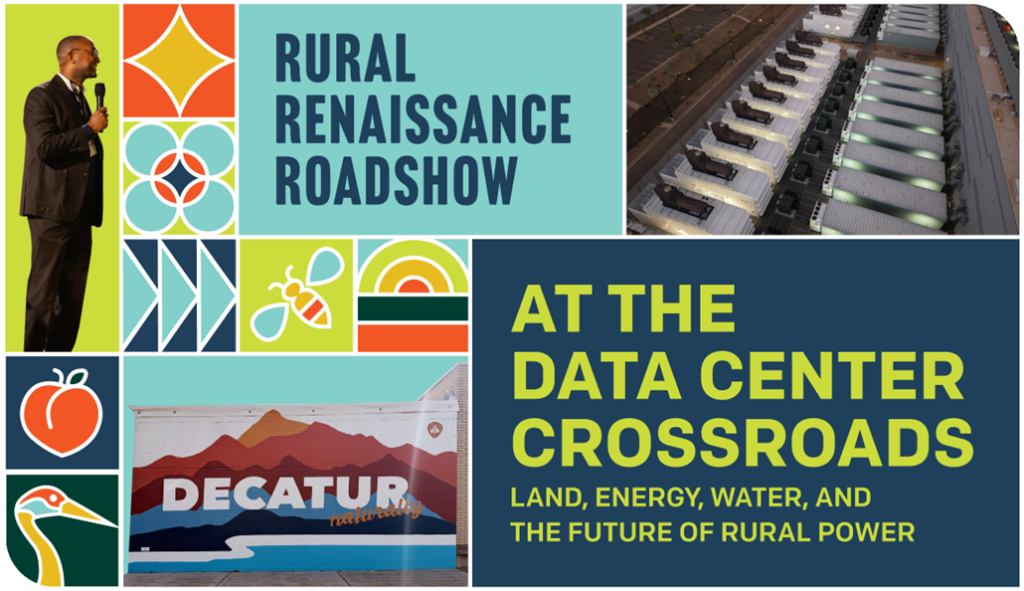
Since publication of her book, Groundswell (a non-profit organization) has sponsored an annual “Rural Renaissance Roadshow” conference bringing rural leaders together to focus on community power and practical resilience projects in small towns and rural areas. It is designed as a catalyst for action, mixing keynotes, workshops, field trips, and local culture to help people go home with concrete ideas and partners.
“Planners and economic development leaders are on the front lines of if (and I do mean IF) technology companies and data centers come to town – and if so – how they show up.” Moore explained recently. “This year’s Rural Renaissance Roadshow is focused on communities ‘At the Data Center Crossroads.’ Convened by Groundswell and hosted in Decatur, Alabama, the Roadshow will confront topics including local sovereignty, energy and affordability, impacts on local water and food systems, and community benefits agreements by sharing experiences, building relationships, and focusing on practical solutions that can be put to good use.”
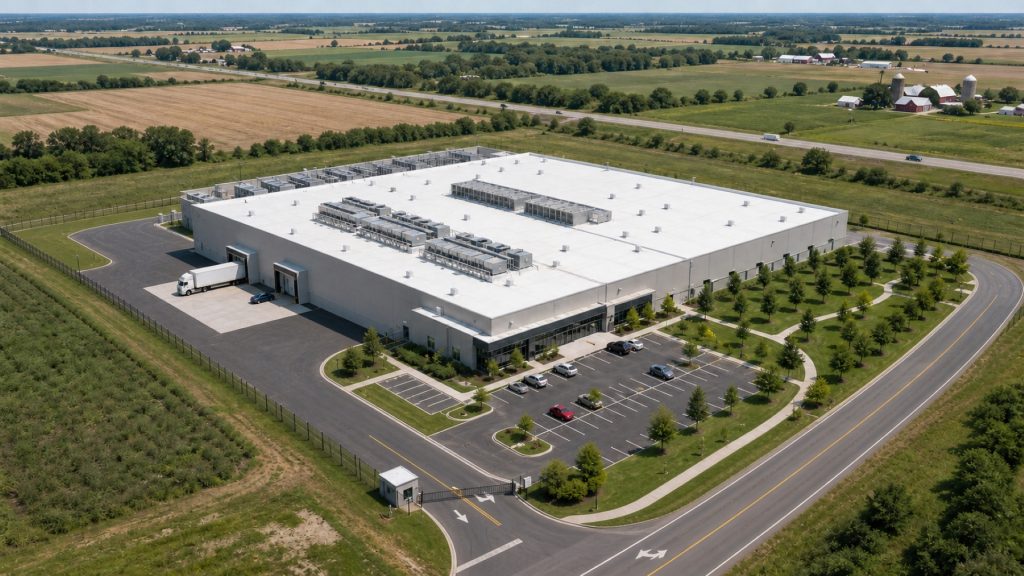
Data centers are front and center in the media and in many small town coffee shops and public meetings across the country. These strange and mysterious entities represent a convergence of communications, utilities, and energy—between their necessity to host social media and artificial intelligence to their voracious appetites for energy and water in communities where either may be in short supply at increasing costs. The upside? Steady property tax revenues for jurisdictions with increasing bills to pay and a new well-paying jobs where those may be few and far between.
Sessions are slated to address affordability and infrastructure, local control vs. federalization (anyone care for a debate over zoning pre-emption?), stewardship and land use planning, and economic development. Within the conversation I would expect ideas about shifting from centralized to distributed solutions, but the real value will likely be in conversations with others dealing with the same issues we’re dealing with at home.
Learn more about the Rural Renaissance Roadshow, coming up November 4 – 6, 2026, at Decatur, Alabama: https://ruralrenaissance.com/.
I wrote a review of Moore’s book for this Small Town & Rural Planning newsletter in the spring of 2024. The book is worth a read if you’re a planner, interested in energy production and conservation, or simply want to learn more about improving your small town or rural community.

