
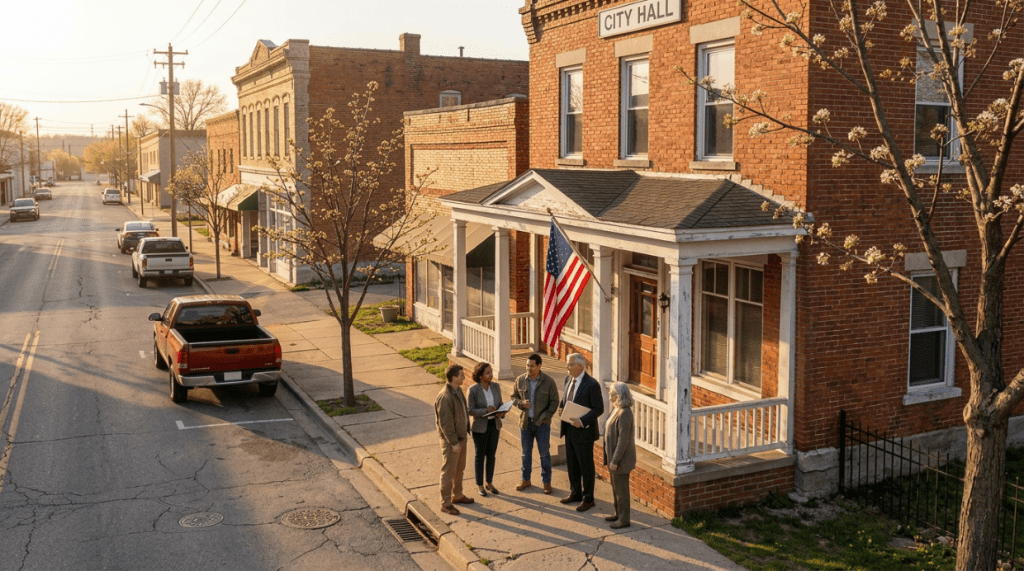
Spring is a good time to look around and ask, “Is this really working for us?” As the snow melts to reveal the promise of a new growing season, it also uncovers the little cracks in the system. We start to notice the potholes, aging buildings, and overworked local offices. It’s a simple reminder: if we don’t take care of the basic parts of public life, they break down. That’s where good governance comes in—not as an abstract idea, but as the everyday work of maintaining what holds a community together. When governance is strong, systems function, trust grows, and people can rely on the institutions that serve them.
At its core, public policy is about making things work. And when things work, most people don’t notice; the town just runs, the lights stay on, and kids get to school.
Lately, though, a lot of people feel like the system isn’t working well. The good news is rural America still has tools that bigger places sometimes forget. Our local governments are usually people we know—our neighbors. Our problems may be tough, but our people are tougher. Let’s take a closer look at that.

Why Good Governance Matters
The business of keeping a community running is usually fairly straight forward. There may be fewer people at City Hall in a small town, but in general the elected officials on volunteers on boards debate policies and there are paid staff who implement those policies. Some very small towns may only have volunteer elected officials who do everything. And some larger cities or counties pay their elected officials on a full-time basis.
However we do local government, public policy is how we decide what problems to tackle and where money and effort come from and go. “Good” governance means leaders use power fairly and wisely, with clear rules and open decisions. When this works, communities are safer, stronger, and more resilient.
Over time, though, political systems can wear out if they do not keep up with social and economic change. Rules can get rigid, special interests can take over, and everyday people lose trust. Many Americans (in places large or small) feel government is stuck. Politicians have become too partisan (well, at least the side you don’t agree with). They can’t solve real problems that affect people like you.
Across the US, we’ve seen the nationalization of local politics. Where small town leaders used to make decisions based on what was best for their community, they may take their cues from national talking points—from the right or left. Policy gridlock in Washington and state capitols makes it hard to fi big issues. Delayed funding, red tape, and constant conflict weaken public confidence. These national problems then spill over into our small towns and rural counties, making it more difficult for us to get things done at home.

What Rural America Can Teach
There is an upside, though, born in the necessity to do more with less. Rural communities often run on lean budgets but close relationships. People know their local leaders, which makes accountability more direct and personal. They have economies of “scope” rather than economies of “scale”.
Some small towns are trying new approaches:
- Partnerships with nonprofits and co-ops to deliver services
- Fresh ways to involve young people and underrepresented residents.
- Quite upgrades to systems that make government work better and rebuild trust.
Spring is upon us here in Middle America. The snow is about gone and the farmers are preparing to plant their new crops. Spring is about renewal… and it’s a good time to think about renewing our public life, too.
We need new leaders who see public service as a responsibility, not just a path to power. That may be wishful thinking, but we all need some hope in our lives.
As citizens, planners, and community builders, at work in those spring fields, we can:
- Ask for clear, honest communication from our institutions
- Support efforts to strengthen local capacity.
- Stay engaged so trust can grow again, starting in our own hometowns.
In the end, good governance is not about party labels or partisanship. Good government is a shared community value worth defending, especially in a season of new beginnings.
I wrote about public policy and governance in April 2025, in an admittedly wonky series here on the blog at jcshepard.com. Political observer Francis Fukuyama had some thoughts on the topic as well (Political Order and Political Decay).
- Good Governance and Trust in Rural America (the basis for this post)
- ICYMI—Political Order and Political Decay in the Time of Trump (repost from 2017)
- Rule of Law in Rural Governance : Strong Small Towns Start With Fair Local Laws
- From Vision to Reality: Why Good Planning Powers Good Governance
The Marketplace public radio team put on a live event 29 March, broadcast last weekend. I’m a fan. Host Kai Ryssdal had a conversation with economics podcast host and educator Kyla Scanlon and Marketplace Morning Report outgoing host David Brancaccio, with an editorial comment at the end particularly relevant to our discussion here on good governance and the rule of law. Give it an hour and a quarter when you can.
.