
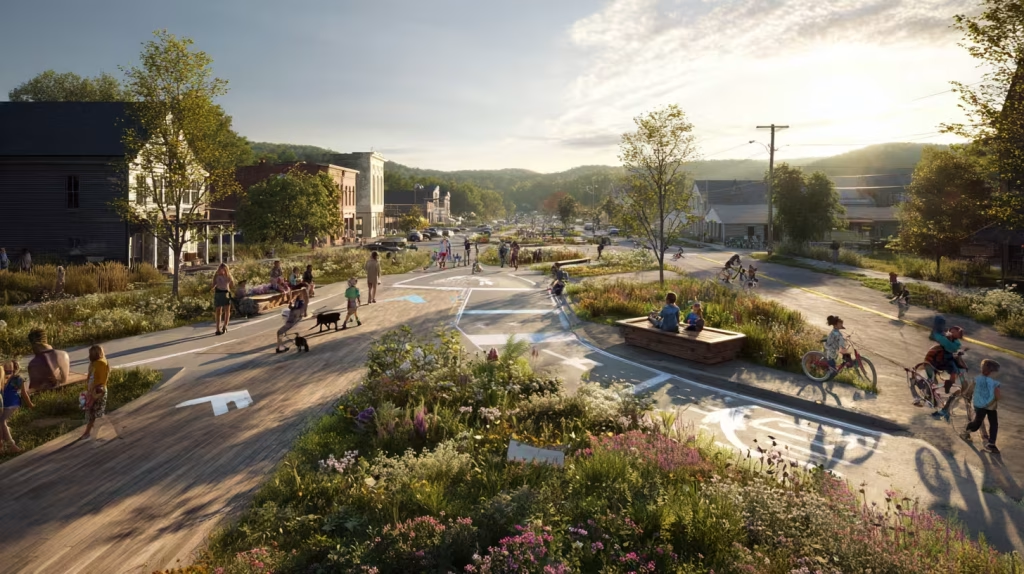
This article continues our November series: From Ideas to Action — A Month of Praxis and Implementation in Rural Communities. In week two we turn our focus to active living and rural health: how small town leaders make choices that support movement, wellness and connection — even when budgets are tight and distances are long.
Improving your community helps people be more physically active. Many rural communities struggle with fewer sidewalks, long travel distances, and limited recreation spaces, which make it harder for residents to walk, bike, or play outside.
What can we do about it, to turn theory into action? Small towns often rely on local partnerships and small, cost-effective projects like adding crosswalks, improving parks, and offering shared-use spaces in schools and churches. These efforts use community ideas and leadership to create safe, welcoming places for exercise while building pride and connection among residents. Successful rural active living is about teamwork, creativity, and adapting plans to the town’s unique culture, geography, and resources.
These small efforts can lead to big change.
What if the key to healthier rural communities isn’t big budgets, but small, smart steps?

Why Active Living Matters in Rural Areas
In rural communities across the United States, health outcomes and quality of life are often shaped not just by personal choices, but by the places people live. Rates of physical inactivity, obesity, and related chronic diseases—such as heart disease and type 2 diabetes—tend to be higher in rural populations than in urban or suburban areas. This isn’t just a matter of lifestyle; it’s also about the environment and infrastructure that support—or limit—everyday movement.
The Role of the Built Environment
The “built environment” refers to how physical spaces are designed and connected. Things like sidewalks, trails, crosswalks, lighting, safe roads, parks, and access to community facilities all influence how easy (or hard) it is for people to walk, bike, gather, and play.
In rural areas, these features are often missing or incomplete. Sidewalks may stop abruptly or never exist. Trails might not connect key destinations. Lighting can be limited or absent, especially in lower-income areas. Long distances between home, school, and services make active transportation difficult. In some places, walking may literally feel unsafe due to traffic, poor visibility, or lack of pedestrian infrastructure.
Without these basic elements, opportunities for physical activity—especially those that are free and close to home—become harder to access, especially for children, older adults, and those without cars.
The Hidden Strengths of Rural Areas
Yet, rural communities also hold unique advantages that urban areas often lack. These include:
- Abundant Open Space: While distances can be long, land is often available for trails, parks, and community gathering spaces—if the right partnerships and resources can be found.
- Tight Social Networks: Relationships in rural towns run deep. When residents mobilize around a cause—like building a walking loop or improving a park—they often bring strong trust, shared values, and a can-do spirit.
- Existing Institutions: Rural schools, churches, and cooperative organizations often serve multiple community roles. With the right agreement, these spaces can be opened for fitness, play, or informal recreation.
- Cultural Connection to Place: Many rural residents have a strong sense of identity tied to the land, heritage, and traditions. This connection can be a powerful motivator for building healthier environments that reflect community pride.
A Matter of Equity and Opportunity
Active living in rural settings is also about equity. In many small towns, particularly those with aging populations, Indigenous communities, or persistent poverty, the lack of safe, accessible places to move and gather reinforces health disparities. Improving the built environment isn’t just about health promotion—it’s about creating dignity, access, and community connection.
That’s why praxis and implementation matter so much here. Rural places can’t always wait for big grants or regional plans. But they can take small, strategic steps to improve local conditions using the assets they already have. From painting a crosswalk to activating a school gym after hours, every action matters—and builds momentum for more.

Putting Praxis and Implementation to Work
Applying praxis and implementation to active living puts theory to work. Translating policy ideas into practical, context-driven action must consider unique rural challenges and local voices. Effective strategies blend local involvement, adaptive planning, and partnership to ensure sustainable impact.
Understanding Praxis in Rural Communities
Applying the idea of praxis in rural planning and policy moves ideas beyond theory. For active living, the approach grounds public policy in daily practice by involving local community members, listening to their needs, and co-creating solutions fitting local culture and geography.
A “one-size-fits-all” approach just doesn’t gain traction in most small towns. Instead, initiatives must be adaptive and rooted in local ownership for long-term success. Implementation is most effective when local leaders, organizations, and residents collaborate from planning through execution, focusing on genuine local concerns and community priorities.
Key Implementation Strategies
Effective active living implementation strategies are community-led and locally relevant. Practices must reflect local culture as well as the geography of the place. Key strategies include cross-sector collaboration with partners from the public sector, employers, schools, health, and civic groups. They also incorporate evaluation and adaptation strategies for continuous improvements.
Active Living by Design
Active Living by Design (ALbD) is an example of a national program, based in theory and implemented with an eye on practice. The initiative was designed to create healthier communities by making physical activity an everyday, accessible part of life for all residents. Established by the Robert Wood Johnson Foundation, the ALbD initiative funded 25 diverse communities across the United States, supporting them to design, plan, and implement innovative approaches to promote active living, especially in underserved, rural, and urban contexts.
As noted by Timothy Schwantes in a presentation to the 2010 Active Living Research Annual Conference “Active Living by Design encourages the use of a “5P” community action model that includes strategies for preparation and partnerships, promotion, programs, policy, and physical projects.”
- Preparation: Build partnerships, assess needs, and develop capacity.
- Promotion: Raise awareness and drive demand for active living opportunities.
- Programs: Deliver and coordinate programs encouraging physical activity, like walking clubs, fitness challenges, or after-school sports.
- Policy: Influence and develop local ordinances or school policies supporting activity, such as safe routes to school or shared-use agreements.
- Physical Projects: Improve infrastructure (sidewalks, trails, parks, bike lanes) to make activity safer and more attractive.
Successful ALbD efforts required strong local leadership, continuous community engagement, cross-sectoral collaboration, and sustained technical assistance. Peer-to-peer learning and tailored technical support were critical resources for adaptation and scaling of best practices.
Addressing Barriers
There are common obstacles to active living in rural environments. Many small towns lack infrastructure like sidewalks and parks. Cultural attitudes can make it difficult to pursue new ideas. Isolation, weather, safety concerns, and limited funding are all more common than not.
Overcoming these barriers requires collaboration, leveraging existing community assets, and seeking innovative funding strategies. Involving a diverse group of stakeholders—public health, planning, local government, residents—helps ensure solutions are relevant, and resources are used efficiently.
Rural communities are not simply “smaller urban areas”, yet Active Living can be just as successful as in metro areas. Planning must account for unique rural diversity, social dynamics, built environment, and transportation networks. Success requires qualitative and quantitative assessment methods tailored to rural contexts, including local input to continually refine active living projects.
Sidewalks and Multi-Use Trails
One key to encouraging active living is providing safe places for people to be active. Sidewalks are often built or upgraded alongside other transportation projects to maximize investment and minimize disruption. Multi-use trails can be integrated into greenway master plans, which also may help secure funding and policy support for their construction and maintenance. Sidewalks and nearby multi-use trails have been shown to increase property values as well as providing community amenities. Trails can also attract visitors for biking and hiking, who then spend money at local restaurants and businesses.
Partnerships across public health, planning, and transportation agencies can help see to both health and mobility improvements. Nobody gets these projects done working by themselves.

Real-World Case Studies: How Small Towns Build Active Living from the Ground Up
One of the best ways to understand rural active living is to see it in action. The following five case studies—from the U.S., China, Europe, and Australia—show how rural communities are using local assets, creativity, and collaboration to create healthier, more connected places to live.
Each example is grounded in real-world data, partnerships, and physical change on the ground.
1. Shared-Use Agreements in Rural Communities
Location: Multiple towns across the U.S.
Source: County Health Rankings & Roadmaps, Active Living Research
The Challenge: Limited access to affordable recreation facilities after hours.
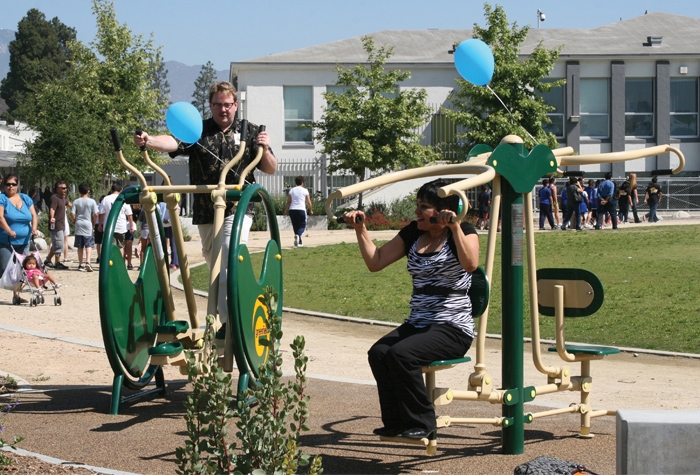
What They Did: Many small towns have established shared-use agreements that opened school gyms, church halls, and public fields for community use. Schools and churches may allow the public to use their gyms, fields, trails, or kitchens for walking, sports, fitness classes, and healthy eating programs.
Shared-use agreements help revitalize underutilized spaces, bring residents together, reduce vandalism, and support public health goals at low cost; they also often improve academic outcomes by supporting student health. These agreements helped communities use what they already had—without needing to build anything new.
Result: Increased participation in physical activity, stronger intergenerational connections, and higher use of existing infrastructure. Shared-use can also encourage community support for school facilities among residents who no longer have school-age children.
Key Success Factors:
- Strong school-community partnerships
- Formal or informal agreements that clarify liability, scheduling, and maintenance
- Flexibility to adapt spaces for multiple age groups and activities
Tip for Rural Planners: “Shared-use agreements are a cost-effective way to maximize what already exists. With the right partnership, even a school gym can become a local hub for health and connection.”
2. Park Revitalization in Shibadong Village, China
Location: Hunan Province, China
Source: Frontiers in Environmental Science (2025), MDPI Sustainability
The Challenge: An underused park with limited public amenities in a mountainous rural village.
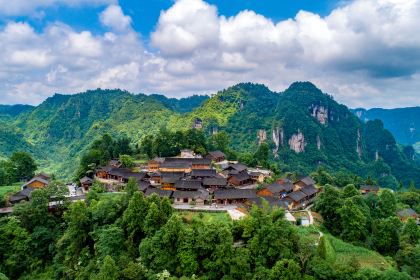
What They Did: As part of China’s Rural Revitalization Strategy, Shibadong Village co-developed a redesigned park featuring walking trails, cultural exhibits, and a community garden. The village aligned its park improvements with local tourism development.
Result: Over 838,000 annual visitors, $2.8 million in tourism revenue, and 30,000 new jobs in the region. The park became a source of pride, wellness, and economic resilience.
Key Success Factors:
- Community-led design and maintenance
- Integration with tourism and cultural identity
- Modest public investment leveraged for maximum impact
Tip for Rural Planners: “Revitalizing a rural park can do more than improve health—it can anchor local identity and drive new economic opportunity.”

3. Mixed-Use Development in Missoula, Montana
Location: Sxwtpayen Area, Missoula, Montana (USA)
Source: Missoula County, Montana
The Challenge: A need for more walkable, livable neighborhoods without increasing traffic or sprawl.
What They Did: Missoula is a progressive college town located in the Rocky Mountains of Montana. The Sxwtpayen Area (pronounced s-wh-tip-KAYN), formerly known as the Mullan Area, is a major planning and development region on Missoula’s western edge, designed as a model for active living, mixed-use neighborhoods, and sustainable, equitable growth. This approach emphasized sidewalks, bike lanes, and public gathering areas. The Sxwtpayen Neighborhoods Master Plan emphasizes walkable community centers, mixed uses, and a blend of retail, commercial, and office spaces.
Result: Increased pedestrian activity, reduced car use, better air quality, and stronger support for local businesses.
Key Success Factors:
- Inclusive zoning that encouraged both equity and environmental sustainability
- Resident-led design of public spaces and trail connections
- Emphasis on safety and accessibility in all new developments
Tip for Rural Planners: “When you bring daily needs closer together, active living becomes effortless. Walkable places aren’t just urban—they’re possible wherever people care about connection.”

4. Community-Led Liveability Strategy in Parkes, Australia
Location: Parkes Shire, New South Wales
Source: Place Score Case Studies
The Challenge: Poor walkability, missing sidewalks, and lack of public input in infrastructure decisions.
What They Did: Parkes launched a community-wide liveability strategy using Place Score, a digital tool that let residents map missing paths, unsafe crossings, and underused areas. The council prioritized small, fast improvements like painted crosswalks and shaded benches.
Result: A 30% increase in park usage within one year. The strategy now informs all future public projects—from roads to housing.
Key Success Factors:
- Data-driven decision-making grounded in community input
- Early “quick wins” to build visibility and trust
- Long-term planning with community voice embedded throughout
Tip for Rural Planners: “If you want people to move more, start by asking them what’s in their way. Then fix it fast, visibly, and together.”
5. Energy-Active Living Link in Estonia & Spain
Location: 34 rural municipalities across Estonia and Spain
Source: LIFE EC4RURAL Project (2023–2027)
The Challenge: Energy poverty and limited indoor activity spaces during cold seasons.
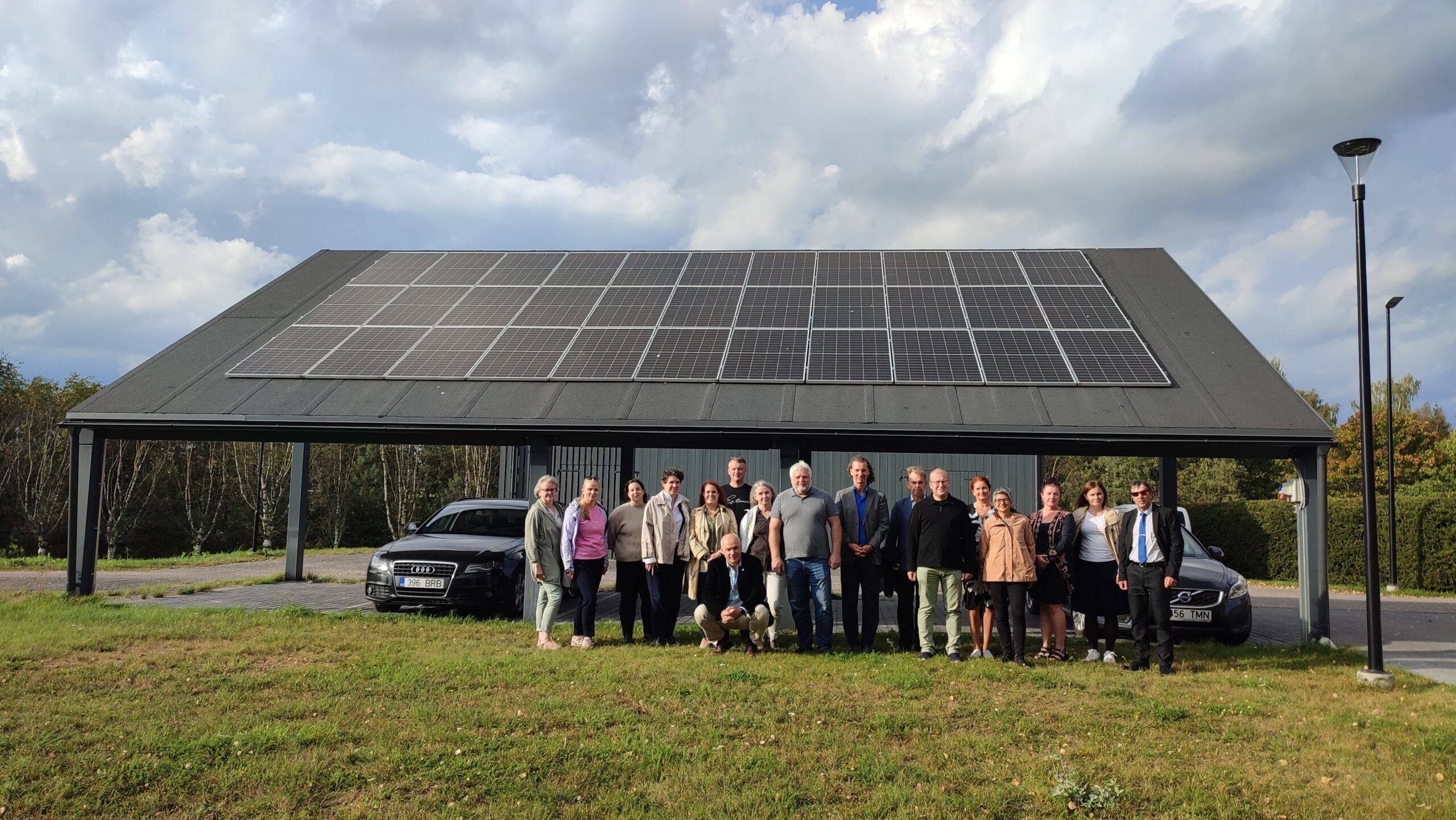
What They Did: The EC4RURAL project created energy communities where residents co-manage solar installations and biomass heating—and use that infrastructure to support active living. In one Estonian town, solar panels installed on a school roof helped power a heated gym used for evening yoga classes and winter fitness events.
Result: Reduced energy costs, improved access to wellness facilities, and increased community ownership of infrastructure.
Key Success Factors:
- Dual-purpose projects linking climate goals with public health
- Local ownership of both energy and active spaces
- Support from the EU LIFE program and national partners
Tip for Rural Planners: “Sustainability and health can go hand in hand. With creative planning, the same solar panel that lights the building can also power community life inside it.”

Five Low-Cost Strategies to Boost Active Living in Rural Communities
You don’t need a large budget to promote healthier, more active lifestyles in small towns. The key is working with what you already have—spaces, skills, and social capital. These five strategies are proven, practical, and easily scalable, whether your town has 500 people or 5,000.

1 – Shared‑Use Agreements: Unlocking Existing Spaces for Wellness
As noted above, shared-use agreements can help bridge the town-gown divide. Research shows that about 42% of U.S. municipalities with a school had a shared‑use agreement allowing public use of school facilities outside regular hours. activelivingresearch.org
Many rural communities have school gyms, tracks or fields that sit idle after school hours. By formalising agreements with local governments or community groups, these facilities become shared‑use recreation hubs. County Health Rankings & Roadmaps
Key Success Factors:
- Partnership: Schools + municipalities + community groups work together.
- Formal vs informal: Written agreements help clarify liability, scheduling & maintenance.
- Programming: Intentional activities (evenings, weekends) increase usage.
“Shared‑use agreements allow a rural school or church to become a daily hub for wellness without building new facilities.”
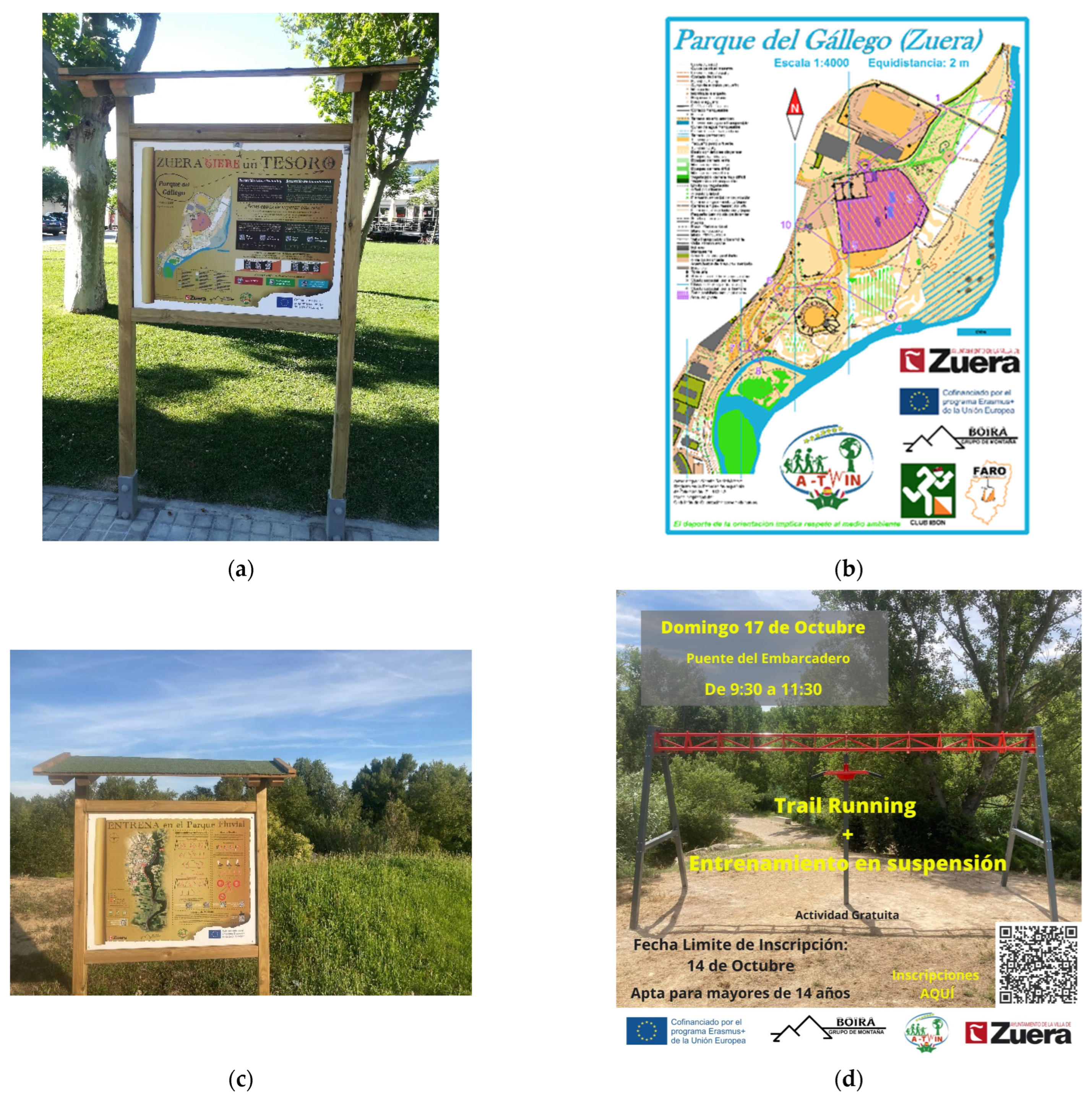
2 – Wayfinding Made Simple: Marked Routes That Mobilise Communities
In a rural municipality in Spain (about 8,500 inhabitants), a project installed a series of marked walking routes, signage and free‑use facilities to stimulate physical activity. PMC
Even when trails or open spaces exist, residents often don’t use them because access is unclear. Simple signage and marked loops remove that barrier.
Key Success Factors:
- Designated routes with signs and explanatory posters.
- Free access facilities and launch events to build awareness.
- Local culture and environment anchored into the route design.
“Hand‑painted route signs and local walking loops gave a Spanish rural town a low‑cost boost in activity.”

3 – Pop‑Up Public Spaces: Test First, Build Later
Research from the Community Preventive Services Task Force highlights that when park/trail/greenway infrastructure is combined with outreach or programming, physical activity participation increases (~17‑18%). thecommunityguide.org
Rural towns may have open spaces or parking lots. By temporarily converting them for walking circuits, markets, or outdoor fitness events, you can gauge interest and build momentum for permanent change.
Key Success Factors:
- Low cost and quick to implement – good for pilots.
- Visibility: creates local buzz and community involvement.
- Data & feedback: use the pop‑up to test what works.
“Pop‑up events let a rural town test a walking circuit or play zone for a weekend—see what works, then build from there.”
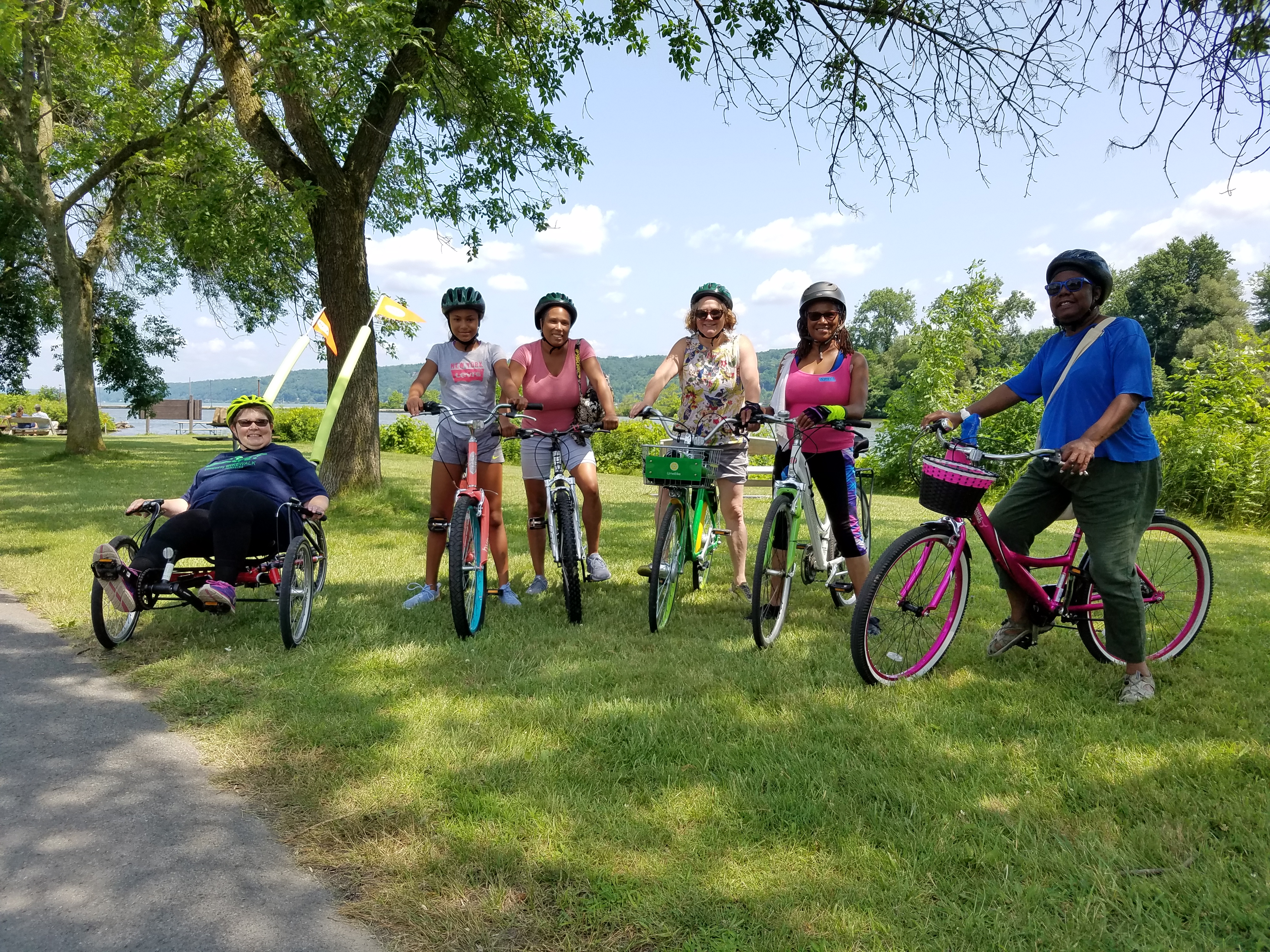
4 – Walking & Biking Groups: Movement with Social Momentum
Rural research indicates that organised group activity can tap into social networks, especially in low‑access areas.
In rural settings where social ties are strong, turning movement into a shared social event—such as “Wednesday Walkers” or weekly bike rides—adds both physical and social benefits.
Key Success Factors:
- Regular schedule and known meeting place.
- Inclusive: all ages, abilities.
- Local partner: clinic, school, church lends legitimacy.
“Start a weekly ‘walk and chat’ group – one hour, one route, one community‑building moment. That’s where active living begins.”
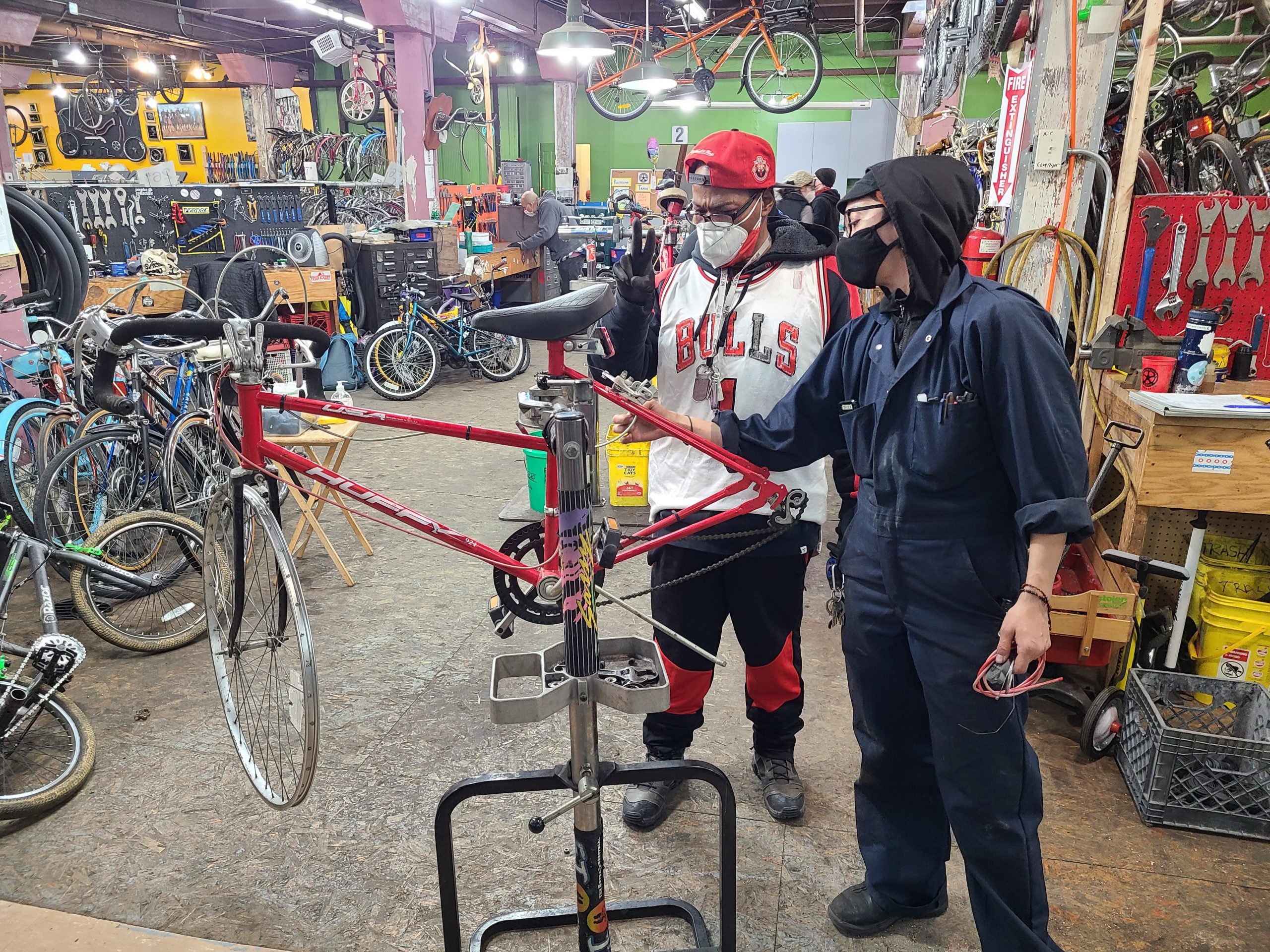
5 – Skill‑Sharing Workshops: Building Capacity, Movement & Community
While specific rigorous studies on workshops in rural active living are fewer, the broader evidence of community‑driven physical activity supports this approach (e.g., community engagement in route signage, local facilities). PMC
Rural residents possess skills (bike repair, outdoor fitness leadership, gardening) that can be shared in informal workshops. These events activate the social fabric and help reduce barriers to activity.
Key Success Factors:
- Local trainers/volunteers showcase trusted expertise.
- Hands‑on, low‑cost, open to all.
- Connects to movement and environment (walk safely, fix your bike, lead the group).
“Host a free bike repair clinic or walking‑club workshop—the skill‑sharing builds both capacity and community.”
Active Living in Action: Making the Active Choice the Easy Choice
A few years ago, I worked with four counties in Southwest Minnesota on an Active Living Intervention as an implementation task for the local public health district. Our objective was to connect communities with policy experts, review community planning efforts, and help stakeholders inform decision makers on mutual goals for the future in non-motorized transportation and recreation.
Land Use and Active Living
Local land use has a significant impact on accessibility, which itself is essential for active living. Walking and biking is simply easier on a traditional grid of blocks and lots with short blocks, sidewalks, and alleys. Allowing densities greater than 4 dwelling units per acre (small than 1/4-acre lots) provides housing choices, with eyes on the street for public safety and a sense of community. Better land use patterns give people choices for more livable communities.
Traditional downtowns also can lead to better active living. A variety of destinations downtown encourages more activity. On-street parking (rather than seas of off-street parking lots), sidewalks, and pedestrian amenities tend to attract more users at more times of the day.
Simply put, implementing active living strategies provide alternative to typical suburban sprawl. One example is providing incentives for compact development patterns, including cluster development which preserves open space by allowing smaller lot sizes with water and sewer infrastructure.
Transportation Systems are Key
Active living depends on accessibility. Bigger, wider, faster roads do not necessarily improve accessibility, especially for people who cannot (or simply do not want to) drive. Accessibility is about providing choices for people of all ages and all abilities; walking, biking, transit, AND driving.
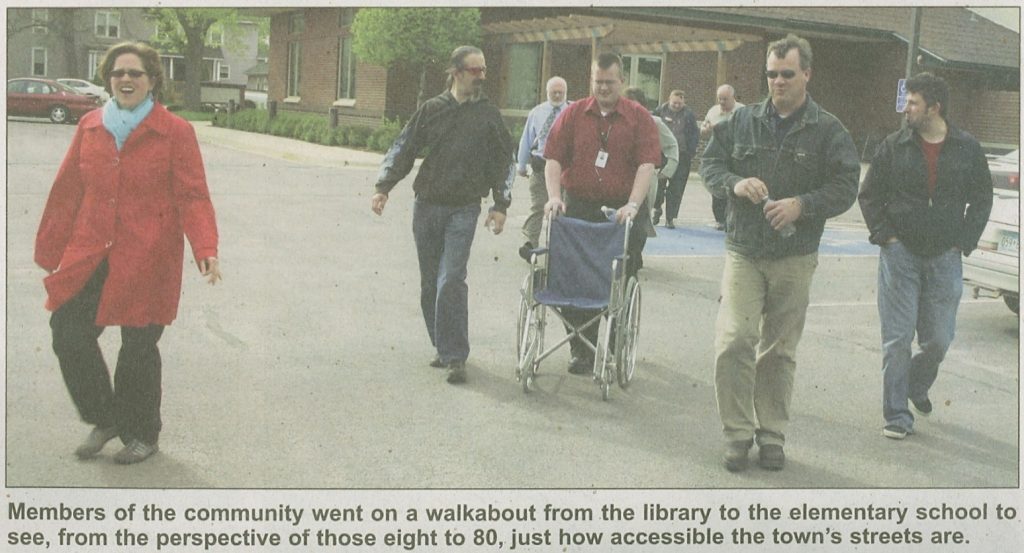
Complete Streets is one policy initiative which complements Active Living efforts. “Complete Streets” are streets which are planned to be safe and accessible for pedestrians, transit riders, bicyclists and drivers. This does not mean “all modes on all roads”. It basically means we design streets for users age 8 and 80, to provide communities for a lifetime. In some states, like Minnesota, Complete Streets are even official policy.
Other planning and development policies can encourage active living implementations. Corridors of activity, for example, provide storefronts close to the street and destination uses close enough for pedestrians to walk from one store or service to another. Transit-oriented design, even in small towns, works for micro-transit as well as subways in big cities. Safe Routes to School are another program which has achieved demonstrable results in improving health and well-being of children while improving community infrastructure for all residents.
The pedestrian experience is key to successful active living. Amenities improve that experience. Benches, bike racks, kiosks, human-scale lighting, planters, drinking fountains, and street trees just make your community a nicer place to be, as well as encourage people to get out of their cars and enjoy the place they live.
Parks, Recreation, and Open Space
Providing parks, recreation, and open space has been an important public service since we’ve built towns. Protecting the natural environment is also good for public health and safety. Conservation of natural areas, including floodplains, benefits wildlife and biodiversity while preventing harm to people and property. “Green” can be good for both nature and the local economy, while providing a venue for people to be more active.

Final Thoughts
Praxis and implementation for active living in small towns and rural areas requires grounded, context-sensitive strategies that go beyond generic policies and busy-work. Each principle we’ve discussed in this series plays a unique role in making active living successful and sustainable in rural communities.
1. Engage Local Expertise
- Theory without action is interesting yet not very useful.
- Local residents, civic leaders, and grassroots organizations provide vital knowledge about community habits, priorities, and barriers to activity.
- Implementation can include participatory workshops, stakeholder interviews, or “Rural Voices” forums that actively solicit feedback and empower community members to co-design solutions.
- Example: Rural towns commonly use resident advisory boards to guide sidewalk/trail planning, ensuring projects address real needs rather than outsider assumptions.
2. Experiment and Adapt
- Small towns benefit from piloting new projects (like pop-up walking trails, seasonal sidewalk extensions, or temporary traffic calming) so they can learn, adjust, and build local buy-in before scaling up.
- Evaluation methods should be flexible and iterative, allowing for rapid adjustment as local conditions or seasons change.
- Example: The VIVA Initiative in New Mexico we profiled last week used phased improvements and ongoing community feedback to adapt evidence-based approaches for their specific rural context.
3. Build Lasting Relationships
- Success in rural areas depends on patience, trust, and consistent presence with local residents, businesses, and organizations.
- Trusted partnerships (city-county coalitions, faith-based alliances, youth engagement teams) strengthen networks and increase long-term sustainability.
- Example: Persistent engagement—attending local gatherings, church events, supporting local leaders—is often necessary to become accepted and foster support for new initiatives.
4. Leverage Local Assets
- Use existing infrastructure, cultural sites, and local expertise for programming and physical projects.
- Transform underused buildings, farmers’ markets, fairgrounds, or main street parks into active living destinations.
- Example: Churches offer shared-use spaces for recreation, fire halls host wellness events, and agricultural landscapes can become scenic walking routes.
5. Foster Collaboration
- Cross-sector collaboration—among schools, health, public safety, business, civic groups, and residents—ensures a broad base of support and resource-sharing.
- Form working groups, joint task forces, and shared leadership models to drive project planning, implementation, and evaluation.
- Example: Rural Active Living networks (like PAPREN) unite researchers and practitioners to adapt strategies and share best practices for rural settings
6. Communicate Effectively
- Successful communication blends traditional and modern methods: local radio, town halls, flyers, social media, and face-to-face engagement all reinforce key messages and invitations
- Messaging should use local language and resonate with place-based stories and values, highlight successes, and overcome connectivity barriers
- Example: Combining word-of-mouth at community gatherings with digital outreach ensures even hard-to-reach groups are informed and involved. And don’t forget your local community newspaper if you are so lucky as to still have one.
7. Align With Local Values
- Programs and policies should recognize, celebrate, and align with the town’s heritage, values, and pride—whether that’s outdoor culture, agricultural roots, or a focus on family life.
- Engagement in local traditions, seasonal events, and cultural festivals fosters acceptance and makes active living initiatives part of the community’s identity.
- Example: Including walking routes in parades, linking trail design to historical landmarks, or integrating activity programs with beloved local gatherings helps root active living in community life.
Effective praxis and implementation for active living is never “one-size-fits-all”—it must be flexible, respectful, collaborative, and deeply informed by local context, experience, and values in rural and small town environments.
Turning theory into small, inclusive changes
Active living in rural communities isn’t about building sprawling parks or high‑budget facilities. It’s about turning theory into small, inclusive changes — from a walking loop to a shared‑gym agreement — grounded in community strengths, local partnerships and resident voices. By leveraging what you already have, listening to your neighbors and emphasizing movement as part of daily life, even the smallest towns can create healthier, more connected places.
What’s one small step your community could take this month to help more people move, gather and connect?

Read More & Take Action
Books
Strong Towns: A Bottom-Up Revolution to Rebuild American Prosperity
Our featured book for November 2025.
Author: Charles L. Marohn, Jr.
Why this book?
- Focuses on incremental, local action—a perfect match for your article’s theme.
- Provides practical examples of how small towns can improve infrastructure and health without large budgets.
- Ideal for planners, mayors, and community leaders. Key Takeaway: “Small, smart steps can transform rural communities from the ground up.”
The Abundant Community: Awakening the Power of Families and Neighborhoods
Authors: John McKnight & Peter Block
Why this book?
- Emphasizes local leadership and social networks—echoing your section on “The Hidden Strengths of Rural Places.”
- Offers tools to mobilize communities around health and well-being.
- Perfect for readers looking to engage neighbors, churches, and schools. Key Takeaway: “The power to create change lies within the community itself.”
Walkable City: How Downtown Can Save America, One Step at a Time
Author: Jeff Speck
Why this book?
- While urban-focused, Speck’s 10 steps for walkable communities can be adapted for rural areas (e.g., safe paths, connections).
- Practical for readers interested in design and policy. Key Takeaway: “Walkability isn’t just for cities—small towns can thrive by prioritizing people over cars.”
Rural Development: Principles and Practice
Author: Malcolm Moseley
Why this book?
- Advocates for an innovative and holistic approach to rural development, linking theoretical understanding with practical steps for local action.
- Covers core principles of sustainability, innovation, adding value, entrepreneurship, inclusion, accessibility, and community involvement.
- Moseley draws on his extensive experience with organizations like ACRE (Action with Communities in Rural England) and as a consultant for the EU’s LEADER Rural Development Programme.
The Community Food Forest Handbook: How to Plan, Organize, and Grow Edible Gathering Places
Authors: Catherine Bukowski & John Munsell
Why this book?
- Food forests and community gardens are a low-cost strategy to promote health and connection (aligns with your “abundant open space” section).
- Practical guide for creating green, edible spaces that encourage movement and gathering. Key Takeaway: “Growing food together grows community—and health.”
Resources
- Active Living Research – Using Active Living Principles in Rural Communities. activelivingresearch.org
- Rural Health Information Hub – Built Environments for Active Living in Rural Areas. ruralhealthinfo.org
- AARP Livable Communities – Rural health & activity strategies. aarp.org
- PAPREN Physical Activity Policy Research and Evaluation Network – CDC-funded Network bringing diverse partners together to create environments that maximize physical activity. papren.org
Action Steps
- Assess your community: Walk or drive around to identify barriers to active living. Are sidewalks missing? Are destinations reachable?
- Start a conversation: Host a community meeting or create an online group to collect ideas about active movement — walking, biking, play.
- Partner up: Reach out to schools, health clinics, churches or businesses for collaboration.
- Apply for small grants: Many funders support health, wellness and recreation in rural areas. Start with a modest pilot.
Looking for more?
- The New Rural Playbook: Planning Trends That Matter
- Planning with Purpose: Emerging Trends in Rural and Small Town Planning
- Thriving Together: Proven Strategies for Sustainable Rural Economies in 2025
- Wired for Change: Rural America and the Energy Economy of Tomorrow
The Best Books for Rural Development and Planning in 2025 and check out the Small Town & Rural Community guides on our Resources page.
(As an Amazon Associate, we may earn commissions from qualifying purchases. Check your local library or bookshop, too.)
