

Most comprehensive plans have a natural resources or environment chapter. Most of them say roughly the same things: protect prime farmland, preserve water quality, support conservation. But knowing what to protect is only half the job. The harder question — and the one most plans struggle with — is how.
This July, we’re spending four weeks on exactly that.
Starting Sunday, July 5th, we’re publishing a new series on natural resources and the environment in the comprehensive plan. Each week focuses on one piece of the puzzle: soils, water, wetlands, and conservation tools. The goal isn’t to cover the theory — it’s to give local officials, planning commissioners, and staff something they can actually use: a clearer picture of what the data is telling them, and what they can do about it.
What the Series Covers
Here’s what’s coming every Sunday in July:
July 5 — Soils: The Ground Under Your Plan
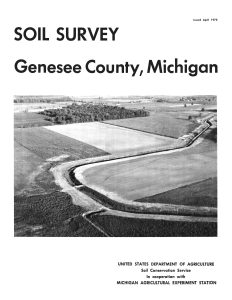
Across the US, your county’s soil survey is already full of answers. It knows where septic systems will fail, where roads will settle, and which fields are worth protecting from development pressure. The question is whether your comprehensive plan is listening. Our earlier piece on no-till farming and soil health shows why soils deserve a central seat at the planning table.
July 12 — Surface and Ground Water: Planning for Wells and Watersheds
Land use decisions don’t stop at the property line — they flow downhill. This week looks at how to connect zoning and subdivision review to watershed function, groundwater protection, and the water resources your community depends on. The USGS National Water Information System is one of the tools we’ll be drawing on.
July 19 — Wetlands: From Inventory to Protection
Wetlands aren’t just regulatory obstacles. They store floodwater, recharge groundwater, and buffer communities from the costs of development in the wrong places. This week is about understanding what you have — and how to keep it working. We’ve covered wetland conservation before — Saving Wetlands: Smart Planning for Conservation and Growth is a good starting point. The USFWS National Wetlands Inventory provides the mapping data most local plans rely on.
July 26 — Conservation Tools: Easements, CRP, and Land Trusts
Conservation easements, the Conservation Reserve Program, land trusts — these tools exist, but using them well requires knowing how they interact with your natural resources comprehensive plan chapter, your tax base, and your community’s long-term goals.
Why Natural Resources Planning Matters Now
The natural resources chapter is often overlooked in both plan making and day-to-day decisions. This series is about changing that — making soils, water, wetlands, and conservation tools a routine part of how local officials think about zoning, subdivisions, and capital investments.
Four Sundays. Four topics. All of it grounded in the kinds of plans and landscapes we work with every day.
Starting July 5th we’ll roll up our sleaves and start playing in the dirt.
Have a natural resources question you’d like to see addressed in the series? Let us know.
I will be speaking at the Inland Northwest Partners Summer Meeting coming up on the 9th of July on the Eastern Washington University (EWU) Campus in Cheney, Washington. Registration info here: https://inwp.org/events/ .
Resources
Design With Nature (25th Anniversary Edition) by Ian McHarg (Wiley, 1995
McHarg’s 1969 book is a foundational treatise on ecological planning and landscape architecture. The 25th anniversary edition presents a visionary and practical approach to creating sustainable, healthy landscapes.
Also, look for Design with Nature Now, Steiner et al ed. (Lincoln Institute of Land Policy, 2019) published in honor of the book’s 50th anniversary. These are both oversized books so you may want to consider real books for your library.
Popular posts on JCShepard.com
- The Planning Process—From Vision to Action in Small Towns and Rural America (January 2026)
- Small Towns Can Build a Strong Outdoor Economy Without Selling Out (June 2026)
- Historic Preservation and Rural Economic Development: A Rural Growth Strategy (April 2026)
- Reviving Rural America: Why Heritage Tourism Is a Game-Changer Now (September 2025)
- What is Economic Development in Modern America? A Field Guide for Small Towns and Rural Places (March 2026)
- Rural Recreation and the Outdoor Economy: Trails, Fairs, Community Identity (May 2026)
- Rural Housing Supply Crisis: Why Small Towns Are Running Out of Homes (February 2026)
- Community Facilities: Why We Need to Rebuild Our Foundations (April 2026)
- Small Towns, Big Impact: How Rural Communities Are Designing Their Own Futures (November 2025)
- The Rural Comeback: How Small Town Innovation Sparks Growth (August 2025)
This page contains affiliate links. As an Amazon Associate, JCShepard.com may earn from qualifying purchases at no additional cost to you. Check your local library.
2026: Bring Your Plans to Life
JCShepard.com Monthly Themes for 2026
- January: An Introduction to Small Town & Rural Planning and Community Engagement
- February: Population and Housing Trends
- March: Economic Development
- April: Community Facilities / Historic Sites / Education
- May: Public Health / Parks & Recreation
- June: Communications, Utilities & Energy
- July: Natural Resources (Today!)
- August: Public Safety & Hazard Mitigation
- September: Land Use
- October: Transportation
- November: Implementation
- December: Reflections
.