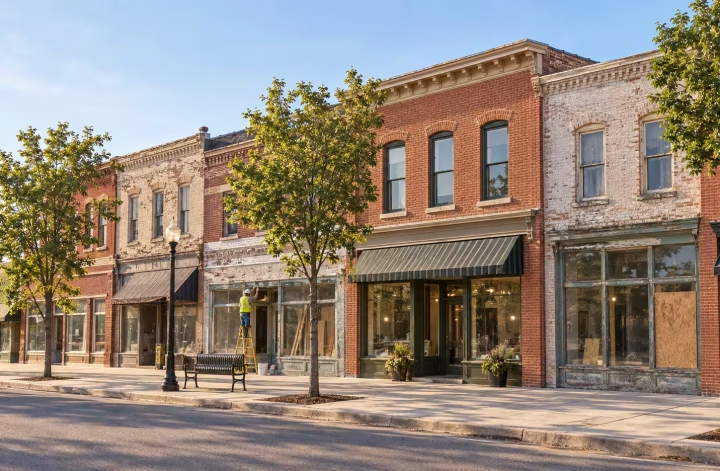
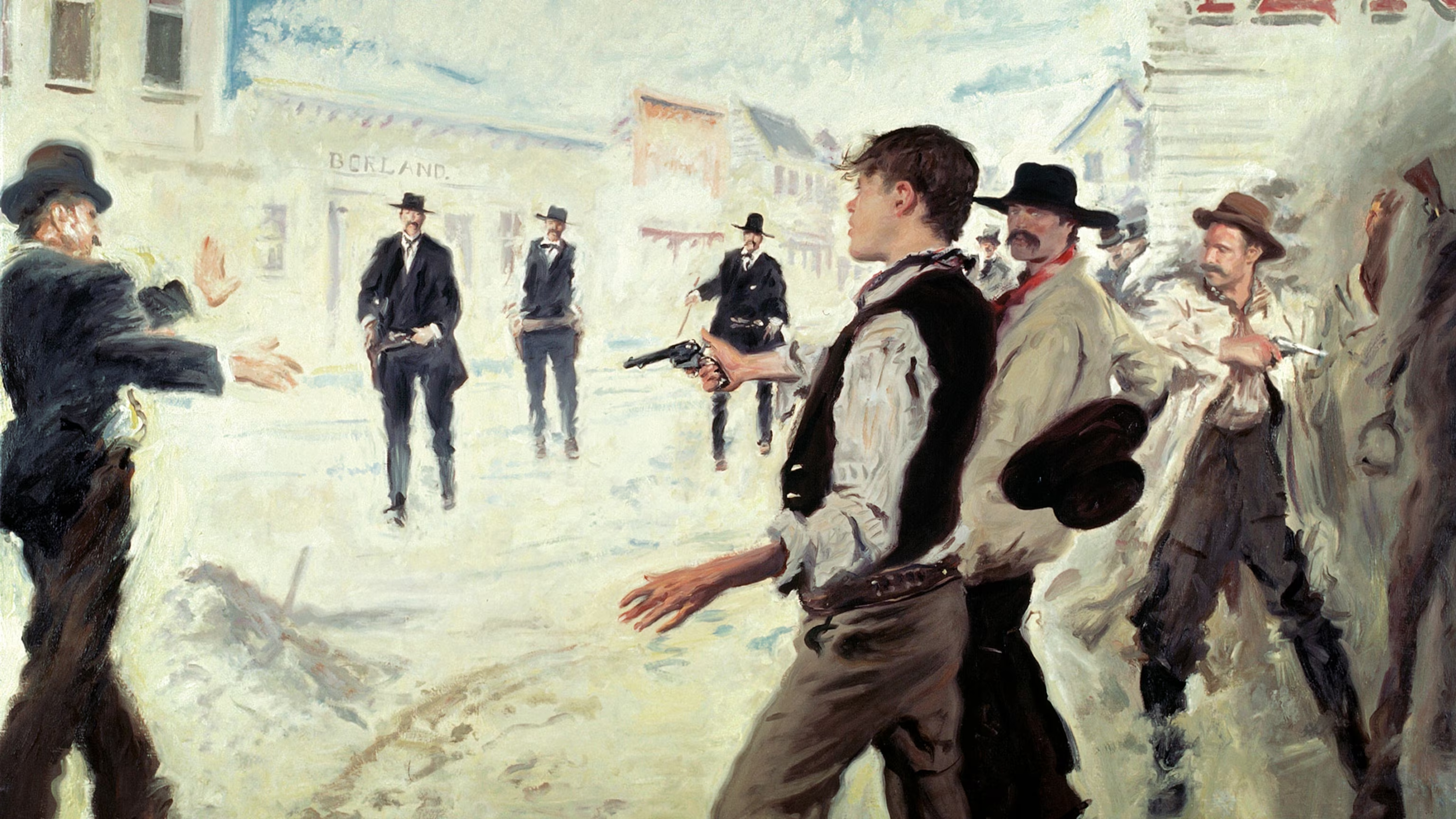
Wednesday 26 October 1881, is said to have been a chilly day at Tombstone, at an elevation of 4,500 feet in southern Arizona Territory. The territory had been contested by the Confederacy, but was established by the US Congress in 1863. By the 1880s, Arizona had over 40,000 residents and the mining town of Tombstone had a population of over 3,000, hosting 110 saloons, 14 gambling halls, and untold houses of ill-repute.
Deputy US Marshal Virgil Earp, his brothers Wyatt Earp and Morgan Earp, and their associate John Henry “Doc” Holliday faced down a gang of cattle rustlers and horse thieves (often referred to as the “Cowboys”) in what became known as the Gunfight at the O.K. Corral. While the event was precipitated by the Marshal’s attempt to enforce the city ordinance which prohibited carrying firearms in town, the confrontation had been building for a couple years. Three lawmen were wounded and three of the outlaws were killed–Billy Clanton and the McLaury brothers.
According to sources, these “Cowboys” were Confederate sympathizers and Democrats with strong ties to Texas, and were supported by Cochise County Sheriff Johnny Behan. The law and order faction – Wyatt Earp, his brothers Virgil, Morgan, and later Warren, and their friend Doc Holliday – had the backing of Tombstone’s Republican business elite, including Mayor John Clum (editor of The Tombstone Epitaph newspaper), mining magnate E.B. Gage, and Episcopalian minister Rev. Endicott Peabody.
The gunfight reflected the broader post–Civil War tension in the American West, as mining investors, lawmen, former soldiers, and frontier cattlemen vied for power and influence in boomtowns like Tombstone. Though the gunfight lasted only seconds, it became a lasting symbol of the Wild West, immortalized in countless books, legends, and films.
The Story Continued
Before the famous Gunfight at the O.K. Corral in 1881, the Earp brothers—Virgil, Wyatt, and Morgan—were experienced lawmen, gamblers, and adventurers shaped by the tumultuous Western frontier. They built their reputations across various boomtowns of the American West, from Wichita and Dodge City to the Arizona Territory.
Yet the outlaws continued to fight the Arizona lawmen after the incident at Tombstone. In December 1881, Virgil Earp was ambushed but survived. Then in March 1882, assassins fired into a saloon and killed Morgan Earp. Wyatt Earp was appointed Deputy US Marshal for Cochise County and battled against Sheriff Behan to clean up the rest of the gang. Wyatt spent the following decades moving through the frontier West, including Colorado, Arizona, and California. Virgil began a quieter life as a lawman—serving as city marshal in Colton, California, and later working in Oregon and Nevada.
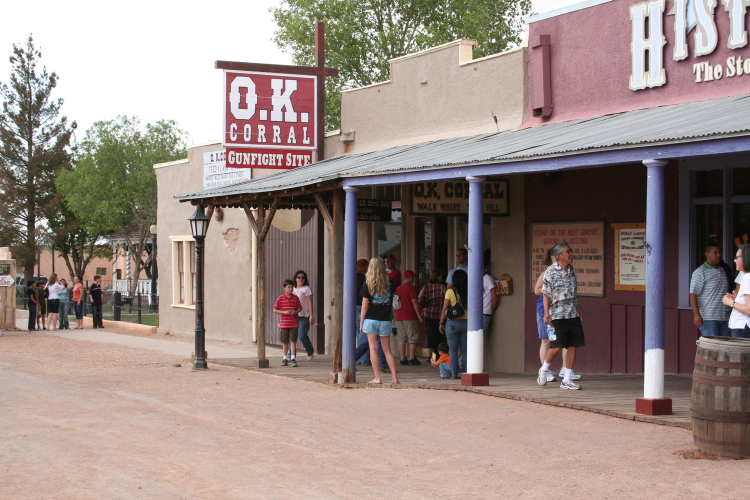
Interestingly, the actual confrontation did not take place at the O.K. Corral on Allen Street. The shootout actually occurred in a narrow lot on Fremont Street, six doors down from the O.K. Corral’s rear horse stalls. Fremont Street is now Highway 80.
.