
Public participation in planning and public policy is where democracy meets daily life. It is the process of involving citizens, stakeholders, and affected parties in decisions that shape their communities—from comprehensive plans and zoning ordinances to capital budgets and infrastructure projects. In small towns and rural counties, where residents know each other on a first name basis, engagement is especially personal and relational. Done well, community engagement grounds plans and policies in local knowledge, values, and priorities, builds trust and legitimacy, and creates the ownership necessary for implementation.
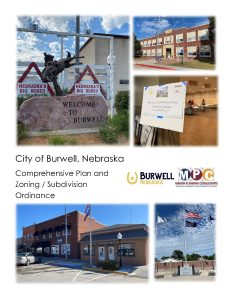
This week’s article draws on principles and practices from our comprehensive planning work at Marvin Planning Consultants across rural Nebraska and beyond, such as an award-winning project by the City of Burwell, at the gateway to the Sandhills. We also draw on plans adopted in the last couple years in rural Deshler and Thayer County on the Kansas line, and their neighbor Clay County, as well as the small metropolitan Hall County with a lot of agricultural land along the Platte River.
Community Engagement and Public Participation
Our discussion explores why public participation matters—strengthening trust, improving decisions, fostering ownership, and advancing equity—and examines the spectrum of participation from informing the public to empowering them with decision-making authority. It describes common methods and tools, from advisory committees and town halls to surveys and digital platforms, and outlines principles for effective engagement: starting early, being transparent, using multiple channels, reporting back, designing for inclusion, and respecting local context.
We also address some of the real challenges planners and local leaders face—low turnout, capacity constraints, conflicting input, the need to balance participation with technical expertise, and “participation fatigue” when past efforts failed to lead to action. You will find highlights of how public participation looks different in small towns and rural areas, where engagement is close-knit, volunteer-driven, and shaped by long institutional memory, and it traces where participation fits across the planning lifecycle, from visioning and issue identification through implementation and monitoring.
Public participation is not a single event or a check-the-box requirement. It is a thread that runs through the entire process, connecting community vision to adopted policies to real-world action.

Why Public Participation Matters
Civic engagement is not just an aspiration—it’s a way of life. Community engagement is an essential part of any public policy and planning project. Effective public participation changes who owns public decisions and how those decisions get made. This is not just a courtesy step; it is part of the substance of planning and public policy.
In rural America, in towns where residents bump into the mayor at the grocery store or in the pew at church, public participation tends to be direct, relational, and rooted in trust. Planning is personal because the outcomes are immediate and visible. Civic engagement is a conversation not a lecture nor interrogation.
Meaningful engagement doesn’t happen by default. It requires intentional effort, especially in an era of demographic shift, digital change, and growing skepticism toward institutions. Unlike in metro regions, where engagement can feel abstract or bureaucratic, small town planning is inherently personal and rooted in daily interactions. The people affected by decisions often know each other, have shared histories, and interact daily.
We try to put these principals into action in our everyday planning work with communities across the U.S. We’ll share some of these here as examples, such as comprehensive plans adopted by the small cities of Burwell and Deshler, Nebraska, in 2024, and rural Thayer County and Clay County, Nebraska, in 2025. Our integrated comprehensive planning, zoning review, strategic planning, and capital improvements plan project with the City of Burwell was recognized with awards from the Nebraska Chapter of the American Planning Association (APA) and APA’s Small Town & Rural Planning Division. The credit goes to the community leaders who brought their residents and property owners into their planning projects.
Legitimacy and trust
Public engagement strengthens the perceived legitimacy of plans and policies. Without trust, the rest of the project will not be accepted by the public.
- When people see that there were open meetings, surveys, and real chances to speak, they are more likely to view the outcome as fair—even if they disagree with parts of it.
- Recording and acknowledging what residents think, as your community engagement chapters do, makes a comprehensive plan “belong” to the community rather than to consultants or a single board.
Trust grows when leaders are transparent about what is being decided, how input will be used, and who has final authority, and when they report back on what they heard and what changed.
Better decision-making
Effective communication improves decisions by adding local knowledge to technical analysis. The community provides context for everything going on there.
- Residents and local leaders bring “soft data”: lived experience with hazards, infrastructure, schools, housing, business climate, and social networks that numbers alone cannot capture. The smaller the area, the larger the margins of error on official statistics and the larger role qualitative information plays.
- In town halls and surveys in places like Clay County and Thayer County, or the cities of Burwell or Deshler, people highlighted issues like housing quality, childcare gaps, broadband dead zones, aging utilities, and workforce shortages—details that sharpened how the plans addressed land use, facilities, and development priorities.
When planners blend quantitative metrics with this qualitative input, they can spot blind spots, test assumptions, and design policies that work better on the ground.
Ownership and support for implementation
Participation helps shift planning from “their plan” to “our plan.” At the root, we are investing in people, not just plans.
- When people have a voice in visioning, planning, implementation, and evaluation, they tend to develop a sense of ownership, skills, and local capacity.
- Town hall comments and survey themes feed directly into goals and action items—for example, Thayer County’s goals explicitly reference issues raised through community engagement.
That connection makes it easier to:
- Rally volunteer energy and local partnerships when it is time to act.
- Defend tough decisions (“we agreed in the plan to focus growth here, protect farmland there”).
- Avoid “participation fatigue,” because residents can see a line from their input to adopted policies and projects.
Equity and Inclusion
Intentional participation is one of the few tools public agencies have to elevate voices that usually get sidelined. While the term “equity and inclusion” may have come in and out of political favor, the idea is a solid foundation of democratic process—everybody deserves a seat at the table.
- Identifying all stakeholders and prioritizing inclusive processes is essential to reach groups often overlooked—by using varied times, locations, formats, and communication channels.
- In Burwell, for example, we engaged not only business owners and long-time residents, but also youth through the student council and people tied to tourism and agriculture, broadening whose priorities showed up in the plan.
Done well, engagement:
- Surfaces different experiences of the same issues (e.g., renters vs. owners on housing, elders vs. youth on amenities).
- Helps avoid policies that unintentionally worsen disparities in access to services, safety, or opportunity.
- Builds a habit of shared problem-solving that strengthens social cohesion over time.
Taken together, legitimacy and trust, better decisions, ownership, and equity are not separate boxes to check—they reinforce one another. A process that listens broadly, explains clearly, and follows through creates plans and policies that communities can live with, defend, and, most importantly, implement.
Citizen participation ensures planning and development projects are tailored to the needs and priorities of the community. It gives community members a voice in decision-making, planning, implementation, and evaluation of the plan, ensuring solutions reflect local needs and values, rather than outside assumptions or unilateral leadership decisions. Participation fosters empowerment, enabling residents to take on leadership roles, develop skills, and build capacity for independent problem-solving and advocacy. Involving residents in all stages—visioning, planning, implementation, and evaluation—leads to more sustainable, impactful, and accepted outcomes.

The Spectrum of Participation
Public participation is not one thing; it operates across a spectrum from minimal input to full shared control of the planning process. The most widely recognized framework comes from the International Association for Public Participation (IAP2), which identifies five levels of increasing public impact.
IAP2
Inform
The Planning Team provides the public with balanced, objective information to help them understand problems, alternatives, opportunities, and solutions. Methods include methods such as newsletters, websites, reports, and public notices.
Consult
When the planning team seeks out public feedback on analysis, alternatives, and decisions. This is two-way communication where planners ask for feedback but retain decision authority. Tools include surveys, public meetings, open houses, and comment periods.
Involve
Working directly with the public throughout the process can help ensure concerns and aspirations are consistently understood and considered. Iterative engagement, where the public helps identify issues, develop options, and test solutions, can use a variety of methods such as workshops, focus groups, advisory committees, and charrettes. These tools lend themselves to greater public involvement.
Collaborate
Partnerships where the public and decision-makers work together, often with shared responsibility for outcomes, takes more work yet can lead to better results. The line between “staff” and “community” blurs; residents may co-lead committees, co-author plan sections, or co-design programs. Collaboration generates buy-in, leverages community expertise, and can produce innovative, locally grounded solutions. Yet true collaboration requires trust, which takes time to grow and nurture. Methods may include co-design sessions, task forces, and community-based planning teams.
Empower
When the goal is empowerment, final decision-making is placed in the hands of the public. The public makes the decision, subject only to legal and constitutional constraints. Empowerment maximizes public ownership and can mobilize significant community energy and resources. It can also raise questions about representation, expertise, and balancing community preferences with needs of the entire jurisdiction charged with implementing a plan. Examples include participatory budgeting, plan approval by referendum, community land trusts, and neighborhood-led planning.
Mix and Match
Most comprehensive planning and public policy processes use a mix of levels on the spectrum of participation. It is essential for the planning team to match expectations of community members and the elected officials statutorily responsible for any official planning project.
In small towns and rural counties, the spectrum of participation often feels more fluid because relationships are closer and roles overlap. A “consult” town hall may feel collaborative when everyone knows each other and the line between “staff” and “community member” blurs. At the same time, limited staff time and budgets can mean that extensive “involve” or “collaborate” processes can be difficult to sustain without outside support.
However we structure public participation in our planning and public policy, it is essential to meet people where they are. We have to get out from behind our desks and talk to people where they live and where they work, where they gather and where they play. Don’t make them come to another meeting at city hall, if you can possibly help it.
As small town economic developer, business owner, and rancher Becky McCray recently wrote about getting out and talking to your neighbors:
“…shift from inviting them to City Hall in the future, to inviting them to share right there, right now.
While you’re at the church, ask for those ideas. What are you already doing? What’s going on with your organization? What’s your youth group doing? Who are your connections in the community?
And it’s not just churches. Go everywhere in the community. Two guys playing pickup basketball? Go talk to them. Listen to what they have to say because one of them might be harboring a really great idea.”
Common Methods and Tools
Public participation in communities of all sizes uses a toolkit adapted to context, capacity, and the stage of the planning or policy process.
Advisory Committees
Typically an ad hoc, small groups of residents, officials, and stakeholders who meet regularly to guide a project. Depending on the usual workload, the local Planning Commission may be perfect to serve as a project Advisory group, since they are ultimately responsible for the care and feeding of an adopted plan.
Focus Groups
As an enhancement to individual interview, focus groups can bring together structured discussions for a small, targeted set of participants. These may be people in a shared sector, like utility providers or local retailers, or a demographic group, like the local high school’s student council. This works best when individuals see their peers as cooperators; they won’t share what’s really on their mind if seen as competitors.
Workshops and Charrettes
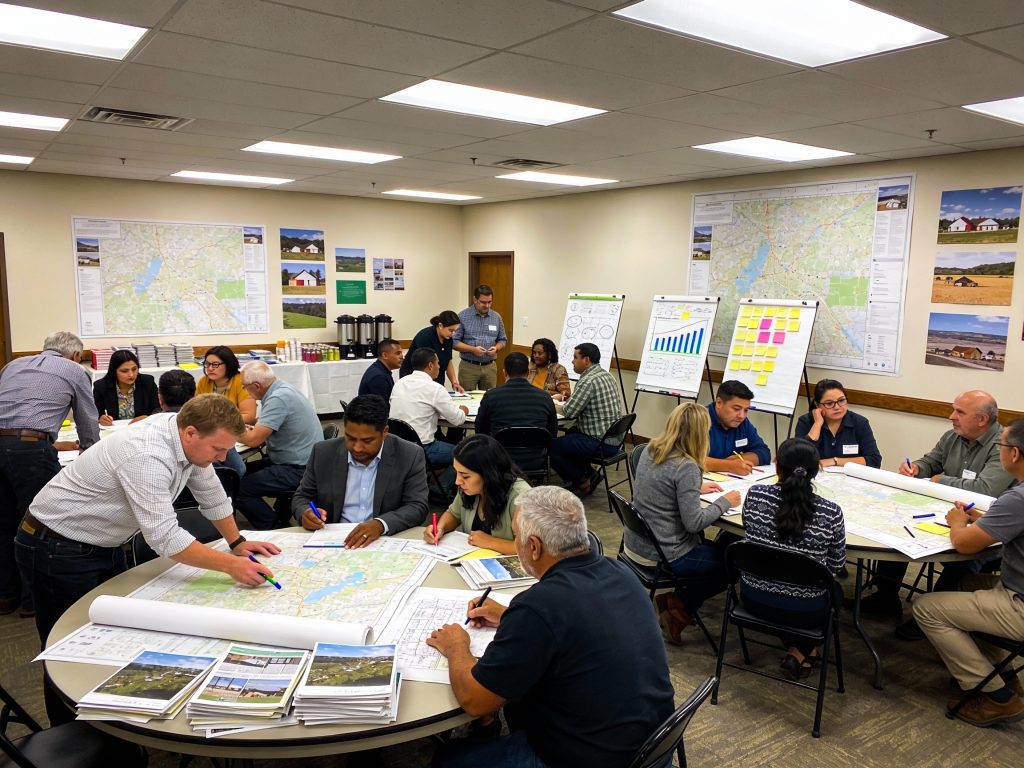
Interactive, facilitated sessions can bring larger groups of participants together to work hands-on with maps, scenarios, or draft policies. Longer half-day or even multi-day events can encourage creative problem-solving or scenario planning. That said, it can be a challenge for residents of small towns to commit extended hours away from their regular work or family time.
Open Houses and Town Halls
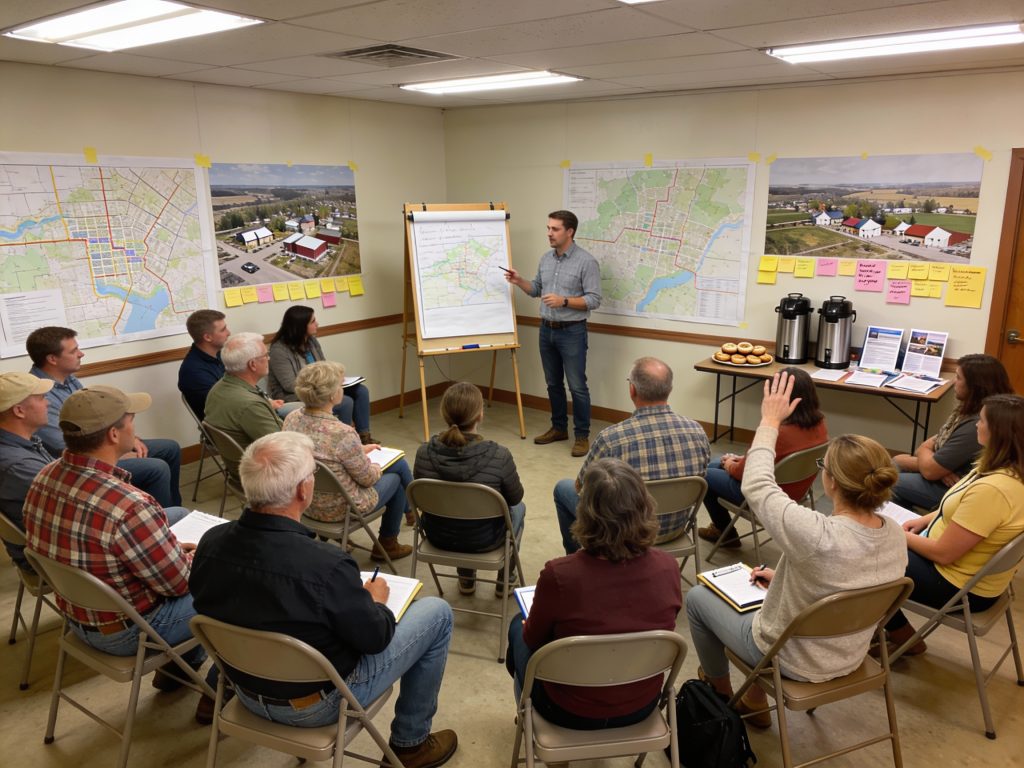
Public meetings are designed to provide for broad participation and discussion—this is the time for active participation. Open houses are typically held on a drop-in basis, with stations, maps, and staff to answer questions. A “town hall” format will typically have a set starting time with facilitated group discussions. These events can be highly visible, transparent, and provide for multiple perspectives. Yet we also have to be prepared for days when 5 people show up… or 50. It might just depend if it’s raining or not.
Surveys
A formal survey process, online or in print, can provide an opportunity for a wide slice of the community to provide input and recommendations. It’s important to be clear if you are doing a random sample (scientifically valid) survey, or an open-ended survey to which anybody can respond. There are advantage to either approach, but generally open-ended surveys can work well with smaller communities if well designed for easy response and well promoted so people know about it.
Formal Meetings and Public Hearings
The legally required public hearings are the very last step of a planning process. It is said that there is a lot of talking, but too often not so much hearing at these sessions. While we certainly don’t want to hide the planning process in “smoke-filled back rooms” like in the not-so-good old days, it is important to hold formal meetings with decision makers, open to the public, to thoroughly cover complicated plans and proposals before formal decisions are scheduled. This gives everybody a chance to ask questions and get answers without making it up on as we go. This ensures transparency, due process, and sound decision-making.
Digital and Media Tools
- Project Websites and Social Media are pretty much expected in this day and age. Social media platforms, especially the big one, Facebook, come and go out of favor. We do the best but social media can easily bust a budget with marginal results.
- There are many options for Online Mapping and Crowdsourcing. I do like ESRI Storymaps as a versatile tool for communities of all sizes. People really like to be able to point to a map and say “I live here.”
- I myself am not a fan of text messaging, but I’m told the younger generation doesn’t do email so much anymore. More options are better than none to get the word out.
It can be difficult to get the word out and to listen to what people have to say. The planning team needs to reach out on a variety of communications channels, and be willing to listen where people are.
We’re going to talk more about new and revitalized tools for community engagement in upcoming posts.
Principles for Effective Engagement
Small towns benefit from close-knit relationships that make civic engagement more accessible, whether through workshops, public forums, or online platforms. It is important for the planning team to build strong relationships in the community early and consistently, cultivating trust in the planning process. Open lines of transparent communication are a sign of the times.
Across planning and public policy contexts, effective public participation follows a set of core principles. Best practices for community engagement include understanding local context, identifying all stakeholders, and prioritizing inclusive processes that encourage broad participation, including groups who might typically be overlooked.
Start Early
Involve the public at the visioning and issue-definition stage, not just when reviewing a nearly finished product.
Why it matters: Early engagement shapes direction. When people help identify problems and set priorities, they understand trade-offs and feel ownership of the outcomes. Late engagement—showing up with a draft plan and asking “any questions?”—feels like a rubber stamp and breeds resentment.
In practice: In Thayer County, for example, we launched town halls and surveys early in the process to surface community strengths, weaknesses, opportunities, and threats before drafting goals or maps. That input directly informed what the plans prioritized (e.g., housing, childcare, workforce, infrastructure, ag protection). Unfortunately the weather was really crummy which limited attendance at the early meetings.
Small-town context: In rural places with limited staff and volunteer planning commissions, “early” means the kickoff meeting, not six months into data collection. Use the first public touchpoints to set expectations, ask open-ended questions, and listen before you start drafting.
Be Transparent
Clearly explain what is being decided, how public input will be used, and who makes the final decision.
Why it matters: Transparency builds trust; vague promises erode it. People need to know whether they are being consulted, involved in co-design, or informed of a decision already made. If they think they have veto power but the board has final say, disappointment is inevitable.
In practice:
- At kickoff meetings and town halls, state clearly: “This input will shape the goals and policies in the draft plan. The planning commission will review the draft and recommend it to the county board, who will hold a final public hearing and adopt the plan by resolution.”
- Acknowledge constraints: statutory requirements, fiscal limits, state or federal rules, technical feasibility.
- Spell out who is leading the process (advisory committee, planning commission, staff, consultant) and how the pieces fit together.
Small-town context: Transparency is personal. In a small community, people know if the “public process” was genuinely open or if decisions were made ahead of time at the café or the grain elevator. Be honest, document what you heard, and show your work.
Use Multiple Channels
Blend in-person and online, formal and informal, written and oral methods to reach different audiences with different preferences and constraints.
Why it matters: No single format reaches everyone. Some residents prefer online surveys they can complete at midnight; others only trust face-to-face conversations. Farmers may not attend evening meetings during planting or harvest. Digital-only outreach excludes people without reliable internet; meeting-only outreach misses people who work nights, care for family, or feel uncomfortable speaking in public.
In practice:
- Hall County, Clay County, Thayer County, Burwell, and Deshler all used a mix: project websites, online and paper surveys, town halls, focus groups, advisory committees, and one-on-one conversations.
- Burwell leveraged partners (Calamus Area Community Fund, Nebraska Extension, CNEDD) to spread the word and co-host events. City staff and leaders worked hard to bring everyone together at the same time in the same place. We were also able to structure the Town Hall to meet the needs of the Community Foundation as well as the community plan.
- Clay County received strong local newspaper coverage, which matters in rural areas where print media still reaches residents and those with limited internet.
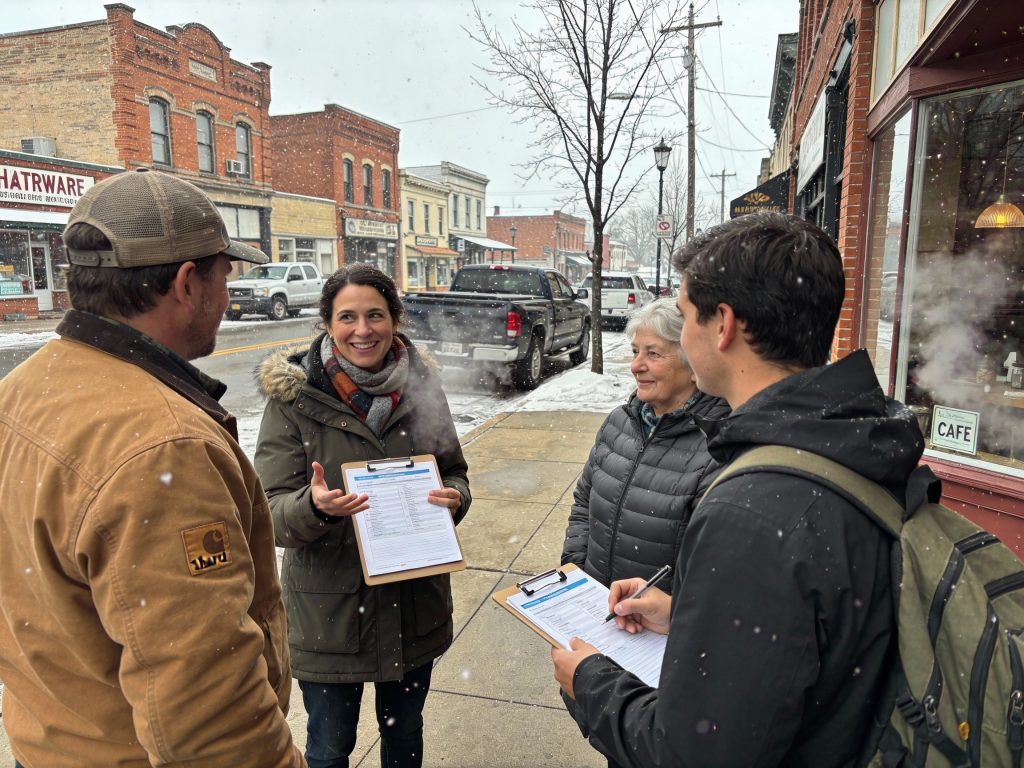
Small-town context: We can’t emphasize enough the importance of meeting people where they are—literally. On some of our other projects, we have set up a booth at the county fair, grabbed a table at a community festival, or spent an hour at the coffee shop on a Saturday morning—where we were ready to listen, not pitch. Use a mix of traditional (flyers, radio, newspaper) and digital (social media, email, QR codes) to reach across generations and geographies.
Report Back
Tell the community what you heard, how it influenced the plan or policy, and why some ideas were adopted and others were not.
Why it matters: People are more likely to participate again—and to support implementation—if they see their input mattered. If comments disappear into a black hole, or if the final plan looks nothing like what residents asked for with no explanation, trust collapses and “participation fatigue” sets in.
In practice:
- Summarize engagement results in the plan itself. In Thayer County’s plan, we summarize themes from the Town Halls and survey findings in the Second Chapter of the plan, Community Engagement. We also added an Appendix for detailed answers from Town Hall exercises and more detailed survey findings. Goals explicitly connect those themes to plan objectives as much as possible.
- At key milestones (draft release, before setting final hearings), share a brief memo or presentation: “Here’s what we heard, here’s how it shows up in the plan, and here’s what we couldn’t address and why.”
- Making detailed notes from town halls and focus groups available (in appendices or on the project website) help participants verify they were heard.
Small-town context: In rural communities with long institutional memory, people remember promises made ten years ago. Reporting back to participants and the community at large is not just courtesy; it is essential for maintaining credibility for the next planning effort.
Design for Inclusion
Proactively reach out to underrepresented groups. Hold meetings at convenient times and locations. Offer translation or childcare where possible. And recognize that not everyone can (or will) attend evening meetings at city hall. Get out into the community whenever you can.
Why it matters: Standard public processes often hear from the same old voices. If planners do not intentionally seek out other perspectives—youth, low-income households, non-English speakers, people with disabilities, new arrivals—plans will reflect only a narrow slice of the community and may unintentionally worsen inequities.
In practice:
- Schedule meetings at varied times (morning, evening, weekend) and locations (schools, community centers, fire halls, fairgrounds) to accommodate work and family schedules.
- Go where underrepresented groups already gather: schools for youth, senior centers for elders, churches, cultural organizations, and food banks.
- Burwell’s focus group with the high school student council is a good example of intentionally engaging youth voices that typically do not show up at evening planning commission meetings. Even so, several student council members were intrigued enough to participate in the Town Hall and have their say there as well.
- Consider accessibility: ADA-compliant venues, childcare, large-print materials, language interpretation or translation if the community has non-English speakers. Just be careful with Google Translate—there are many variations in dialects from place to place!
Small-town context: Rural communities are often assumed to be homogeneous. You might be surprised how diverse our home towns can be. Small towns and counties have generational divides (longtime residents vs. newcomers, elders vs. youth), economic divides (landowners vs. renters, professionals vs. service workers), and sometimes linguistic or cultural divides (Hispanic ag workers, Amish or Mennonite populations). Inclusive design means recognizing diversity and adapting engagement methods accordingly.
Respect Local Context
In small towns and rural areas, engagement is often relational, overlapping, and personal—residents wear multiple hats, and planners need to build trust through ongoing presence, not just formal events.
Why it matters: Rural civic life is different from urban or suburban. People see one another constantly—at the grocery store, ball games, church, library, volunteer fire calls. The farmer testifying at a hearing may also be the school board president and the volunteer ambulance driver. Relationships matter more than formal titles, and trust is built over coffee and shared work, not just through official channels.
In practice:
- Show up repeatedly, not just for the kickoff and final hearing. Attend community events, stop by local businesses, have conversations at the café or the post office. As a consultant, I try to shop local as much as I can fit in our schedule.
- Recognize overlapping roles. The advisory committee in Thayer County included county and municipal representatives because land use decisions in one place affect neighbors. Hall County’s Regional Planning Commission structure reflects decades of collaborative planning culture.
- Be mindful of local politics and history. Small communities remember past planning efforts—both successes and failures—and that shapes current willingness to participate. If the last plan sat on a shelf unused, people will be skeptical. If the last planner was dismissive or pushed a one-size-fits-all template, you need to earn trust back.
- Understand that “dissent” in a small town can feel risky. Speaking up against a neighbor or a powerful local employer in a public meeting has social costs. Offer multiple input channels—surveys, written comments, one-on-one conversations—so people can share concerns without public confrontation.
Small-town context: Rural engagement is inherently personal and rooted in daily interactions. Best practices blend relationship-building with structured outreach. As planners—whether local staff or outside consultants—we need to invest time in understanding the community’s culture, power dynamics, and civic rhythms, not just deploy a standardized participation toolkit.
These principles work together, not in isolation. A process that starts early, explains clearly what role the public will play, uses multiple channels to reach diverse voices, reports back on how input shaped decisions, designs intentionally for inclusion, and respects the relational nature of rural civic life will generate more trust, richer input, and stronger implementation than one that checks procedural boxes but misses the human dimension
Challenges and Tensions
As ICMA points out, “The public engagement strategy for New York City would not lend itself well to Rawlins, Wyoming, USA. Rural communities are faced with a unique set of challenges…”
Public participation is valuable but not without challenges. Public participation in small towns and rural communities comes with a distinct set of challenges that can undermine even well-designed processes. Recognizing these tensions and planning for them helps planners and local leaders set realistic expectations and navigate the inevitable friction.
Low Turnout or Self-Selection Bias
Often, only a small fraction of residents participates, and those who do may not represent the broader community.
The problem: Town halls that draw 10 or 20 people in a county of 5,000 or a city of 1,200 are not unusual. The same applies in many urban neighborhoods. Those who show up may tend to skew toward older, long-tenured residents, property owners, retirees with flexible schedules, and people motivated by a specific concern (opposition to a project, worry about taxes, desire to protect something they value). Youth, renters, working families, newcomers, and people who feel their voice does not matter more often stay home.
Why it happens:
- Time and scheduling: evening meetings conflict with second jobs, caregiving, or farm work; daytime meetings miss people who work bankers’ hours.
- Location and accessibility: city hall can be intimidating or physically inaccessible; some people lack transportation.
- Trust and efficacy: if residents believe decisions are already made, or that “the same people always get their way,” they will not invest time in participation.
- Cultural norms: in some rural communities, speaking up in public—especially in disagreement—carries social costs.
What planners can do:
- Use multiple channels (surveys, focus groups, one-on-one conversations, informal “office hours” at the café or fair) to reach beyond the usual crowd.
- Vary meeting times and locations; go to where people already gather rather than expecting them to come to city hall.
- Proactively recruit underrepresented voices onto advisory committees and focus groups.
Even amazingly good engagement will not reach everyone. At the end of the day, combine what we hear with other data (demographics, housing, economy) to test whether participant input aligns with or diverges from broader community conditions. It may mean we need to go out again. Or it means the “hard data” itself is skewed, especially in small areas with large margins of error in standard surveys.
Nobody said this was going to be easy.
Capacity Constraints
Small jurisdictions with limited staff and budgets struggle to mount extensive engagement campaigns, especially across large rural counties. This is especially true in so many areas where local media—newspapers and radio—have closed or consolidated with out-of-town chains or gone online only.
The problem: A county with one part-time zoning administrator and a volunteer planning commission cannot run the kind of multi-year, multi-channel engagement process that a large city with a planning department might manage. Rural counties are often geographically large, with dispersed populations, making it expensive and time-consuming to hold multiple meetings close to everyone.
Why it happens:
- Staff time: many rural jurisdictions lack dedicated planning staff; the clerk, administrator, or zoning officer wears multiple hats and has limited hours for outreach.
- Budget: printing materials, advertising, meeting space, refreshments, consultant time, and translation or accessibility services all cost money that small budgets may not have.
- Geographic spread: holding town halls across a rural Western county or multi-county economic development district can mean driving long distances, scheduling multiple events, and hoping enough people show up at each one to get good results. Remote (Zoom) options can help, but there are time we just need to meet in person out in the real world.
What planners can do:
- Right-size engagement to local capacity. A lean process with one countywide town hall, a simple online/paper survey, and an advisory committee can still be effective if it is transparent and follows up.
- Leverage partners: regional planning agencies, extension offices, economic development organizations, community foundations, and civic groups can help with promotion, logistics, and facilitation.
- Use low-cost or no-cost tools: free online survey platforms, social media, local newspaper coverage, flyers at the library and post office, and informal conversations rather than expensive mailings or professionally produced videos. Just don’t forget the print newspaper still needs to pay their bills, so budget for print ads whenever you can.
- Be strategic about where to invest time: focus on early visioning and issue identification (where input shapes direction) and final review of draft policies before formal hearings (where people can see how their input landed while there is still time to change direction).
Don’t forget, there will never be enough time or money so don’t worry about what you don’t control. Do the best you can with what you have.
Conflicting Input
Public participation surfaces real disagreements—between growth and preservation, development rights and environmental protection, newcomers and longtime residents. Bringing disagreements into the light of day can create a great deal of stress.
The problem: Engagement does not produce consensus; it reveals the conflicts that already exist. Some residents want more housing and business development; others want to protect agricultural land and small-town character. Some prioritize property rights and minimal regulation; others want strict land use controls to preserve open space and water quality. Newcomers may bring different expectations than multi-generational families. Multi-generational families may have their own conflicts between young people, working adults, and retirees.
Why it happens:
- Diverse values and interests: even in seemingly homogeneous rural communities, people have different economic stakes, visions for the future, and tolerance for change.
- Structural tensions: comprehensive planning asks communities to make trade-offs—where growth goes, what gets protected, who bears costs—and those are inherently political decisions.
- Limited resources: in slow-growth or declining places, decisions can feel zero-sum. If one town gets the new business or housing development, another may not. Jealousy is a base human reaction and planning is all about the humans here.
What planners can do:
- Normalize disagreement as part of the process. Frame engagement as “understanding the range of perspectives” rather than “finding what everyone agrees on.”
- Document diverse views. In town hall notes and survey summaries, show that you heard conflicting input (e.g., “Some participants prioritized infill and town-centered growth; others emphasized rural property rights and minimal government interference”).
- Use the plan to make trade-offs transparent. A future land use map and clear policies on where growth is encouraged, where agriculture is protected, and where transitions may occur help the community see the choices being made and debate them openly.
Remember that elected officials and planning commissions are responsible for weighing competing interests and making decisions in a representative democracy. Public input informs but does not replace that judgment.
Balancing Participation with Expertise
Public input is essential, but it does not replace technical analysis, legal compliance, or elected officials’ responsibility to weigh competing interests and make decisions.
The problem: Residents bring invaluable local knowledge—where flooding happens, which roads are failing, what businesses closed and why—but they may lack expertise in soils, stormwater engineering, legal constraints on land use, or the fiscal implications of extending infrastructure. For that matter, staff likely relies on outside expertise for engineering and legal advice. Planners and elected officials must integrate public input with technical facts, legal requirements, and broader policy goals.
Why it happens:
- Complexity: planning and policy involve technical disciplines (engineering, environmental science, law, finance) that are not intuitive to most people.
- Legal constraints: state statutes, federal programs, court precedents, and intergovernmental agreements limit what local plans and ordinances can do, regardless of public preference.
- Representative democracy: elected officials are accountable for balancing the interests of those who participate with those who do not, and for making unpopular decisions when necessary.
What planners can do:
- Be clear up front about what is on the table and what is not. Explain legal requirements, fiscal constraints, and technical standards so people understand the boundaries within which the plan operates.
- Translate technical information into plain language. Show floodplain maps, soil suitability, and infrastructure capacity in ways residents can understand and react to.
- Frame technical analysis and public input as complementary, not competing. Use phrases like “What we heard from the community aligns with [or diverges from] what the data show, which suggests…” rather than dismissing one or the other.
Throughout the planning process, we ought to remind everyone that public input informs recommendations, but planning commissions and elected boards make final decisions after weighing all evidence and interests in most of the planning and development projects we work on in rural communities.
“Participation Fatigue”
In communities which have been through multiple planning processes with little visible follow-through, residents may become skeptical or disengaged. While building in small implementation steps along the way can help, people are busy and don’t want to take time without an obvious return.
The problem: Small towns and rural counties have long institutional memories. If the last comprehensive plan sits on a shelf unused, or if previous visioning sessions produced no tangible projects, people will question why they should invest time in another planning exercise. “We’ve done this before and nothing changed” is a common refrain.
Why it happens:
- Weak implementation: plans that do not lead to updated zoning, capital projects, or visible changes feel like wasted effort.
- Turnover in leadership: elected officials and staff change; new councils or boards may not feel bound by previous plans or may prioritize different issues.
- Overpromising: if engagement materials suggest the plan will solve every problem or guarantee funding, residents will be disappointed when reality falls short.
- Lack of follow-up: if there is no annual review, no progress reporting, and no effort to keep the plan alive, it fades from memory and credibility.
What planners can do:
- Acknowledge past efforts honestly. At kickoff meetings, recognize previous planning work and explain what this effort will do differently or how it builds on what came before.
- Set realistic expectations. Be clear that a comprehensive plan is a policy guide, not a budget or a construction contract. It will influence zoning, capital spending, and development review, but it will not by itself build houses or fix roads.
- Emphasize implementation from the start. Include clear action items, responsible parties, and timelines in the plan itself, and commit to annual reviews and updates.
- Report back on progress. Even small wins—updating a zoning section, completing a drainage project identified in the plan, approving infill housing aligned with plan goals—help show the plan is a living tool, not a static document.
- Build implementation into the culture. Encourage planning commissions and boards to cite the plan in their decisions, bring the future land use map to meetings, and ask “Does this match what we adopted?” as a regular part of development review.
These challenges do not have perfect solutions, but they can be managed. Keys to overcome typical challenges in local community engagement:
- Be honest about constraints—turnout will be modest, budgets are tight, people will disagree, expertise matters, and trust must be rebuilt through action.
- Design engagement that fits local capacity and culture.
- Follow through by using the plan in real decisions and reporting back on what happened.
Communities that treat participation as an ongoing relationship rather than a one-time event, and that connect planning to visible implementation, are more likely to overcome these tensions over time.
The Small Town and Rural Context
Public participation looks and feels different in small towns and rural counties than in large cities. Community engagement operates in a fundamentally different social and civic environment than in large cities. Understanding these differences is essential for designing engagement that works with, not against, the grain of rural life.
Close-Knit and Relational
People tend to know one another in small towns. They see each other at the grocery store or church, and often serve in multiple roles—farmer and fire chief, business owner and school board member.
Why it matters: In a small town, engagement is not transactional; it is relational. The person who testifies at a planning commission hearing may also be your neighbor, your kid’s soccer coach, or the person who plows your driveway in winter. Relationships built over years of shared work, worship, school events, and community crises carry more weight than formal titles or processes.
How it shapes engagement:
- Trust is personal and earned over time. A planner or consultant who shows up for one meeting and leaves is less credible than one who spends time in the community, attends local events, and builds relationships with key leaders and residents.
- Informal conversations—at the coffee shop, the grain elevator, the post office, the county fair—are often where the real input happens. Formal meetings may affirm what has already been discussed informally.
- Multiple hats mean people think holistically. The farmer on the planning commission also worries about school enrollment, volunteer fire department capacity, and main street vitality. Rural engagement naturally connects issues that urban planning often treats separately.
Practical implications:
- Go beyond city hall. Set up a booth at the farmers market or county fair; host “office hours” at a local café; attend community events and be ready to listen, not pitch.
- Use local trusted messengers—extension agents, clergy, school principals, economic development staff, community foundation leaders—to spread the word and validate the process.
- Recognize that in close-knit communities, a few well-placed conversations with key leaders can have outsized influence, for better or worse. Engagement needs to be broad enough to avoid being captured by a narrow group.
Limited Anonymity
In a smaller community, speaking up at a public meeting can feel risky if you disagree with neighbors or powerful local interests.
Why it matters: In a city of 100,000, you can testify at a hearing and then go home to relative anonymity. In a town of 800, everyone knows who said what, and social or economic consequences can follow. Disagreeing with a major employer, a large landowner, or a longtime civic leader at a public meeting may strain relationships, affect business dealings, or create uncomfortable encounters at church or the grocery store.
How it shapes engagement:
- Some residents self-censor in public settings and save their real opinions for private conversations or anonymous channels.
- Newcomers or people in less secure social or economic positions (renters, employees of local businesses, recent arrivals) may be especially reluctant to speak up.
- Contentious issues—wind farms, CAFOs, subdivisions, zoning enforcement—can polarize small communities quickly, and public meetings can become uncomfortable or even hostile.
Practical implications:
- Offer multiple input channels, including anonymous surveys and written comments, so people can share concerns without public exposure.
- Use focus groups and small-group conversations where participants can speak more freely than in a packed town hall.
- Be mindful of power dynamics. If the largest employer or biggest landowner dominates the conversation at a public meeting, actively invite other perspectives and make space for quieter voices.
- Consider confidential interviews with key stakeholders early in the process to surface issues that may not come up in public forums.
Volunteer-Driven
Most small town and rural engagement relies heavily on volunteer planning commissions, advisory committees, and civic groups rather than paid staff.
Why it matters: Rural jurisdictions often have limited professional staff. The planning commission is made up of volunteers who meet monthly after work or during lunch. Advisory committees, economic development boards, downtown groups, and service organizations are staffed by residents who donate their time. This volunteer culture is a strength—it reflects deep civic commitment—but it also means capacity is stretched thin.
How it shapes engagement:
- Volunteers have day jobs, farms, and families. Long, frequent meetings or complex technical processes can overwhelm them.
- Turnover is common. Planning commissioners serve for a few years and then rotate off; institutional knowledge can be lost.
- Civic volunteers often serve on multiple boards at once (planning commission, school board, library board, economic development committee), so scheduling and avoiding burnout is a constant challenge.
Practical implications:
- Design engagement processes that fit volunteer capacity. A lean advisory committee that meets six times over a year is often more sustainable than an elaborate multi-tier structure.
- Provide clear materials, agendas, and staff support (even if “staff” is a part-time zoning administrator or regional planning consultant) so volunteers can focus on policy and input, not logistics.
- Document the process well so that when volunteers turn over, the next generation can pick up where the last left off.
One idea to consider is to acknowledge and celebrate volunteer contributions publicly—recognition matters in small communities and helps sustain participation over time.
Long Institutional Memory
Small communities remember past planning efforts—both successes and failures—and that history shapes current willingness to participate.
Why it matters: In small towns and rural counties, people remember the comprehensive plan from 1995 that gathered dust, unused; the downtown revitalization effort that stalled after one year; the consultant who came through with big promises and no follow-through. That institutional memory—passed down through stories, not just files—affects how residents respond to the next planning process. If past efforts led to visible improvements (a new park, better drainage, successful housing rehab), people would be more willing to engage. If past efforts felt like a waste of time, skepticism will run high.
How it shapes engagement:
- “We’ve done this before and nothing changed” is a common refrain. Overcoming that requires honesty about past efforts and clear commitments to implementation.
- Long-tenured residents know the politics, the personalities, and the unspoken rules. They remember which leaders followed through and which did not.
- Newcomers or younger residents may not carry the same institutional memory, which can create generational divides in how people perceive the value of planning.
Practical implications:
- Acknowledge past planning efforts at the start of a new process. Explain what is being carried forward, what is being updated, and how this effort will be different or better.
- If the last plan was not implemented, be honest about why (turnover, funding, priorities shifted) and explain what will be different this time (annual reviews, clear action items, commitment from current leadership).
- Celebrate past successes, even small ones, to remind the community that planning can and does lead to real results.
Follow through, implementation, and reporting back on progress are ways to rebuild trust and create a positive institutional memory for the next planning cycle.
Effective Rural Engagement Requires Going Beyond City Hall
It is essential to get out from behind our desks and into the community, using a mix of communication channel, and honoring the civic culture already present in a place of any size.
Go where people are.
County fairs, farmers markets, community events, church suppers, school functions, and informal gathering spots are where rural residents naturally congregate. Setting up a booth, hosting informal conversations, or simply being present builds relationships and gathers input that formal meetings often miss.
Use multiple communication channels.
Blend traditional methods (flyers, local newspapers, radio, bulletin boards at the library and post office) with digital tools (social media, email lists, project websites, online surveys). Rural areas have variable internet access and varied media consumption patterns; no single channel reaches everyone.
Honor existing civic culture
Rural communities have established ways of getting things done—service clubs, church groups, ag organizations, school boosters, volunteer fire departments, community foundations. Work with these existing networks where you can.
In practice, Burwell’s partnership with the Calamus Area Community Fund, Nebraska Extension, and CNEDD worked out extraordinarily well. Local leaders found ways to meet the needs and expectations of each of the groups and the community at large.
Be patient and persistent
Building trust in rural communities takes time. Planners and local leaders who show up consistently, follow through on commitments, and treat residents as partners rather than subjects earn credibility. Those who parachute in with templates, ignore local context, or fail to follow up reinforce skepticism.
Community engagement and public participation in small towns and rural communities is personal, relational, and deeply shaped by history, culture, and social structure. Standard urban engagement toolkits—online portals, evening hearings, formal advisory committees—can work, but only if adapted to rural realities: close relationships, limited anonymity, volunteer capacity, and long memories.
Planners and local leaders who succeed are those who invest time in building trust, meet people where they are (literally and figuratively), and follow through so that engagement leads to visible action. Done well, rural community engagement leverages the strengths of small-town civic culture—commitment, shared identity, practical problem-solving—to create plans and policies that communities recognize as their own and are willing to defend and implement.
Where Participation Fits in Planning and Public Policy
Public participation and community engagement are not single events; they are woven through the entire planning and policy lifecycle, from early conversations about what matters to long-term monitoring and updates. Each stage of the process calls for different kinds of input and different engagement methods.
Visioning and Goal Setting
We work to identify shared values, priorities, and desired future conditions in visioning and goal setting phases of a planning and public policy process.
Why it matters: Visioning is where a community decides what kind of future it wants and what principles will guide decisions. This is the most open-ended and generative stage of planning, and it sets the tone for everything that follows. When people help define the vision and goals early, they understand the plan as “ours” rather than “theirs.”
What engagement looks like:
- Early town halls with open-ended questions: “Why do you live here?”, “What do you love?”, “What are the biggest opportunities and challenges?”, “What should this place look like 20 years from now?”
- Kickoff meetings where planners explain the process, share baseline data, and ask residents what they want the plan to address.
- Surveys that ask about quality of life, priorities for investment, and satisfaction with existing services.
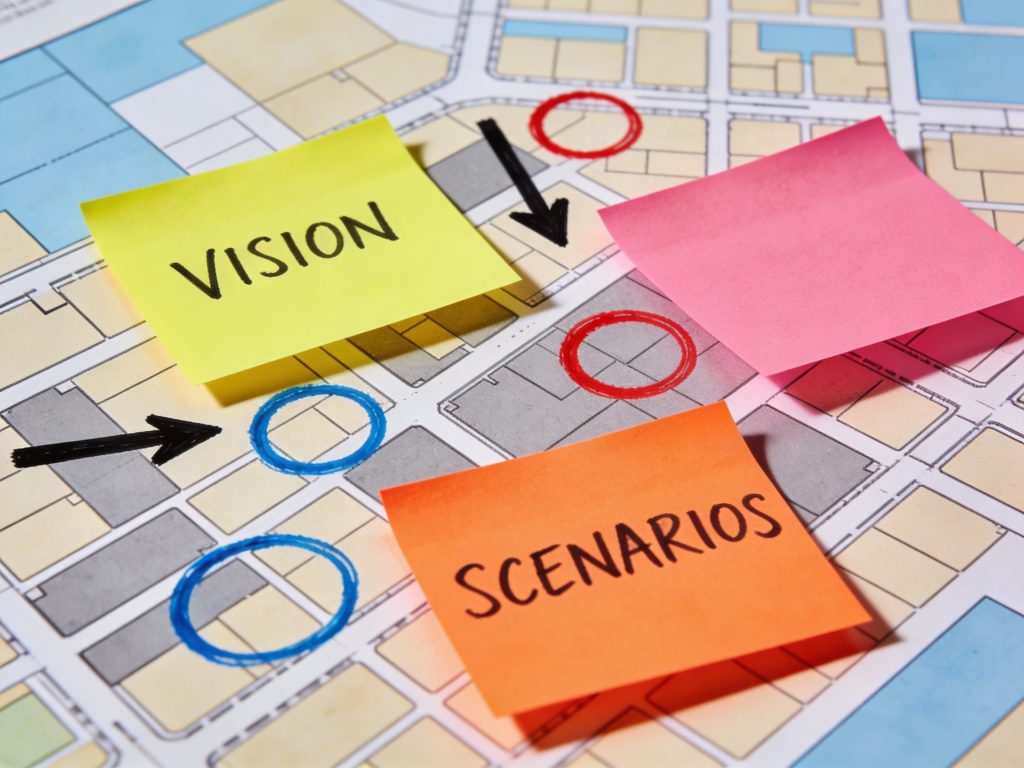
- Workshops or charrettes where participants use maps, images, and scenarios to imagine different futures.
- Multi-generational listening sessions to bridge elders’ institutional memory with youth perspectives on the future.
Examples from our plans:
- Clay County’s town hall asked residents, among other questions, to describe “the ideal Clay County 20 years from now.” Participants talked about towns big enough to support themselves while maintaining quality of life and the long-term viability of agriculture.
- Burwell’s town hall surfaced values around small-town quality of life, tourism balanced with community identity, and opportunities tied to the rodeo and Calamus Lake.
- Thayer County’s SWOT analysis at multiple town halls identified local assets, competitive disadvantages, opportunities, and threats—themes that directly shaped goals in each plan element.
Outcome: A shared vision statement and a set of core goals or values (e.g., protect working lands, keep towns strong, create opportunity for the next generation, stay safe and resilient) can guide goals and policies of the plan, as well as how the plan is brought to life through implementation actions.
Issue Identification and Analysis
We should use results of public participation to help define problems, gather local knowledge, and test findings from technical studies.
Why it matters: Technical data—demographics, housing conditions, infrastructure capacity, hazard risk—tell part of the story, but residents know things that numbers cannot capture: which roads flood every spring, where the housing stock is deteriorating, which neighborhoods lack sidewalks, where broadband is unusable. Engagement at this stage helps planners understand what the data mean in practice and identify issues that technical analysis might miss.
What engagement looks like:
- Focus groups with specific sectors (agriculture, business, health care, emergency services, youth, seniors) to explore issues in depth.
- Interviews with department heads, elected officials, and key stakeholders to confirm data and discuss strategic outlook.
- Participatory mapping or photo surveys where residents identify problem areas (flooding, blight, unsafe intersections) and assets (trails, parks, historic buildings).
- Advisory committees reviewing demographic, housing, and economic trends and providing context: “This number makes sense because…” or “That doesn’t match what we’re seeing.”
Examples from our plans:
- Hall County conducted focus groups with real estate professionals, developers, manufacturers, and affordable housing providers in conjunction with plans for the City of Grand Island and the Villages of Alda and Doniphan. We also conducted interviews with county and city department heads and Village staff, to understand development challenges and infrastructure needs.
- Burwell’s focus groups with city staff, small business owners, hospitality, economic development, and student council brought out sector-specific concerns (workforce, housing, tourism seasonality, youth perspectives).
- Survey results across Clay, Thayer, Burwell, and Deshler highlighted issues that data analysis alone might not prioritize: childcare shortages, broadband gaps, aging utilities, rental housing quality, and the visual appearance of downtowns. One-on-one interviews confirmed these results and let to specific recommendations in the plans.
Outcome: A refined understanding of what needs to be addressed—housing, infrastructure, workforce, economic development, hazards, land use conflicts—that blends technical analysis with local knowledge and shapes the issues each plan chapter tackles.
Developing Alternatives
Evaluating options, trade-offs, and scenarios before drafting a plan or policy can help fill in the project work plan, even if full scenario planning is not in your scope or budget.
Why it matters: Most planning decisions involve trade-offs: growth versus preservation, development rights versus resource protection, infrastructure investment in one area versus another. Before locking in a preferred approach, it helps to show residents the options and ask which trade-offs they are willing to make. This stage can surface conflicts and build understanding of why certain choices are necessary.
What engagement looks like:
- Surveys or interactive tools ask residents to prioritize investments or rank policy options (e.g., “Which is more important: affordable housing or preserving agricultural land?”).
- Small-group discussions or advisory committee sessions can discuss different approaches to be refined before a preferred alternative is selected.
- Draft future land use maps should be presented for feedback, with explanations of the rationale and trade-offs involved.
- With sufficient time and budget, scenario workshops can be organized to compare different growth patterns (infill versus expansion, town-centered versus dispersed) and discuss implications for infrastructure, taxes, farmland, and community character.
Examples from our plans:
- Survey questions about future growth (e.g., whether new housing should be within city limits, whether renewable energy should be near towns) test public preferences on key policy choices. You just need to balance the length and detail in any survey with the patience of people to respond to the questionnaire.
- In most of our projects, advisory committees review draft approaches to land use, housing, economic development, and other elements over multiple meetings, providing direction on which strategies fit local conditions.
Outcome: A preferred set of strategies—growth patterns, land use policies, infrastructure priorities, economic development approaches—that have been shaped by public input and reflect the community’s willingness to make certain trade-offs.
Reviewing Drafts
The community engagement process needs to provide time and logistics for the public to comment on proposed language, maps, and regulations prior to formal public hearings. This can also help in identifying unintended consequences.
Why it matters: Draft plans and policies often include unintended consequences, unclear language, or proposals that sound good in theory but will not work in practice. Public review at this stage helps catch those problems before adoption and gives residents a last chance to see how their earlier input landed in the final document.
What engagement looks like:
- Releasing draft chapters or the full draft plan on the project website and in public libraries or city/county offices for review.
- Advisory committee and/or planning commission review sessions where drafts are discussed section by section and revised based on feedback.
- Public open houses or workshops where residents can review maps, policies, and action tables, ask questions, and offer comments.
- Written comment periods where residents can submit feedback by mail, email, or online forms prior to formal public hearings
Examples from our plans:
- Deshler’s planning commission met repeatedly (May, June, July, September, and October 2023) to review and comment on draft chapters before the plan went to the City Council.
- Each of our plans includes a copy of adoption resolutions passed by planning commissions and governing boards after public hearings, documenting the formal legal step that closes out the review process.
Outcome: A final plan which has been vetted by the public and decision-makers, with language, maps, and action items refined to address concerns and avoid unintended consequences, ready for formal adoption.
Implementation and Monitoring
The purpose of the plan is to be put into action—the plan itself is about documenting the planning process more than how pretty the plan turns out to be. Responsible authorities should find ways for the public to continue participating in action, tracking progress and revisiting the plan or policy as conditions change.
Why it matters: A comprehensive plan is only as good as its implementation. Public participation does not end at adoption; it continues through capital budgeting, zoning updates, development review, project implementation, and periodic plan updates. Engagement at this stage helps keep the plan alive, ensures accountability, and allows the community to adjust priorities as conditions change.
What engagement looks like:
- Annual or regular reviews where planning commissions and governing boards revisit the plan’s action items, report on progress, and adjust priorities.
- Public meetings or work sessions focused on specific implementation steps (e.g., updating zoning, planning a capital project, applying for grants).
- Ongoing advisory committees or implementation task forces that shepherd key projects forward. In many places, the Planning Commission takes on this responsibility as part of their regular meetings throughout the year.
- Public reporting—through newsletters, websites, or annual reports—on what has been accomplished, what is underway, and what has stalled.
- Plan amendments or updates (every 8-10 years or as triggered by major changes) that involve another round of public engagement to revisit vision, goals, and strategies.
Examples from our plans:
- Thayer County’s plan commits to annual reviews by the planning commission and governing body to track implementation, adjust priorities, and keep the plan relevant.
- Hall County, Clay County, Burwell, and Deshler all emphasize that “implementation and regular review are essential to bring this plan to life,” signaling that engagement continues beyond adoption.
- Our implementation sections typically include action tables with responsible parties, timeframes, and funding sources—tools that make it easier for advisory committees and staff to track progress and report back to the public.
Outcome: A living plan that adapts over time, with visible progress on action items that reinforces public trust and willingness to participate in future planning efforts.
Why this matters in small towns and rural counties
In small towns and rural areas, where capacity is limited and relationships are personal, understanding where participation fits in the planning lifecycle helps planners and local leaders be strategic about when and how to engage.
- Front-load visioning and issue identification. This is where broad public input has the most influence and builds the foundation for everything that follows.
- Use advisory committees to bridge stages. A consistent advisory group that meets throughout the process can help with alternatives, draft review, and implementation without requiring large public meetings at every step.
- Be transparent about roles. Early engagement shapes direction; middle-stage engagement refines options; late engagement catches problems; implementation engagement ensures accountability. Each stage has value, but only if people understand what their input will and will not change.
- Follow through. The strongest signal you can send about the value of participation is visible implementation and regular reporting back.
Community engagement and public participation is not a single event or a check-the-box requirement; it is a thread that runs through the entire planning process, connecting community vision to adopted policies to real-world action.
We will be discussing visioning more extensively in the article after next, and the rest of these topics throughout the year.
Looking Ahead
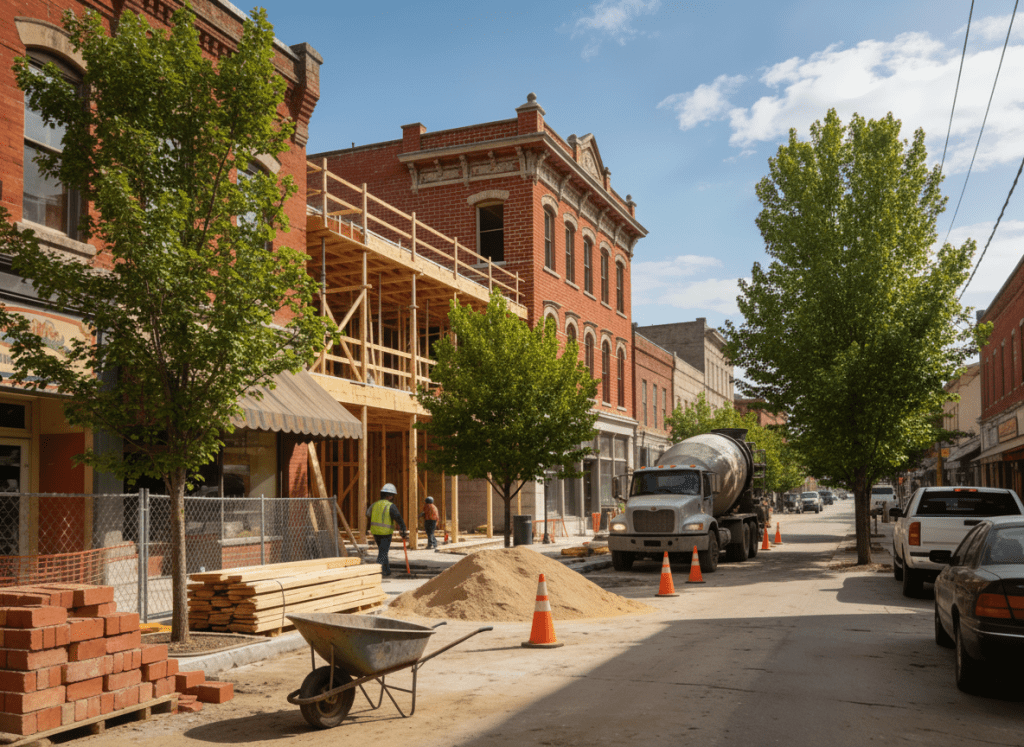
Community engagement in planning and public policy continues to evolve. Digital tools offer new ways to reach people but also risk deepening divides between those with and without internet access. Demographic change, generational shifts, and increasing skepticism of institutions push planners to rethink traditional methods of public participation and meet people where they are—literally and figuratively. At the same time, the core purpose remains constant: to ground decisions in the knowledge, values, and priorities of the people who will live with them, and to build the trust and ownership necessary for plans and policies to work in the real world.

Handing Off Ownership of Our Plans Through Engagement
Public participation is essential to planning and public policy because it changes who owns decisions and how those decisions get made. In rural America, where planning is personal and outcomes are immediate, effective engagement builds legitimacy and trust, improves decision-making by blending technical analysis with local knowledge, fosters ownership and support for implementation, and advances equity by elevating voices often sidelined in traditional processes.
Participation operates across a spectrum, from informing the public to consulting them for feedback, involving them in co-creating solutions, collaborating as partners, and empowering them to make final decisions. Most planning processes use a mix of these levels, depending on the stage, audience, and local capacity. Common methods include advisory committees, focus groups, workshops and charrettes, open houses and town halls, surveys, and formal hearings, supplemented by digital tools like project websites, social media, and online mapping.
Effective engagement follows core principles: start early at the visioning stage, be transparent about what is being decided and who decides, use multiple channels to reach diverse audiences, report back on how input shaped decisions, design proactively for inclusion, and respect the relational, volunteer-driven, and memory-laden nature of rural civic life. Challenges are real—low turnout, limited staff and budgets, conflicting public input, the need to balance participation with expertise, and skepticism from past efforts that did not lead to action—but they can be managed through honest communication, right-sized processes, and visible follow-through.
In small towns and rural counties, engagement is close-knit and relational, shaped by limited anonymity, volunteer leadership, and long institutional memory. Planners and local leaders who succeed invest time building trust, meet people where they are (at fairs, coffee shops, and community events), honor existing civic networks, and follow through so engagement leads to visible results.
Public participation fits throughout the planning lifecycle: in visioning and goal-setting, where shared values and priorities are identified; in issue identification and analysis, where local knowledge tests and sharpens technical findings; in developing alternatives, where trade-offs and options are evaluated; in reviewing drafts, where unintended consequences are caught; and in implementation and monitoring, where the community tracks progress and adjusts as conditions change. Understanding where participation fits helps planners and leaders be strategic about when and how to engage, front-loading visioning and issue work while using advisory groups and periodic check-ins to bridge later stages.
At its heart, community engagement in planning and public policy is about grounding decisions in the knowledge, values, and priorities of the people who will live with them, and building the trust and ownership necessary for plans and policies to work in the real world.
Coming Up: Next week we’ll look at more new and interesting community engagement and public participation methods and tools.

Read More
Books of an Academic Interest
- Public Engagement Made Easy: A Guide for Planners and Policymakers – Susan Charland (Routledge, 2024). Recent, short, “how‑to” style guide aimed squarely at planners and policymakers looking for step‑by‑step approaches and templates.
- Planning for Small Town Change (RTPI Library Series) by Powe & Hart (Routledge, 2017). Uses small‑town case studies to explore how local actors shape change, with strong attention to local social and political culture and the role of community in planning decisions–dynamics in English small towns often translate well to US, Canadian, Australasian contexts.
- Public Participation for 21st Century Democracy (Bryson Series in Public and Nonprofit Management) by Nabatchi & Leighninger (Jossey-Bass textbook, 2015). Framework-heavy but accessible overview of modern participation systems, scenarios, and tools, useful for thinking beyond single-meeting engagement
- The Public Participation Handbook: Making Better Decisions Through Citizen Involvement by James L. Creighton (Jossey-Bass Inc. Pub, 2005). Classic, very practical guide to designing participation programs from theory through tools and case studies.
Books of a More Practical Interest
- The Idea Friendly Guide: Practical, Immediate Steps to Break Free from Old-Way Thinking and Transform Your Community’s Future by Becky McCray (2025). Temper your urge for extensive planning & participation with a practical take on using action to involve the community in building a shared future.
- The Civic Brand: The Power & Responsibility of Place by Ryan Short (Modassic Group, 2025). A bold and practical book that challenges conventional thinking about many things, including community engagement.
- From Possibilities to Reality: Save Your Small Town with these Uniquely Do-able Ideas, Projects, and Success Stories by Deb Brown (2024). A practical workbook for small town revitalization.
- Strong Towns: A Bottom-Up Revolution to Rebuild American Prosperity by Charles Marohn (Wiley, 2019). Chuck covers a lot of ground here. Worth a read and then a re-read.
Resources
- IAP2 International Association for Public Participation. Established in 1990, this global membership organization promotes public participation in government and industry.
- ICMA (City/County Managers Association) Community Engagement resources.
- Urban Institute Community Engagement Resource Center
- Michigan State University National Charrette Institute
More from JCShepard.com
2026: Bring Your Plans to Life – Monthly Themes Preview
- The New Rural Playbook: Planning Trends That Matter
- Planning with Purpose: Emerging Trends in Rural and Small Town Planning
- Thriving Together: Proven Strategies for Sustainable Rural Economies in 2025
- Wired for Change: Rural America and the Energy Economy of Tomorrow
Check out The 12 Planning & Sustainability Books You Need in 2026 and browse through the Small Town & Rural Community guides on our Resources page.
(As an Amazon Associate, we may earn commissions from qualifying purchases. Check your local library or bookshop, too.)
.