
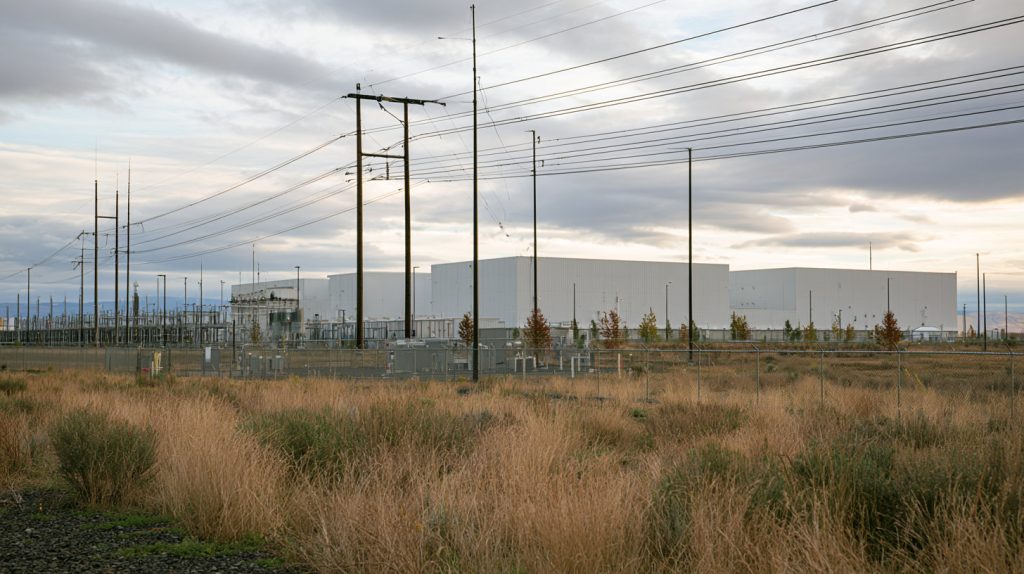
What began as scattered neighborhood resistance to individual projects has become something much larger: a national backlash against the physical footprint of the AI economy. According to Data Center Watch, at least 75 data center projects worth more than $130 billion were delayed or canceled in the first quarter of 2026 alone, effectively matching the scale of all opposition recorded in 2025. Over the same period, active opposition groups grew from 396 at the end of 2025 to 833 by the end of March 2026, spanning 49 states. About a dozen states have introduced data center moratoriums, including New York, which approved a one-year pause on large data center permits, and polling cited by Fortune found that roughly seven in ten Americans now oppose data centers near their homes.
For planners, local officials, and economic development practitioners, the important shift is geographic as much as political. As resistance hardens in established East and West Coast markets, developers are moving deeper into small-town and rural America, where land is cheaper, zoning may be looser, and public institutions often have less experience evaluating projects of this scale and intensity. That does not mean the projects are sliding through quietly. As Fortune observed in its reporting on what it bluntly called “data center hate”, hearings are becoming “heated and harder for local politicians and developers to manage,” and in some communities opposition has formed before a formal application even hit the table. In other words, this is no longer a simple land use case. It is becoming a test of local trust, infrastructure capacity, and whether promised tax base and prestige can outweigh concerns about water, power, noise, landscape change, and the basic identity of a place.
Texas is a case study for this conflict. The Texas Tribune reports that ERCOT’s interconnection queue includes more than 1,800 projects representing over 474 gigawatts of demand, with roughly 90 percent of those new power requests tied to data centers. On August 3, Governor Greg Abbott ordered the Public Utility Commission of Texas and ERCOT to conduct a “comprehensive verification and audit” of data centers advancing through the grid interconnection process, effectively freezing approvals while regulators sort out what is actually in the pipeline. Under that directive, developers must disclose tax incentives, projected power demand, on-site generation plans, water use and cooling operations, ownership details, and measures to reduce impacts on surrounding communities, including noise, lighting, setbacks, traffic, and emergency-response coordination. ERCOT also paused its “batch zero” review after the order, underscoring that this was not symbolic messaging but a meaningful intervention in the approval process.
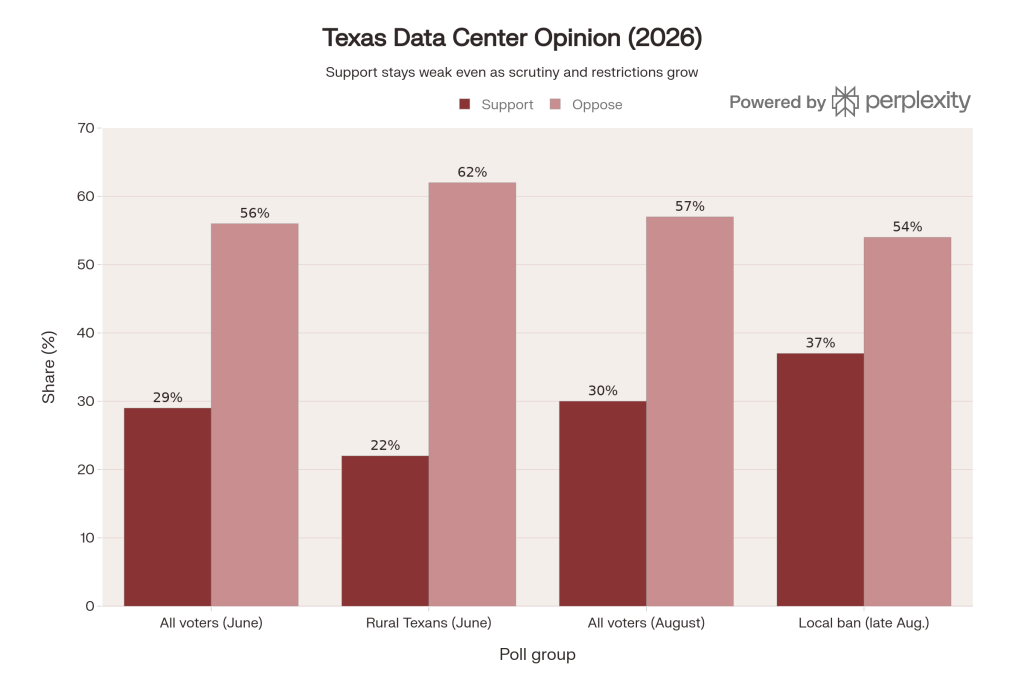
The politics behind that pause are not hard to understand. CBS Texas reported that only 30% of Texans support a data center in their community, while 57% oppose one. Even more telling, voters gave state leaders poor marks on the issue, with 24% approving of their handling of data centers and 45% disapproving. Efforts to reassure the public with more safeguards have not moved opinion very much. Adding stronger protections around pollution and water usage lifted support only modestly, leaving a clear majority still opposed. That is a revealing signal for anyone in local government: in many places, the objection is no longer just about better conditions of approval. It is about whether the use belongs there at all.
There is also a broader structural issue lurking beneath the headlines. Abbott has separately proposed legislation for the 2027 session that would open municipally-owned utility territories such as Austin Energy and CPS Energy to retail electric competition. That is not just an energy-market story. It is a municipal-finance story, because CPS Energy contributes 14 percent of its profits to San Antonio’s city budget in lieu of property taxes, making any restructuring potentially significant for local service delivery and budget stability. Abbott argues the current arrangement amounts to “taxation through electricity prices without representation,” particularly for customers outside city limits, while local officials and utility leaders counter that the public model keeps returns in the community rather than sending them to private investors.
Taken together, these fights reinforce that data centers are no longer simply a technology-sector development issue. They have become a frontline question in rural planning, local infrastructure governance, annexation politics, water policy, utility regulation, and public legitimacy. For small towns and rural counties especially, the challenge is not whether the AI economy is arriving. It is whether local communities have the tools, time, and leverage to shape its terms before the terms are shaped for them.
I am participating in a webinar, Data Centers and Energy: Who Powers Them and Who Pays? Wed. 9 September 2026, at Noon CDT. The $20 registration supports the sponsor, APA Planning and Law Division. Link to register posted on the APA Small Town & Rural Planning Division home page.
Earlier this summer, I wrote about the upcoming Rural Renaissance Road Show: At the Data Center Crossroads. Registration is open now for this in-person event.
Some things have changed, but much of the trend just keeps trending since last fall when I wrote “The Rural Energy Revolution: How Data Centers and AI Are Reshaping Electricity Demand in America’s Heartland“.
.

