
October 2026 series: Transportation & the Comprehensive Plan
Every few years, the price at the pump becomes the loudest number in town. People talk about it at the diner, the school board hears about bus budgets, and the county road department recalculates what a season of grading and plowing will cost.
Usually the spike passes. This year it hasn’t. Since the war with Iran began in late February, shipping through the Strait of Hormuz has been disrupted, and oil prices have swung sharply. They fell back in early summer, then climbed again: in mid-September, Brent crude settled above $100 a barrel. Nobody can tell you how long this lasts. The honest description is not “a price spike.” It is prolonged uncertainty.
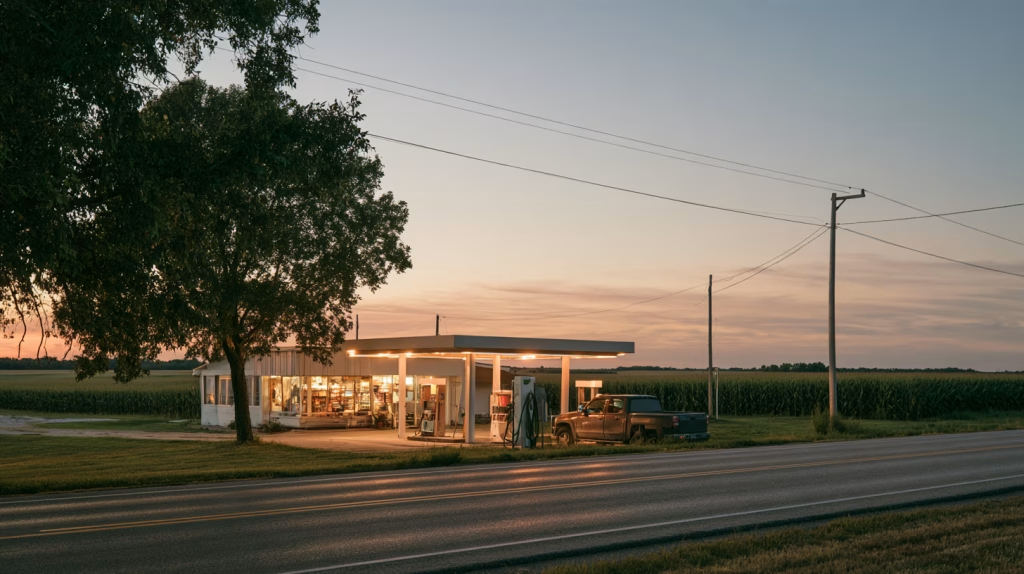
And yet, after months of fuel price uncertainty, drive through almost any town in America and very little looks different. The same trucks are parked outside the same hardware store. The same fuel station sits at the highway exit. That is not a failure of imagination. It is how transportation systems work.
Why transportation systems change slowly
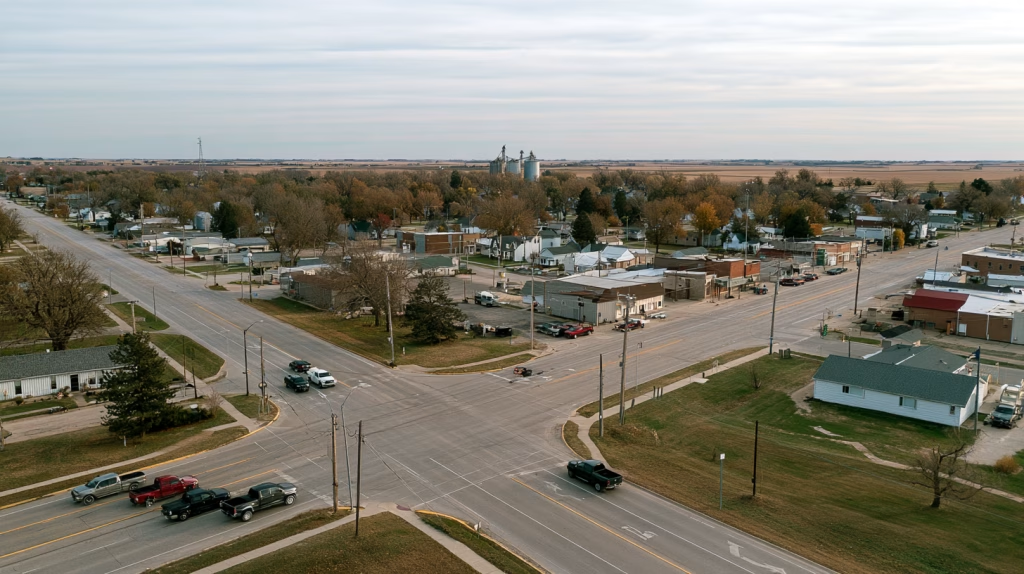
A transportation system is not just roads. It is the vehicles people already own, the fueling network that serves them, the land use patterns that decide how far people must travel, and the habits that grow up around all of it.
Each of those layers moves on its own clock. Most households keep a vehicle for many years, and a pickup bought this year will likely still be on county roads in the late 2030s. Fueling stations are private investments tied to long leases and underground tanks. Road networks outlast the people who planned them. Settlement patterns (where the school is, where the clinic is, how far the nearest grocery store sits from the farmhouse) change more slowly than anything else.
Let’s not even talk about the federal fuel efficiency rollback in progress. I’m not a fan of federalizing California standards for anything. But there’s something to be said for being prepared for the future.
When fuel prices jump, households absorb the cost long before the system adapts. For rural families who drive long distances to work, school, and health care, that cost lands hardest. I speak (write) from first-hand experience.
That is the planning problem. Not “which fuel will win,” but how a community keeps people connected to jobs and services while vehicles, infrastructure, and habits catch up.
The real question: can vehicles, infrastructure, and access develop together?
Every alternative fuel faces the same chicken-and-egg problem. People won’t buy vehicles they can’t refuel. Nobody builds fueling stations for vehicles that aren’t on the road. And even when both exist, they don’t help the household that can’t afford the vehicle in the first place.
Electricity is where this problem is most visible today, and where governments have made the clearest policy choices. Comparing three regions shows three different answers.
United States and Canada: build the network, then fill the gaps
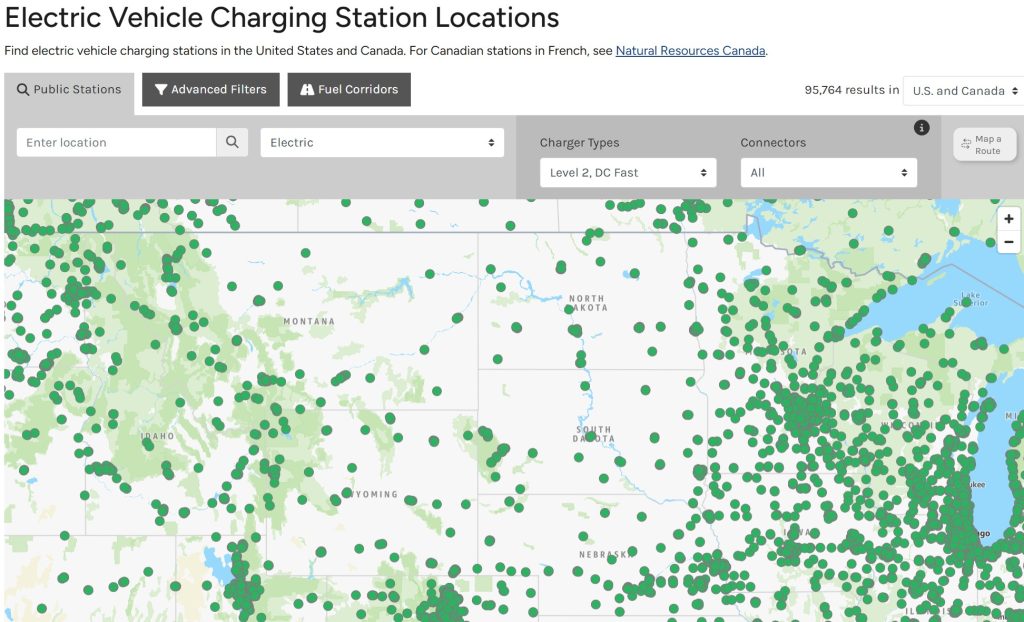
The US federal National Electric Vehicle Infrastructure (NEVI) program set aside $5 billion to help states build a fast-charging network along designated highway corridors. After a pause in 2025, revised federal guidance gave states more flexibility: in how far apart stations can be, and in when they can start spending on other public roads beyond the corridors.
That second point matters for small towns in particular. The first phase of NEVI was largely about through-traffic. The next phase could be about the places travelers pass through, and the people who live there.
Canada’s Zero Emission Vehicle Infrastructure Program (ZEVIP) takes a broader approach. It funds chargers and hydrogen stations in a wider range of locations, not only along highways.

Europe: set targets, and plan for affordability
The European Union’s Alternative Fuels Infrastructure Regulation (AFIR) takes the opposite starting point: it sets binding targets. Member states must provide fast-charging capacity at regular intervals along the main road network, and hydrogen refueling along core corridors and in urban nodes by 2030. The infrastructure is planned ahead of demand instead of waiting for it.
France adds a second piece that most infrastructure programs ignore: affordability. Its leasing social program helps modest-income households lease a new electric car for under €200 a month, before insurance and options. What makes it relevant here is who qualifies. Beyond the income limit, applicants must either live more than 10 kilometers from work and drive their own car to get there, or drive more than 8,000 kilometers a year for work in their personal vehicle. In other words, the program deliberately targets people who depend on their car, many of them in rural and peri-urban areas. It is funded through energy savings certificates, an obligation placed on energy companies rather than a line in the national budget. The 2026 edition aims to reach at least 50,000 households.
It doesn’t end car dependence. It makes it cheaper and cleaner for the people who can least afford the pump.

Australia: distance first
Australia faces the challenge rural America knows best: enormous distances and small populations in between. Its National Electric Vehicle Strategy ties vehicle policy to investment in charging and hydrogen. The country has been building fast charging along its major highways, and its national funding now targets charging blackspots, with priority for regional and remote communities.
That makes Australia the most useful comparison for rural America: it is trying to serve both the main routes and the towns in between.
The other fuels: different vehicles, different jobs
Electricity is not the whole story. Other fuels are finding their place by use, not by headline.
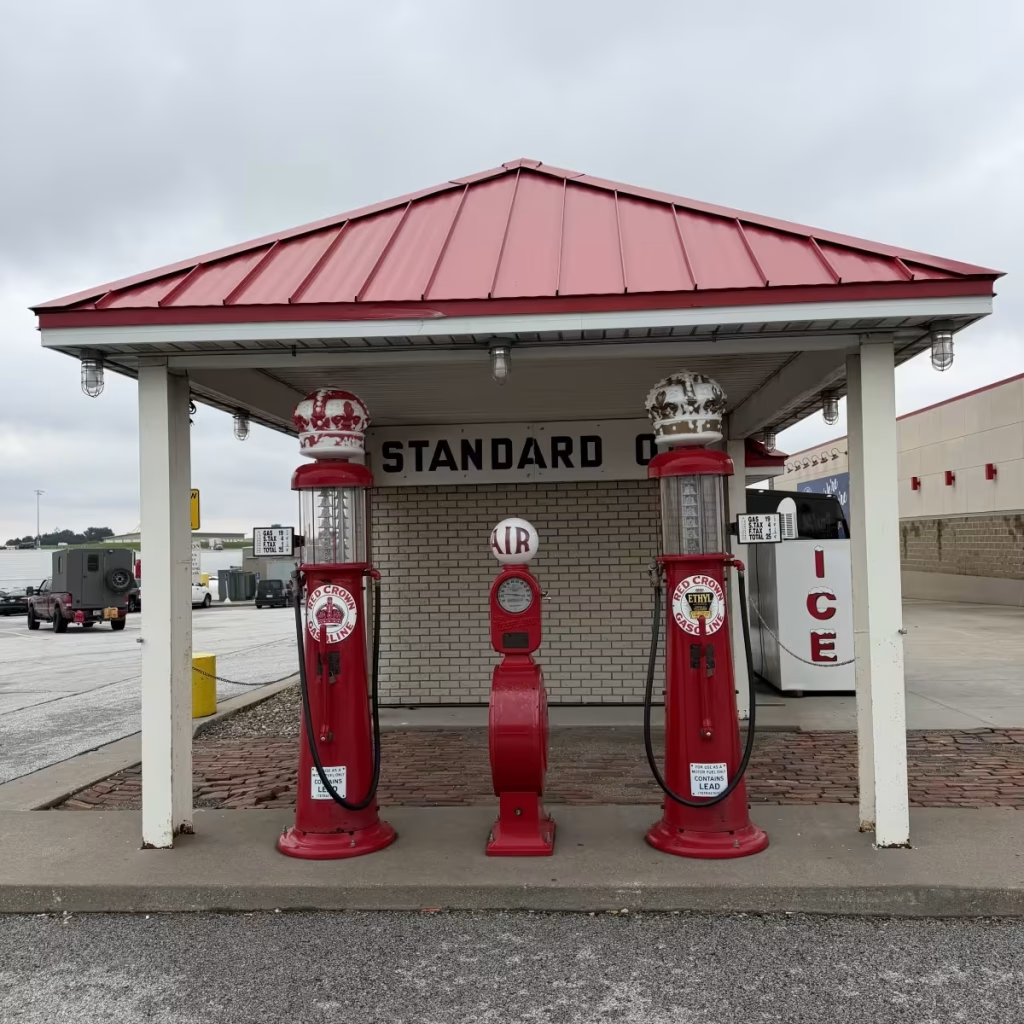
- Ethanol is already in most American gasoline. It might be 10% or 15%. Across the Midwest, pumps serve custom blends E-20, E-30, E-50, or E-85 (Flex Fuel at 51%-83% in season) at a good discount.
- Renewable diesel (produced via hydrotreating) can usually replace petroleum diesel directly, which matters for farm equipment and freight, where replacing expensive machinery isn’t an option. Biodiesel is common across the US, but how much can be blended depends on the engine and the manufacturer’s specifications.
- Compressed natural gas has a steady niche in fleets that return to base every night, such as refuse trucks and some school buses.
- Hydrogen remains early, with most attention on heavy-duty freight and specific corridors.
The planning lesson is simple: match the fuel to the fleet. A county’s road department, a school district, and a regional freight hub may reasonably land on different answers.
What fuel price uncertainty means for your comprehensive plan
Local governments have more influence here than it might seem. A few practical steps:
- Plan for scenarios, not forecasts. Ask how your transportation chapter holds up if fuel stays expensive for years, not just months.
- Know your fleet. Inventory public vehicles such as road equipment, buses, and emergency vehicles, and note their replacement cycles. That is where local government controls the timing.
- Put charging on the map. Identify likely charging locations downtown and at the school, the clinic, and highway interchanges, then make sure zoning allows them.
- Talk to your utility early. Grid capacity is often the real constraint in rural areas.
- Protect fuel resilience. Know which stations have backup power during an outage or emergency.
- Remember the people without options. Dial-a-ride, carpooling, and walkable town centers reduce exposure to fuel costs for everyone.
Much of the starting information already exists in fleet records, commute data, and conversations with utilities and major employers. The question is whether local governments are using it.
A comprehensive plan can’t set fuel prices. It can make a community less exposed to their flux.

Coming this month
Over the next four Sundays, we’ll follow the same question through the whole transportation system:
- October 4: Streets, roads, and the edge of town — why a street and a highway do different jobs, and what your town’s entrance says about you
- October 11: Beyond the car — transit, bikes, sidewalks, and trails
- October 18: Rail — freight, passengers, and the long game
- October 25: Air service and regional economic development
Each week we’ll borrow one or two ideas from Europe, and ask what a small American town or rural county can actually do with them.
It Takes A Planner
October is National Community Planning Month, an opportunity to recognize the people and planning processes that help communities prepare for the future.
From economic development and transportation planning to reinventing what our housing options look like, this October share how planning and planners are leading the way forward for all in your community.

Further Reading
Official sources
- Federal Highway Administration — Revised NEVI guidance: https://highways.dot.gov/newsroom/president-trumps-transportation-secretary-sean-p-duffy-unveils-revised-nevi-guidance
- Alternative Fuels Data Center — NEVI Formula Program: https://afdc.energy.gov/laws/12744
- US Energy Information Administration — Biofuels explained: https://www.eia.gov/energyexplained/biofuels/biodiesel-rd-other-basics.php
- Natural Resources Canada — Zero Emission Vehicle Infrastructure Program (ZEVIP): https://natural-resources.canada.ca/energy-efficiency/transportation-energy-efficiency/zero-emission-vehicle-infrastructure-program
- European Alternative Fuels Observatory — AFIR review: https://alternative-fuels-observatory.ec.europa.eu/general-information/news/afir-review-shaping-europes-alternative-fuels-network
- French Ministry of Ecological Transition — Leasing social 2026 (in French): https://www.ecologie.gouv.fr/leasing-social
- Australian Government (DCCEEW) — Driving the Nation Fund: https://www.dcceew.gov.au/energy/transport/driving-the-nation-fund
Books
- Confessions of A Recovering Engineer: Transportation for a Strong Town by Charles Marohn (Wiley, 2021)
A discussion including reasons road design so often serves speed over place. Our October 2026 featured Book of the Month. - Killed by a Traffic Engineer: Shattering the Delusion that Science Underlies our Transportation System by Wes Marshall (Island Press, 2024)
Translates engineer-speak into plain English, and the obfuscation of engineer data into plain facts you need to know to save lives in your community.
Read a short excerpt on the blog here. Top entry in our 12 Planning Books recommended for 2025. - Human Transit: How Clearer Thinking about Public Transit Can Enrich Our Communities and Our Lives by Jarrett Walker (Island Press, original 2012 / revised edition 2024)
a clear introduction to how transit planning works, useful background for our week two article on multimodal transport. - How the World Really Works by Vaclav Smil (Viking, 2022)
Explains why energy transitions take decades, the core of today’s article.
As an Amazon Associate, jcshepard.com earns from qualifying purchases. This does not affect the price you pay or our recommendations.