

How biomass, geothermal, and SMRs are powering the next chapter of rural clean energy
This is the fourth installment in JCShepard.com’s October series on rural energy, exploring how the clean energy transition is reshaping life across America’s heartland.
While solar and wind have dominated the headlines—and much of our previous coverage—this week we dig into the next wave of rural clean energy. Emerging technologies like biomass, geothermal, and small modular reactors (SMRs) offer more than just megawatts. They offer energy independence, 24/7 reliability, and the chance to transform waste and legacy infrastructure into economic opportunity.
For rural planners, policymakers, and energy leaders, these technologies aren’t fringe. They’re foundational. And they may be key to building energy systems that are not just clean—but resilient, community-driven, and built to last.

Why These Technologies Matter for Rural America
While solar and wind dominate clean energy headlines, the technologies quietly gaining traction—biomass, geothermal, and SMRs—may hold even greater promise for rural regions. These systems offer dispatchable power, industrial heat, and energy independence, while making use of existing infrastructure, agricultural waste, or legacy energy sites.
What sets them apart?
- Biomass energy turns farm and forest byproducts into renewable baseload power—while creating jobs in rural pellet plants and bioenergy supply chains.
- Geothermal energy provides steady, year-round electricity and heating using Earth’s natural heat—with small footprints and minimal visual impact.
- Small Modular Reactors (SMRs) offer zero-carbon, always-on power for industrial and remote rural use—especially well-suited to repowering former fossil fuel sites.
Together, these technologies represent the “next wave” of rural clean energy—one that complements wind and solar, strengthens local economies, and aligns with rural values of productivity, stewardship, and independence.

Biomass Energy: Turning Waste Into Wealth
How Rural America Can Lead the Clean Energy Revolution
What Is Biomass Energy?
Biomass energy converts organic materials—such as wood chips, corn stover, manure, and dedicated energy crops (e.g., switchgrass, miscanthus)—into electricity, heat, or renewable fuels like biogas and bioethanol. At its core, biomass is about turning everyday organic leftovers into useful power.
Here’s what sets biomass apart. Unlike wind and sun, which come and go with the weather, biomass is steady. We can fire up a generator with wood chips or press the switch on an anaerobic digester any time, day or night. That means reliable energy for small towns, farms, and businesses—even when the sky is dark and the wind disappears. In rural America, that kind of dependability keeps the lights on and the economy humming.
The numbers are impressive: according to the U.S. Department of Energy and Department of Agriculture, the U.S. produces nearly 1 billion tons of biomass annually, enough to replace 30% of national petroleum use. About 80% of that potential lies in rural areas. If we harness that resource, we support local jobs, add value to crops, and give family farms and small businesses a shot at new revenue streams—all while strengthening national energy security.
And don’t forget the environmental piece. If we use agricultural leftovers or forestry by-products wisely, biomass can be close to carbon-neutral—plants capture CO₂ as they grow and release it when converted to energy, keeping the carbon cycle in balance. But there’s another fascinating product that can result from processing biomass: biochar, a form of charcoal made by heating organic material (biomass) in a low-oxygen environment, usually through a process called pyrolysis. This isn’t your everyday grill charcoal—biochar is produced specifically for agricultural and environmental uses. Biochar improves soil health and provides carbon storage.
So, when we look to the future, biomass energy offers a bridge between our working lands and our clean energy ambitions—a resource rooted in our soil, fueling our rural communities, and helping America lead the way toward a low-carbon future.

Why Biomass Energy Works for Rural America
Local Fuel = Local Jobs
Biomass energy supports 3x more jobs per megawatt than fossil fuels (NREL, 2024). In Maine, for example, biomass fuels over 8,000 rural jobs across logging, transport, and plant operations (Maine Clean Energy, 2024).
Because biomass supply chains—from field to furnace—are inherently local, they recirculate dollars within rural communities.
Waste as a Resource: From Liability to Asset
- Agricultural residues: 500 million tons of corn stover, wheat straw, and nut shells are often burned or left to rot. These can be converted into pellets, biogas, or bio-oil.
- Forest thinning: 60 million acres of U.S. forests require active management to reduce wildfire risk. Woody slash can be used in combined heat and power (CHP) plants.
- Manure management: Livestock farms spend ~$1 billion per year on waste disposal. Anaerobic digesters turn this waste into biogas and biofertilizer, cutting methane and odor while producing revenue.
Economic Resilience
Biomass energy offers diversified, year-round income:
- Farmers can earn $50–$150/ton selling residues or energy crops.
- Biomass plants run continuously—unlike seasonal crops—providing stable jobs and tax revenue.
- In Georgia, poultry farms have reduced waste costs by 40% by switching to biogas systems.
Energy Security & Disaster Resilience
- In remote regions like Alaska, pellet-based microgrids keep communities powered off-grid.
- During grid outages (e.g., 2023’s winter blackouts in Texas and Louisiana), biomass facilities provided crucial backup energy.
The biomass energy industries in Canada and the United States share similar technologies but differ in scale, policy direction, and market structure. Canada’s bioenergy sector is smaller in scale but more integrated with forestry, agriculture, and regional sustainability goals. Biomass energy north of the US border stems primarily from forestry residues, wood chips, and pellet exports, with heavy concentration in British Columbia, Alberta, and Quebec. While its domestic market is smaller, the sector is tightly linked to biofuel exports and the wood-pellet trade to Europe and Japan.
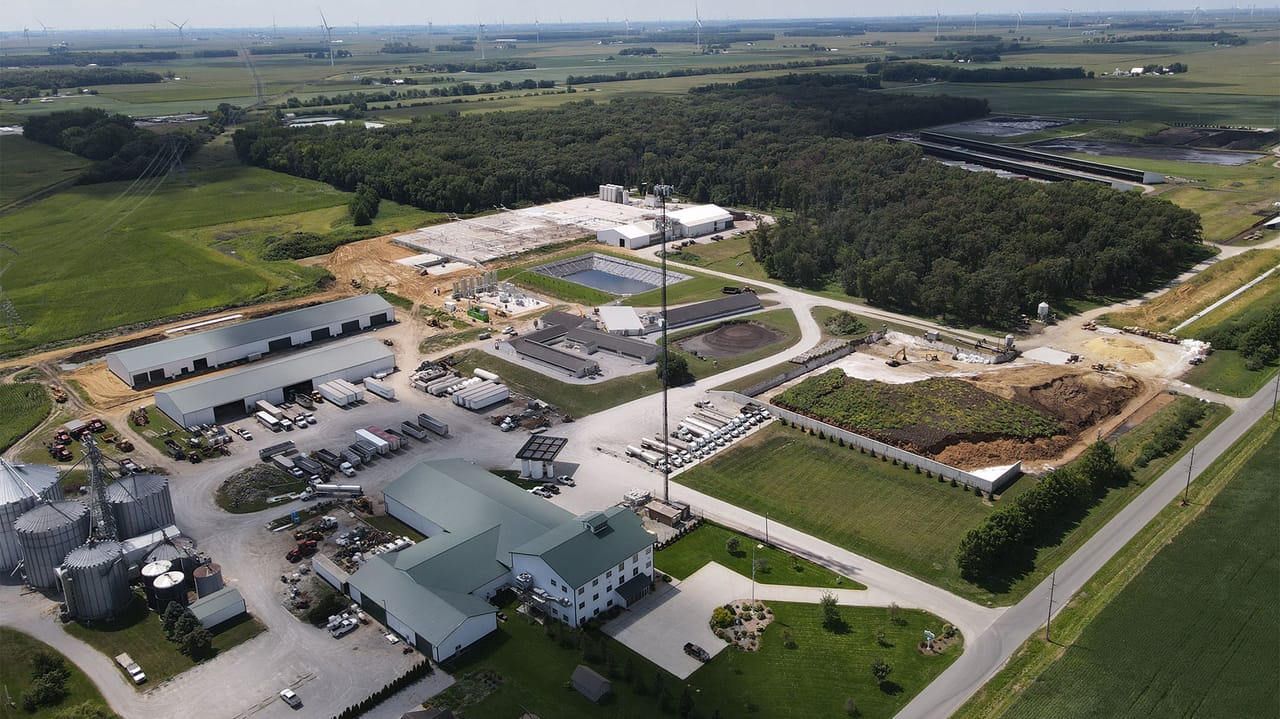
Case Study: BioTown Biogas – Reynolds, Indiana
How a Dairy-Fueled Biogas Hub Turned Manure Into Clean Power, Local Jobs, and Climate Gains
Project Overview
BioTown Biogas (BTB) is a large-scale renewable energy facility located in Reynolds, Indiana—a rural town of about 500 people in White County. The project is a public-private partnership between BioTown Ag, a vertically integrated livestock and farming operation, and Green Rock Energy Partners, an infrastructure investment firm focused on renewable gas. BioTown represents one of the largest on-farm anaerobic digestion and RNG facilities in the United States.
“The goal is zero waste—closing the loop between agriculture and energy.”
— BioTown Ag founder, Indiana Farm Progress (2023)
Technology and Feedstocks
- Feedstocks used:
- Dairy manure (from 20,000+ cows)
- Beef and hog waste
- Agricultural residues (corn stover, food waste, fats, oils, and greases)
- Digestion system:
- Uses DVO’s Two-Stage Linear Vortex™ anaerobic digesters
- Processes more than 400,000 gallons of organic waste daily
- Energy outputs:
- Renewable electricity: >42 million kWh/year (enough for 3,500 homes)
- Renewable natural gas (RNG): ~3 million gallons/year
- Biofertilizer: Byproduct used to enrich farm fields
- Gas grid injection: BTB injects upgraded RNG directly into the regional natural gas pipeline, displacing fossil fuels.
Sources: DVO Inc
Economic and Environmental Impacts
- Revenue:
- ~$5 million/year from RNG sales to utilities and fleets
- ~$1.5 million/year in avoided manure management costs
- Jobs created:
- ~40 direct jobs in operations, maintenance, and logistics
- Local contractors for construction, hauling, and engineering
- Methane reduction:
- Captures methane from manure, equivalent to removing ~160,000 metric tons of CO₂ per year
- Carbon-negative profile when paired with cover crops and reduced synthetic fertilizer use
- Circular economy:
- Biofertilizer from digester solids is returned to farm fields, improving soil health and reducing chemical inputs
Lessons Learned for Rural Planners
- Start with what you have: Reynolds had manure, farmland, and a need for waste solutions—now it has energy, jobs, and new revenue streams.
- Feedstock diversity matters: The system’s ability to process manure and food/ag waste builds flexibility and scalability.
- Think infrastructure: The project co-locates feedstock sources, digestion, RNG upgrading, and grid connection—all on a rural site.
- Plan for long-term growth: BTB started as a manure-to-power project and expanded to include RNG injection and CO₂ recovery.
- Community visibility: Hosting farm tours, working with schools, and showing tangible local benefits helped reduce skepticism and build local pride.
Key Challenges
| Challenge | How They Addressed It |
|---|---|
| Feedstock logistics | Developed in-house hauling and partnerships with regional farms and processors |
| Technology complexity | Used modular digesters and partnered with experienced tech providers (DVO, Clarke Energy) |
| Regulatory hurdles | Worked with Indiana Department of Environmental Management (IDEM) for streamlined permitting |
| Public perception | Emphasized co-benefits: odor control, reduced runoff, local jobs |
Why This Case Matters
BioTown Biogas isn’t just a rural RNG plant—it’s a proof-of-concept for circular energy systems in agricultural communities. It shows that:
- Biogas can scale in low-density, rural environments
- Manure and ag waste are not problems—they’re local energy assets
- With the right partners, technology, and community engagement, small towns can build big climate solutions
“BioTown is not the future—it’s happening now. And it’s happening in Reynolds.”
— Indiana Office of Energy Development, 2023

Planning Strategies for Rural Biomass Success
1. Inventory Local Resources
Use the USDA’s Biomass Atlas or DOE’s Bioenergy KDF to map agricultural, forest, and waste feedstocks.
Example: Minnesota identified 5 million tons/year of ag waste—now powering 10+ facilities.
2. Build Local Partnerships
Successful models include:
- Cooperatives (e.g., Land O’Lakes biogas projects)
- Public-private partnerships with utilities
- Power Purchase Agreements (PPAs) to ensure project viability
Example: Vermont’s McNeil Generating Station converts wood chips into 50 MW of baseload power.
3. Co-Locate with Heat Users
Pair biomass energy with local heat demand to boost efficiency:
- Greenhouses (biomass CO₂ boosts plant yields)
- Lumber mills (onsite heat and electricity)
- District heating (e.g., Montpelier, VT heats 30% of downtown with wood chips)
4. Leverage Grants and Incentives
- USDA REAP: Up to $1 million for rural clean energy
- DOE Bioenergy Tech Office: $100M+ in annual R&D funding
- EPA Clean School Bus: $500M for biogas-fueled buses
- State RPS mandates: Biomass carve-outs in renewable portfolios (e.g., Maine: 30%)
Addressing Common Biomass Challenges
| Issue | Solution | Example |
|---|---|---|
| Sustainability | USDA BioPreferred® certification | Iowa corn stover pellets |
| Air Emissions | EPA Clean Air Act-compliant CHP systems | Burgess BioPower, NH |
| Project Costs | USDA REAP + state clean energy funds | Malheur Lumber CHP, OR |
| Logistics | Regional hubs for pre-processing feedstocks | Bioenergy Campus, NC |
Biomass in the Rural Energy Mix: Comparative Snapshot
| Technology | Dispatchable? | Land Use | Jobs/MW | Storage Required |
|---|---|---|---|---|
| Biomass | ✅ Yes | Low (often co-located with ag) | 15–20 | ❌ No |
| Solar | ❌ No | High (5–10 acres/MW) | 5–10 | ✅ Yes |
| Wind | ❌ No | Very high (60+ acres/MW) | 3–5 | ✅ Yes |
Hybrid Systems: Pair biomass with solar/wind to ensure 24/7 reliability (e.g., Hawaii’s bioenergy + solar microgrids)
2025 Trends & Innovations in Rural Biomass
- Advanced Biofuels: Fulcrum BioEnergy (NV) is turning municipal waste into jet fuel for United Airlines.
- Modular Biomass Units: Companies like HomeBiogas and Community Power Corp are building portable digesters and pelletizers for farms and forest communities.
- BECCS (Bioenergy with Carbon Capture and Storage): Projects like Drax Power in Louisiana now capture 4 million tons of CO₂ annually, with new 45Q tax credits ($85/ton) expanding deployment.
Policy Priorities to Scale Rural Biomass
Federal Level
- Assure continuance of USDA REAP
- Strengthen Renewable Fuel Standard (RFS) for biofuels
- Extend clean energy tax credits (45Q, 48C)
State Level
- Provide biomass carve-outs in RPS programs
- Streamline permitting for <5MW rural biomass systems
- Fund extension and farmer training on biomass practices
Local Level
- Update zoning to allow and encourage on-farm digesters
- Create municipal biomass utilities (e.g., Burlington, VT)
- Develop partnerships with tribal nations (e.g., Navajo wood pellet plants)
How to Launch a Rural Biomass Project
- Assess feedstocks using the Biomass Atlas
- Secure stakeholders—farmers, utilities, investors
- Apply for grants from USDA, DOE, or your state
- Pilot a small project—e.g., one digester or mobile pelletizer
- Scale up with CHP, RNG, or district heating systems
✅ Pro tip: Visit the DOE Bioenergy Technologies Office for free maps, data tools, and technical assistance.
Biomass Energy – Conclusion
Biomass isn’t just a legacy fuel—it’s a renewable workhorse uniquely suited to rural America. With abundant agricultural and forestry byproducts, strong local supply chains, and real potential for circular economies, biomass turns waste into wealth. For communities looking to create jobs, reduce emissions, and build energy independence from the ground up, biomass energy is a practical, proven solution.

Geothermal Energy: Tapping Into Earth’s Steady Heat
How Rural America Can Unlock a Hidden Energy Powerhouse
What Is Geothermal Energy?
Geothermal energy taps into the Earth’s natural heat — stored in rocks, fluids, and magma — to generate electricity or provide direct‑use heating. Unlike solar or wind, geothermal delivers 24/7 baseload power, making it a game‑changer for rural energy resilience.
North America’s geothermal story begins in the West—where tectonic edges and ancient volcanoes still breathe heat. These regions sit close to the Earth’s molten engine, making them prime ground for tapping steady, renewable power. California is king, home to The Geysers, the world’s largest geothermal complex, and the Salton Sea, where hot brines yield both energy and lithium. Nevada ranks next, its Great Basin full of plants at places like Steamboat Hills and Dixie Valley. To the north, Oregon and Idaho sit on the volcanic Cascades, powering local grids and Boise’s century-old geothermal district heating. Utah’s FORGE project near Milford tests the next wave—Enhanced Geothermal Systems that could bring this energy east.
Natural wonders mirror the industry. Yellowstone, Long Valley Caldera, and Valles Caldera remind us how alive the land remains. New tech is now pointing to buried heat in Colorado, Texas, and even the Appalachians.
Types of Geothermal Systems
| Type | Description | Typical Use |
|---|---|---|
| Hydrothermal | Uses naturally occurring hot‐water or steam reservoirs | Electricity generation, district heating |
| Enhanced Geothermal Systems (EGS) | Engineered reservoirs (e.g., hydraulic stimulation) in hot dry rock zones | Broader geographic deployment of geothermal |
| Direct‑Use | Lower‑temperature heat used for non‐electric applications | Greenhouses, aquaculture, rural industry |
| Ground‑Source Heat Pumps (GSHPs) | Shallow loops in the soil or bedrock for heating/cooling buildings | Homes, schools, small businesses |
Why It’s a Big Deal for the U.S.
- The U.S. currently has on the order of ~3,300 MW of installed geothermal capacity.
- The geologic resource potential is far larger — for example, studies in Idaho show hundreds of megawatts potential even in moderate‑temperature zones.
- Rural areas — especially in the West, Alaska, Hawaii and areas with legacy wells — sit on a large share of this resource.
(Idaho Energy and Mineral Resources)
Why Geothermal Works for Rural America
Reliable Baseload Power
Geothermal plants operate at very high capacity factors (90%+), unlike intermittent sources. For example, the Raft River Geothermal Power Plant in Idaho runs as a binary‐cycle plant delivering steady power day and night. POWER Magazine
Minimal Land Impact
Compared with large solar or wind farms, geothermal requires a small surface footprint. For example, geothermal plants can operate with ~1–8 acres per MW in some cases, helping preserve agricultural land or dual‐uses. Your draft’s claim aligns with this.
In Idaho, the resource is considered “long‑term, secure power source … with minimal fuel supply cost” in fact sheets. Energy and Mineral Resources
Job Creation & Economic Boost
Rural drilling, operations, and maintenance offer local employment. For instance, Idaho’s geothermal sector supports direct and indirect jobs in drilling, maintenance, and agrarian applications. Lease payments and taxes for counties are also cited in Idaho for geothermal operations. Energy and Mineral Resources
Agricultural & Industrial Integration
Examples include direct‐use geothermal for greenhouses, aquaculture, food processing, and drying systems. Idaho uses geothermal for aquaculture and greenhouses. Energy and Mineral Resources
The geothermal energy industries in Canada and the United States share deep technical roots but differ sharply in maturity, scale, and government strategy. Canada is only now moving from exploration to deployment, leveraging its world-class drilling expertise from the oil and gas sector. Despite significant potential, Canada has no commercial-scale power plants yet. Pilot projects led by Eavor Technologies, DEEP Earth Energy, and FutEra Power are testing closed-loop and hybrid geothermal designs in Alberta, Saskatchewan, and British Columbia, projected to begin production in 2026–2027.

Challenges & Solutions
Exploration Risk
Geothermal requires drilling and resource confirmation; risk remains high in undeveloped zones. Example: The Raft River site underwent deep drilling and testing to establish a viable reservoir. Factor This
Upfront Costs
Large capital is required for wells, infrastructure, and power plant equipment. But federal programs and loan guarantees can help (e.g., DOE grants). At Raft River a US DOE grant of ~$9 million was awarded in 2008 for EGS stimulation. power-technology.com
Community Concerns
Rural communities may raise questions on drilling impacts (water, seismicity) and land use. Models of benefit‑sharing, local ownership and early engagement help build support. The Bulletin
Water Use / Seismicity
Especially with EGS, injection wells and stimulation raise permit and environmental issues. Best practice: closed‑loop systems, micro‑seismic monitoring. Idaho fact sheet states geothermal plants can operate “24 hours a day 7 days a week … with little or no greenhouse gas emissions or effects on wildlife and view‑scape.” Bureau of Land Management
US Federal Cutbacks
The US Department of the Interior plans to cut employees from regional offices that manage energy project permits. These layoffs are part of a broader plan to eliminate 2,000 Interior Department positions. The staffing cuts, coupled with increased federal oversight of local offices, have already slowed approval processes for geothermal and other energy projects, raising concerns about permit backlogs and diminished efficiency despite the administration’s goal of expediting energy development. NOTUS
Rural Strategies for Geothermal Success
A. Start with Direct‑Use
Heating applications often have shorter payback periods than full electricity generation, making them suitable for early rural deployment.
B. Leverage Legacy Wells & Oil/Gas Infrastructure
Regions with oil/gas wells or existing industrial sites may reuse infrastructure, reducing cost and timeline. For example, Idaho’s resource zones include old well fields. idahogeology.org
C. Pair with Agriculture & Industry
Examples: greenhouses heated by geothermal, aquaculture using stable warm water, lumber drying. These reduce energy costs and anchor geothermal into local economy.
D. Access Grants & Incentives
Federal resources (e.g., DOE Geothermal Technologies Office) plus USDA REAP or state programmes can be leveraged for rural projects.
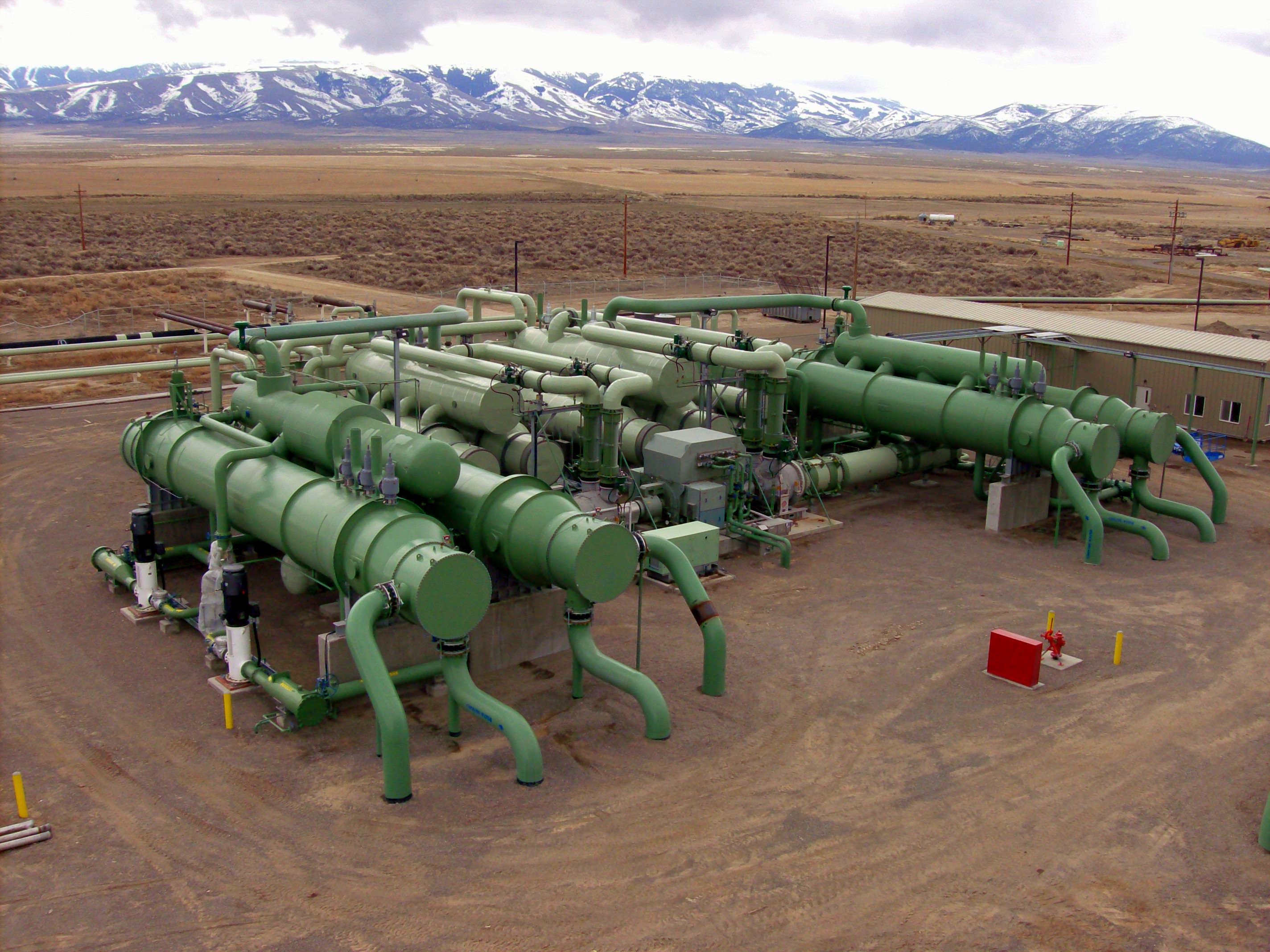
Case Study: Raft River, Idaho – A Rural Breakthrough in Geothermal Energy
Location: Cassia County, Idaho
Scale: 13 MW net capacity | Binary-cycle system | 5 production + 2 injection wells
Output: Enough to power 10,000+ homes
Developer: U.S. Geothermal Inc. (now part of Ormat Technologies)
Operation Start: 2008
Website: ormat.com
1. Project Overview & Rural Potential
In a quiet corner of southern Idaho, the Raft River Geothermal Project is showing how deep heat from the Earth can provide clean, consistent energy—without the land disturbance of solar or the intermittency of wind. Sited on what was once a Department of Energy test site in the 1970s, the project draws from moderate-temperature geothermal resources at 275–300°F, using a closed-loop binary-cycle system to generate electricity year-round.
Unlike flash steam systems that rely on high-pressure reservoirs, Raft River taps a lower-temperature resource using isopentane to transfer heat and spin turbines. This makes the project a model for other rural regions that lack “hot springs” but have suitable geology for mid-range geothermal energy.
2. How It Works on the Ground
The plant uses:
- Five deep production wells tapping geothermal fluid at 4,500–6,000 feet
- Two injection wells to return cooled fluids back underground
- Closed-loop design that reuses over 90% of the water
- A 25-year Power Purchase Agreement with Idaho Power, ensuring market stability
By integrating new infrastructure with pre-existing test wells and grid access, the project minimized siting costs and reduced environmental disruption. The entire facility occupies just a few acres—preserving surrounding rangeland for grazing and future agricultural use.
3. Economic and Environmental Impact
Raft River is more than an energy project—it’s an economic driver in a county of just over 24,000 people. With 30–50 permanent jobs, lease payments to local landowners, and an estimated $20 million in annual economic impact, the project supports both livelihoods and resilience.
- Reliable Baseload Energy: Runs at >90% capacity, strengthening local grids
- Low Emissions: No combustion, no smoke, no ash
- Minimal Water Use: 90%+ recycled within the system
- Dual-Use Potential: Rangeland continues to support agriculture and wildlife habitat
4. Research and Innovation
Raft River also serves as a testbed for enhanced geothermal systems (EGS). With its legacy of DOE research, the site has informed modern techniques for hydraulic stimulation of hot dry rock—an approach that could unlock 100+ GW of new capacity nationwide.
- Replicable Model: Demonstrates viability of binary-cycle tech in moderate-temperature zones
- Infrastructure Synergies: Shows how DOE assets can accelerate private-sector innovation
- EGS Potential: Adjacent formations are being considered for future high-temperature development
5. Lessons Learned
Raft River is a prime example of what happens when local planning, federal investment, and private expertise align:
- Start with what you have: Repurposing old research wells reduced both cost and risk
- Engage local landowners: Lease payments ensured community support
- Design for longevity: The project is built to last 25+ years with consistent output
- Use geothermal where it fits: Especially effective in Western states, former fossil fuel sites, or rural areas with oil and gas legacy infrastructure
Why Raft River Matters
Geothermal energy often flies under the radar—but in Cassia County, it’s proving to be one of the most stable, scalable, and sustainable forms of rural clean energy. With minimal land use and round-the-clock output, projects like Raft River offer rural communities a rare combination of climate resilience, economic value, and long-term reliability.
Geothermal vs. Other Renewables: The Rural Edge
| Technology | Baseload? | Land Use | Jobs/MW | Storage Needed? |
|---|---|---|---|---|
| Geothermal | ✅ | Very small (1–8 ac/MW) | ~30+ | ❌ |
| Solar | ❌ | Moderate (5–10 ac/MW) | ~5–10 | ✅ |
| Wind | ❌ | High (60+ ac/MW) | ~3–5 | ✅ |
| Biomass (note) | ✅ | Low‐moderate | ~15–20 | ❌ |
Hybrid Potential: Pair geothermal with solar or wind to create truly 24/7 renewable systems — ideal for rural microgrids and resilient communities.

2025 Trends & Innovations
- Next‑Gen EGS: Drilling to super‑hot rock (10+ km depth) to unlock vast new geothermal resources.
- Direct‑Use Revolution: Agricultural applications combining geothermal heat with greenhouse operations or agrivoltaics.
- Policy & Finance Breakthroughs: Growing tax credit mechanisms, loan programmes and state carve‑outs for geothermal.
Policy Recommendations for Rural Geothermal
Federal Level
- Scale up DOE funding for EGS and direct‑use
- Extend tax credits (e.g., ITC for geothermal)
- Streamline permitting for <50 MW rural projects
State Level
- Create “Geothermal Opportunity Zones” with tax breaks
- Mandate geothermal carve‑outs in RPS (Renewable Portfolio Standards)
- Build workforce training in community colleges for geothermal drilling and operations
Local Level
- Negotiate community benefit agreements (e.g., 20%+ revenue stays local)
- Update zoning to allow for geothermal well fields, heat loops and co‑located ag/industrial uses
- Explore tribal partnerships for geothermal projects on tribal lands
How to Start a Geothermal Project: Step‐by‐Step
- Assess Potential: Use tools such as DOE’s Geothermal Prospector or USGS maps
- Secure Partners: Include drillers, utilities, local government, agriculture/industry actors
- Apply for Grants: USDA REAP, DOE grants, state incentives
- Pilot Phase: Focus on direct‑use (greenhouse, heating) to build local momentum
- Scale Up: Add electricity generation, district heating, regional integration
Pro Tip: Visit the U.S. Department of Energy’s Geothermal Technologies Office for free technical assistance, maps and case studies.
Geothermal Energy – Conclusion
Often overlooked, geothermal energy offers rural communities something rare: clean, quiet, always-on power with a light footprint. Whether used for electricity, heating, or agriculture, geothermal systems integrate naturally with rural industries and landscapes. By tapping into the steady heat beneath our feet, rural America can gain long-term energy security while supporting jobs and sustainability right at home.
SMRs: A New Chapter in Nuclear for Rural America
How Small Modular Reactors Can Power the Heartland’s Clean Energy Future
What Are Small Modular Reactors (SMRs)?
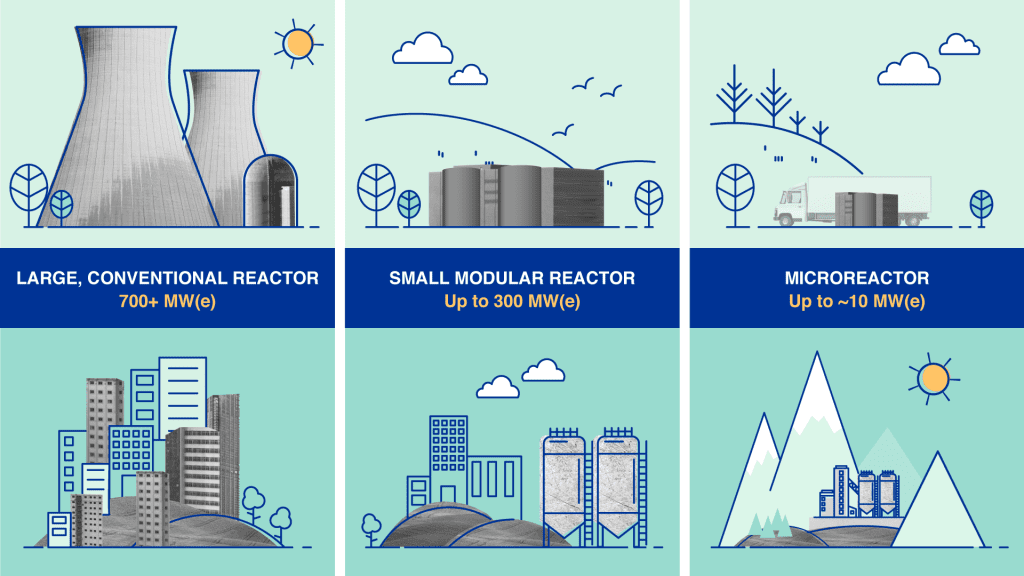
Small Modular Reactors (SMRs) mark the next wave in nuclear power—compact, factory-built, and scalable. Each unit generates between 10 and 300 megawatts, small enough to power a medium-sized city yet advanced enough to meet modern safety and efficiency standards.
Unlike the massive plants of the past, SMRs are manufactured in controlled factory settings, then shipped to site for assembly. This modular approach shortens construction from a decade to just two or three years, lowers costs, and allows utilities to add units as demand grows. Many are designed to fit neatly into existing industrial sites—especially old coal plants—where grid connections and water access already exist.
SMRs operate with “passive safety” features—cooling and containment systems that rely on physics and gravity rather than constant human or mechanical input. Their smaller cores and lower pressures mean reduced risk and simpler operation. Some models can run for seven years between refueling cycles, minimizing waste and fuel handling.
Beyond the grid, SMRs show promise for hydrogen production, desalination, and data center power, offering reliable, zero-carbon energy for industries that can’t afford downtime. With over 80 designs in development worldwide and a handful already online, 2025 marks the threshold between concept and commercialization.
These aren’t your grandfather’s reactors—they’re quiet, modular engines built for a low-carbon future. The next generation of power may come not from sprawling plants, but from clusters of compact systems humming along the edges of old coal country.
Why SMRs Matter:
- Factory-built: Cuts construction time and risk
- Scalable: Add units as demand grows
- Safer by design: Passive cooling, meltdown-proof systems
- Siting flexibility: Ideal for rural and remote communities
SMR Types You Should Know:
- Light Water SMRs: Based on proven designs (NuScale, Westinghouse)
- Advanced Reactors: Molten salt or gas-cooled (TerraPower, Kairos)
- Microreactors: Ultra-small, off-grid power (<10 MW) for villages, mines, and military bases… and data centers?
The Department of Energy projects SMRs could add up to 50 gigawatts by 2050, replacing over 100 retiring coal plants. And with 70% of viable sites in rural areas, this isn’t just a technology story—it’s a rural strategy.
Why SMRs Make Sense for Rural America
24/7 Power, No Matter the Weather
With capacity factors over 90%, SMRs provide consistent, on-demand power—essential in regions where wind and solar can’t always deliver.
Case in point: NuScale’s 2028 Idaho plant is designed to power over 400,000 homes—without batteries, without backup.
Reusing Fossil Infrastructure
Coal-to-nuclear transitions are real and growing. Old coal sites already have water, grid access, and trained labor.
Example: TerraPower’s project in Wyoming is set to replace a retiring coal unit, retaining workers while slashing emissions.
Quality Jobs and Local Wealth
Construction and operation of an SMR can create 1,000+ jobs and inject hundreds of millions into local economies. Nuclear jobs typically pay $80K–$120K/year—double the rural average.
Example: TVA’s Clinch River project in Tennessee is expected to bring 2,500 jobs by 2030.
A Stronger Grid with Renewables
When paired with solar or wind, SMRs reduce the need for expensive battery storage by up to 60%.
Example: Minnesota’s Xcel Energy project is testing this hybrid approach—marrying SMRs with wind farms for round-the-clock clean power.
SMR development in Canada and the United States occupy different stages of maturity. Both nations are pursuing the same core goal—decarbonizing heavy industry and replacing retiring coal plants—but Canada has advanced further toward first-of-a-kind deployment, while the U.S. maintains a broader design ecosystem still transitioning from licensing to construction. Canada is building its first commercial SMR at Darlington, Ontario, led by Ontario Power Generation (OPG) using GE Hitachi’s BWRX-300 design. Approved by the Canadian Nuclear Safety Commission (CNSC), this project—four 300 MW reactors totaling 1.2 GW—will likely become the first grid-connected SMR in the G7, with the initial unit scheduled for 2030 startup.
Barriers — and Rural Workarounds
- Public Perception: Community benefits (jobs, revenue-sharing) help earn trust.
Example: NuScale’s Utah project offers 20% profit-sharing to tribal partners. - Financing: Federal loan guarantees ($10B+ available) and public-private partnerships are closing the gap.
TerraPower received $1B in federal support for Wyoming. - Licensing: The NRC’s new “Part 53” fast-track rule aims to shrink SMR approvals to just 2–3 years.
Oklo’s Aurora microreactor may be the first approved under this process. - Water Use: Many SMRs use closed-loop or air-cooled systems.
Kairos Power’s salt-cooled design produces zero water discharge.

Rural Strategies for Smart SMR Deployment
A. Pick the Right Sites
Several projects are starting with former coal or gas plants. The DOE’s Advanced Nuclear Development Siting Tool maps ideal locations. (Authorization for access required.)
The Navajo Nation, for example, is exploring SMRs on retired coal lands in Arizona and New Mexico.
B. Earn Trust with Transparency
Town halls, NRC engagement, and safety education matter. Highlight passive safety and zero-meltdown designs.
Alaska’s Eielson AFB project held over 50 public meetings—an approach worth replicating.
(Trivia: pioneer aviator Carl Ben Eielson was from North Dakota.)
C. Build for Local Benefits
SMRs can be heat sources for:
- Clean manufacturing hubs
- CO₂-enriched greenhouses
- Data centers and tech parks
- Remote tribal microgrids
D. Use What’s Available
Tap into federal and state programs, including:
- DOE SMR Demo Program ($2.5B)
- USDA Rural Energy grants
- State nuclear credits ($10–$30/MWh in IL, NJ)
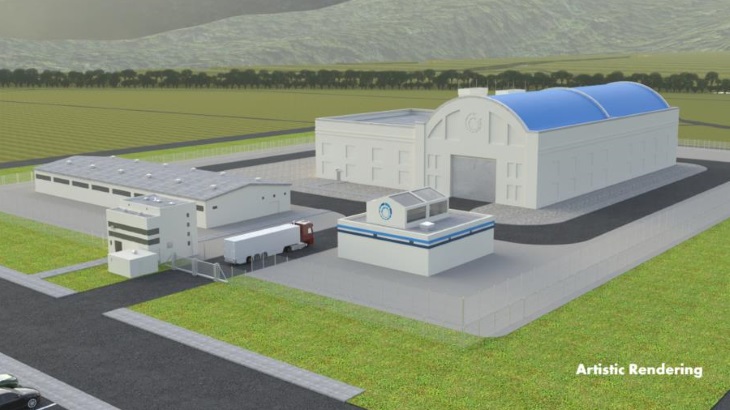
Case Study: A Rural Coal Ash Site Becomes a Nuclear Innovation Hub
How a rural Tennessee community is repositioning for the clean‑energy transition
1. Project Overview & Rural Context
In Hermitage (Anderson County), Tennessee—a community of roughly 15,000 residents with a median income of around $38,000 (compared to the national average of $67,000)—the retired fossil‑fuel landscape presents both challenge and opportunity. The adjacent Tennessee Valley Authority (TVA) Bull Run coal plant is scheduled for retirement in 2026, and the site’s legacy of coal ash and fossil infrastructure could have meant decades of economic decline.
Instead, Kairos Power chose this location, proximate to the Oak Ridge National Laboratory (ORNL) and on land formerly used for coal ash disposal, to deploy its Fluoride‑Salt‑Cooled High‑Temperature Reactor (KP‑FHR). Leveraging existing grid connections, water access, and a skilled but underemployed workforce, the site is being repositioned into a nuclear innovation hub—providing a model of how the rural energy transition can be anchored in place.
2. Why This Site Was Chosen
- Infrastructure ready: Existing grid interconnection and utility infrastructure from TVA reduce development risk.
- Workforce & legacy: The region’s nuclear legacy (ORNL) brings technical capability and training potential.
- Regulatory momentum: Kairos is benefitting from the NRC’s new Part 53 pathway for advanced reactor licensing.
- Brownfield advantage: Repurposing a coal ash site aligns with environmental remediation goals and place-based redevelopment.
3. The Challenge
Economic & Environmental Pressures
- Coal Decline: TVA’s Bull Run plant (1,200 MW) scheduled for retirement in 2026, risking 500+ jobs.
- Water Scarcity: Tennessee faced drought conditions in 2023–2024, limiting industrial water use.
- Energy Transition: Rural Tennessee needed replacement baseload power to avoid blackouts.
Public Perception Hurdles
- Nuclear Stigma: Local resistance due to Three Mile Island/Chernobyl misconceptions.
- Waste Concerns: Fear of spent fuel storage in a rural community.
4. The Solution: Kairos Power’s KP-FHR
Technology Overview
- Reactor Type: Fluoride‑salt‑cooled high‑temperature reactor (KP‑FHR)
- Fuel: TRISO particle fuel (uranium encapsulated in ceramic)
- Coolant: Fluoride salt (melts at ~350°C, non‑flammable)
- Water Use: Air‑cooled condenser with zero water discharge—important in drought‑vulnerable rural regions
- Revenue & Community Agreement: Kairos negotiated a benefit‑sharing deal with local government—20% of profits plus $10 million/year for schools
5. Project Timeline
| Milestone | Date | Details |
|---|---|---|
| DOE ARDP Award | October 2020 | $629 million federal grant to support advanced reactor demonstration |
| Site Selection | March 2022 | Hermitage chosen for proximity to ORNL and TVA infrastructure |
| NRC Pre-Application | June 2023 | First project to enter NRC’s Part 53 fast-track licensing process |
| Community Agreement Signed | November 2023 | Includes 20% profit-sharing + $10 million/year for local schools |
| Construction Start | Q2 2025 | Modular factory-built components assembled on-site |
| First Criticality Planned | 2027 | 140 MW output, with future expansion planned up to 500 MW |
6. Key Partners
- Kairos Power: Lead developer (Berkeley, CA-based).
- Tennessee Valley Authority (TVA): Grid operator and co-investor.
- Oak Ridge National Lab (ORNL): R&D support (fuel testing, safety analysis).
- U.S. Department of Energy (DOE): Funding + regulatory coordination.
- Local Government: Anderson County (TN) – negotiated revenue-sharing deal.
7. Outcomes & Impact (Projected for 2027)
Economic Benefits
- $500M Local Investment:
- $300M construction contracts (local firms prioritized).
- $200M in operational spending/year.
- 1,200 Jobs:
- 600 construction jobs (2025–2027).
- 600 permanent ops jobs ($80K–$120K/year salaries).
- Tax Revenue: $15M/year for Anderson County (funds schools, infrastructure).
Energy & Industrial Impact
- 140 MW Baseload Power:
- Replaces ~30% of Bull Run coal plant’s output.
- Powers 100,000 homes + local industries.
- Hydrogen Production:
- 10,000 kg/day of green hydrogen for agricultural fertilizers (partner: Nutrien).
- Grid Stability: Reduces blackout risk by 40% (TVA estimate).
Environmental Wins
- Zero Water Discharge: Critical for drought-prone Tennessee.
- 90% Less Waste: TRISO fuel produces far less spent fuel than traditional reactors.
- Coal Ash Remediation: Site cleanup created 100 temporary jobs.
8. Lessons for Rural Planners & Communities
- Engage early and visibly: Over 50 public town halls, independent safety reviews and benefit‑sharing helped build trust in a community historically tied to coal.
- Leverage existing assets: Using grid access and legacy workforce lowered cost and enabled faster deployment.
- Use regulatory innovation to your advantage: The Part 53 rule shortens licensing time—important when competing for rural investment.
- Modular, scalable approach: Start with a pilot 140 MW build and scale later—making the project manageable for a rural site.
| Challenge | Solution |
|---|---|
| Public Opposition | Profit-sharing + job guarantees (e.g., coal worker retraining). |
| Water Constraints | (zero discharge). |
| Supply Chain Delays | Local manufacturing partnerships (e.g., Tennessee steel plants). |
| NIMBYism | Independent safety reviews by ORNL + NRC. |
9. Quotes from Stakeholders
“This project isn’t just about power—it’s about revitalizing rural Tennessee. We’re turning a coal ash site into a 21st-century energy hub.” — Mayor Terry Frank, Anderson County
“The KP-FHR’s passive safety and zero water use make it ideal for drought-prone regions. This is the future of nuclear.” — Dr. Kathleen Araújo, MIT Energy Initiative
10. Why This Case Matters for Rural Energy
This case demonstrates that rural America can host next‑generation power infrastructure—not merely as a passive site for energy production, but as an active participant in the clean‑energy economy. It shows how an aging coal community can pivot toward advanced clean technologies, create high‑quality jobs, and anchor its identity in the energy transition.
For rural planners and community leaders, the takeaway is clear: with the right combination of site readiness, community inclusion, and technical ambition, advanced energy projects can become drivers of rural economic resilience—not threats to it.
Sources & Further Reading
- DOE Advanced Reactor Demonstration Program (ARDP)
- NRC’s Part 53 Licensing Framework
- TVA’s Clean Energy Transition Plan (2025)
- Kairos Power’s Hermitage Project Updates

SMRs in Context: How They Stack Up in Rural Energy
| Feature | SMRs | Geothermal | Biomass | Solar/Wind |
|---|---|---|---|---|
| Baseload Power | Yes | Yes | Yes | No |
| Land Use (acres/MW) | 10–50 | 1–8 | 1–5 | 5–60 |
| Water Use | Low | Low | Moderate | Minimal |
| Job Creation | 1,000+ | 30+/MW | 15–20/MW | 3–10/MW |
| Best For | Grid stability, industrial heat | Heating, power | Waste reuse | Intermittent supply |
Hybrid Potential: SMRs + renewables can deliver 100% clean power for rural microgrids.
Example: Utah’s NuScale + solar project.
SMR Trends to Watch in 2025
- Next-Gen Reactors: TerraPower’s Natrium uses liquid sodium for higher efficiency and grid flexibility.
- Hydrogen Integration: X-energy’s Xe-100 in Washington will produce clean hydrogen for fertilizer and steel.
- Policy Shifts: The Inflation Reduction Act now offers up to $30/MWh in tax credits for SMR power.
Policy Recommendations for Rural Planners
Federal Level
- Expand DOE funding to $10B for first-of-a-kind SMRs
- Streamline NRC approval for rural-scale projects
- Accelerate national waste storage (e.g., dry casks, interim sites)
State Level
- Create carve-outs for nuclear in clean energy standards
- Offer local tax relief and siting incentives
- Fund technical training via community colleges
Local Level
- Secure revenue-sharing agreements with developers
- Build tribal and community ownership models
- Require independent safety assessments during early siting
How to Explore Rural SMR Projects
- Assess your Sites: Consult U.S. Nuclear Regulatory Commission (NRC) and Department of Energy (DOE) key site criteria
- Engage the Community: Early outreach matters
- Find Partners: Utilities, DOE, labs, tribes
- Apply for Funding: Target federal and state grants
- Pilot First: Start with micro or hybrid SMR+solar systems
- Scale Smart: Integrate heat, hydrogen, and industrial loads
Small Modular Reactors (SMRs) – Conclusion
SMRs may be small in size, but they offer big potential for rural revitalization as they move from theory to practical projects. These next-gen nuclear reactors bring round-the-clock power, repurpose old coal infrastructure, and deliver high-wage jobs to energy towns looking for their next chapter. When paired with renewables, SMRs help rural communities lead the clean energy transition—not from the sidelines, but from the center.

What Rural Planners and Leaders Can Do Now
| Step | What to Do | Why It Matters |
|---|---|---|
| 1. Map your energy assets | Inventory waste streams, geothermal zones, legacy plants, and grid access. | Uncovers local advantages and co-location potential. |
| 2. Update zoning codes | Define clean energy types, allow co-use zones, streamline permitting. | Reduces friction and supports innovation. |
| 3. Pilot small, visible projects | Start with a biomass dryer, greenhouse geothermal, or energy district. | Builds credibility, experience, and trust. |
| 4. Engage the community early | Host workshops, tours, and youth programs tied to projects. | Builds ownership and long-term stewardship. |
| 5. Partner across sectors | Involve utilities, universities, extension services, and private investors. | Increases impact, funding options, and policy support. |

Conclusion: Reclaiming Energy, Reclaiming Place
From Idaho’s geothermal rangelands to Indiana’s manure-to-power systems, and Tennessee’s nuclear reinvention of a coal ash site—rural communities across the U.S. are proving that clean energy doesn’t have to come from somewhere else. This isn’t even mentioning innovations in biofuels like ethanol, bio-diesel, hydrogen, and sustainable aviation fuels. It can come from here—rooted in local land, people, and ingenuity.
Biomass, geothermal, and SMRs aren’t silver bullets, even when combined with wind, solar, and battery energy storage systems. But together, they form a powerful rural energy stack—one that delivers around-the-clock power, creates high-quality jobs, and strengthens local control over critical infrastructure.
This isn’t just an energy story. It’s a story about economic renewal, environmental stewardship, and rural self-determination.
So what comes next? For planners and community leaders: start small, stack smart, and scale what works. Leverage what’s already there—be it waste, wells, or workforce—and reimagine energy as a local asset, not a distant utility.
Because energy isn’t just about electricity—it’s about the future of the places we call home.
Tune in tomorrow (Monday 10/27/25) for a special bonus on building your own Rural Energy Stack.

Further Reading & Resources for New Energy Tech
Reports & Toolkits
- NREL State, Local, and Tribal Energy Tools Portal — Offers models and data visualization tools for local energy planning, suitable for combining geothermal or bioenergy projects with regional rural development initiatives. NREL
- WIPO Green Technology Book: Green Rural Energy Solutions — Focuses on integrating biomass, geothermal, and nuclear into sustainable rural systems, emphasizing innovation and inclusive development pathways. WIPO
Biomass
- Renewable Energy Trends, Options, and Potentials for Agriculture and Forestry — Covers biomass among other rural energy pathways in agriculture and forestry sectors. Amazon
- Community Biomass Handbook Volume 4: Enterprise Development for Integrated Wood Manufacturing (PDF) — A USDA/Forest Service technical guide aimed at rural enterprises and wood‑based bioenergy systems. research.fs.usda.gov
- Biomass for Energy in the Developing Countries — Hall (1981). Explores how biomass energy can support rural development and agriculture‑based economies. Elsevier Shop
- Rural Biomass Energy Book 2020 — A global overview that includes rural feedstocks, technologies and scale‑up issues. Google Books
Geothermal
- The Future of Geothermal Energy (PDF) — MIT‑led research report on large‑scale geothermal potential, including rural deployment issues, 2006. Idaho National Laboratory
- An Assessment of Geothermal Resource Development Needs (PDF) — A foundational report discussing how geothermal fits into state and local energy planning, 2007 (rural relevance). geothermal.org
- “Renewable energy communities in rural areas: A comprehensive overview of current development, challenges, and emerging trends” in the Journal of Cleaner Production (Vol 484) — A 2024 review of communities in transition from localised renewable energy to advanced, integrated systems. ScienceDirect
- “Earth Source Heat: Unlocking Geothermal in the Northeast” from The National Interest’s Energy World — Case study of geothermal deployment in rural regions with relevance for rural‑focused planners. eesi.org and Energy World blog
Small Modular Reactors (SMRs)
- Small Modular Reactors: Challenges and Opportunities (PDF) — OECD/NEA 2021 report exploring SMR technology maturity, costs, and deployment, including remote and rural contexts. Nuclear Energy Agency (NEA)
- Small Modular Reactors: A Realist Approach to the Future of Nuclear Power (PDF) — 2025 publication covering SMRs and their realistic potential, including rural siting implications. itif.org
- SMR Catalogue 2024 (PDF) — Catalogue of SMR designs from the International Atomic Energy Agency (IAEA), useful for understanding options applicable to rural sites. aris.iaea.org
- Handbook of Small Modular Nuclear Reactors – 2nd Edition — An extensive reference on SMR design, deployment and global developments. Amazon (very very pricey)
Looking for more?
- The New Rural Playbook: Planning Trends That Matter
- Planning with Purpose: Emerging Trends in Rural and Small Town Planning
- Thriving Together: Proven Strategies for Sustainable Rural Economies in 2025
- Wired for Change: Rural America and the Energy Economy of Tomorrow
(As an Amazon Associate, we may earn commissions from qualifying purchases. Check your local library or bookshop, too.)
1 Comment
Nuclear Panel Says Bill Gates-Backed Kemmerer Project Is Environmentally Safe
The federal Nuclear Regulatory Commission has found that the Bill Gates-backed Kemmerer Natrium project poses “no adverse impact to the environment.” It is the first advanced commercial facility to receive such a distinction.
https://cowboystatedaily.com/2025/10/29/nuclear-panel-says-bill-gates-back-kemmerer-project-is-environmentally-safe/