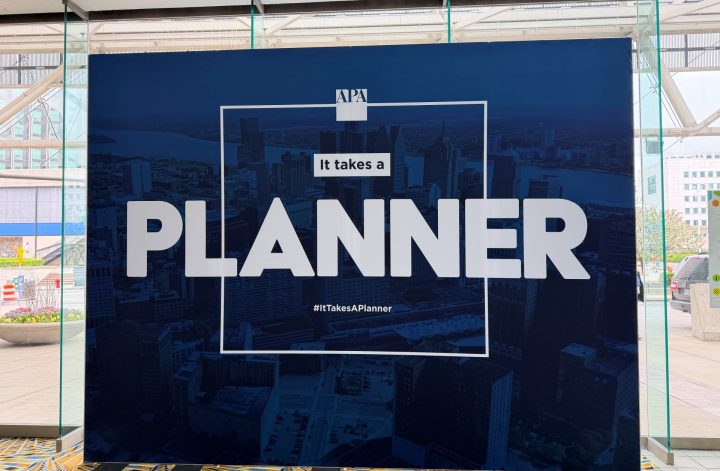
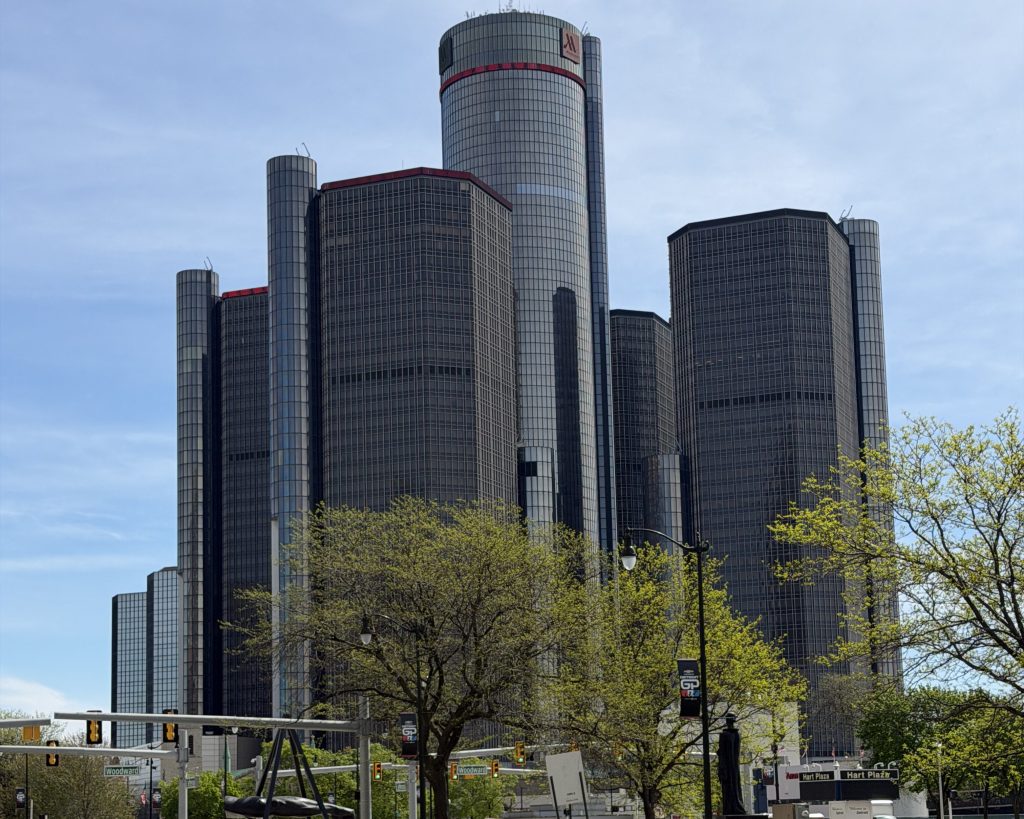
I had the opportunity to spend two weeks in Michigan last month for the American Planning Association‘s APA National Planning Conference. APA is a membership organization of professional urban planners, volunteers, and elected officials from across the US and around the world. About four to five thousand people usually attend the annual conference, held in a different major metro city each year.
I’ve been an APA member since I was an undergrad in Planning at the University of Illinois, and our student group rented an RV to drive to Denver (where I was headed for grad school). While I grew up in North Dakota until we moved to the Chicago area when I was in high school, my family was from Michigan. We drove to the conference in Detroit and were able to visit the small towns, farms, and family cemeteries, in the places along the way where my folks grew up. I got a new Tigers cap and we brought home local St. Julian wine.
As a board member of the APA Small Town & Rural Planning (STaR) Division, the annual conference is a working meeting. Business to attend to, things to be learned, continuing education credits to be logged. While the keynotes and most of the sessions are geared to people living and working in much larger places, it’s a good place to catch up with people interested in building better places wherever they are. I could have spent the entire conference at the Island Press books booth, talking to authors and browsing the next planning blockbusters (such as they are).
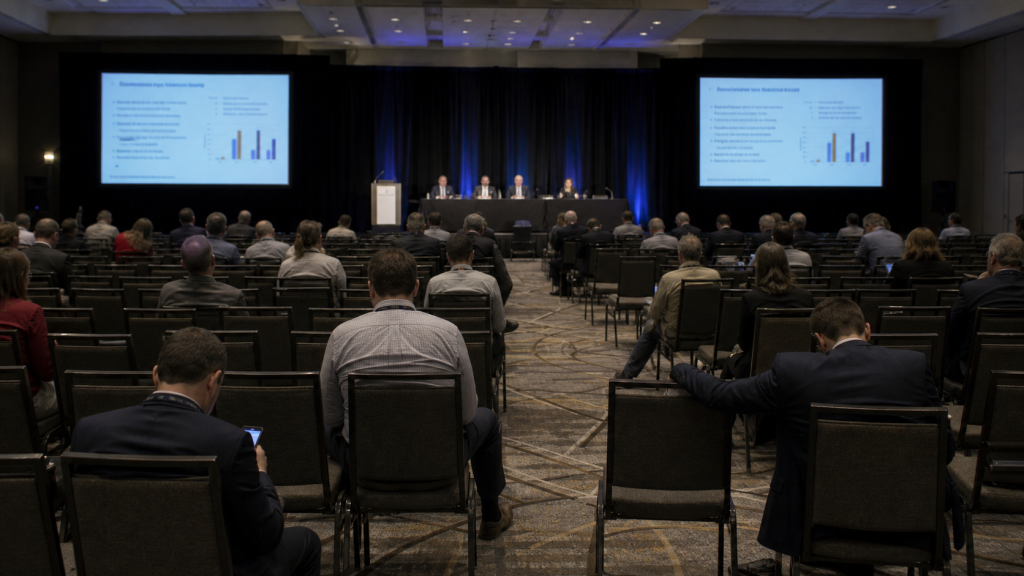
What About Rural in the APA National Planning Conference?
Yet, I couldn’t help but think about Becky McCray’s post last summer, “Why Rural People Stop Coming to Your Conference (And How to Get Them Back)“.
Becky is an astute observer who doesn’t mince her words: “Every session at a conference that isn’t intentionally designed to include rural is urban-biased by default.” Now it might seem obvious a conference of urban planners would be urban-biased. Yeah, I’ve known that since I was a college student at that first planning conference long ago. Yet I counted just one session with the word “rural” in the title.
That said, are we being truly inclusive if we exclude the far reaches of rural America (or Canada, or Australia, or…) when we talk about how our communities function and thrive? Why do so many of our professional associations and events simply fail to mention anything relevant to the 15-20% of us in small towns and rural areas??
The urban tilt is not everywhere all the time, and I’ve been noticing a greater number of organizations specifically reaching out to rural audiences on rural topics. For example, last year, the International Economic Development Council (IEDC) held an inaugural Rural Retreat in Great Falls, Montana, where my wife’s family is from.
Becky, of course, turned her observation into a positive Whatcha Gonna Do About challenge. To summarize, she gives us five ways to break the cycle:
- Add rural roundtables right away
- Include rural voices on existing panels
- Offer breakout sessions on rural-specific topics
- Match your rural sessions to your rural population
- Feature a rural keynote
And she challenges the reader not to wait and complain. And I’m going to follow her lead to ask my organization “How are we serving our rural members?”
Our volunteer leaders and the conference organizers are good people. I’m sure you have similar folks in your favorite professional or membership organization. Everybody is busy. So the obvious follow up is, “How can I help serve our rural members?”
That’s a keynote I would like to hear.