
At about 5:30 p.m. Eastern on Monday, November 9 (4:30 Central), the Senate clerk will call the roll on a question that, on its face, has nothing to do with power lines, pipelines, wetlands, or historic districts. The formal question is whether to end debate on the motion to proceed to H.R. 2347, the Survivor Justice Tax Prevention Act, a House-passed tax bill that the Senate Daily Press identifies as “the legislative vehicle for the permitting reform bill.” The permitting text it is expected to carry is S. 5653, the Bipartisan American Affordability and Jobs Act of 2026, a 417-page bill that its authors call BAAJA and pronounce like the Spanish word “baja,” according to Roll Call.
I remain skeptical.
Monday’s vote will not pass anything. It needs 60 votes to open debate in the lame duck Senate, and if it succeeds the Senate still has to take up the bill, consider amendments, and vote on final passage, as Roll Call and the Senate calendar make clear. Even so, procedural votes often decide where a bill is going, and this one comes at an unusual moment. Since Democrats’ decisive November 3rd election returns, opposition to the bill’s environmental-law changes has grown louder, but Majority Leader John Thune’s office has kept the vote on the schedule, Bloomberg Law reported. A manager’s amendment is expected, but as of this writing I have not found substitute text, so senators may be voting to proceed on language that few people outside the negotiating rooms have read (Public Record Service).
I want to be fair to this bill. It is a serious piece of legislative work. Sens. Shelley Moore Capito (R-W.Va.), Mike Lee (R-Utah), Sheldon Whitehouse (D-R.I.), and Martin Heinrich (D-N.M.), who lead the two committees with jurisdiction, spent months building a coalition that includes energy producers, labor, utilities, and clean-energy developers (Heinrich). Anyone who has watched a transmission line, a rural water project, or a county bridge replacement sit in review for years knows that federal permitting needs reform. My concern is not the goal. It is that a bill this large, touching this many statutes, appears to be moving faster than the analysis, consultation, and public understanding needed to get it right.
The bill is easiest to understand in three parts: environmental review, energy, and historic preservation and intergovernmental consultation. In each one, I try to separate the parts that would make the system work better from the parts that would make it easier to avoid.
Part One: Environmental Review, Water, and Endangered Species
NEPA: Changing the Threshold, Not Just the Clock
The National Environmental Policy Act (NEPA) changes are the core of Division A, and they go well beyond deadlines. The 2023 Fiscal Responsibility Act already listed seven categories of actions that are not “major Federal actions” subject to NEPA. BAAJA would double that list to 14, adding exclusions for loans and loan guarantees when they are the only federal involvement, transmission and pipeline work within existing rights-of-way, routine administrative actions under $10 million, certain U.S. Army Corps of Engineers projects with a federal share under $50 million, and repairs to “lifeline infrastructure” that increase capacity by no more than 20 percent (Bipartisan Policy Center).
Some of this is welcome in rural jurisdictions. A county replacing a flood-damaged bridge in roughly its existing footprint, or a small water utility rebuilding a treatment plant after a storm, should not have to go through the same review as a new interstate corridor. The lifeline-infrastructure exclusion recognizes that, and practitioners in hazard mitigation and recovery should look at it closely.
Other changes deserve more scrutiny. The bill would add the project sponsor’s goals to the statement of purpose and need, and require the lead agency to drop any alternative, other than no action, which does not meet those goals (Bipartisan Policy Center). Planners know what this means in practice. When the purpose is defined by what the applicant wants to build, the range of reasonable alternatives can shrink until only the proposed project is left. The bill would also bar agencies from considering research made public after a review begins, and would cap public comment periods at 45 to 60 days, extendable to 75 only with the sponsor’s agreement (Bipartisan Policy Center).
The judicial review provisions matter as well. Section 1110 would replace the six-year default limitations period with a 150-day filing deadline, limit standing to parties who submitted sufficiently detailed comments, require substantial deference to agencies, and make remand without vacatur the only remedy for a NEPA violation, with the authorized activity allowed to continue while the agency fixes its error (Congressional Research Service; Bipartisan Policy Center). Shorter limitation periods may be defensible; six years is a long time to leave a financed project in legal limbo. But when a short filing window is combined with narrow standing and a court that cannot pause a project, the result is not only a faster process. It is a NEPA process that is much harder to enforce.
Clean Water Act: Narrowing State and Tribal Authority
The Clean Water Act provisions shift authority in ways local governments will notice. Under Section 401, BAAJA would limit state and tribal water quality certification to specific statutory water quality requirements, allow denial only with clear and convincing evidence that no modification would let the project comply, require any conditions to be the least burdensome possible, and place the burden of proof on the state rather than the applicant (Bipartisan Policy Center). For interstate gas pipelines and bulk-power transmission lines, review would be limited further, to the “direct point source discharge” into waters of the United States, with a nine-month maximum review period (Congressional Research Service).
The bill would also extend state-issued National Pollutant Discharge Elimination System (NPDES) permits and Nationwide Permits from five years to ten, limit EPA’s dredge-and-fill veto to the formal review period, and apply the same 150-day limitations period and limits on vacatur to Section 404 challenges (Bipartisan Policy Center). Ten-year permit terms would give utilities and municipal dischargers real stability. But the Native American Rights Fund points out that a Nationwide Permit not challenged within 150 days could go unamended for a decade (NARF). That is a long time for permit conditions to stay fixed while flood risk, development patterns, and water science keep changing.
Endangered Species: Faster Consultation, Some Restraint
The Endangered Species Act provisions are the most modest of the three statutes, and that restraint deserves credit. BAAJA would cut the base Section 7 consultation period from 90 days to 60, tighten the extension rules, allow states to assume consultation responsibilities by agreement, and authorize $150 million a year for consultation capacity (Bipartisan Policy Center). Challenges to biological opinions would go to the D.C. Circuit within 150 days (Congressional Research Service). Unlike the NEPA and historic-preservation provisions, though, the ESA title would not add a deference standard or limit remedies, so a court could still vacate a biological opinion or enjoin a project (Bipartisan Policy Center). This shows the authors know how to speed up a process without stripping courts of the ability to stop irreversible harm. It is fair to ask why they did not use that approach elsewhere in the bill.
Project Certainty: Protecting Approvals After They Are Issued
The project certainty section, Section 1401, would bar agencies from revoking, suspending, or altering permits in effect on or after September 16, 2026, except for a court order, material violation, fraud, a request from the permit holder, or action needed to prevent “specific, urgent, substantial, and proximate harm” based on new information. Agencies would bear a clear-and-convincing burden of proof, and permit holders could recover 25 to 50 percent of costs already incurred, paid from the Judgment Fund (Bipartisan Policy Center).
This responds to a real problem: administrations halting projects that were already approved and financed. I am not as concerned with the critics who warn it could also make fossil fuel projects harder to challenge when new evidence of harm to water or land emerges. Reporting suggests the sponsors’ pending amendment responds in part to concerns that the provision could tie a future president’s hands, but that text has not been released (Inside Climate News).
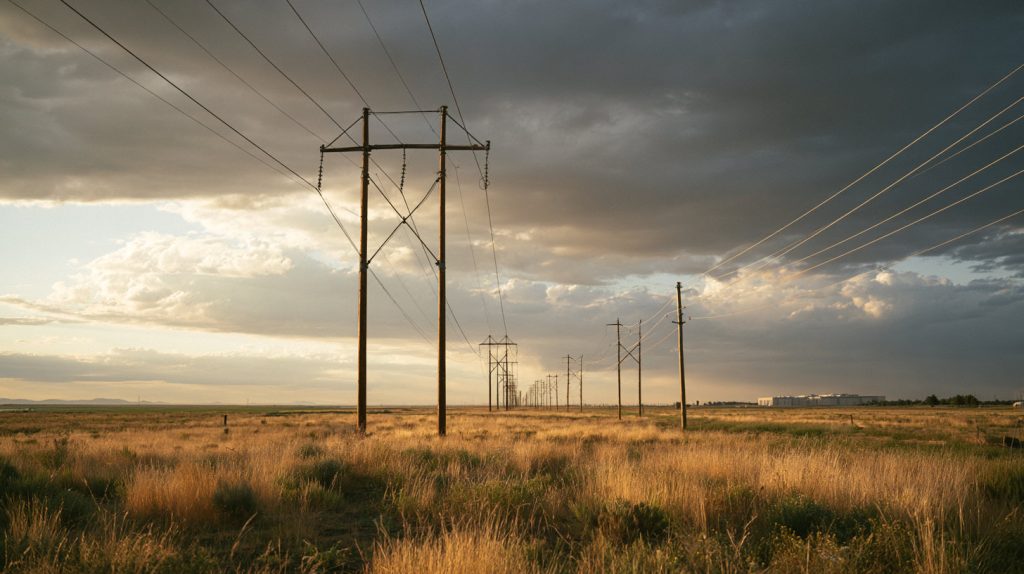
Part Two: Energy, Transmission, Pipelines, Generation, and Data Centers
Transmission: The Strongest Part of the Bill
The transmission title is a major focus of the BAAJA compromise. Under current law, the Federal Energy Regulatory Commission’s (FERC) backstop siting authority applies only within corridors designated by the Department of Energy, and FERC has never used it. BAAJA would remove the corridor requirement and require FERC to issue permits for lines of 230 kilovolts or more when a state lacks siting authority or has not acted within one year, as long as the line meets public-interest, consumer-benefit, or reliability criteria. Developers of lines of 345 kilovolts or more could apply to FERC and the state at the same time, and FERC would have to provide at least 45 days of public comment and consider landowner input (Bipartisan Policy Center).
The bill would also codify regional and interregional transmission planning, ban federal right-of-first-refusal protections for incumbent utilities, and require combined generation-and-transmission planning with interconnection-queue reforms (Bipartisan Policy Center). Rhodium Group’s modeling credits this combination of linear infrastructure, queue reform, and planning requirements with adding substantial new capacity to the grid (Rhodium Group).
For rural counties, the tradeoff is real. These lines cross our farms, ranches, and section-line roads. Federal backstop authority will speed construction, but it also means local and state officials may have less control over routing. You have never met a farm owner more furious than one who finds a high-voltage transmission tower right in the way of his center pivot. Counties will have to be ready to take part in the FERC record from the start, not after a state’s one-year window has closed.
Pipelines: Easier Upgrades in Existing Corridors
Pipelines appear throughout the bill, not just in one title. Repairs, replacements, upgrades, looping, compression, and capacity enhancements within existing interstate natural gas pipeline corridors would be treated as neither major federal action under NEPA nor undertakings under Section 106 (House Western Caucus section-by-section). The Section 401 limits described above would apply directly to interstate pipelines, and the bill would provide more certainty for Nationwide Permit 12, which the natural gas industry calls critical for pipeline construction and maintenance (Natural Gas Council). Heatmap reports that the bill would remove a Clean Water Act tool some governors have used to block pipeline expansions (Heatmap).
There is a reasonable case for streamlining work within existing corridors. Rebuilding an aging line where it already runs usually causes less disturbance than cutting a new route. But “capacity enhancement” can mean more than routine maintenance, and the bill gives these projects the same exemptions as minor repairs. Rep. Sean Casten (D-Ill.), who is still undecided, has warned the bill could spur a “gold rush for gas” (Hill Heat).
Generation and Resource Development
The bill would speed up renewable, geothermal, hydropower, and offshore projects (Congress.gov). It would also eliminate the federal drilling permit requirement for certain oil and gas development on nonfederal land where the federal government holds only a minority mineral interest, while leaving state, tribal, and other requirements in place (McGuireWoods). The balance is intentional. The bill is designed to ease permitting for both fossil and renewable energy so it can attract votes from both parties (Capito).
Analysts do not agree on the climate effect, and frankly I’m less concerned about theoretical here than the loss of local community engagement and input. Purdue’s Kevin Kircher argues that power sector analyses miss other parts of the bill and that fossil fuel industries would gain more than clean energy (Inside Climate News). When credible analysts disagree this much on a 417-page bill only weeks after its introduction, that is a sign the bill needs more time.
Data Centers: A Cost-Allocation Fix, Not a Siting Policy
The data center provision is one of the bill’s most practical features. For new data centers of 20 megawatts or more, other customers could not be charged for the added cost of serving them; data centers would have to pay for infrastructure even if they leave early and provide financial guarantees before utilities build. States could charge them more than cost, require them to bring their own generation, or limit how much power they draw (Bipartisan Policy Center). The Energy Information Administration (EIA) would also begin collecting data on data center electricity use—they do good credible work.
This provision is a meaningful protection for households and small businesses in rural areas where many of these facilities are going. But it addresses who pays for the grid, not where data centers go or how they affect water supplies, roads, noise, farmland, or local tax bases. Those questions remain with local comprehensive plans, zoning codes, and development agreements. Communities should not read this provision as a substitute for that work.
Part Three: Historic Preservation and Intergovernmental Consultation
What Section 106 Does Now
Section 106 of the National Historic Preservation Act does not prohibit anything. It requires federal agencies to identify how their decisions may affect historic properties and consider ways to avoid, minimize, or mitigate those effects before deciding, with an important role for State and Tribal Historic Preservation Officers, Tribal governments, and other consulting parties (Environmental Science Associates). It is also not the main cause of delay that it is sometimes made out to be. The National Trust for Historic Preservation reports a national average review time of 16 days, with 98 percent of reviews finding no adverse effect (WEOS).
What BAAJA Would Change
Section 2301 would define an “undertaking” as a project that requires a federal permit, license, or approval and is subject to substantial federal control. That would exclude projects whose only federal connection is funding (Bipartisan Policy Center). For small towns, which is a significant change. Many of the federally funded projects that touch historic downtowns, courthouse squares, and depot districts are grant funded. Under the introduced text, some could fall outside Section 106 entirely.
The bill would also narrow what counts as harm. An adverse effect would have to directly alter a property, and visual, atmospheric, and audible effects would count only if they directly and significantly diminish what makes the property eligible for the National Register (Bipartisan Policy Center). For a pipeline or transmission line crossing one federal parcel, the agency would survey and consult around that crossing rather than along the whole route. Consultation would have to end by the NEPA deadline, and a party that missed a 30-day response window could not require reconsideration of earlier findings (Bipartisan Policy Center).
Most troubling, an agency could conclude its obligations by finding, “in the federal official’s sole discretion,” that other considerations outweigh historic preservation (Bipartisan Policy Center). The National Trust argues that agencies could make that determination at the start of consultation, which would function as an exemption that makes the rest of Section 106 moot (National Trust for Historic Preservation). That is an advocate’s reading, not a court’s. But Congress should answer it before acting, not after.
The judicial review changes complete the picture. NHPA claims would face a 150-day filing deadline and remand without vacatur, and a preliminary injunction would be available only on a showing that the action likely violates a law other than NEPA or the NHPA (Bipartisan Policy Center). Historic preservation is where that limit matters most. A remand cannot rebuild a demolished building or restore a disturbed burial site.
The Bill’s Concessions
The bill does not ignore the parties it would affect. State and Tribal Historic Preservation Officers, Tribes, Native Hawaiian organizations, and local governments that raised an issue in writing during consultation would be exempt from the comment and direct-harm requirements for standing. The bill would also authorize $200 million a year for the Historic Preservation Fund for FY2027 through FY2036, along with new grants for Tribal Historic Preservation Officer databases (Bipartisan Policy Center).
These are real concessions. But the same title would make missed consultation deadlines grounds for finding a state or tribal program inconsistent, and require the Secretary to take over an officer’s functions if the program is not brought into compliance within two years (Bipartisan Policy Center). Money for capacity does not offset losing the authority that capacity was meant to support.
Tribal Nations and the States
Tribal opposition is broad and specific. The National Congress of American Indians, together with Tribal organizations across Indian Country, has asked Congress to withdraw Division B, Title III, saying the changes would narrow Section 106 review, reduce Tribal participation, impose inappropriate federal oversight on Tribal Historic Preservation Officers, and limit judicial review (NCAI). NCAI describes the provisions as in “deep conflict with federal trust and treaty obligations” to consult Tribal Nations government-to-government, and Ira Matt of the National Association of Tribal Historic Preservation Officers expects the anticipated changes to be “small provisions with the hopes of making it look like they’re providing substantive concessions” (The Hill).
The states have also weighed in. On November 6, attorneys general from New Mexico, Arizona, Hawaii, Minnesota, Nevada, and Oregon asked Senate leaders not to advance the bill without significant amendments. They raised the historic-preservation changes and warned that the legislation “limits judicial review” and makes permitting decisions “too susceptible to industry capture” (Bloomberg Law).
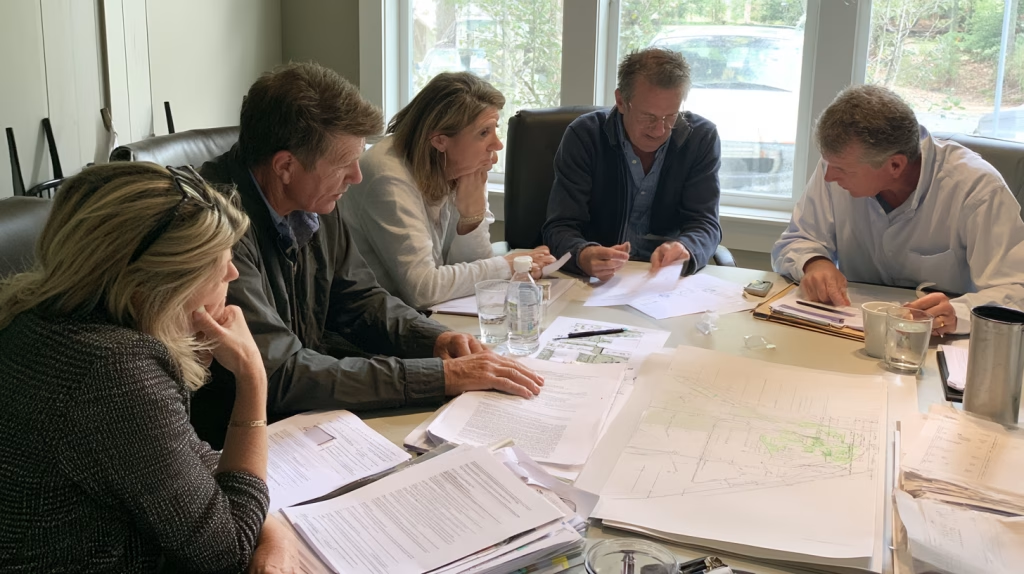
There is also a practical point. Preservation advocates, and I count myself among them, have raised serious questions in recent years about whether federal agencies are following the Section 106 rules already on the books. A statute that makes key consultation steps discretionary, and then limits courts’ ability to intervene before harm occurs, depends on agency good faith. In my experience with intergovernmental work, which is the one thing a well-designed process should not assume.
Conclusion: Back to Monday
That brings us back to Monday afternoon and a cloture vote on a tax bill about survivors’ damages. The vehicle is a procedural detail, but it reflects the bigger problem. A 417-page rewrite of NEPA, the Clean Water Act, the Endangered Species Act, the Federal Power Act, and the National Historic Preservation Act was introduced on September 30, set aside during the campaign, and is now headed to the floor in a lame-duck session. Its authors have said they expect only technical changes (Bloomberg Government). The manager’s amendment that would carry those changes was still unpublished as of Saturday (Public Record Service). Even Rep. Mike Levin (D-Calif.), who wants permitting reform to succeed, says he cannot take a position until he sees final text (Heatmap).
I do not doubt the good faith of the four senators who wrote this bill—mostly. I think much of it would improve how this country builds infrastructure. But the bill does two things at once. It speeds up the process and narrows what agencies have to look at, who they have to listen to, and what courts can do when agencies get it wrong. The first is reform. The second deserves a fuller debate than a lame-duck calendar allows.
Implementation is where plans succeed or fail. A comprehensive plan adopted in a hurry, without the people who will live with it, rarely lasts. Federal permitting reform is no different. It is badly needed, and this bill is a good starting point. But if the Senate moves forward on Monday, I hope senators treat the cloture vote as the beginning of the work, not the end of it. Tribal consultation, the historic-preservation title, and the judicial-review provisions all deserve the same care the authors gave the transmission title. A permitting system built to last will be one that Tribes, states, local governments, and the public can trust, not just one that moves faster.
The analysis and opinions expressed here are those of the author, and do not necessarily reflect those of any organization or client.
.

