
There was a time when we built civic buildings with pride. We designed with an eye for architectural standards and constructed in brick and stone to last.
Then we grew out of those grand old buildings. What do we do with the big old school in the middle of town when the school board moves all the students out to the middle of a corn field on the edge of town?
Challenges Abound
Reusing an old downtown school building presents a variety of technical, financial, regulatory, and social challenges. These structures are often impressive and community landmarks, but turning them into viable spaces for modern uses is rarely straightforward.
There are plenty of challenges:
- Modern Building Codes and the Americans with Disabilities Act (ADA)
- Layout constraints with long corridors and classrooms with large windows
- Hazardous materials about in all sorts of historic structures, from asbestos to lead paint
- Zoning should reflect community goals to preserve historic structures, yet too often sets up hurdles such as use restrictions, parking requirements, and arbitrary design review.
The Washington Pavilion
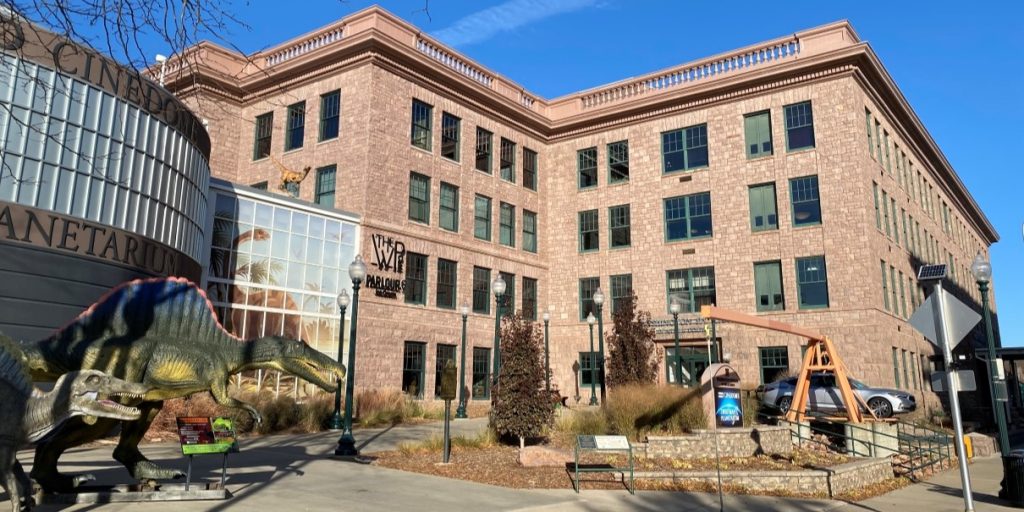
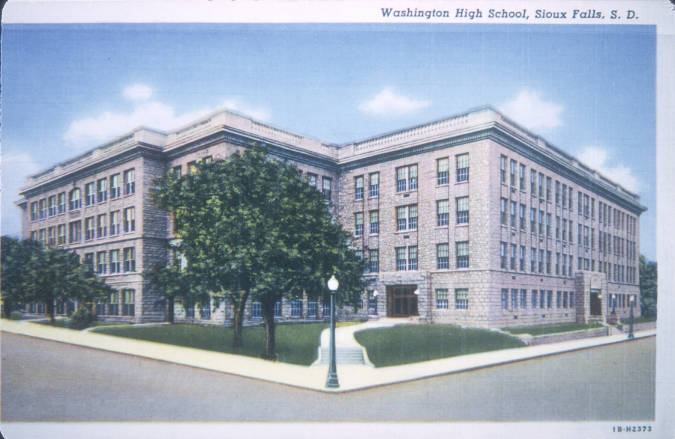
Sioux Falls, South Dakota, outgrew their historic 1908 central school many years before Washington High School was moved out of downtown. The building was originally designed by local architect Joseph Schwartz in the neo-classical style. It had four-stories of native red quartzite. In 1922, an addition was made to the south side, then further capacity added in 1936, all with the same solid materials with a flourish in the later phase of Art Deco, prairie school-inspired entrances. The building was listed on the National Register of Historic Places in 1986.
After closure in 1992, the school board slated the landmark for demolitions — it would have made a convenient parking lot. Yet a narrow 1993 public voted saved old Washington High School for community use. The ambitious multi-year project was accomplished with a mix of public and private funding; renovations began after careful architectural planning, and the Washington Pavilion opened its doors in 1999. The transformation created a rare multifaceted facility that integrates performing arts, visual arts, hands-on science exhibits, and educational programming all under one roof.
- The Kirby Science Discovery Center is a large three floor, hands-on science experience. When our kids were young, they spent hours there at Scouting events.
- The Visual Arts Center hosts several galleries including the Northern Plains Tribal Art collection.
- The Cinedome, a multiformat 60 ft dome theater, recently added a planetarium.
- The performing arts center brings Broadway productions, operas, dance, and concerts to the community, which also attracts regional tourism.
- They also have an onsite cafe and host meetings and conferences of all sizes.
Now, Sioux Falls is larger than most of small towns, yet is much smaller than most metro areas across the U.S. This project would scale, in the right conditions. The Washington Pavilion is just one example of what you can do with your old school.
Check it out for yourself: https://www.washingtonpavilion.org/
Cross-posted from Medium.com.