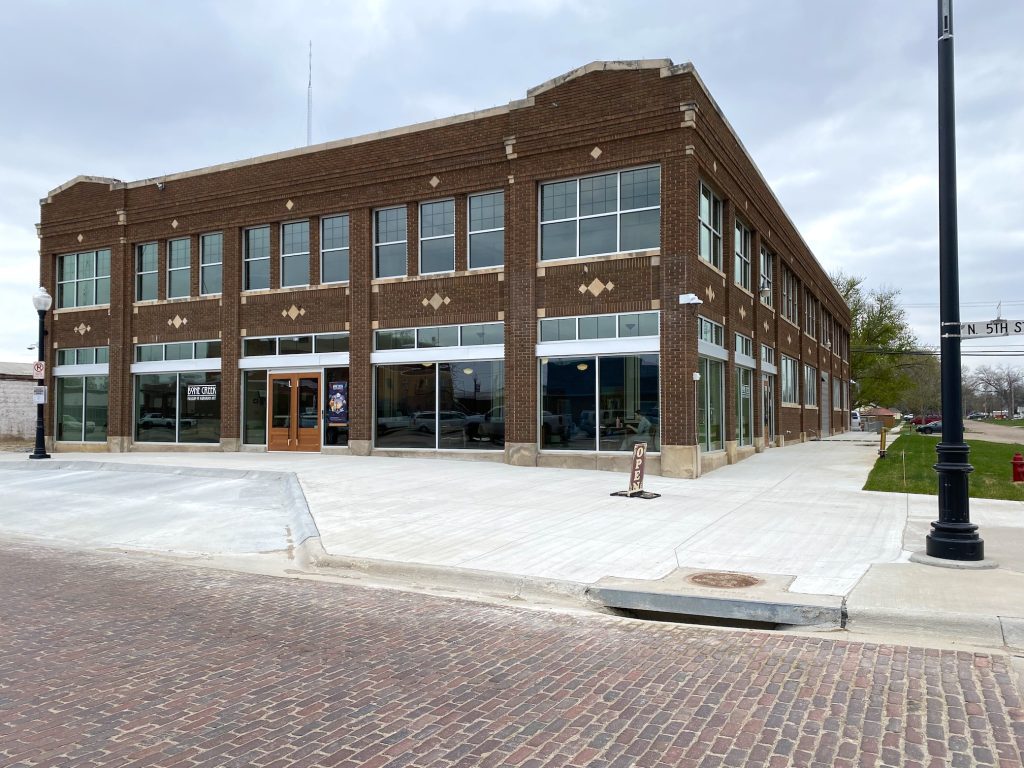
In an historic, red brick warehouse where old cars once were assembled, the world of rural art now finds a home at the Bone Creek Museum of Agrarian Art. This new facility brings an old building back to life serving a role in art appreciation and cultural preservation.
In 1880, there was a livery stable on the corner of 5th and “E” Street in downtown David City, Nebraska. The lots were owned by the grandfather and father of J.C. Hall, founder of Hallmark Cards. In 1917, a two-story Ford motor car building was constructed, with an elevator to bring vehicles from assembly to the first floor showroom. While Ford’s main production was in Detroit, smaller assembly garages were established in small towns across the country to assemble Model T kits and provide local repair and service.
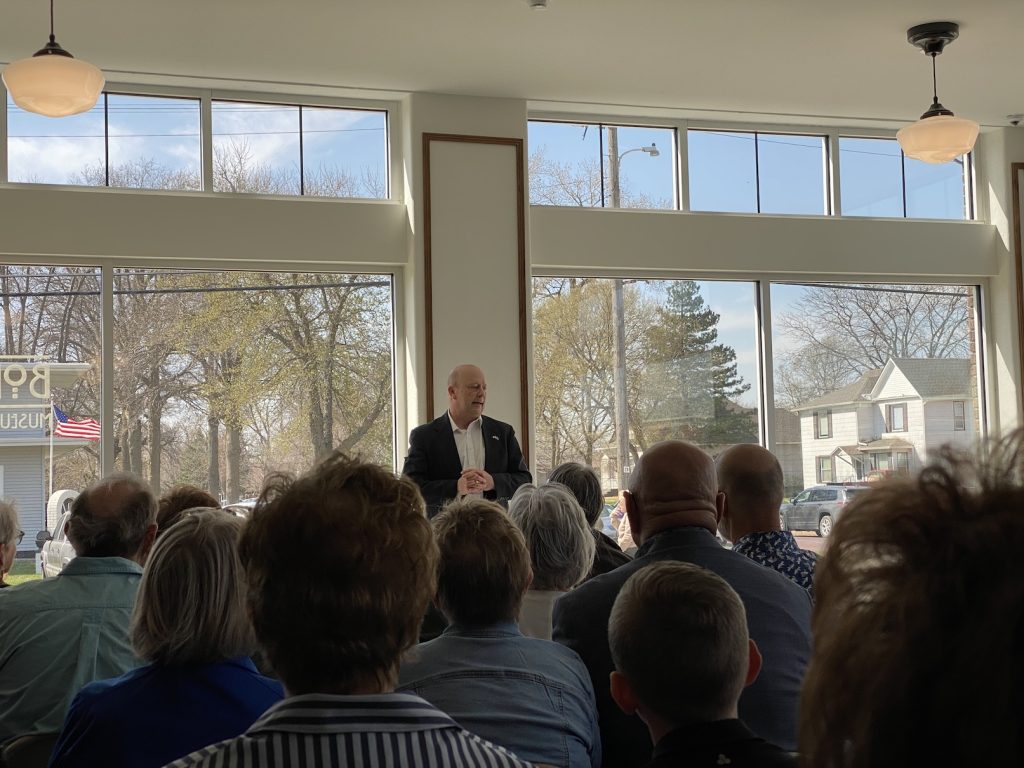
Today, the old Ford Building in David City is home to the Bone Creek Museum of Agrarian Art. The Museum, founded in 2007, occupied a small gallery a block north. On the 12th of April, 2025, the new museum building was opened with a standing-room crowd of over 400 people listening to speeches from the Mayor and other dignitaries. K.C. Belitz, director of the Nebraska Department of Economic Development, cut the ribbon, remarking on the potential of the Arts in economic development. David City does participate in the Nebraska Creative Districts program, with Bone Creek as the anchor.
Arts and culture account for about 4.4% of the U.S. economy. That may not seem like much but it adds up to over $1 trillion nationwide. According to the Nebraska Arts Council, creative industries add about 27,000 jobs and $2.7 billion to Nebraska’s economy.
The renovated historic structure is a shining example of the potential of historic preservation. May being Historic Preservation month, we’re reminded the best way to conserve energy and encourage cultural preservation may be to simply reuse and rehabilitate the existing brick buildings we already have in downtowns across North America. The museum even features a 1923 Model T Ford, assembled and sold at the David City facility, which was moved to Colorado at one point before being donated and returned to the new museum.
Celebrating the Power of Place
The theme for Preservation Month this year is “celebrating the power of place”. Bone Creek Museum is the only institution of its kind dedicated to “agrarian” art. The museum is named after a local waterway, and if there is anything that defines the place the museum is at in rural Butler County, Nebraska, it would be agrarian. As Smithsonian magazine has written, “American artists have long been drawn to agrarian subjects in their work, from Winslow Homer in the 19th century to the 1930s Regionalism movement, which included painters like John Steuart Curry and Grant Wood, the creator of the often imitated American Gothic.“
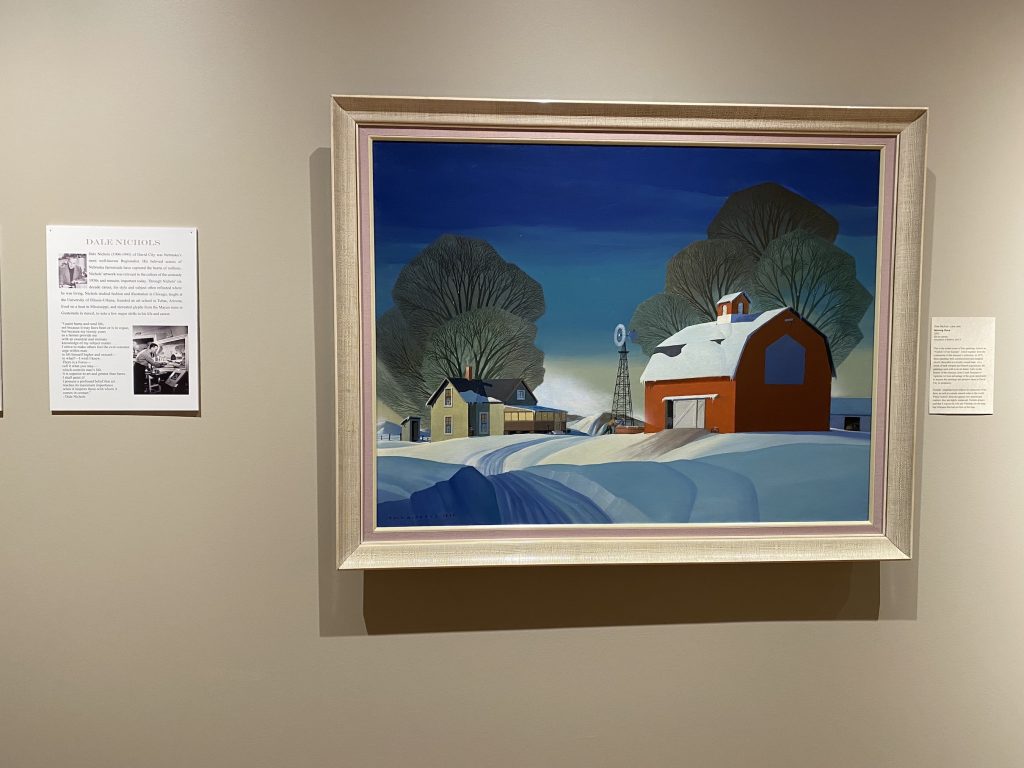
Bone Creek’s collection is built around Regionalist artist and native-son Dale Nichols (1904-1995). After growing up in David City, Nichols studied art for a short time at the Chicago Academy of Fine Arts and after working at an advertising agency became the Carnegie Professor in art at the University of Illinois. His works included illustrations, paintings, lithographs, and wood carvings. His 1934 painting “End of the Hunt” is in the collection of the Metropolitan Museum of Art in New York City, and in 1942, one of his winter scenes was used on a U.S. postage stamp.
The Regionalist aesthetic was a key part of the New Deal art movement, which aimed to promote social realism, preservation of cultural heritage, and national unity. Regionalism as an artistic style focused on local, representational subject matter, often depicting scenes of the rural Midwest, American folklore, or the hard times of the Great Depression. The Federal Art Project (FAP), part of the Works Progress Administration (WPA), employed artists, including Regionalists, to create murals, paintings, and sculptures, promoting the New Deal’s agenda and themes. The named artists of the time included Thomas Hart Benton, Grant Wood, John Steuart Curry… and Dale Nichols.
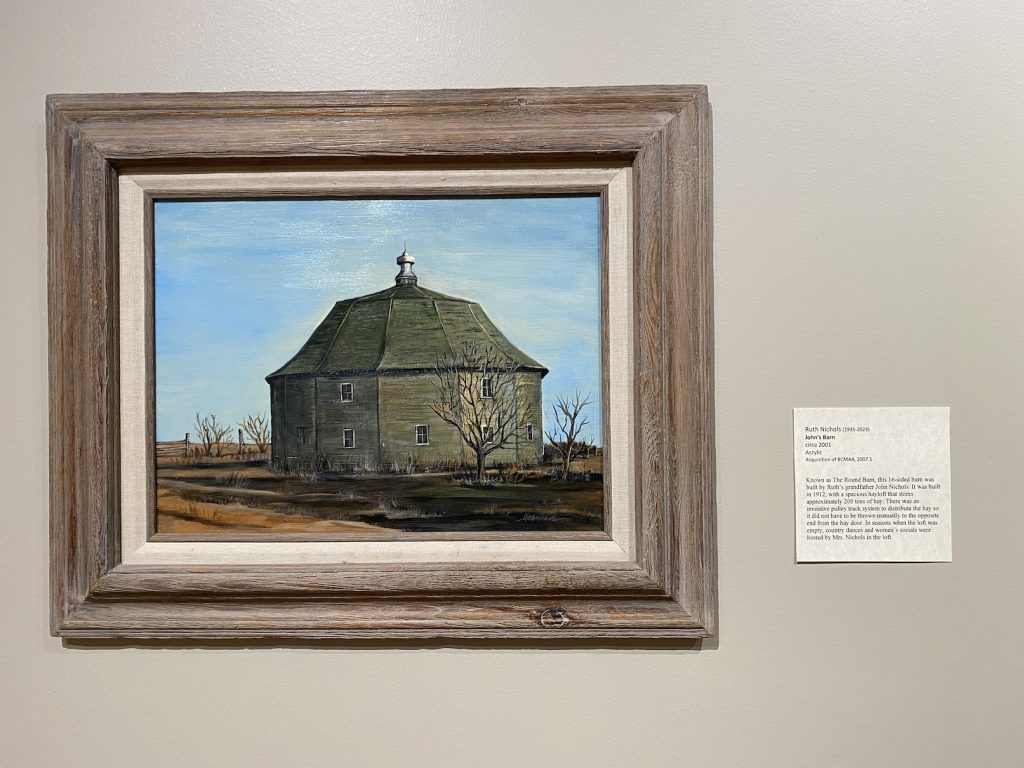
The museum’s foundation is built on Nichols because he was from here. Though he didn’t return to live in Nebraska, he maintained family ties. Dale’s brother Flood F. Nichols, a veteran of World War I, operated a welding shop in David City and developed his metal working craftsmanship, for example with personalized combat knives made for servicemen during World War II. Floyd’s daughter (Dale’s niece) Ruth Nichols became a sculptor and restored religious figures for local churches. She was among the founders of the Bone Creek Museum. Art by Floyd’s great-grandson Aaron Rerucha is also on display.
Not only does Bone Creek show off a local boy made good, but the curators work hard to place his style of art in a local context. Nebraska is an agrarian place with an agrarian culture. That idea means so many things. The museum explores that idea with other contemporary Regionalist artists as well as newer contemporary artists.
This brings to mind the question of a museum’s responsibility to its community–the artist’s responsibility to their community.
- Creative contributions — An artist can use their work to reflect the light AND the darkness of the place they call home. They can inspire change and offer new perspectives. They can also foster a sense of belonging.
- Active participation in community life — An artist can choose to live in the place they inhabit, engaging in community events and supporting other local businesses.
- Ethical considerations — As artists tend to be empathetic and open to shared experiences, they may have greater opportunities than others to demonstrate respect for all members of their communities.
Artists can enrich the lives of their neighbors, inspire positive change, and foster a vibrant, thriving community, where they can.
With the expanded space, the new Bone Creek Museum facility can host multiple exhibitions as well as rotating their core collection of artists such as Terence Duren, Joan Cech, and Mark Moseman. One gallery currently features Charles Guildner’s Cowboy Portraits and Spring Branding exhibits of black-and-white photographs.
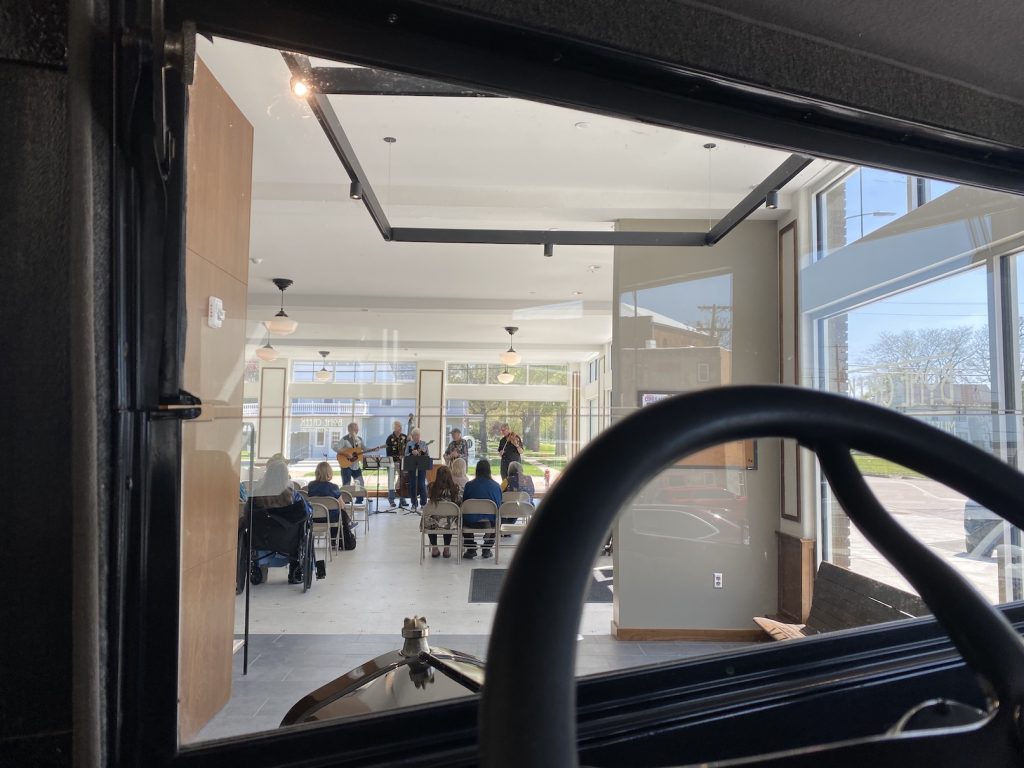
The museum is also about more than the visual arts. The new building has room for an art library, educational offerings, panel discussions, and artist workshops. For example, they have already hosted local string band The Toasted Ponies for an afternoon acoustic concert of bluegrass, cajun, and folk music. A good time was had by all.
Bone Creek Museum of Agrarian Art is open at 575 “E” Street in David City, Nebraska, Wednesday through Sunday, with no charge for admission–donations are welcome.
Resources
Bone Creek Museum of Agrarian Art – Dale Nichols: Transcending Regionalism. This exhibition highlighted Nichols’ iconic winter landscapes with red barns and snow-covered fields, capturing his nostalgic view of rural America. Paintings dating from 1935 to 1972 establish Nichols not only as the fourth regionalist in a line of great artists, such as Grant Wood and Thomas Hart Benton, but one who transcended the confines of the genre to achieve universal success in art.
* bonecreek.org/exhibitions/past-exhibitions/dale-nichols-transcending-regionalism
Smithsonian Magazine, “Go Behind the Red Barn and Rediscover Dale Nichols”, by Henry Adams. 2012 article on The Bone Creek Museum of Agrarian Art and the Dale Nichols: Transcending Regionalism exhibit.
* www.smithsonianmag.com/arts-culture/go-behind-the-red-barn-and-rediscover-dale-nichols-80789748/
Study.com – Regionalism in Art: Characteristics & Style. A clear and accessible explanation of the characteristics of Regionalism in art, perfect for educational purposes.
* study.com/academy/lesson/regionalism-in-art-characteristics-style.html
National Gallery of Art – Building the Collection: Regionalism and Folk Art. Scholarly article as part of the gallery’s American Paintings, 1900-1945.
* www.nga.gov/research/publications/american-paintings-1900-1945/building-collection-regionalism-and-folk-art
Books
Dale Nichols: Transcending Regionalism, Bone Creek Museum of Agrarian Art. Accompanied traveling exhibition, 2011.
Cultivating Citizens: The Regional Work of Art in the New Deal Era, by Lauren Kroiz. 2018.
Looking for more insights on rural planning? Explore our recommended resources on sustainable land-use strategies:
The Best Books for Rural Development and Planning in 2025
(As an Amazon Associate, I earn from qualifying purchases.)
.