
This has been a great year for our blog here at JCShepard.com. A lot of things to discuss regarding Life, Liberty, and the Pursuit of Americana, wherever you may be. Now the holidays are upon us, let’s take a look back at the posts which you, our readers, have given the most interaction over the year to date.
September’s theme of Heritage Tourism brought all four weekend posts onto this list of the top dozen posts with the most interaction for 2025. Our November theme of Praxis and Implementation for rural communities was also well-received throughout the month—a wonky topic, but we did focus on what small town leaders can do to turn plans into action. The August theme of economic resilience brought two posts onto the list, and the other two weekend posts did almost as well.

Number 12: Business Retention in Small Towns: The Quiet Powerhouse of Rural Job Growth
Number 12 on the Best of 2025 list goes to “Business Retention in Small Towns: The Quiet Powerhouse of Rural Job Growth” for putting a spotlight on resilience with a focus back where it belongs: on the employers already holding up our main streets. The post makes the case that in most rural places, 60–80 percent of net new jobs come not from recruitment wins but from Business Retention & Expansion (BRE)—steady, relationship-based work that rarely makes headlines but often decides whether a community keeps its payrolls, services, and local wealth. Through examples from Mason City’s business visitation program, King Arthur Baking’s transition to employee ownership, Redwood County’s revolving loan fund, and Cortez’s university partnerships, it shows how proactive outreach, workforce and succession planning, local capital, and institutional allies can turn “keeping what you’ve got” into a full-fledged resilience strategy.
This post directly speaks to rural planners and local officials who wear multiple hats. It translates BRE from a technical acronym into a practical playbook: listen first, align permitting and zoning with real business needs, close the financing gap with local tools, and weave retention data into comp plans, capital budgets, and regional workforce efforts. Within conversations about entrepreneurship, outdoor economies, and heritage tourism, this article anchors the series by reminding readers that the future of rural development starts with looking after the firms already invested in place—and that the quiet work of BRE is often the most transformative work of all.

Number 11: Small Towns, Big Impact: How Rural Communities Are Designing Their Own Futures
Small Towns, Big Impact rounded up our November theme of Praxis and Implementation and found enough readers to make it into the top dozen posts of 2025. We were trying to capture what rural revitalization really looks like on the ground: neighbors listening small, thinking big, and working with what they’ve already got. Instead of chasing silver bullets or imported fads, the piece lays out a rural design ethos rooted in kitchen-table praxis—turning theory into step‑by‑step implementation through local leadership, low-cost pilots, and iterative learning. From façade grants to pop‑up parks, it argues that successful infrastructure and placemaking work in small towns is less about the perfect master plan and more about having a workable plan that fits local capacity, culture, and institutions.
The post featured three grounded case studies—Millsboro, Delaware’s phased Complete Streets program, Independence, Iowa’s “Paint the Town” façade and pop‑up strategy, and Truth or Consequences, New Mexico’s reinvention of Ralph Edwards Park as a community anchor. Each shows how small, visible wins like wider sidewalks, murals, pocket parks, and weekly markets can move the needle on vacancy, crime, business starts, and community pride when paired with strong engagement and simple metrics. In a year full of big headlines about rural decline, this piece earned its spot by documenting how everyday rural people are quietly designing their own futures—one block, one brushstroke, and one park workday at a time.
This was also one of the longest reads we’ve done here on the blog. Just a lot of small town and rural planning ideas to explore. On LinkedIn, Nancy Orr of Ontario, Canada, commented “Thanks for highlighting some of the many strengths of non-metro and rural, where community driven innovation and a get ‘er done attitude often prevail.”
Number 10: Save Your Small Town: A Guide
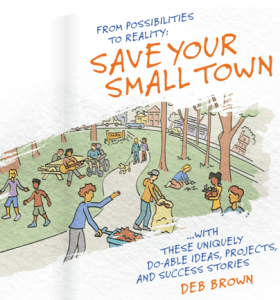
Deb Brown published a great, practical workbook last year titled From Possibilities to Reality: Save Your Small Town …With These Uniquely Do-Able Ideas, Projects, and Success Stories. I posted a review then which I wrote up for the STaR newsletter, then re-posted it again this November on LinkedIn. This resource offers actionable, grassroots approaches based on the “Idea Friendly Method” which Deb and Becky McCray have worked to share with so many small towns.
I reviewed Becky’s new book when it hit the streets on the first of this month: The Idea Friendly Guide: How You Can Embrace New Ideas, Build Community, and Save Your Small Town.
Learn more at https://saveyour.town/ .
Number 9: Who Is Rural? McKinsey & Company Have an Idea
If post #11 was our longest on this list, #9 was the shortest. This was a quick recap of a McKinsey & Company report on the many different answers to the question of “Who is Rural?” They have ideas… which are pretty much the same as what most of us in the field would say. They did have some really cool maps and graphics, though.

Number 8: Small Town Heritage: The Proven Power of Rural Cultural Preservation
Week 3 of our September Heritage & Tourism series continued to draw readers through autumn. “Small Town Heritage: The Proven Power of Rural Cultural Preservation” crystallizes a central theme of the year on the blog: rural places aren’t museum pieces, they are living cultures using heritage as a strategy for identity, tourism, and long-term resilience. The post walks through how tangible assets—barns, schoolhouses, main streets, cultural landscapes—and intangible assets—festivals, foodways, crafts, language, and story—all work together to build a sense of place that attracts visitors, supports small business, and keeps young people connected to home. Case studies from Lindsborg, Kansas; Junction City, Oregon; Rugby, North Dakota; and Ōamaru, New Zealand ground the narrative in real towns that turned cultural inventories, festivals, and adaptive reuse into year‑round heritage economies and stronger local pride.
This post focused on practical ideas for planners and local leaders: there is a toolbox for starting a cultural inventory, policy strategies for aligning preservation with zoning and tourism, and a dense resource list of programs, grants, and tools from National Heritage Areas to Story Maps. The post is honest about challenges—funding gaps, maintenance, community pushback, and over-tourism—but argues for balanced, community‑based planning that keeps locals in the driver’s seat. In a year of hand‑wringing over rural decline, this installment shows ideas of how small towns can map what they already have, tell their own stories, and turn cultural stewardship into sustainable rural development.

Number 7: Unlock the Remarkable Power of Heritage Tourism in Rural Communities
The week 1 post set the tone for September’s Heritage & Tourism series, arguing that rural heritage isn’t a side-show—it’s the main asset for economic revitalization, identity, and resilience. The post lays out a clear, accessible definition of heritage tourism that goes beyond museums and monuments to include barns, main streets, cemeteries, festivals, foodways, language, and everyday rural rituals as the living story of a place. It makes the case that when rural communities lead with authentic culture instead of manufactured attractions, they attract visitors who stay longer, spend more locally, and help fund preservation while reinforcing pride and sense of place for residents.
This post bridges big ideas with grounded practice—showcasing rural advantage around authenticity, then illustrating it through global case studies from Tillamook County’s cultural heritage trail to Viscri, Aínsa, Shunran-no-Sato, Haida Gwaii, and Newberry Springs on Route 66. The post closes by turning directly to planners and local leaders, offering concrete steps to map cultural assets, weave heritage into comprehensive plans, and right-size tourism so it remains community-led and stewardship-focused. In a year framed around rural resilience, this essay reframes heritage tourism not as nostalgia, but as a strategic, identity-driven path forward for small towns.

Number 6: How Authentic Rural Experiences Shape Identity and Belonging
“How Authentic Rural Experiences Shape Identity and Belonging” closed out the Heritage & Tourism series by arguing that the most transformative work in rural tourism isn’t happening in big venues or glossy visitor centers—it’s happening in church basements, farm kitchens, story circles, and slow craft workshops where people share what they actually do and why it matters. The post makes the case that authenticity is not a product but a relationship: community‑led, rooted in lived tradition, and designed first for residents, with visitors invited in as guests rather than consumers. From hands‑on workshops and storytelling walks to seasonal festivals, foodways, and slow place‑based tours, it lays out a practical framework for experiences that deepen identity, build social capital, and help rural communities remember who they are even as they adapt to change.
This post links those ideas to real places and clear next steps. Case studies from Helena’s gospel brunches, Coushatta pine‑needle basketry in Louisiana, Silverton story nights, Portuguese goat walks, Slow Food tours in Bra, craft weekends on Gotland, Zapotec weaving in Oaxaca, and Tōno’s folklore revival show what authenticity looks like in practice across cultures. The post then hands rural planners and local leaders a playbook: start with people, pilot small, train local hosts, respect cultural boundaries, align with planning and housing policy, and use authenticity as a community‑development strategy, not just a marketing hook. The wrap-up to the series stands out for its simple thesis and deep resonance: heritage tourism works best when it helps residents feel at home in their own story—and invites visitors into that story with care.

Number 5: From Vision to Action: How Small Towns Turn Big Ideas into Real Progress
Why Community-Driven Development Works. That’s the subhead for this installment of the November series on Praxis and Implementation for small towns and rural areas. The post attempts to capture what praxis really looks like in rural America: not glossy renderings, but neighbors turning theory into sidewalks, startups, and gigabit fiber. The post argues that community and economic development in small towns is less about chasing big-ticket incentives and more about clear, locally owned vision, phased implementation, and relentless leverage of every tool at hand—from grants and loan funds to volunteer paint days.
The message of “From Vision to Action” is grounded in three very different but deeply practical case studies: Elkhart’s step‑by‑step Main Street revival through façade grants, pop‑up markets, and pocket parks; Chattanooga’s decision to treat broadband as infrastructure and build a municipal fiber network that reshaped its regional economy; and Port Townsend’s Local 20/20 effort to localize capital, launch a LION investing network, and sustain a “buy local” culture. Together they deliver a simple, replicable roadmap—start with a community vision, break it into small pilots, line up partners and funding, track results, then scale what works—that embodies the month’s theme of ideas becoming action, one block, one fiber line, one loan at a time.
Marci Goodwin, a Rural Microbusiness Advocate, noted on LinkedIn: “Community-led economic development doesn’t need to start as a big campaign. Start small. Take ownership. Bring more people on board. That’s how progress happens. Just get started!!”

Number 4: How Small Towns Can Build a Strong Outdoor Economy Without Selling Out
Part Three in our June series on Conservation and the Great Outdoors explored how small towns and gateway communities are building sustainable outdoor economies that serve both people and place. This post reframes the outdoor recreation boom as both an opportunity and a warning label for rural places. The post walks through some of my favorite places: Bozeman, Moab, Durango, and Taos, as living case studies in what happens when tourism demand collides with limited land, housing, and infrastructure—showing how gateway communities can thrive only when recreation is tied to conservation, local culture, and planning that keeps residents at the center. It then pivots to award‑winning examples like Burwell, Asheville/Buncombe County, and Telluride to show how comprehensive plans, housing policy, and climate‑aware land use can turn outdoor amenities into long‑term rural resilience instead of short‑term extraction.
In this post, we sketched out a toolbox for small towns that will never be Moab or Bozeman but still want to grow an outdoor economy on their own terms. It highlights resources like USDA’s recreation‑county data, Utah State’s GNAR Initiative, and conservation‑oriented programs, then boils the strategy down to three core moves: integrate conservation with economic development, start small and incremental, and balance multiple uses so working lands, hunting and fishing, trails, and clean energy all have a place. The result is a field guide for planners, councils, and local volunteers that captures the June series’ core message: build from the ground you stand on, protect what matters, and make the outdoors part of your development strategy without sacrificing the soul of your town.
Over on LinkedIn, Chris Perkins highlighted the Outdoor Recreation Roundtable’s nifty (my word, not his) toolkit: https://recreationroundtable.org/programs/rural-development/. ORR is doing some interesting work.

Number 3: The Rural Comeback: How Small Town Innovation Sparks Growth
Number 3 for 2025, “The Rural Comeback: How Small Town Innovation Sparks Growth,” pulled the August theme of economic resilience together by showing that rural innovation is less about shiny tech and more about people-powered reinvention. The post walks through how communities are using Main Street revitalization, creative placemaking, broadband as basic infrastructure, and small-town innovation hubs to turn old assets into new opportunities—highlighting examples like Emporia’s nationally ranked Main Street, Lanesboro’s arts campus, Wilson’s municipal fiber network, and The Generator innovation hub in Pine Bluff.
What sets this piece apart—and earns it a top-three spot—is how clearly it connects local creativity to policy and practice. It lifts up collaborative leadership models from groups like the North Carolina Rural Center and the Idea-Friendly Method as the “glue” that makes these projects stick, then hands planners and local officials a concrete to‑do list: loosen zoning for adaptive reuse, target grants to arts and broadband, build regional partnerships, and back community-led ideas with flexible tools instead of one-size-fits-all programs. In a year full of rural case studies, this article stands out as the capstone argument that the rural comeback is already underway—one restored storefront, one mural, one fiber line, and one cross-sector partnership at a time.

Number 2: How Small Towns Succeed: A Proven Playbook for Rural Action
This article launched our November series: From Ideas to Action—A Month of Praxis and Implementation in Rural Communities. The post sets out what many rural leaders already know in their bones: plans don’t change communities, but the act of planning can. The post frames praxis as the bridge between theory and action, arguing that rural progress starts with treating residents as place experts, testing ideas through small pilots, and building long-term trust across coffee shops, churches, and council chambers rather than waiting for one-size-fits-all solutions to arrive from outside. Drawing on examples from Appalachia, Minnesota’s walking school bus, rural health innovations in the Philippines, New Mexico’s VIVA “Step Into Cuba” initiative, and Europe’s Smart Villages work, it shows how listening, experimenting, and adapting can turn limited budgets and aging infrastructure into catalysts for creative, community-led change.
We were trying to be as practical as it gets for rural planners and policymakers who are already wearing multiple hats. It lays out a usable praxis–implementation cycle—start small, learn by doing, treat relationships as core infrastructure, collaborate across towns, speak in plain language, and ground every project in what locals already care about—while pointing to tools like the Idea Friendly Method (remember Post 10 above?) to turn “what if?” conversations into tangible, visible wins.
As I once told Becky McCray, several jobs ago, “Implementation is the watch word.” It still is.

Post Number 1 for 2025: Reviving Rural America: Why Heritage Tourism Is a Game-Changer Now
“Reviving Rural America: Why Heritage Tourism Is a Game-Changer Now” in our Heritage Tourism series ended up with the most interaction of any post of 2025.
Reviving rural America requires more than infrastructure or incentives—it calls for strategies rooted in identity, community, and resilience. One powerful and often underused approach is heritage-driven rural tourism development.
The mid-September article argued something many rural folks feel but rarely see in policy playbooks: your story is not a side note, it’s an economic strategy. The piece lays out how heritage-driven tourism can turn existing assets—historic buildings, landscapes, foodways, and community traditions—into a local engine that supports small businesses, creative entrepreneurs, preservation trades, and service jobs without chasing smokestacks or generic visitor numbers.
From Red Cloud, Nebraska’s Willa Cather–centered revitalization to Butte, Montana; Silverton, Colorado; Mineral Point, Wisconsin; Eufaula, Alabama; Canada’s Northern Sky Corridor, and even European examples, the article shows how places of all sizes can build real livelihoods around authentic stories instead of manufactured themes. It closes with a clear charge to rural planners and policymakers: treat heritage as infrastructure, bake it into comprehensive plans, clear zoning and permitting barriers, coordinate regionally, and measure what visitors leave behind in local wealth, preserved buildings, and community pride—not just what they spend on gas.
You don’t need to reinvent yourself to grow.
You already have what you need—your story. Your place. Your people.
On LinkedIn, Regina Binder commented “To me, it’s about understanding that heritage is layered like chapters in a book, each building tells a story of time and place socio-economically, environmentally, and in terms of policy and regulations. It is actually harder, I think, because preservation hasn’t fully grasped the idea of evolution and often wants to set “a period of significance” that undermines true community character.”
Top 12 of 2025 and Looking Forward to 2026
We hope you have enjoyed our Top 12 posts of 2025. What do we have on map for the New Year? Well, like we advise for local planning and development: test your ideas, learn, adapt, and test some more. I do know I’m going to continue short-reads on Medium.com and try to keep up with long-reads here, posting both destinations on socials. We’ll see how that goes.
Thanks for traveling along with jcshepard.com.
.
