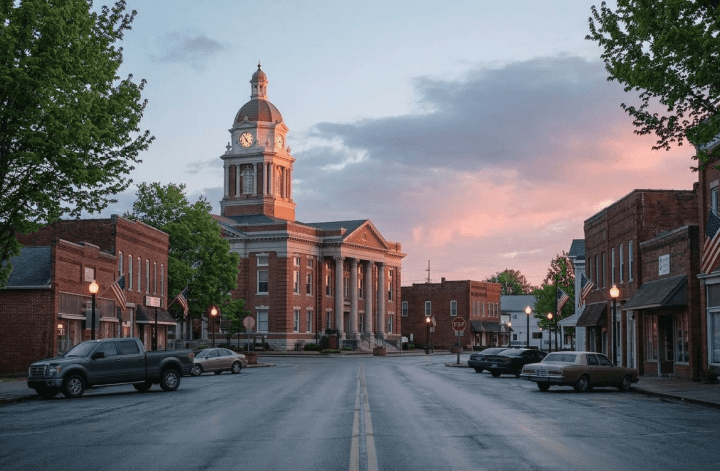
Community disaster preparedness is essential as communities across the United States—particularly in rural areas—face challenges from natural disasters, economic disruptions, and demographic and environmental changes. Strengthening resilience means preparing for and withstanding shocks, recovering quickly, and adapting for the long term. But how can these resilience strategies be effectively applied to rural planning? A wealth of resources and success stories from federal agencies, research institutions, and private-sector innovators offer valuable guidance.

Defining Community Resilience in the Rural Context
Community resilience encompasses a community’s ability to:
- Withstand potential shocks (e.g., floods, wildfires, or economic downturns);
- Recover and rebuild quickly in the aftermath of disruptions;
- Continuously adapt to changing circumstances (such as demographic shifts or climate-related challenges).
Resilience in rural areas is about more than just preparing for a single event like a flood or wildfire; it entails proactively strengthening social, economic, and ecological systems to absorb a range of potential disruptions. Strong local networks, diversified economies, and sustainable resource management all contribute to a community’s capacity to bounce back and even thrive after hardship.

Core Principles for Rural Resilience
- Participatory Planning
Involve residents, local business owners, and organizations from the outset. Rural areas often have strong social bonds, and this local expertise is vital for crafting tailored solutions. - Flexible Infrastructure
Roads, bridges, power grids, and communication networks must be designed and maintained with extreme events in mind. Disaster-ready infrastructure underpins a resilient community. - Economic Diversification
Overreliance on a single economic sector—be it agriculture, tourism, or industry—magnifies vulnerability. Encouraging diverse economic activities (e.g., artisanal enterprises, small-scale tourism, innovative farming) bolsters overall resilience. - Natural Resource Management
Responsible stewardship of water, land, and biodiversity is essential. Rural communities often depend heavily on natural resources, making sustainable usage and conservation a key pillar of long-term resilience. - Robust Social Structures
Social cohesion—through community centers, faith-based groups, volunteer fire departments, cooperatives—forms a safety net in times of crisis. Strengthening these networks is crucial for rapid recovery and adaptation. - Continuous Learning & Adaptation
A community’s disaster plan should never be static. Ongoing reviews, drills, and new research—such as those from NIST or university-led studies—help refine approaches and maintain a state of readiness.

Key Frameworks and Tools
A foundational starting point for community resilience for many municipalities and organizations is the planning framework offered by the Federal Emergency Management Agency (FEMA). The agency’s “Planning for Resilient Communities” fact sheet underscores the importance of risk-based decision-making—analyzing specific threats and prioritizing resources accordingly. By integrating risk assessments directly into a community’s comprehensive plan, local governments can more effectively align disaster response with long-term development goals.
Further details on how to incorporate resilience into community preparedness efforts can be found in FEMA’s Resilience Guidance. While these documents are often used in urban contexts, their principles—such as stakeholder engagement and clear continuity-of-operations planning—are equally relevant to rural communities, where long distances to critical services can compound risks.
A Structured Approach: NIST’s Community Resilience Planning Guide
Another resource that some might not expect to be so community-focused comes from the National Institute of Standards and Technology (NIST), or at least it did at the end of January 2025. Their Community Resilience Planning Guide provides a systematic roadmap for assessing vulnerabilities in both physical and social infrastructures. For rural towns grappling with aging bridges, limited emergency response teams, or outdated water systems, NIST’s framework helps local leaders set clear, phased priorities—whether that’s upgrading roads and utility lines or building stronger public health networks.

Addressing Housing and Equity: HUD’s Community Resilience Toolkit
In many rural areas, the housing stock can be older, with fewer financing options for repairs or energy upgrades. The U.S. Department of Housing and Urban Development (HUD) offers its own Community Resilience Toolkit to address these types of vulnerabilities. (At least it did the end of January 2025.) From guidance on grant applications to examples of successful affordability programs, HUD’s toolkit helps local leaders make sure that resilience strategies are not only about infrastructure but also about housing stability and equity, ensuring vulnerable populations are not left behind.
Harnessing the Power of Data: ESRI’s GIS Solutions
Much of resilience planning today relies on sound data and visualization. In rural settings, identifying where hospitals, fire stations, or emergency shelters are located—and where they’re needed—can mean the difference between quick recovery and prolonged setbacks. Geographic Information System (GIS) platforms like ESRI’s Resilience Planning tools enable community leaders to map hazards, resource locations, and population demographics. These insights inform everything from evacuation routes to the placement of critical communication infrastructure.
Academic Insights: Colorado State University and the Hazards Center
Research institutions add another layer of depth to rural resilience strategies. At Colorado State University’s Resilience Center, scholars are working on sustainable agricultural practices, water-resource management, and land-use planning. CSU’s insights are valuable for rural communities that depend heavily on farming and natural resources, as well as tourism and manufacturing.
Similarly, the Natural Hazards Center at the University of Colorado (CU) has partnered with NIST to explore risk-based community resilience planning. Their collaborative research often translates into practical guidelines on everything from community flood insurance strategies to wildfire mitigation, bridging the gap between academic theory and on-the-ground realities.

Practical Steps: From Policy to Implementation
- Risk Assessment & Mapping
Use GIS tools (e.g., ESRI) to identify vulnerable areas, populations, and critical infrastructure. - Stakeholder Engagement
Facilitate workshops and town hall meetings to gather input from farmers, business owners, nonprofits, local officials, and residents. - Strategic Planning
Incorporate findings from the risk assessment and stakeholder feedback into formal plans (see the NIST Planning Guide for a structured framework). - Implementation & Funding
Explore HUD grants and FEMA disaster funding. Establish a coherent plan to ensure resources are allocated effectively. - Monitoring & Evaluation
Define indicators (e.g., time to recover after a flood). Review performance regularly and update strategies based on new data and changing conditions.
Book Recommendation: Planning for Community Resilience
- Planning for Community Resilience: A Handbook for Reducing Vulnerability to Disasters published by Island Press
For a comprehensive look at community resilience—covering policy, theory, and real-world case studies—this book offers valuable insights into both successful and less successful examples of resilience planning.

Conclusion
By drawing on the expertise of organizations like FEMA, NIST, HUD, and ESRI, and by collaborating with academic institutions such as Colorado State University and the Natural Hazards Center at the University of Colorado, rural communities can build robust strategies to handle whatever challenges arise. The key is to integrate these resources in a holistic way—combining risk assessment, stakeholder engagement, economic diversification, and long-term planning.
Rural resilience is ultimately about community empowerment. When local knowledge is paired with reliable data and practical tools, small towns can not only survive disruptions but transform them into opportunities for growth, innovation, and shared prosperity.
Author’s Note: The frameworks, tools, and research mentioned above illustrate how multiple agencies and institutions contribute to resilience planning. By combining these tools with local expertise, rural communities can make significant progress toward a more sustainable, economically diverse, and socially vibrant future.
Read More: Resources for Building Rural Resilience
For those looking to deepen their understanding of rural resilience and community preparedness, the following resources—including websites, books, and reports—offer valuable insights and practical strategies.
Websites
- FEMA Resilient Communities
https://www.fema.gov
Offers guidance on risk assessment, mitigation planning, and funding opportunities for disaster preparedness. - NIST Community Resilience Planning Guide
https://www.nist.gov
Provides a structured framework for local governments to assess and improve community resilience. - HUD Community Resilience Toolkit
https://www.hud.gov
Focuses on housing stability, equity, and financial support programs to strengthen rural communities. - ESRI GIS for Resilience Planning
https://www.esri.com
Demonstrates how mapping and data visualization can enhance emergency response and infrastructure planning. - Natural Hazards Center at the University of Colorado
https://hazards.colorado.edu
Conducts research on disaster preparedness, recovery strategies, and risk communication.
Books
- “Planning for Community Resilience: A Handbook for Reducing Vulnerability to Disasters” by Jaimie Hicks Masterson et al.
A practical guide on incorporating resilience into urban and rural planning efforts. - “Resilient Cities: Overcoming Fossil Fuel Dependence” by Peter Newman, Timothy Beatley, and Heather Boyer
Although city-focused, this book provides useful strategies for sustainable development and resilience in small communities. - “The Resilience Dividend: Being Strong in a World Where Things Go Wrong” by Judith Rodin
A broad look at resilience planning, drawing from global case studies. - “Building Community Disaster Resilience Through Private-Public Collaboration” (Free PDF) by National Research Council
Highlights the need for communities to anticipate, mitigate, and recover from disasters together.
Reports and Studies
- “Planning for Resilient Communities” (FEMA)
A comprehensive guide to integrating resilience strategies into local planning.
https://www.fema.gov - “Community Resilience Indicators” (NIST & FEMA)
A research-based approach to measuring resilience in small towns and rural regions.
https://www.nist.gov - “State of Rural Resilience: A National Perspective” (HUD & USDA)
Examines policy efforts and successful initiatives in rural resilience.
https://www.hud.gov
Online Tools and Communities
- Hazard Mitigation Assistance (FEMA)
Provides funding and technical support for resilience projects.
https://www.fema.gov/hazard-mitigation-assistance - Rural Resilience Hub (American Planning Association – APA)
A platform for sharing case studies and best practices in rural resilience.
https://www.planning.org - GIS Disaster Mapping (ESRI)
Offers free and paid tools for mapping hazards and planning response efforts.
https://www.esri.com
Looking for more insights into cultural development? Explore our list of The Best Books for Rural Arts and History in 2025 here:
Unlock the Future: 12 Powerful Books for Rural Arts and Preservation
As an Amazon Associate, I earn from qualifying purchases.