

Planning enthusiasts, architects, engineers, and community leaders, take note! The year 2024 has brought a wealth of thought-provoking urban planning books exploring development, architecture, and community resilience. Whether you’re passionate about economic development, city development, sustainable cities, urban design, zoning regulations, creative placemaking, or historical perspectives on city building, these dozen standout titles offer interesting insights. Let’s dive into the year’s most impactful urban planning books for planners and dreamers alike, so you can put the ones you haven’t read yet on your 2025 reading list (starting with this year’s Christmas list).
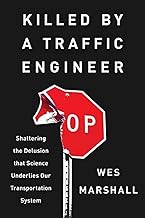
1. Killed by a Traffic Engineer
Author: Wes Marshall
About the Book:
In the US we are nearing four million road deaths since we began counting them in 1899. The numbers are getting worse in recent years, yet we continue to accept these deaths as part of doing business. There has been no examination of why we engineer roads that are literally killing us. Fixing the carnage on our roadways requires a change in mindset and a dramatic transformation of transportation. This goes for urban planners, and traffic engineers in particular, because we are still the ones in charge of our streets and roads.
Why It’s a Must-Read:
The author, a professor at the University of Colorado, translates engineer-speak into plain English, and the obfuscation of engineer data into plain facts you need to know to save lives in your community.
Related Post: “…billboards was associated with an increase of 40 to 50% in injury crashes.“
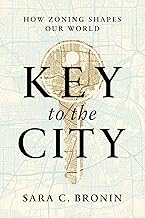
2. Key to the City: Zoning Laws and Their Impact on Urban Life
Key to the City: How Zoning Shapes Our World
Author: Sara C. Bronin
About the Book:
Bronin unpacks the critical role of zoning laws in shaping our cities, from their historical origins to their modern-day implications. She advocates for reforming zoning to create more equitable and sustainable communities.
Why It’s a Must-Read:
For planners grappling with zoning regulations, this book provides an invaluable roadmap for understanding and improving land use policies.
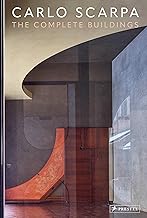
3. Carlo Scarpa: Innovative Interventions in Historical Architecture
Carlo Scarpa: The Complete Buildings
Author: Robert McCarter
About the Book:
This comprehensive guide explores the work of Carlo Scarpa, a master of blending modern architectural techniques with historical preservation. The book covers his most iconic projects, illustrating his innovative approaches to design.
Why It’s a Must-Read:
Scarpa’s ability to integrate history and modernity offers valuable lessons for planners and architects working in culturally sensitive areas.
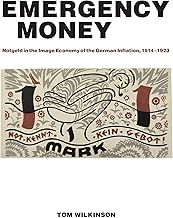
4. Emergency Money: Hyperinflation, Art, and Economic Planning
Emergency Money: Notgeld in the Image Economy of the German Inflation, 1914–1923
Author: Jutta Vinzent
About the Book:
This fascinating exploration of “Notgeld” (emergency money) issued during Germany’s hyperinflation combines economic history with artistic analysis. It highlights how design and planning can respond to crises.
Why It’s a Must-Read:
A rare look at how art and economy intersect in times of upheaval, providing creative inspiration for crisis management in urban settings.
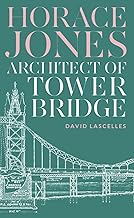
5. Horace Jones: The Architect Behind London’s Iconic Tower Bridge
Horace Jones: Architect of Tower Bridge
Author: Anthony Quiney
About the Book:
This biography celebrates Horace Jones, the visionary architect behind London’s Tower Bridge and other iconic structures. It examines his life, designs, and impact on 19th-century urban development.
Why It’s a Must-Read:
Jones’ work demonstrates the power of combining aesthetics and functionality in public infrastructure, offering timeless lessons for planners.
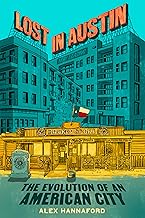
6. Lost in Austin: The Transformation of an American City
Lost in Austin: The Evolution of an American City
Author: Alex Hannaford
About the Book:
Hannaford explores the rapid transformation of Austin, Texas, analyzing its growth from a quirky cultural hub to a booming tech city. The book highlights the tensions between progress and preservation.
Why It’s a Must-Read:
This case study serves as a cautionary tale for planners navigating the challenges of rapid urbanization and cultural identity.
7. Protest Architecture: Exploring Spatial Tactics in History and Design
Protest Architecture: Barricades, Camps, Spatial Tactics 1830–2023
Author: Justin McGuirk (Editor)
About the Book:
This book delves into the spatial strategies of protests throughout history, from barricades to protest camps. It combines historical analysis with architectural insights, offering a compelling view of how public spaces shape and are shaped by dissent.
Why It’s a Must-Read:
For planners interested in the intersection of architecture, public space, and social movements, this book provides unique and timely insights.
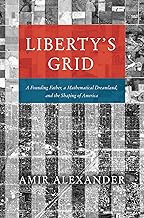
8. Liberty’s Grid: Enlightenment Ideals in American Urban Planning
Liberty’s Grid: An American Landscape
Author: Amir Alexander
About the Book:
Alexander explores how the Enlightenment-inspired grid system shaped America’s urban and rural landscapes. The book traces its influence on everything from land development to cultural identity.
Why It’s a Must-Read:
It connects the physical layout of cities with broader social and philosophical trends, offering insights into the historical roots of urban planning.
9. The Zone: Marginalized Spaces in Parisian Urban Development
The Zone: An Alternative History of Paris
Author: Justinien Tribillon
About the Book:
This book examines the “Zone,” the liminal space between Paris and its suburbs, as a lens for understanding urban marginalization. Tribillon weaves history, sociology, and urban theory into a compelling narrative.
Why It’s a Must-Read:
It offers a fresh perspective on the challenges of urban sprawl and social inequality, relevant to planners tackling suburbanization.
10. Balzac’s Paris: Socio-Economic Complexity in the City of Light
Balzac’s Paris: The City as Human Comedy
Author: Eric Hazan
About the Book:
Hazan revisits 19th-century Paris through the works of Balzac, exploring the social, economic, and physical structures of the city. The book reveals how literature can illuminate urban planning and inequality.
Why It’s a Must-Read:
For those interested in the cultural and historical dimensions of urban development, this book provides a rich and engaging perspective.
11. To the Ends of the Earth: A Grand Tour for the 21st Century – Global Sustainability Insights
To the Ends of the Earth: A Grand Tour for the 21st Century
Author: Richard Weller
About the Book:
This thought-provoking book examines the global challenges of urbanization and landscape transformation through a sustainability lens. Weller takes readers on a journey exploring how innovative planning can address ecological crises while fostering urban development.
Why It’s a Must-Read:
It offers a fresh perspective on integrating ecology into urban planning, making it essential for anyone looking to align growth with environmental stewardship.
12. Escaping the Housing Trap
Escaping the Housing Trap: The Strong Towns Response to the Housing Crisis
Author: Charles L. Marohn, Jr. and Daniel Herriges
About the Book:
Housing is an investment. Investment prices must go up. Housing is shelter. When the price of shelter goes up, people experience distress. This is the housing trap. It’s time to escape. In Escaping the Housing Trap: The Strong Towns Response to the Housing Crisis, urbanists Chuck Marohn and Daniel Herriges introduce a first-of-its-kind discussion of the tension between housing as a financial product and housing as shelter. This is the key insight that’s been missing from the Housing Crisis Conversation; and the insight that can help cities fight back against the crisis from the bottom-up.
Why It’s a Must-Read:
This book offers a serious, yet accessible, history of housing policy in the United States and explains how it led us to this point in time: where we face a market that is rigged against people who, only a few decades ago, could have been homeowners or stable, long-term rentals. Only local change, on a neighborhood or city-wide scale, can begin to restore balance to the housing market.
If you haven’t read this yet, no time like the present–or as a present to yourself.
Related Post: “Escaping the Housing Trap is 2024’s entry in Charles Marohn’s Strong Towns series.“
Why These Urban Planning Books Deserve a Spot on Your Shelf
Urban planning and design are constantly evolving, and these urban planning books provide fresh perspectives on the challenges and opportunities shaping our cities and communities. Whether you’re a professional planner, a student, or simply curious about the built environment, these titles are packed with ideas to inspire your work and thinking.
We’ve shared our To Be Read List here, how about yours? Which book will you read first? Share your thoughts and recommendations about urban planning books in the comments below!
As an Amazon Associate, I earn from qualifying purchases.