
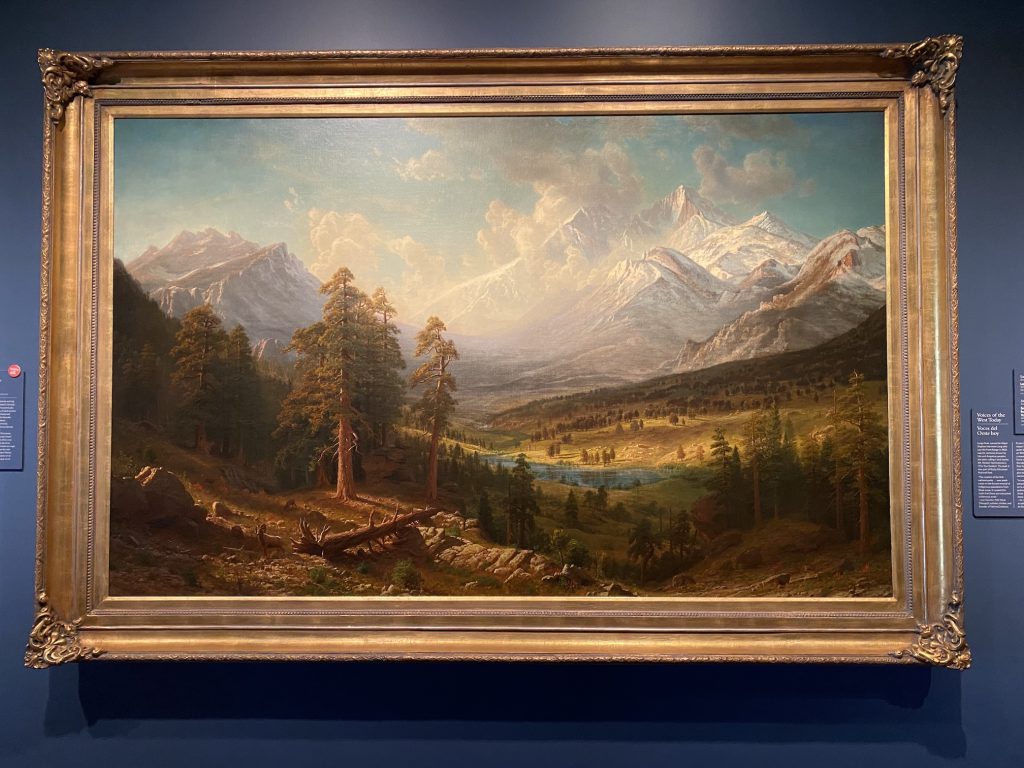
It is said Art is the expression of human creative skill and imagination, typically in a visual form although interpretive music, dance, and literature all apply, producing works to be appreciated primarily for their beauty or emotional power. I tend to appreciate art in its practical forms–classic Greek and Roman architecture, grand landscapes, and sculptures by Cowboy artists of the Old West.
Although I’ve lived in Colorado several times since 1990, I had never visited the Denver Art Museum until the National Planning Conference earlier this month. When I first lived in Denver, the museum was made up of the one large castle-like tower, designed by Italian architect Gil Ponti and opened in 1971–an ugly structure completely out of context for Colorado, its mountains or plains. It has grown substantially, in equally ugly buildings, over the years.
Still, I like art. I’ve visited the Art Institute of Chicago several times over the years and have yet to see every exhibit hall there so I knew I wouldn’t be able to see everything at the museum in Denver. The entry, now, is in the Hamilton Building designed by architect Daniel Libeskind, southeast of the Denver Public Library and a half-block from the History Colorado Center. While the museum is tagged as highlighting Western and regional art, the collection is a hodgepodge of European masters and modern art, with a few classic Western and regional artworks displayed.
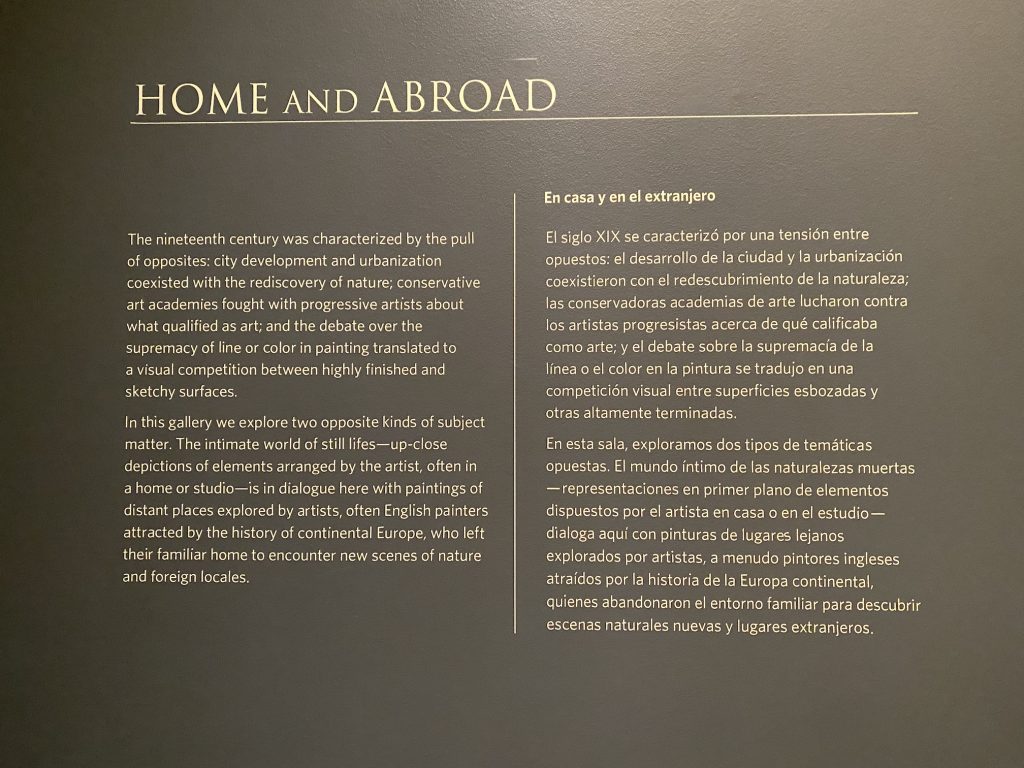
Heading from the entrance across the bridge of 13th Avenue, a gallery welcomed viewers to consider selections of classic European art. The storyboard reads:
The nineteenth century was characterized by the pull of opposites: city development and urbanization coexisted with the rediscovery of nature; conservative art academies fought with progressive artists about what qualified as art; and the debate over the supremacy of line or color in painting translated to a visual competition between highly finished and sketchy surfaces.
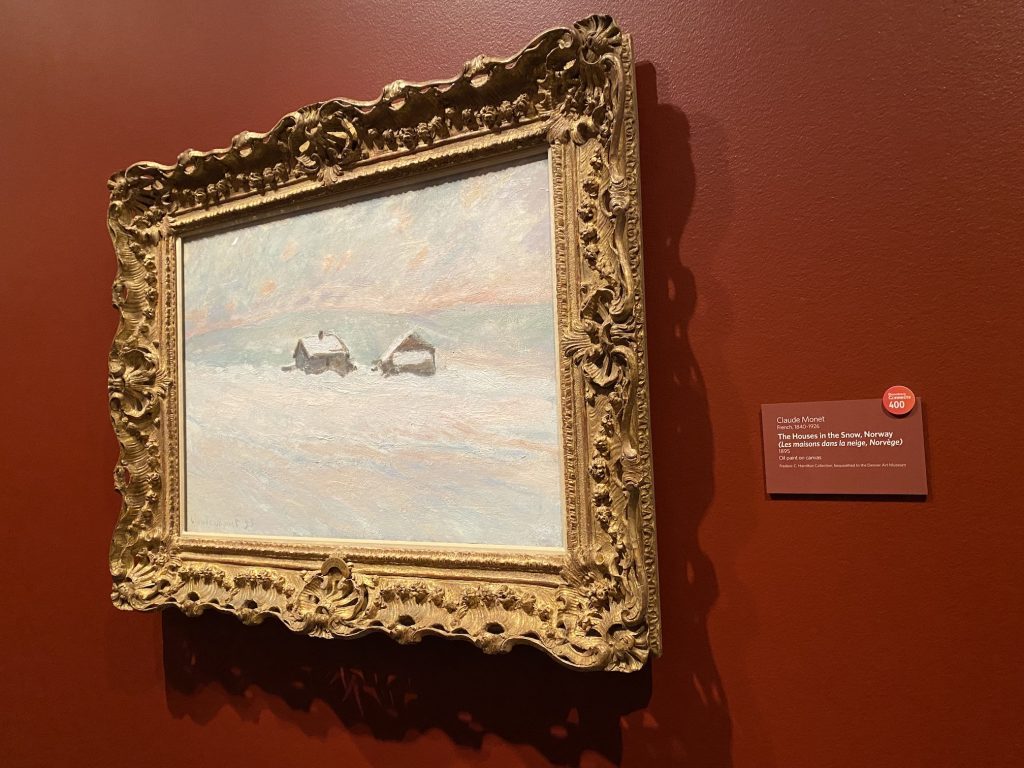
As an urban planner, the selections showing the bustle of London and Paris compared to peaceful landscapes such as the Monet picture here (The Houses in the Snow, Norway, 1895–I bought the magnet) prompted me to consider how these countervailing trends transcend history. What is old will be new again, which is something museums should be good at.
A Sense of Place?
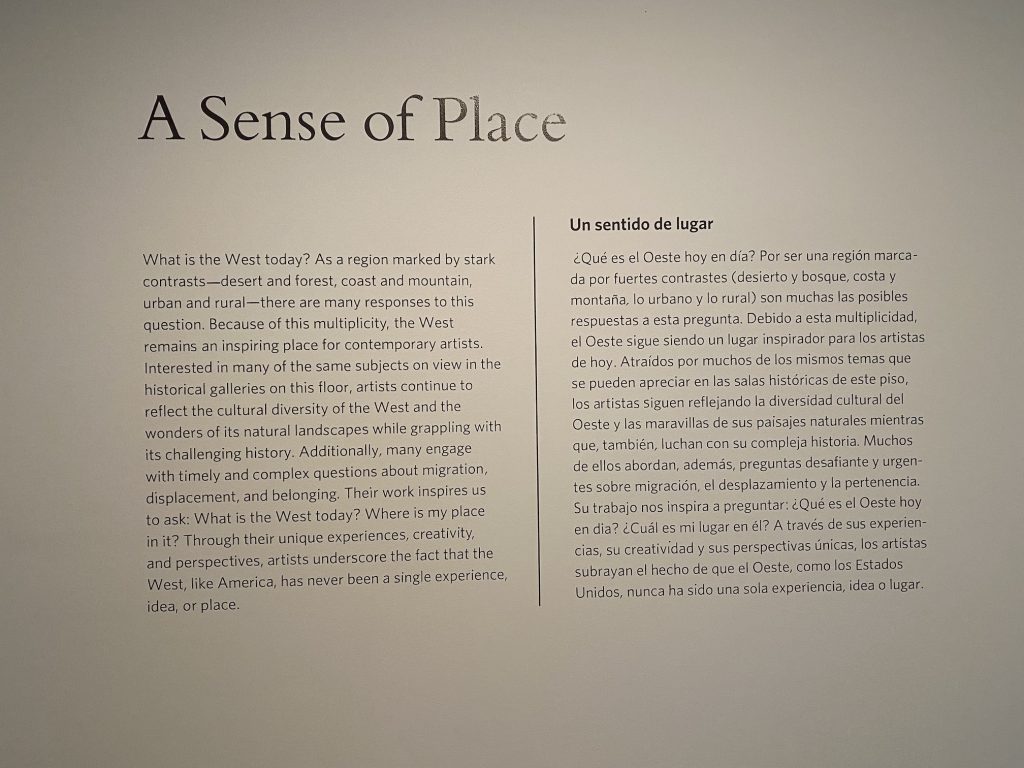
The Western Art galleries are located on the top floor of the North building. The storyboard there promised contemplation on “A Sense of Place” yet seemed to end up navel gazing:
What is the West today? As a region marked by stark contrasts–desert and forest, coast and mountain, ran and rural–there are many responses to this question. Because of this multiplicity, the West remains an inspiring place for contemporary artists. Interested in many of the same subjects on view in the historical galleries on this floor, artists continue to reflect the cultural diversity of the West and the wonders of its natural landscapes while grappling with its challenging history…
The Denver Art Museum touts its credentials in western American art collection, including their Institute of Western American Art. While there were paintings on display by Thomas Moran, Albert Bierstadt, and C.M Russell, much of the collection is ultra-modern. Even so, there are treasures hiding in the Denver Art Museum’s modern malaise. I do love classic landscapes by Albert Bierstadt (1830-1902), like this painting “Wind River Country” (1860).
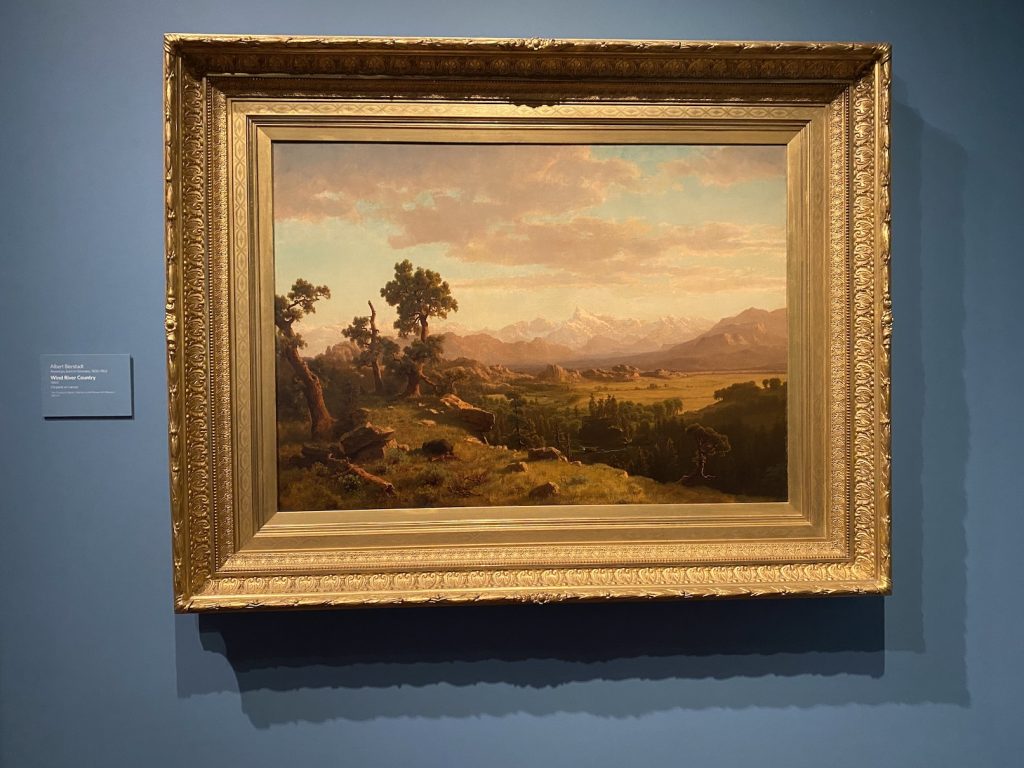
They also had a room full of small Western sculptures behind glass. One Frederic Remington is worth the rest of the modern art on the top floor. These were the best galleries in the museum.
Alexander Phimister Proctor

Out the north slit windows of the top floor of the north building–like an archer would use to defend an ancient castle–one can see two sculptures which have long stood guard on the Civic Center park. One the western side sits Broncho Buster, and on the eastern side sits On The War Trail, both by Alexander Phimister Proctor (1860-1950). Born in Ontario, Proctor’s family moved in 1871 to Denver, where he developed a love for hunting and sketching wildlife. In 1885, Proctor sold his homestead near Grand Land and moved to New York City to study art. He produced large pieces for the World Columbian Exposition of 1893 in Chicago. He moved to Paris to continue his studies, returning to New York in 1899.
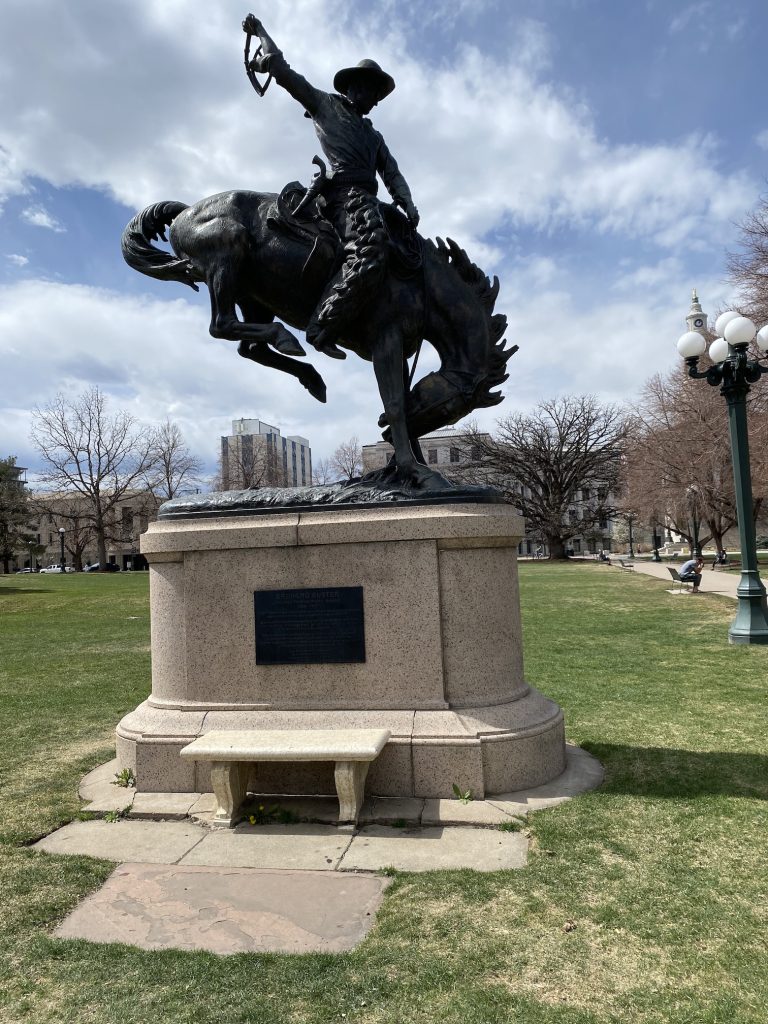
Broncho Buster (aka Bronco Buster) was completed in 1920. In 1917, Denver Mayor Robert Speer asked Proctor to sculpt two equestrian monuments for the city. As the plaque reads, “Broncho Buster captures the legendary spirit of the Old West here in the heart of Denver. The cowboy model, Bill “Slim” Ridings, was a notable Pendleton Round-Up rodeo rider.”
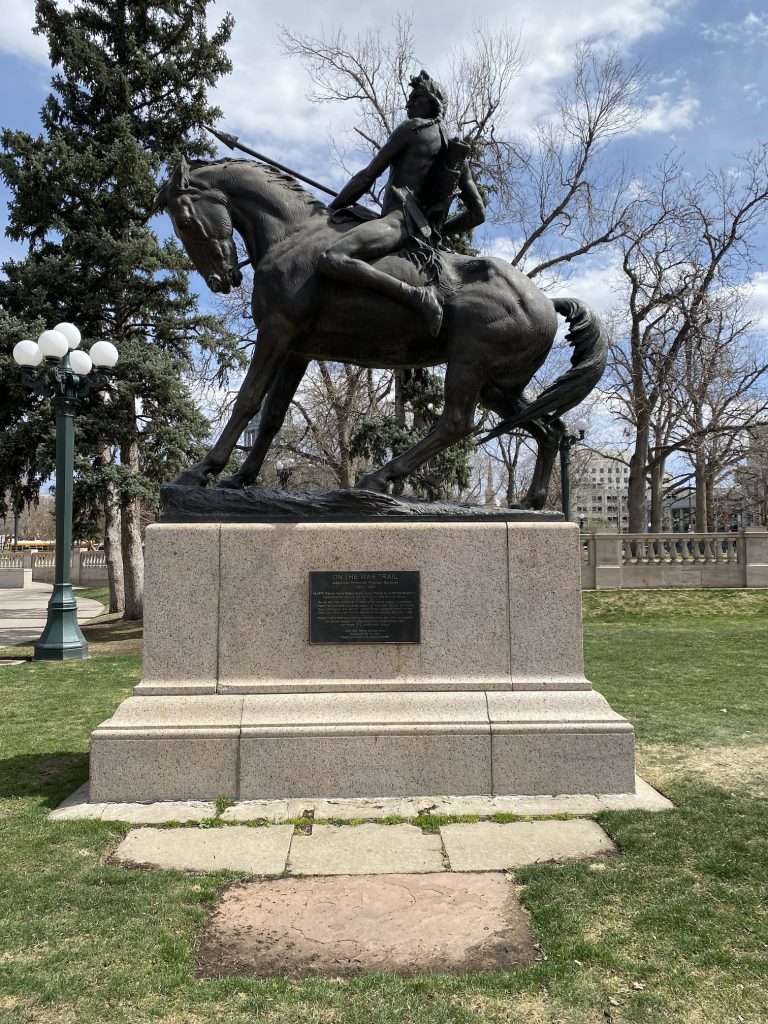
On the War Trail is Proctor’s 1922 tribute to Native Americans of Colorado. The plaque notes, Jackson Sundown of the New Perce tribe and Big Beaver of the Blackfeet tribe were his models for this statute. As noted in the museum storyboard on the artist, smaller reproductions of both statutes appear in the museum’s collection.
A Museum’s Responsibility to Community
Any museum must balance fidelity to its core mission and wish to serve a greater audience. Museums have a vital responsibility to their communities, going beyond simply preserving and displaying objects. I am sure many (most) members are happy with the wide variety of art and geographies represented, from east to west and pole to pole.
I myself like a local museum to feature the best of that locality–when I’m in Denver, I want to learn about Denver. I have seen scholars recommend a 50-50 split between local and global content seems to be well received (Bisanti, “Musems-from local to global” Journal of Science Communications, 2012).
I also want to learn from a museum, not be lectured. A good museum is like a story–it transfers information and illuminates ideas, creating narration to engage visitors. The debate over “woke” museums and scholarship in the current age is far from over.
I’ll have to visit again to explore the rest of the Denver Art Museum, and learn more about the stories they want to illustrate.
Western Art Museums I Like
- Whitney Western Art Museum at the Buffalo Bill Center of the West, Cody, Wyoming
- C.M. Russell Museum–the Art and Soul of the American West, Great Falls, Montana
- Georgia O’Keeffee Museum in Santa Fe, New Mexico
- I have heard good things about the Joslyn Art Museum, which recently re-opened nearby in Omaha, but I haven’t been there yet.
Resources
- Denver Art Museum Shops — Lots of books and art stuff, including custom prints.
- Denver Art Museum: Collection Highlights (2021)
- Lost Denver (2016)
- West: The American Cowboy, Anouk Masson Krantz (2019)
(As an Amazon Associate, I earn from qualifying purchases.)

