

Week 1 – September 2025 | Heritage & Tourism Series
Heritage tourism is more than a visit to a museum or a stroll through an old town—it’s an invitation to experience the authentic living story of a place. In rural communities across the world, heritage is not tucked away in exhibits. It lives in the landscape, the architecture, the traditions, and the rhythms of daily life.
For communities navigating change—economic shifts, population loss, cultural erosion—heritage tourism offers a powerful way forward. It creates space for growth that doesn’t require reinvention, but instead builds on what’s already there: identity, pride, and a sense of place.
This post kicks off a four-part series exploring the potential of heritage tourism as a tool for economic revitalization, cultural stewardship, and rural resilience. We’ll begin here by defining what heritage tourism is—and why it matters so much right now.

What Is Heritage Tourism?
Heritage tourism is a form of travel that goes beyond sightseeing—it invites visitors to immerse themselves in the cultural, historical, and lived identity of a place. Unlike conventional tourism, which often prioritizes entertainment or convenience, heritage tourism centers on authentic experiences that reflect the unique character of a community or region.
It encompasses both:
Tangible heritage
These are the physical expressions of history—the built and natural environments that shape how people live and remember. In rural areas, this might include:
- Historic main streets and town squares
- Farmsteads, barns, grain elevators, and ranch buildings
- Country churches and cemeteries
- Mills, covered bridges, and old railroad depots
- Civil War battlefields, mining camps, or frontier sites
- Working landscapes: scenic byways, fields, forests, and waterways
These landmarks are not just old structures—they are cultural anchors that tell the story of a place through architecture, land use, and continuity.
Intangible heritage
Just as important are the traditions and practices that define a community’s identity over time. This includes:
- Seasonal festivals, county fairs, and storytelling gatherings
- Traditional music, folk dances, and oral histories
- Local crafts like quilting, pottery, blacksmithing, or woodworking
- Foodways: heirloom recipes, smokehouses, community dinners
- Dialects, expressions, and local place names
- Spiritual practices, migration stories, and ancestral rituals
These are the living elements of heritage—the parts that evolve, adapt, and are passed down through generations.
Together, these tangible and intangible elements form a sense of place that distinguishes one rural community from another. Heritage tourism invites travelers to explore, learn, and connect with these unique stories—not just as observers, but as respectful participants.
Critically, successful heritage tourism is not about staging culture for consumption—it’s about sharing identity with intention, often in collaboration with the community itself. That might mean a visitor joins a heritage trail guided by a local, eats a family recipe at a small-town café, or learns about the region’s history from the people who lived it.
In this way, heritage tourism becomes a tool for both cultural understanding and community empowerment—building bridges between past and present, locals and guests.

Why It Matters for Rural America
In rural communities, heritage isn’t something locked away behind museum glass or confined to historic markers along the highway. It lives in the everyday rhythm of life—in the layout of the town square, the annual parade that marks the changing season, the sound of old tunes drifting off a front porch, and the well-worn tools passed down through generations in a family barn.
These elements don’t just tell a story—they are the story.
In places where economies may have shifted, populations declined, or outside investment overlooked local assets, heritage tourism offers rural communities something incredibly valuable: the ability to reclaim and reframe their own narrative.
Here’s why that matters:
1. It highlights what already exists.
Unlike tourism models that rely on building new plastic attractions or imported entertainment, heritage tourism draws attention to the value of what’s already present—historic buildings, cultural practices, local knowledge, and everyday traditions. It’s a development strategy rooted in local strengths rather than external fixes.
2. It supports local economies.
When a visitor stays in a locally owned inn, buys crafts from an artisan, or eats at a family-run diner, they’re investing directly in the community. Heritage tourism creates demand for lodging, food, guide services, and retail—all of which benefit small businesses and local entrepreneurs. These economic benefits tend to be more distributed and resilient than in extractive or seasonal industries.
Despite its potential, heritage tourism often remains underutilized as a serious economic strategy—especially in rural planning. Yet research consistently shows that heritage travelers are among the most engaged and economically impactful visitor segments. They’re drawn to places with a strong sense of identity, seek immersive experiences, and tend to spend more—precisely because they value uniqueness, authenticity, and cultural depth.
3. It preserves and affirms identity.
In rural towns facing demographic shifts or economic uncertainty, there’s often a deep fear of being forgotten or losing what makes the place special. By intentionally celebrating and sharing cultural heritage, communities reinforce their sense of self and place. This isn’t just for tourists—it’s a source of pride and cohesion for residents too.
4. It builds civic pride and engagement.
When residents take part in telling their community’s story—whether through a local tour, a reenactment, a food festival, or a mural—they become active stewards of their own culture. This fosters a sense of ownership and participation that goes far beyond tourism. It strengthens community bonds and encourages intergenerational dialogue.
In fact, in many towns, heritage tourism becomes the bridge between past and future—helping communities honor where they’ve been while building new opportunities around what they’ve always had. It’s not a luxury strategy; it’s a practical, place-based approach to community resilience.
And for rural America, that makes all the difference.

Not Just History—But Identity
Heritage tourism is often misunderstood as something passive—as a form of nostalgia, or a quiet admiration of the past through old buildings and dusty artifacts. But that view misses what makes rural heritage so powerful: it’s not about looking backward, but about understanding who a community is right now, through the lens of where it has been.
Heritage is not static—it’s living, evolving, and expressive. It’s how rural places pass on values, tell stories, and adapt traditions in the face of change. It shows up in how communities decorate their streets, gather for seasonal events, care for elders, welcome newcomers, and continue to create meaning across generations.
When thoughtfully approached, heritage tourism becomes a tool for identity-building—not just for visitors, but for the people who live there.
Here’s how:
1. It connects generations and communities.
Heritage experiences—whether it’s a music festival, quilting workshop, or walking tour—can bring elders and youth together, offering opportunities for intergenerational learning. It also allows newcomers to connect with the traditions of longtime residents, fostering greater understanding and inclusion in communities that may be in demographic transition.
2. It bridges economic and cultural goals.
For planners and local leaders, heritage tourism doesn’t have to be a choice between growth and preservation. A well-managed program can drive local economies while respecting the authenticity of place. It’s about aligning investment with community values, using tourism to fund preservation, support local businesses, and elevate the cultural fabric of the town.
3. It helps shape a shared sense of place.
When communities are able to define their own narrative—through the lens of both history and everyday culture—they build stronger emotional ties to place. This deepens civic pride, strengthens social cohesion, and gives both residents and visitors a richer experience. In short, it creates places that are not just visited, but truly felt.
In this way, heritage tourism isn’t about freezing time. It’s about engaging with identity as a living process—a way for rural communities to express who they are, preserve what matters, and invite others to understand and appreciate that identity on its own terms.

A Rural Advantage
Rural communities hold a quiet but powerful advantage in the world of heritage tourism: they often offer something that can’t be faked, franchised, or manufactured—authenticity.
In many rural areas, culture and tradition aren’t curated for effect. They’re simply part of everyday life. A farmer’s market that still sells from the back of a pickup, a church dinner cooked from memory rather than recipes, a music jam on a porch instead of a stage—these are experiences grounded in lived heritage, not performance. And that makes them incredibly compelling for visitors seeking connection.
In an age of generic, standardized travel experiences, where many destinations feel interchangeable, rural places stand out by being genuinely themselves. They don’t have to invent stories—they are the story. This kind of grounded, place-based authenticity has become increasingly rare—and therefore increasingly valued.
Many visitors today are looking for:
- Real conversations with locals
- Immersion in cultural landscapes
- Hands-on experiences rooted in history and community
They’re seeking meaning, not marketing. And rural communities are uniquely positioned to offer that—if they recognize the value in what they already have.
Programs that Support Rural Heritage
Initiatives like the National Heritage Areas, state-designated heritage trails, and regional storytelling projects provide strong frameworks for linking historic preservation with tourism, economic development, and cultural education. These programs demonstrate how rural areas can protect their heritage while creating shared value across sectors.
But perhaps the most powerful heritage tourism efforts begin at the grassroots level. They start with local leaders, artists, historians, farmers, elders—people who see the richness in their own communities and choose to open that up, not for spectacle, but for shared appreciation.
When communities define how they want to be seen, and invite others in as guests, not consumers, tourism becomes more than an economic tool—it becomes a cultural bridge.
In this way, rural heritage isn’t just an asset—it’s a strength. And for communities willing to lead with their authentic identity, their story, and their values, that strength can shape not only how others experience them—but how they experience themselves.

Case Studies: How Rural Communities Bring Heritage Tourism to Life
Heritage tourism thrives when it’s rooted in real places, real people, and real stories. Across the globe, rural communities are embracing their identity—not as static history, but as living heritage that drives local pride, economic opportunity, and cultural resilience.
There are too many great cases of rural communities bringing heritage tourism to life around the world. Here are seven inspiring examples of how heritage tourism works in practice.

Tillamook County, Oregon – Building a Cultural Heritage Trail
Despite a small population, Tillamook County has developed a rich cultural infrastructure—as Nan Devlin pointed out to me, this includes 14 museums and 7 cultural organizations. This rural area on the Pacific Coast is also home to Tillamook County Creamery Association, the cooperative which produces Tillamook cheese. The community created a Cultural Heritage Trail to connect these sites, promoting storytelling, regional cohesion, and year-round tourism. This is a powerful model of how rural areas can leverage existing assets through coordination, interpretation, and community-driven promotion.
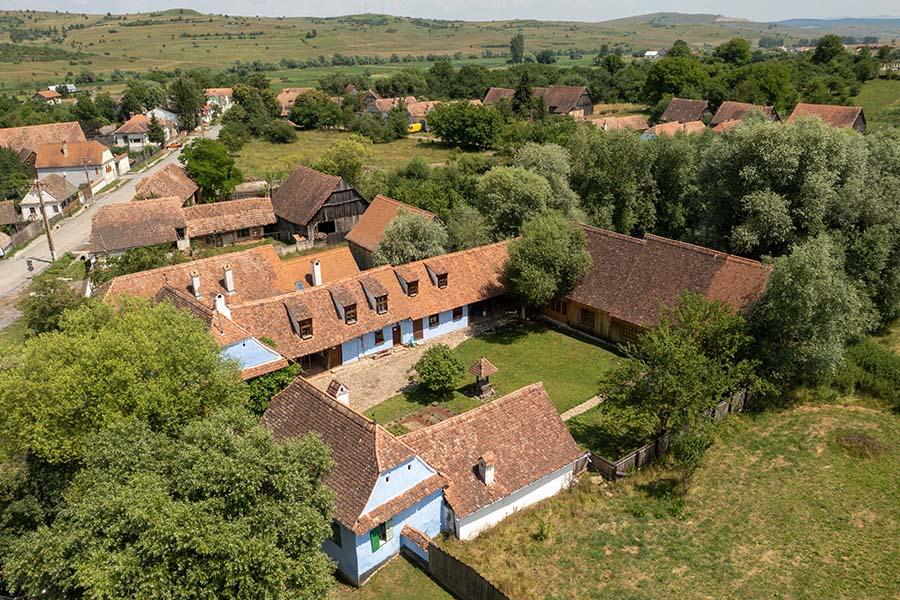
Viscri, Romania – A Village Rooted in Living History
This Saxon village in Transylvania was revitalized through restoration of historic homes, traditional building practices, and eco-cultural tourism. Backed by organizations like the Mihai Eminescu Trust and supported by King Charles III, Viscri now welcomes visitors not as tourists, but as temporary residents invited into a living landscape of hay meadows, wood-fired stoves, and hand-built architecture. It’s a quiet success story of grassroots heritage tourism and rural stewardship.

Aínsa, Spain – Community-Led Recognition on a Global Stage
Designated a UNWTO Best Tourism Village, Aínsa is a small town in Aragón that embraced its crossroads heritage, festive traditions, and food culture. Civic collaboration across sectors—local government, entrepreneurs, volunteers—created a shared narrative that earned international recognition. This case shows how rural heritage can be both authentic and innovative, rooted and forward-looking.

Shunran-no-Sato, Japan – Farm Stays That Preserve Tradition
In the mountains of Ishikawa, aging farmers opened their homes to visitors as traditional guesthouses—offering hands-on experiences like seasonal cooking and rice planting. The Noto Peninsula, where the inns are located, is part of a Globally Important Agricultural Heritage System. The initiative grew to 40+ sites, hosting over 10,000 visitors annually. More than tourism, Shunran-no-Sato became a way to keep villages alive, preserve craftsmanship, and pass on agrarian knowledge.

Kim Bồng, Vietnam – Reviving an Artisan Economy
Once fading, this woodworking village near Hội An found new life through community-based heritage tourism. A visitor trail, artisan demonstrations, and restored houses revived both pride and income. UNESCO and local partnerships helped secure resources, but the heart of the initiative remains in the skills passed from generation to generation.

Haida Gwaii, Canada – Indigenous Tourism on Haida Terms
On the ancestral lands of the Haida Nation, tourism has become a means of cultural empowerment on the Haida Gwaii archipelago of 150 rocky islands off the West Coast of British Columbia. Experiences like the Haida House and Klahoose Wilderness Resort reflect Haida values of respect, land stewardship, and storytelling. Visitors take a cultural pledge before arrival, reinforcing that this is not just a destination—it’s sacred territory being shared with intention.

Newberry Springs, California – Route 66 Revival with a Local Twist
As the Route 66 centennial approaches in 2026, this desert town is revitalizing heritage through grassroots creativity—from restoring the Bagdad Café to hosting themed events and developing music venues. It’s nostalgia with integrity: a small town using its history to spark economic renewal, not just relive the past.
Lessons Across Contexts
What do these stories have in common?
They show that successful heritage tourism is locally driven, culturally grounded, and future-minded. Whether through regional networks, Indigenous self-determination, or intergenerational craft, rural communities have the tools to shape how the world sees them—and how they see themselves.
These case studies offer inspiration, but more importantly, they offer proof that it works.

For Planners and Policymakers: Turning Heritage into Strategy
Heritage tourism is more than storytelling—it’s a planning opportunity. For rural communities navigating limited budgets, demographic shifts, and economic uncertainty, cultural heritage offers a unique advantage: it’s already there. The key is recognizing its value, organizing its potential, and integrating it into broader community development goals.
Here are some ways planners and decision-makers can turn heritage into strategic action:
1. Map What You Have
Start with a local cultural asset inventory—both tangible (historic sites, trails, architecture) and intangible (traditions, languages, crafts, festivals). Invite residents to help identify what matters most. This builds ownership and surfaces overlooked treasures.
2. Integrate Heritage into Local Plans
Include heritage tourism in comprehensive plans, economic development strategies, tourism frameworks, and land-use policies. Position it as a cross-cutting theme that strengthens identity, attracts visitors, and supports small businesses.
3. Foster Collaboration Across Sectors
Connect heritage organizations, chambers of commerce, tourism offices, tribal governments, arts councils, and agricultural groups. Successful heritage tourism is multidisciplinary—and stronger when co-owned.
4. Support Visibility and Interpretation
Wayfinding, signage, storytelling tools, and digital platforms help make the invisible visible. Invest in interpretation that is accurate, inclusive, and locally voiced. Remember: presentation matters.
5. Balance Access and Stewardship
Develop policies that encourage small-scale tourism enterprises—like guide services, home-stays, pop-up markets—without compromising local character or overburdening infrastructure. Rural tourism works best when it is right-sized and community-led.
When communities lead with their identity—and when planners support that identity through policy, investment, and collaboration—heritage becomes more than a memory. It becomes a foundation for rural resilience.

Looking Ahead
Heritage tourism isn’t just a trend—it’s a mindset. A way of seeing value in what’s already around us, of rooting growth in identity rather than reinvention. For rural communities, this offers not only economic opportunity but also a renewed sense of confidence and cohesion.
When we approach tourism through the lens of cultural stewardship, we’re not just telling stories—we’re keeping them alive. We’re inviting visitors to engage with real places in real ways, and we’re empowering residents to shape how their communities are seen, remembered, and sustained.
As we continue this September series, we’ll explore how heritage tourism goes beyond ideas—how it creates jobs, revitalizes main streets, and strengthens community pride. And we’ll look at what it takes to manage that growth responsibly, so that local culture isn’t lost in the process.
Because in the end, heritage tourism isn’t about the past—it’s about the future we choose to build from it.

Read More: Recommended Resources on Heritage Tourism
Books & Handbooks
- Cultural Heritage Tourism: Five Steps for Success and Sustainability – Cheryl M. Hargrove
Provides a proven five-step process designed specifically for planners, managers, and community leaders. Amazon - Heritage Tourism Destinations: Preservation, Communication and Development – Alvarez, Yüksel, & Go, ed.
An international perspective on heritage tourism planning. Amazon - Rural Tourism Development: Localism and Cultural Resilience – George, Mair, Reid
A comprehensive look at how rural communities can leverage cultural heritage amid globalization. Amazon - Handbook on Tourism and Rural Community Development – Mair, ed.
Essays by global experts exploring the intersection of tourism, heritage, and resilient rural development strategies. elgaronline.com
Research Reports & Articles
- Assisting Communities to Develop Heritage Tourism – Jones, et al.
A hands-on guide for engaging local communities in heritage tourism development and organization. csu.edu - Cultural Tourism and Rural Community Resilience – Gocer, et al.
A research article examining how heritage tourism supports social and economic resilience in rural settlements. ScienceDirect - Heritage-led Sustainable Development in Rural Areas – Candeloro & Tartari
Examines case studies like Vivi Calascio cooperative to illustrate rural revitalization through heritage stewardship. ScienceDirect - Heritage Tourism in Rural Areas: Challenges in Southeast Asia – Kausar & Nishikawa
Explores the socio-economic impacts of heritage tourism and local industry linkages in places such as Borobudur, Central Java. ResearchGate - The Benefits of Tourism for Rural Community Development – Yung-Lun Liu 1, Jui-Te Chiang, & Pen-Fa Ko
A 2023 study outlining economic, social, environmental, and leisure benefits of rural tourism globally. PMC - Tourism and Rural Development: A Policy Perspective – World Tourism Organization (2023)
A UNWTO report underscoring tourism’s potential to catalyze inclusive and sustainable growth in rural areas. e-unwto.org - Australian Heritage Tourism Direction Papers – A comprehensive framework which identifies key strategic initiatives to drive heritage tourism growth. National Trust of Australia
- Cultural and Heritage Tourism: A Handbook for Community Champions – Whyte, Hood, & White, eds.
Canadian Federal Provincial Territorial Ministers of Culture and Heritage resource (2012) PDF hosted by British Columbia
Websites & Initiatives
- Advisory Council On Historic Preservation – The ACHP encourages and supports heritage tourism, fostering public appreciation for the social, economic, and educational benefits of historic preservation. www.achp.gov/heritage_tourism
- UNESCO World Heritage and Sustainable Tourism Programme – A program for management and development of sustainable tourism at World Heritage properties. UNESCO
- Life Beyond Tourism – An international platform by the Romualdo Del Bianco Foundation advocating for culturally grounded tourism that fosters intercultural dialogue and values over consumption. www.lifebeyondtourism.org
- Heritage Tourism Development Reports (Red Cloud, Nebraska) – A rich archive of strategies and progress updates from a rural arts and heritage trail initiative. Red Cloud was the hometown of author Willa Cather. visitredcloud.com
Recent Newsworthy Examples
- A World Bank feature on southern Albania, showing how heritage preservation of historic homes is driving local entrepreneurship and community-led adaptation. World Bank
- Saint-Antoine-l’Abbaye (France): A medieval village revived through heritage tourism following its designation as “France’s Favorite Village,” balancing tradition with sustainable growth. Financial Times (paywall)
- Uttar Pradesh, India: A rural tourism initiative promoting farm stays, homestays, and self-help group crafts—positioning “villages as living heritage” and tapping into identity-based tourism. The Times of India
- Travelers and Traditional Crafts Worldwide: From puppet-making workshops in Malaysia to crafts revived in the Scottish Highlands, this article highlights global examples where tourists support endangered crafts directly. Condé Nast Traveler (paywall)
- “It’s Time for a Heritage Tourism Reset”: A post-COVID commentary on the state of heritage tourism in Canada and worldwide. National Trust for Canada
Heritage tourism isn’t about preserving the past—it’s about building an future rooted in authentic identity, pride, and place.
Coming up next week: We explore how rural communities are using heritage tourism as a practical tool for economic revitalization—with real-world examples, strategies, and tips for making it work at the local level.
Week 2: Reviving Rural America: Why Heritage Tourism Is a Game-Changer Now
Looking for more insights? These resources offer a starting point for anyone working to strengthen policy that works for rural communities—whether you’re a planner, council member, or community leader.
The Best Books for Rural Development and Planning in 2025
Community Guide No. 2: Small Town and Rural Community Guide to Cultural Preservation (PDF) on our Resources page.
(As an Amazon Associate, we may earn commissions from qualifying purchases. Check your local library or bookshop, too.)