

Six Authors You Should Check Out
I fell in love with the Great Outdoors through books. I always wanted to visit and hike and fish and camp since I was a Cub Scout. I learned about conservation and stewardship and Leave No Trace. Yet it wasn’t until after I had miles under my feet and nights under the stars that I fell deeply in love with the land, mountains and prairies and lakes and streams. It wasn’t until I experienced public lands that I read the books singing their praises and warning of all that could go wrong. That was when I fell in love with the Great Outdoors.
Essays on Conservation and the Great Outdoors
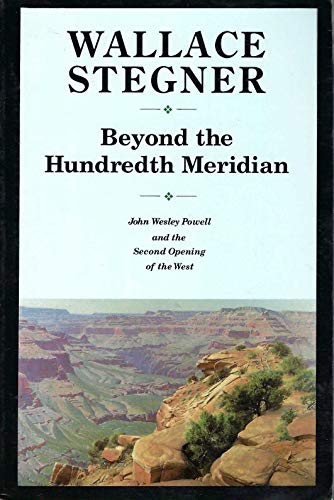
Beyond the Hundredth Meridian
Wallace Stegner was an Eagle Scout, like me, who grew up in Great Falls, Montana; Salt Lake City, Utah; and a village in Saskatchewan. He was born in 1909 in Iowa and died in 1993 in Santa Fe, New Mexico. In between, he was a college professor and for a time a special assistant to Secretary of the Interior Stewart Udall. He wrote fiction and non-fiction.
His novel Angle of Repose won the Pulitzer Prize for Fiction in 1972. As noted by Utah Gov. Jon Huntsman, his work Wilderness Letter helped win passage of the US Wilderness Act in 1964. The Wallace Stegner Chair in Western American Studies at Montana State University in Bozeman was established in his honor.
Stegner wrote about John Wesley Powell (1834-1902), the first Anglo-American to explore the Colorado River through the Grand Canyon, in his non-fiction biopic Beyond the Hundredth Meridian: John Wesley Powell and the Second Opening of the American West (1954). Stegner tells his story through the story of Powell, the man who put fact to the mythologies of the Old West when it was still new.
Powell described the arid West as it was–too dry for eastern agricultural patterns, in need of a new way of doing business. As the New York Times wrote in their review back at the time, “Believing passionately in science as the servant of mankind, he considered it the function of government to sponsor scientific investigations.” Now isn’t that a novel idea?
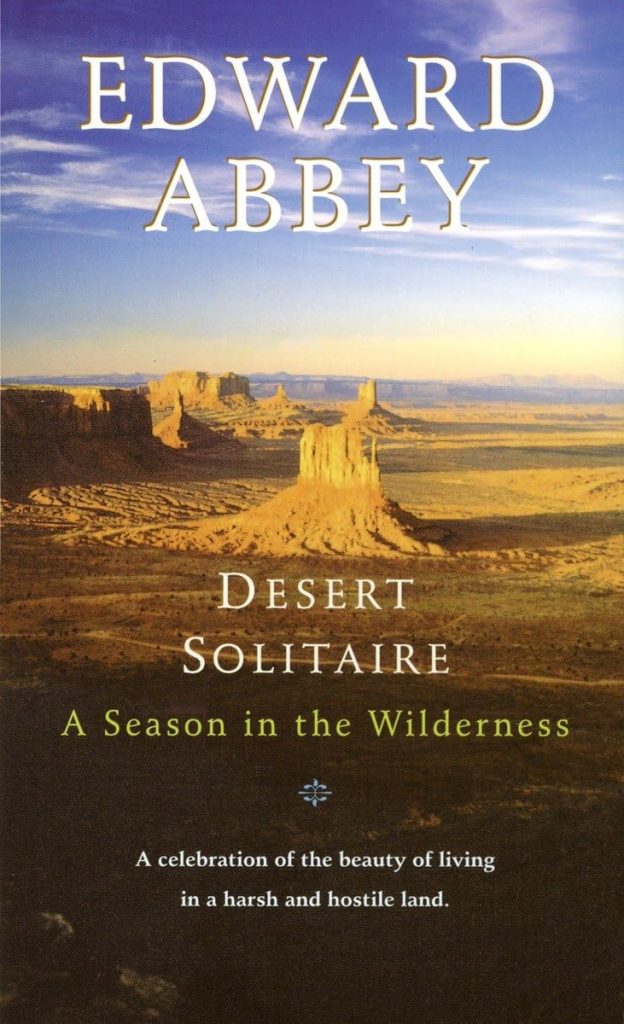
Desert Solitaire
Edward Abbey (1927-1989) wasn’t always a nice guy. The Pennsylvania native and US Army veteran had an attitude which got him a Wallace Stegner Creative Writing Fellowship at Stanford University in 1957, after graduating from the University of New Mexico; and his attitude got him a file with the FBI–they must have really loved his novel The Monkey Wrench Gang when it came out in 1975. His outspoken attitude probably would have gotten him “canceled” in today’s environment for what that’s worth. Yet it also got him a starring role in Thomas Russel’s song “Ballad of Edward Abbey”. He was and is a complicated character.
Abbey expressed his attitude in fiction, though Hollywood decided that was OK and the movie version of his second novel, The Brave Cowboy, was adapted for the screen as Lonely Are the Brave with Kirk Douglas. The self-described “redneck environmentalist” also expressed attitude in his one work of non-fiction, Desert Solitaire: A Season in the Wilderness, published in 1968 based on his time as a ranger at Arches National Park in the mid 1950s, when Moab was a mining town.
The book has been compared to Aldo Leopold’s A Sand County Almanac and Thoreau’s Walden. Desert Solitaire has had a profound and lasting impact on American attitudes about conservation and the great outdoors. The book elevated the value of wilderness, not just as a resource but as a good for its own sake, and emphasized the importance of solitude and self-reliance.
While Abbey’s more radical views on environmental activism (chop that billboard down!) and his sometimes gruff persona were controversial, they spark important debates about the responsibility of individuals and society towards the environment. Despite the controversies, his work has undeniably shaped how many Americans view and value wilderness.
This House of Sky
“The spaces between stars are where the work of the universe is done,” wrote Ivan Doig (1939-2015) in his non-fiction work This House of Sky: Landscapes of a Western Mind. “There is more time than there is expanse of the world and so any voyage at last will end.” Doig was born in 1939 at White Sulphur Springs, Montana. While young, his family moved to a sheep ranch at Dupuyer, Montana, near where my father-in-law grew up at the same time. My wife’s family stayed on the hardscrabble land while Doig graduated from Valier High School, attended Northwestern University and the University of Washington, making his home in Seattle.
Much of Doig’s fiction is set in North Central Montana where he grew up. His first three Montana novels—English Creek, Dancing at the Rascal Fair, and Ride with Me, Mariah Montana—form the “McCaskill trilogy”, covering the first century of Montana statehood from 1889 to 1989. They are worth a read on their own merits. In 1978, Doig compiled his memoirs in This House of Sky, which was nominated for the National Book Award.
He lovingly describes the beauty of the land, even as it ground down his father and their farm. This reflection on place cannot help but get you thinking about looking behind the conventions of the day and learning to love where you call home.
Montana PBS produced a documentary on the life and work of Ivan Doig in 2023, check it out at ivandoig.org
Three Western Authors I Lose Myself In When I Can’t Get Outside
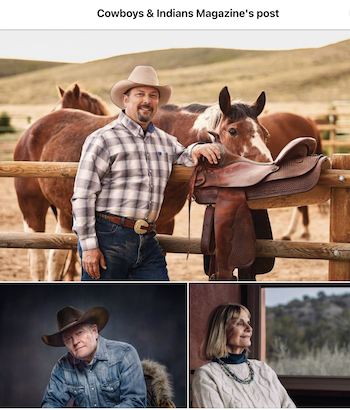
There are many good western writers and tributes to the great outdoors out there. Louis L’Amour is my absolute favorite author but he’s not producing new content from beyond the grave. If you’re looking for good new books, or new-to-you books, consider C.J. Box, Craig Johnson, or Anne Hillerman.
C.J. Box
Charles James Box Jr. is a Wyoming native and author who writes about the place he lives. CJ Box published the first Joe Pickett novel, Open Season, in 2001, and has continued with new releases every year since, with the latest, Battle Mountain, released in February 2025. The next release, The Crossroads, is due in February 2026. The mystery series follows Wyoming Game Warden Joe Pickett and his family and friends in the fictional home town of Saddlestring, Wyoming, loosely based on Buffalo and Sheridan, Wyoming.
Spectrum/Paramount+ ran a two-season Joe Pickett adaptation for streaming in 2021 and 2023. The principal characters were good actors, but the diversity casting and poor writing tanked the show–Spectrum Cable, which aired Season One, isn’t even available in the rural areas most likely to draw fans of the show. The filing locations in Alberta we not bad, but they are not the Big Horn mountains of Wyoming either. As usual, the books are much better than the television show.
Box has also written a series based on private detectives Cody Hoyt and Cassie Dwell, set in Montana. ABC adapted these into a series which used the name “Big Sky”–Montanas are fairly protective of this trademark and many were upset by its use for a 2nd rate three-season series. Box also has three stand-alone novels and a collection of short stories.
Our more liberal readers may not appreciate his Old West politics, First/Second Amendment story lines, or traditional family values. For example, Box has partnered with Pine Bluffs Distilling to produce limited-series “Joe Pickett Bourbon”. As for me, I can relate to Game Warden Joe Pickett (of about my same age), since at the end of the day the hero rides home to his family.
Craig Johnson
Craig Johnson is another Wyoming author of mystery novels. He is best known for his Sheriff Walt Longmire mystery series, set in so-called Durant, county-seat of Absaroka County, a fictionalization of Johnson County, Wyoming. His first Longmire story, The Cold Dish, was published in 2004, with the character (a USC alumn and Vietnam-veteran) returning to Wyoming in 1972 as a deputy Sheriff. Another Man’s Moccasins won the 2009 Spur Award for Best Western Short Novel. He did a reading tour through Nebraska recently and I wish I could have made it. The latest Longmire story is Return to Sender, published in 2025.
In 2012, Warner Horizon adapted the main characters and the Wyoming setting for a Neo-Western television series, Longmire. The TV producers used Santa Fe and Las Vegas, New Mexico, as filming locations to set in for Wyoming’s Big Horn mountains. Australian actor Robert Taylor stars as Sheriff Walt Longmire, Loud Diamond Phillips as Henry Standing Bear (a Cheyenne), Adolfo Martinez as businessman Jacob Nighthorse, and Zahn McClarnon as Chief Mathias, chief of the Cheyenne tribal police (among others). After a three-season run on A&E, Netflix picked up the show for three more seasons running 2015-2017. Johnson, Taylor, and other stars continue to promote the storyline in conjunction with the Longmire Days celebration in Buffalo each summer.
Tony and Anne Hillerman
Anthony Grove “Tony” Hillerman (1925-2008) shared my birthday and my love for the great outdoors. The Oklahoma native and World Warr II veteran grew up with the Potawatomi tribe and attended the University of Oklahoma. In 1952, he became a journalist in Santa Fe, and in 1966 he moved to Albuquerque where he earned a master’s degree at the University of New Mexico. Hillerman wrote 30 books over his lifetime, including The Great Taos Bank Robbery (1973).
Hillerman’s 1970 mystery The Blessing Way was set on the Navajo Nation and featured tribal police officer Joe Leaphorn, who also takes center state in the second and third books as well. The character Jim Chee is featured in the next three books starting with People of Darkness (1980). Leaphorn and Chee begin working together in the seventh novel, Skinwalkers (1986), which is about when I started reading the novels.
In 2013, after his death, daughter Anne Hillerman published Spider Woman’s Daughter, continuing the series with Jim Chee and officer Bernadette Manuelito taking the lead. This novel won the 2014 Spur Award for Best First Novel from the Western Writers of America. Her latest release is Shadow of the Solstice: A Leaphorn, Chee & Manuelito Novel, due out January 20, 2026.
In 1991, book five The Dark Wind was adapted for the screen. In 2002, the novels Skinwalkers, A Thief of Time, and Coyote Waits, were adapted by PBS. Leaphorn was portrayed by actor Wes Studi.
In 2022, AMC began the first of three seasons of a TV series titled “Dark Winds” based on the Leaphorn and Chee series. The show is set on the Navajo Nation in the early 1970s, true to the novels. Zahn McLarnon starts as Joe Leaphorn, as a tribal police lieutenant based in Kayenta. Kiowa Gordon stars as Jim Chee, an undercover FBI agent, and Jessica Matten stars as Bernadette Manuelito, a tribal police sergeant.
The first season of “Dark Winds” is primarily based on Listening Woman (1978) with foreshadowing of the second season, based on People of Darkness. The third season is based on Dance Hall of the Dead (1973) and The Sinister Pig (2003). Adolpho Martinez picks up a recurring role in Season Two as Sheriff Gordo Sena. George R.R. Martin, Robert Redford, and Anne Hillerman are among those listed as Executive Producers. Much of the filming is done in the great outdoors of the Four Corners region, and I’ve recognized a couple filming locations in Santa Fe and Española. Makes me miss good green chile and mountain mornings fishing for trout.
Looking for more insights on rural planning? Explore our recommended resources on rural resilience and land-use strategy:
The Best Books for Rural Development and Planning in 2025
(As an Amazon Associate, we may earn commissions from qualifying purchases. Check your local library, too.)
