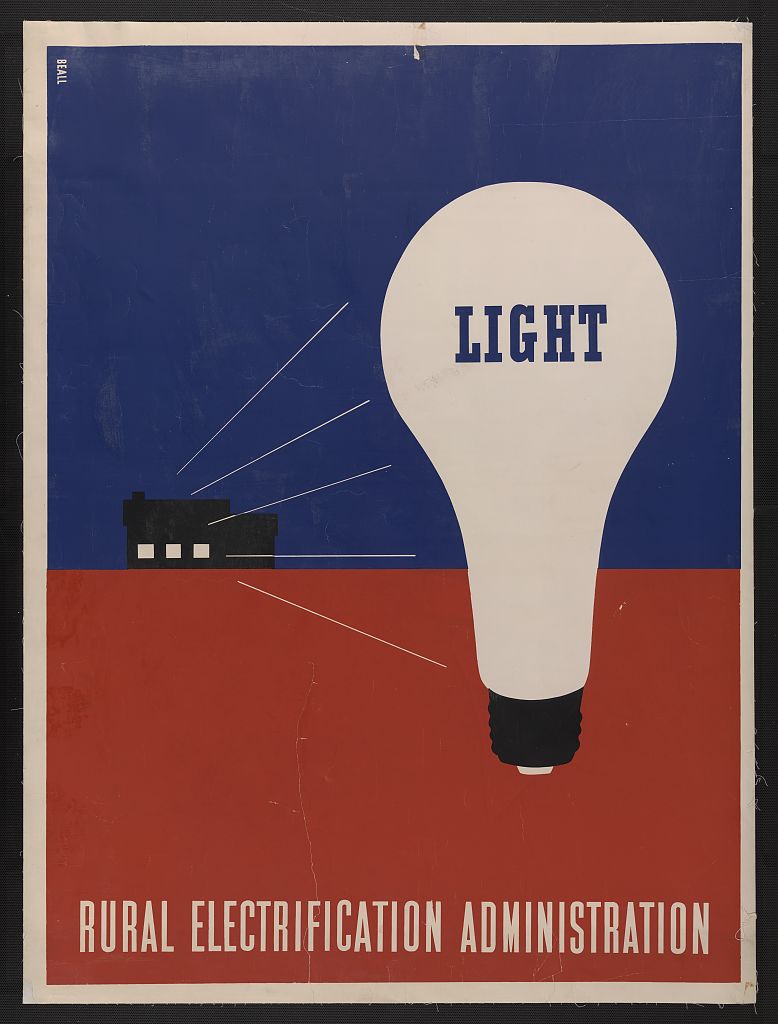
The creation of the Rural Electrification Administration (REA) by Executive Order 7037 followed the TVA Act in 1935. The REA, which was later incorporated into the US Department of Agriculture and became the Rural Utility Service, was established to support electrification in rural areas. When the Rural Electrification Act of 1936 provided federal loans to build electric utility systems to serve rural areas, loan applications began pouring in from farmer-based cooperatives that were cropping up across the states. In 1937, REA developed the Electric Cooperative Corporation Act as model legislation that states could adopt to enable the formation and operation of these not-for-profit, consumer-owned electric cooperatives to lead the way. Many of the same federal financing authorities and the resulting network of rural electric cooperative utilities remain today.
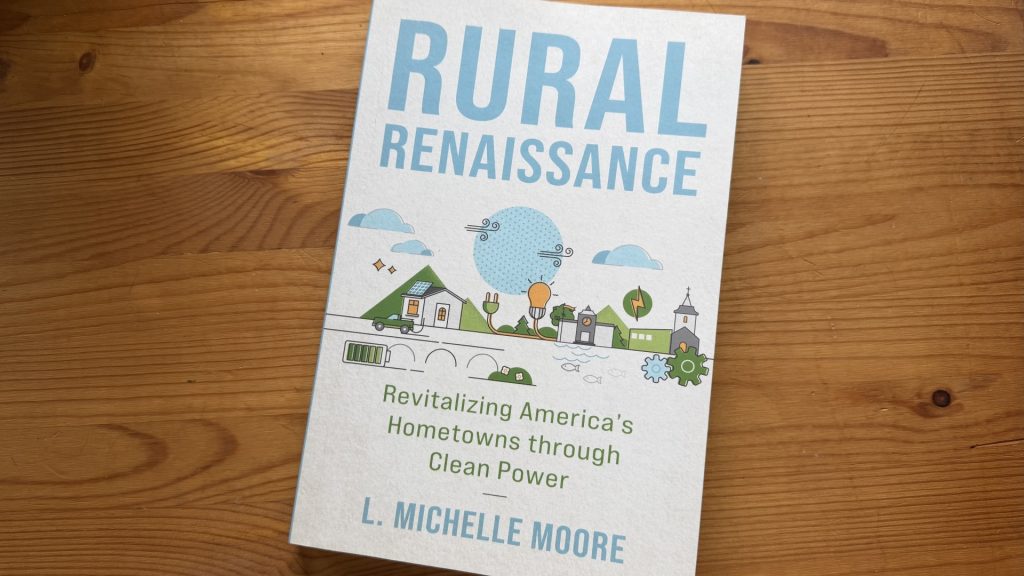
—L. Michelle Moore, Rural Renaissance: Revitalizing America’s Hometowns through Clean Power (Island Press, 2022).
Moore has provided both a deeply personal story and an informative, practical guide to local applications of renewable energy generation. The book was immediately useful to this small town and rural planner. It is our book of the month for June 2026 here at JCShepard(dot)com.
Watch for more on Michelle’s ongoing work with Groundswell Community Power on community partnerships in renewable energy.
Read the full review here from the APA Small Town & Rural Planning newsletter.
(As an Amazon Associate, we may earn commissions from qualifying purchases. Not likely, but we might. Check your local library or bookshop, too.)
.