Diary of Orrin Brown, outside White Oak, South Carolina
Fifth Part of Journal
Wednesday–Feb. 22nd
We were on the road at 6 AM marched out 4 or 5 miles and haulted for one of the other divisions to pass. Started up again and passed through White Oak Station on the Charleston and Richmond R. R. about 10 AM. We marched about 10 miles and went into camp about 5 Pm in a little grove. I got my things carried in the Ambulance today. The weather was quite cool AM but warm and pleasant PM.
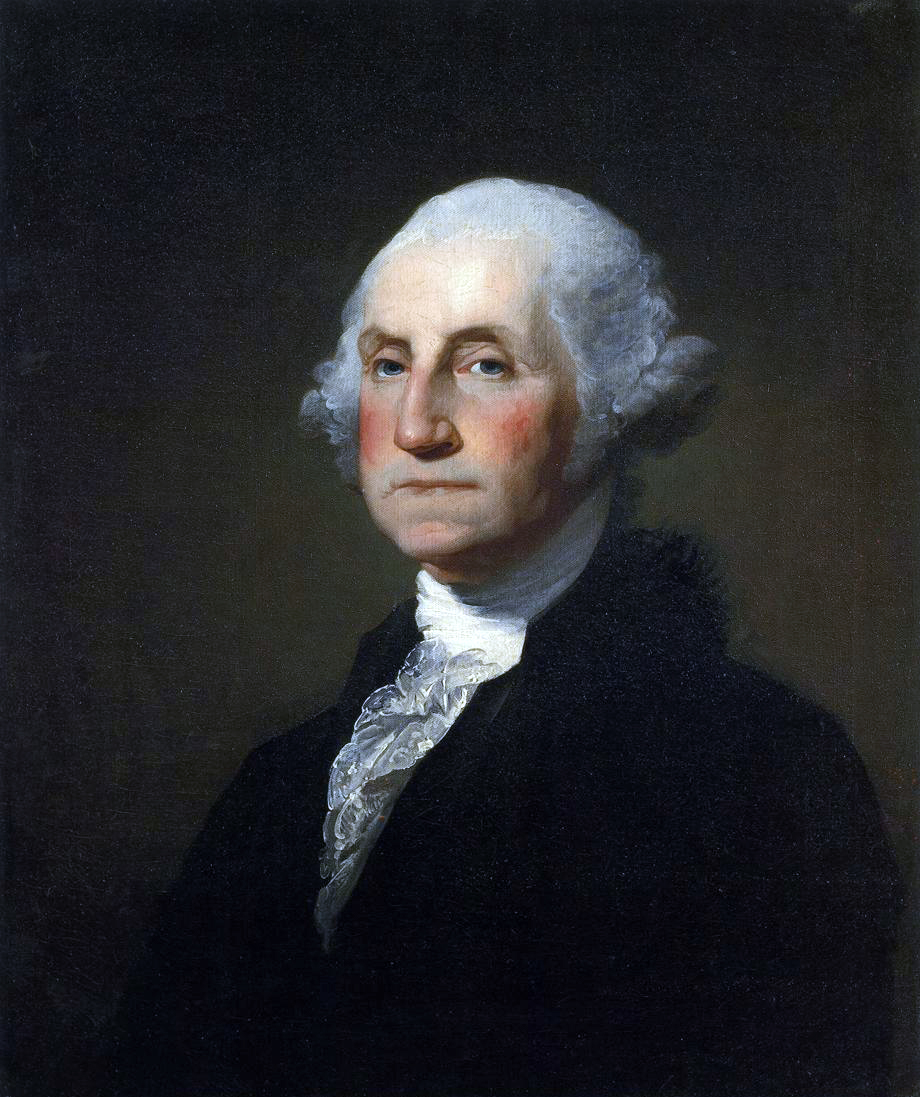
Happy birthday to George Washington
The first President of the United States, George Washington, was born on the 22nd of February 1732 (or 11 February 1731 by the Julian calendar used until c.1752). The Father of our Country was also a member of the Southern landed gentry, born on a family plantation at Pope’s Creek in Westmoreland County, Virginia. The Washington family had held the estate on the Potomac River downriver from the location of Mount Vernon since 1674. President Washington passed away in 1799 at Mount Vernon.
Fun fact: George Washington is my 11st cousin 9x removed. Our common ancestor is Thomas Holland/Holand KG (c. 1350-1397)
Washington’s image was appropriated by both North and South during the Civil War. While he owned slaved who worked his plantation, he came to oppose slavery and freed his slaves in his will (although his wife, Martha, did not free hers from her former marriage). Abraham Lincoln claimed Washington’s support for Union in his 1860 Cooper Union address in New York City. Jefferson Davis likewise claimed Washington’s Revolutionary mantle for the Confederate States in his 1861 inauguration.
Many of Washington’s family in 1861 did stand with Virginia and the Confederacy. John Augustine Washington III, the last private owner of Mount Vernon, was Robert E. Lee’s aide-de-camp. Lee himself had strong connections to Washington: Lee’s father “Light Horse” Harry Lee was a trusted aide of Washington, and his wife was the daughter of Washington’s adopted son. Before the war, Lewis William Washington, a descendant of George’s older brother Augustine, was taken hostage by John Brown at Harpers Ferry, and was a key witness at Brown’s trial. Lewis’ son James Barroll Washington served as aide-de-camp to Gen. Joseph E. Johnston.
The Federal Idea
While it may seem obvious to some that Washington’s loyalty would lie with Virginia and the South, during and after the Revolution he consistently supported the Federal idea. He was instrumental in forging a Continental Army out of the odd assortment of militias. A weak Federal government under the Articles of Confederation led to the Constitutional Convention, of which Washington was elected President, and then to being unanimously elected President of the United States in 1789. Then again, during the Whiskey Rebellion, Washington directly led troops into the field in 1794 to enforce federal authority. As Robert E. Lee’s own father eulogized in the United States Congress, Washington was “a citizen, first in war, first in peace, and first in the hearts of his countrymen.” And his country was America.
Read More:
- The Return of George Washington: 1783-1789 by Edward J. Larson (William Morrow, 2014) “…revealing how Washington saved the United States by coming out of retirement to lead the Constitutional Convention and serve as our first president.”
- The Man Who Would Not Be Washington: Robert E. Lee’s Civil War and His Decision That Changed American History by Jonathan Horn (Scribner, 2015)
- Sherman’s March Through the Carolinas by John Gilchrist Barrett (Univ North Carolina Press, 1956)
- Fierce Patriot: The Tangled Lives of William Tecumseh Sherman by Robert L. O’Connell (Random House, 2014)
- The March to the Sea and Beyond: Sherman’s Troops in the Savannah and Carolinas Campaigns by Joseph T. Glatthaar (New York University Press, 1985)
- The Memoirs Of General William T. Sherman by W.T. Sherman (Library of America, 1990)
(As an Amazon Associate, we may earn commissions from qualifying purchases. Check your local library or bookshop, too.)
.