

Diary of Orrin Brown, Savannah, Georgia
Saturday–Jan. 7th
We found a heavy frost in dixie this morning but the wind has gone down and we have had a very nice day. We were out on drill an hour today. I wrote a ltter to A. W. Brown. It is getting quite cool again this evening, we received this evening for our Brigade to be ready to march at 6.30 AM tomorrow, we are going out 7 miles to guard a drove of Cattle to stay two days, we heard a very comical war speech from the Rev. Mr. Chaplain in a Mass Regt. He spoke about two hours and cracked a good many sharp jokes, which made it very interesting to the soldier boys for they are all fond of a good joke at any time.
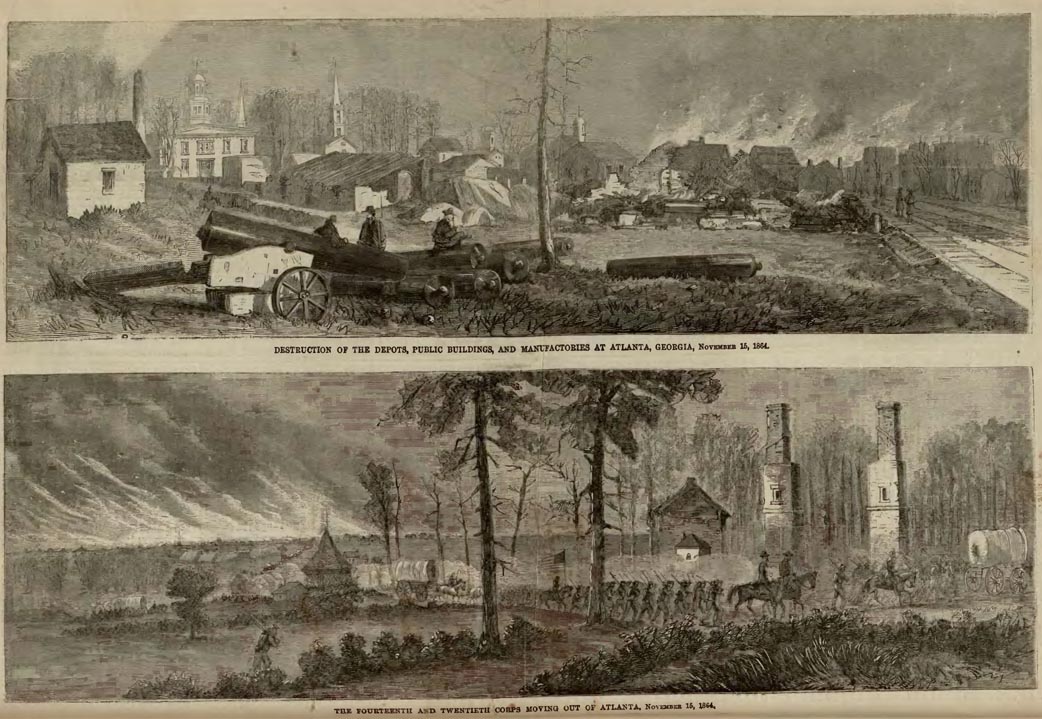
On this date in 1865, Harper’s Weekly dedicated much of it’s edition, including sketchings, to Sherman’s March in Georgia. Harper’s Weekly was the most widely read illustrated news magazine in the United States during the Civil War and became a major shaper of Northern public opinion about the conflict, slavery, and national politics. Published out of New York by Harper & Brothers, it combined battlefield reporting, political commentary, and powerful imagery that gave many Americans their first “visual” experience of the war.
For six weeks, the Federal army had been virtually on press blackout, cut from their rear supply lines back to Tennessee, until they reached Savannah and the Atlantic fleet. Six weeks. Today our 24/7 news cycle gets apoplectic when the government fails to issue a press release every 6.9 seconds it seems. Six weeks would be an eternity.
Read More:
- Fierce Patriot: The Tangled Lives of William Tecumseh Sherman by Robert L. O’Connell (Random House, 2014)
- The March to the Sea and Beyond: Sherman’s Troops in the Savannah and Carolinas Campaigns by Joseph T. Glatthaar (New York University Press, 1985)
- The Memoirs Of General William T. Sherman by W.T. Sherman (Library of America, 1990)
(As an Amazon Associate, we may earn commissions from qualifying purchases. Check your local library or bookshop, too.)
.
