

How Rural America Is Balancing Clean Energy, Conservation, and Community
This is the second installment in JCShepard.com’s October energy series, exploring how the clean energy transition is reshaping rural communities. Last week, we examined global energy trends and how data centers and AI are driving unprecedented electricity demand in America’s heartland. In this post, we dig into how rural communities can shape the wind energy transition—rather than simply respond to it.
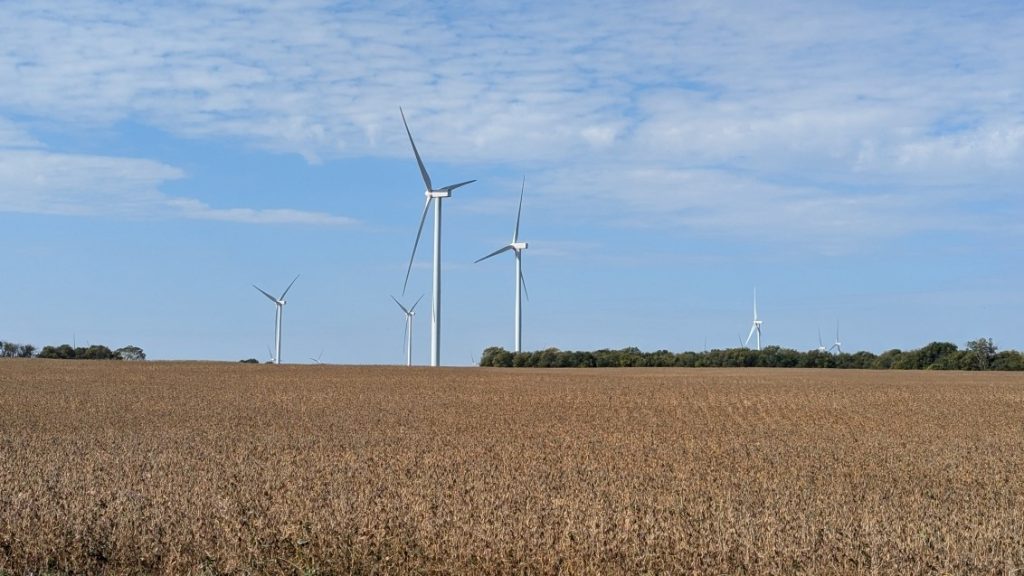
A New Era for Rural Wind Energy
Wind power is often celebrated as a rural success story—and for good reason. Small-scale wind generators can power homes and farms located far off the electric grid. Utility scale wind generates steady income for landowners, creates local jobs, and supplies tax revenues for schools and infrastructure. But as wind projects scale up and compete with other land uses, rural counties are finding themselves at the center of complex regulatory, ecological, and social trade‑offs.
The question is no longer if wind energy will expand—but how, and who gets to decide.

Wind’s Growing Role, in Numbers and Territory
The US Energy Information Administration (EIA) notes: “Good places for wind turbines are where the annual average wind speed is at least 9 miles per hour (mph)—or 4.0 meters per second (m/s)—for small wind turbines and 13 mph (5.8 m/s) for utility-scale turbines. Favorable sites include the tops of smooth, rounded hills; open plains and water; and mountain gaps that funnel and intensify wind.”
Economic Lifeline — Beyond the Basics
Wind energy production facilities do more than spin turbines. In many rural counties, they serve as economic anchors—bringing long-term, diversified income to communities often reliant on volatile commodity markets.
Landowners hosting utility-scale wind gneration frequently receive annual lease payments ranging from $5,000 to $10,000 per turbine in modern contracts, with older agreements still reflecting $3,000–$5,000 per turbine. These payments can make or break small farms, offering a steady, non-agricultural income buffer during crop price slumps or extreme weather seasons.
Counties benefit, too. Wind projects generate substantial local tax revenues—even though turbines occupy only a small fraction of the land they sit on. Nationally, lease payments and tax revenues from wind and solar projects contribute over $3.5 billion annually, a majority of which flows directly to rural jurisdictions.
But the economic impact doesn’t stop at the landowner’s gate:
- Construction contracts inject short-term spending into local hotels, restaurants, and supply chains.
- Ongoing maintenance jobs offer stable, well-paying employment with lower barriers to entry than many tech-sector roles.
- Local service providers—from road builders to electricians—see increased demand during and after installation.
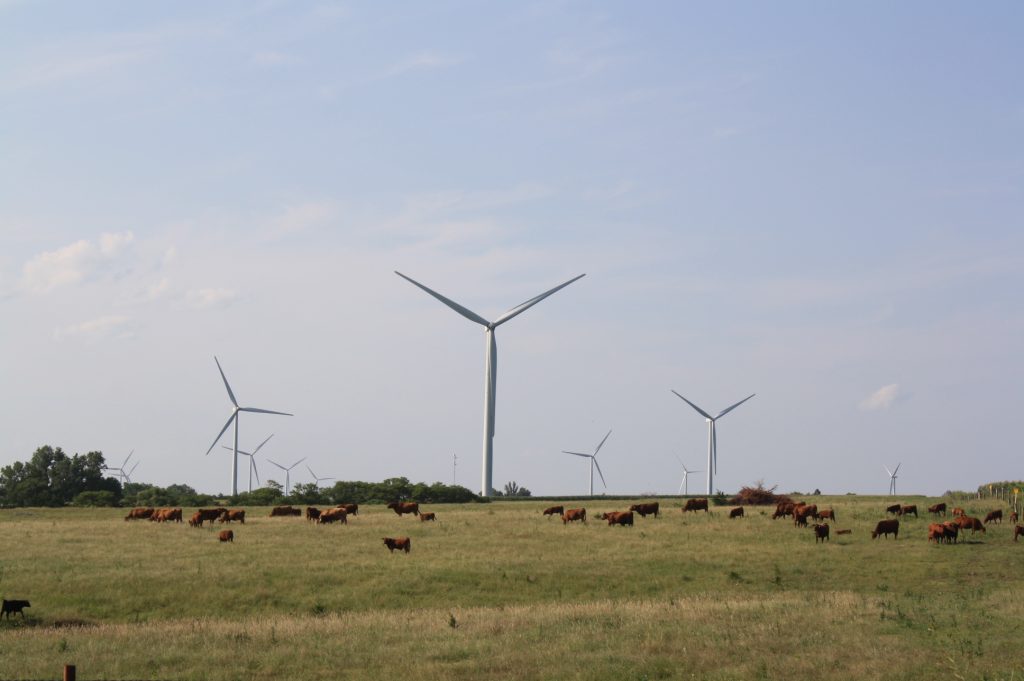
While wind turbines can be seen from a long distance, wind farms are land-efficient: turbine pads and access roads typically remove just 1–3% of a parcel from productive use. The remaining acreage often remains in row crop production or livestock grazing, preserving agricultural continuity even as new energy infrastructure is built.
Economic Impact in Minnesota
Across rural Minnesota, for example, renewable energy is providing thousands of jobs, generating billions in investment, delivering major tax revenues for rural counties, and supporting local landowners and communities through lease payments and infrastructure funding. The Southwest Regional Development Commission (SRDC), based in Slayton, Minnesota, has played a central role in facilitating wind energy development across southwest Minnesota, acting as a convener, technical resource provider, and advocate for local communities in the region. SRDC supports the Rural Minnesota Energy Board (RMEB), an 18-county collaborative formed to guide renewable energy policy and resolve development barriers, especially those related to wind energy projects.
Across the state, wind energy alone supports between 2,800 and 3,000 direct and indirect jobs statewide, including positions in construction, operations, maintenance, and manufacturing (Clean Grid Alliance). Renewable energy employment, spurred by wind development, is growing much faster than the average Minnesota economy, with clean energy jobs reaching a new state record of over 62,000 in 2023, and wind being a substantial part of that total.
Wind energy projects have resulted in over $7.4 billion invested in Minnesota’s infrastructure and energy grid as of recent years. Local manufacturing is also boosted, with over 100 Minnesota companies participating in the wind energy supply chain.
Wind projects provide a sizable source of tax revenue for host counties, supporting roads, emergency services, education, and property tax relief. As Rebekah Pierce writes in her upcoming book, Agri-Energy, “wind projects alone deliver an estimate $2 billion in state and local tax payments and land lease payments each year on average.” Some companies make payment-in-lieu-of-taxes or PLT contributions to host counties as public benefits.
In Southwest Minnesota, Lincoln County, on the South Dakota border, raised nearly $4 million in taxes from wind projects in 2024, while counties like Nobles on the Iowa border raised over $2 million from wind project taxes. Annually, wind projects deliver between $7-13 million in production taxes statewide, with cumulative wind energy tax payments to rural Minnesota communities surpassing $94.4 million since 2004.
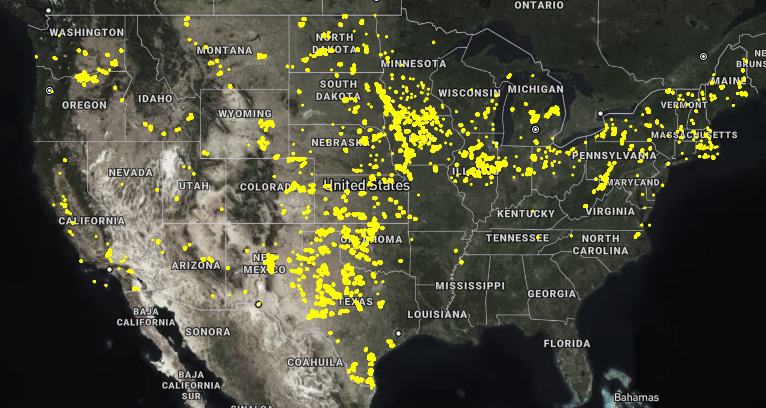
National Scale, Local Benefit
Wind is no longer a fringe energy source—it’s now a cornerstone of the U.S. renewable energy portfolio.
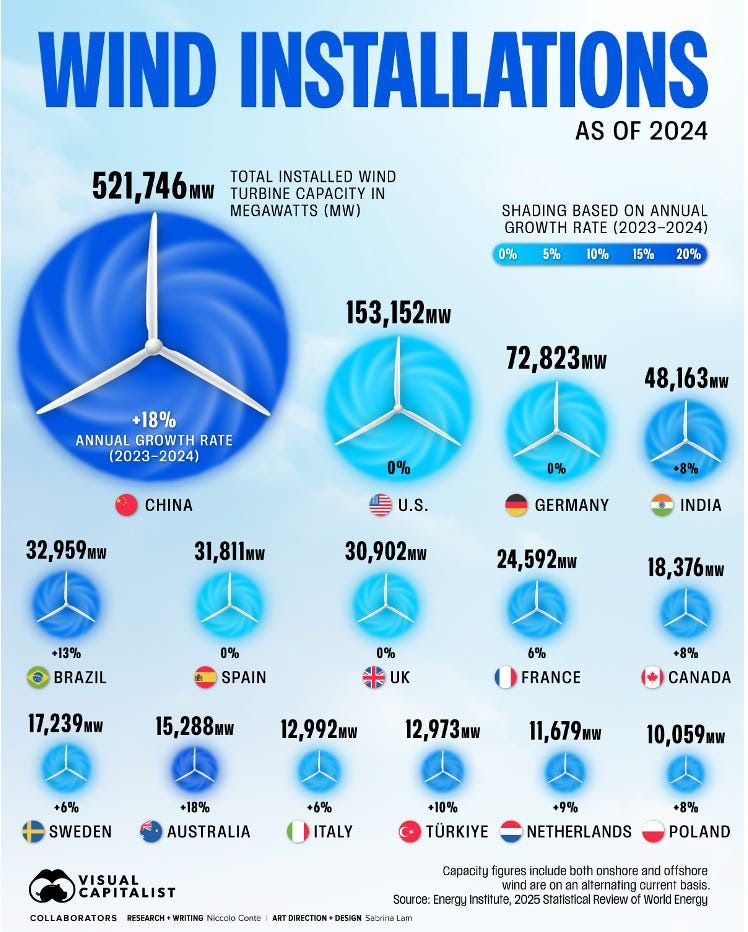
- As of 2025, the U.S. had over 73,000 wind turbines across 44 states, contributing to more than 153 gigawatts of installed wind capacity.
- Wind generated over 10% of the nation’s electricity in 2022, according to the U.S. Energy Information Administration.
- Texas, Iowa, Oklahoma, Kansas, and Illinois lead the nation in electricity generation from wind—with Texas alone hosting over 19,400 turbines, more than the next three states combined.
Growth isn’t limited to the Great Plains. Projects are increasingly appearing in non-traditional geographies: Michigan and Ohio are adding to Illinois’ wind capacity in the Great Lakes region. Pennsylvania and West Virginia are harvesting wind in the Appalachian foothills. The coastal corridors in the Northeast are adding both off-shore and on-shore wind generation.
It may seem at the Federal level in the US that renewable energy has become a partisan issue. The previous Administration passed generous incentives while the current Administration claws them back—Congress ebbs and flows as politicians are apt to do. Yet here in the Midwest, GOP leaders have been among the strongest proponents of letting rural communities capitalize on investments in energy generation. It’s the “all of the above” perspective. As the Wall Street Journal reported this week:
Iowa alone has more than 100 large wind farms and two new projects planned for delivery through 2027, according to federal data. Current Iowa Gov. Kim Reynolds, a Republican, said wind has helped keep electricity prices low.
“We don’t have gas or oil in our state, but we have renewables,” she said in an interview. “We have biofuels and we have wind. We are on a wind path. So, we can make it work for our state.”
The Journal continues: “Wind turbines, which help reduce local property taxes and make tens of millions in annual lease payments to farmers, help Iowa enjoy some of the lowest electricity prices in the nation.”
For many of these communities, wind energy represents the first major capital investment in decades—bringing infrastructure upgrades and new tax revenue, but also introducing novel land use and environmental considerations.
But Growth Brings Growing Pains
As wind energy scales, so do the complexities of coexistence. The challenges are no longer just technical—they’re social, environmental, and political:
- Turbine scale and visibility: Modern wind turbines frequently exceed 600 feet (180 meters) in total height, with rotors that span longer than a football field. Their visibility alters the landscape, generating aesthetic and emotional reactions, especially in areas with deep ties to rural heritage.
- Noise and shadow flicker: Though relatively low-frequency, operational noise and shadow flicker from rotating blades can affect residents’ sense of well-being—prompting debate over measurement standards, health impacts, and appropriate mitigation.
- Land use competition: Turbine siting must balance between productive farmland, conservation corridors, and residential buffer zones. Local zoning decisions increasingly involve difficult trade-offs between preservation and progress.
- Cumulative regional impacts: In areas with multiple overlapping projects, residents may experience “turbine fatigue”, voicing concerns about overdevelopment, landscape saturation, and wildlife displacement.
- Infrastructure strain: Large wind developments stress local roads, bridges, and transmission systems, requiring upgrades and easements that may fall outside original project scopes—or burden already stretched local governments.
With wind energy poised to expand even further, rural communities must now confront a critical question: How do we integrate this opportunity without losing sight of local character, conservation, or cohesion?
That’s where wildlife protection and smarter zoning come in—providing the guardrails for growth.
Let’s take a closer look.

Wildlife at the Crossroads
Bat Mortality — The Hidden Cost
Expanding wind power means more turbines—and more interfaces between energy infrastructure and living ecosystems. Mitigating wildlife impacts, particularly on bats and birds, is now a central challenge.
Though public discourse tends to focus on bird collisions, bats account for the majority of vertebrate fatalities at many wind facilities, especially migratory tree-roosting species (hoary, silver-haired, eastern red bats).
These fatalities peak during autumn migration (July–October), when bats travel longer distances and operate more broadly at night—often at wind speeds below thresholds that trigger turbine operation. Several studies show that raising cut-in speeds (i.e. delaying turbine activation until winds exceed a higher threshold) can reduce mortality:
- A Pennsylvania site saw a 44% drop in bat fatalities when cut-in speed was moved from 3.5 m/s to 5 m/s.
- In broader reviews, curtailment strategies have consistently reduced bat mortality by ~33–60%, and meta-analyses find average reductions of ~62% across facilities. BES Journals
But there’s no silver bullet. Curtailment reduces energy production (though often modestly), and the timing and wind thresholds must be tuned to local bat activity.
Deterrents, Detection, and Emerging Tools
To go beyond curtailment, researchers and developers are experimenting with supplementary technologies:
- Ultrasonic acoustic deterrents aim to “jam” bats’ echolocation systems, discouraging them from entering the risk zone. Some field trials report fatality reductions of 50–78% for species like Lasiurus cinereus and Tadarida brasiliensis. ScienceDirect
- However, results are mixed. A 2025 study in Ohio found no additive benefit when combining deterrents with curtailment, and in some cases, mortality of eastern red bats doubled under deterrent regimes. PLOS
- Radar, cameras, and real-time detection systems can trigger temporary shutdowns during bird flocks or rare passes. These systems incur cost, complexity, and false positives.
- TIMR (Turbine Integrated Mortality Reduction) systems—which modulate blade motion or airflow—are in early deployment phases and show promise (e.g. mortality decreases >80% in pilot trials), but broad-scale validation is ongoing.
The takeaway: combining smart curtailment, targeted deterrents, and adaptive management is likely the most viable path forward—but only if the biology, site conditions, and species mix are well understood.
Birds, Raptors, and Habitat Fragmentation
Bird collisions—especially of raptors and migratory species—remain a regulatory and reputational risk. Species like golden or bald eagles demand high scrutiny: even a single fatality can trigger strict mitigation obligations under federal law. The Sierra Club estimates up to a million or more birds are killed by wind turbines each year, although many more are killed by power lines and other artificial causes. The American Bird Conservancy and wind energy experts are working to reduce the rate with alternatives such as “No-blade” wind turbines.
Beyond direct collisions, wind development can fragment habitats, interrupt migratory corridors, degrade pollinator networks, and alter ecological connectivity. These cumulative and landscape-scale effects require ecosystem-level planning, not just turbine-by-turbine assessments.
In the heart of the Central Flyway critical habitat for migratory birds, the University of Nebraska’s Wind Energy and Wildlife Project recommends collaboration among stakeholders to reduce impacts on wildlife and habitat. “Guidelines for Avoiding, Minimizing, and Mitigating Impacts of Wind Energy on Biodiversity in Nebraska” have been developed by the Nebraska Wind and Wildlife Working Group. The guidelines recommend prioritize siting wind energy facilities on already cultivated or disturbed lands, away from large, intact native habitats and major wildlife corridors, and buffering key ecological areas. Infrastructure designs can minimize wildlife risks, such as tubular towers, buried powerlines, and reduced lighting.
Mitigation Strategies: Methods, Trade-Offs, and Challenges
To reconcile energy deployment with wildlife protection, developers and planners are experimenting with a variety of mitigation approaches. Here’s a deeper look:
| Strategy | How It Works | Effectiveness & Challenges |
|---|---|---|
| Curtailment / Cut-in speed adjustments | Turbines are temporarily shut down, or only activated above higher wind speed thresholds during bat‑active months. | Shown to reduce bat fatalities by 33%–93% when tuned properly. However, increased cut-in speeds reduce energy yield slightly—though studies often show minimal revenue loss. |
| Ultrasonic deterrents | Emit high-frequency sound to deter bats from entering the rotor-swept zone. | Some trials report >50% reductions in bat activity within ~20 m of the turbine. But effectiveness is variable by species and site. |
| Radar, camera, and detection systems | Detect incoming birds or bats in real time and trigger temporary shutdowns. | Useful for rare or high-risk events (flocks, raptor passes). Adds system complexity, sensor cost, and false positives. |
| Habitat restoration & compensatory corridors | Improve or protect habitat in other areas to offset local impacts. | Helps biodiversity resilience regionally but does not directly prevent collisions under turbines. |
| TIMR (Turbine Integrated Mortality Reduction) | A technology that modulates blade motion or airflow to reduce risk. | Early tests show dramatic reductions—for example, an 85% drop in bat fatalities at one test site—but broader validation is still ongoing. |
Sources
Bat Mortality Studies
– PMC: Wind energy and bat fatalities – a global review
– Journal of Wildlife Management – Curtailment effectiveness
– The Wildlife Society – Effects of Wind Turbine Curtailment on Bird and Bat Fatalities
Bird and Raptor Impacts
– Engineering.com – The realities of bird and bat deaths by wind turbines
– Knowable Magazine – Wind turbines and wildlife
– Sustainability by Numbers – How many birds do wind farms kill?
Deterrent & Detection Technologies
– Tethys PNNL – Ultrasonic deterrents summary
– Renewable Energy Wildlife Institute – TIMR blade technology
Federal & State Guidance & Tools
– WindExchange – Bats and Wind Energy
– Nebraska Wind and Wildlife Working Group, Guidelines for Avoiding, Minimizing, and Mitigating Impacts of Wind Energy on Biodiversity in Nebraska (PDF), 2018
Zoning: The Rural Regulatory Frontier
As wind development expands across rural America, the zoning conversation is no longer just about land use—it’s about control, equity, and long-term sustainability. While wind power offers undeniable economic benefits, the rules that shape where and how projects are built are increasingly under scrutiny. Property rights are a major concern for rural property owners, yet whose property rights will prevail? Those who want to lease their land for energy development, or those who do not want to have to live next to energy development?
For local leaders, understanding this evolving regulatory landscape is crucial.
A Patchwork of Local Rules
Over 1,800 local wind ordinances now exist across the U.S., reflecting a vast diversity in approaches to setbacks, noise limits, environmental review, and more. Some counties rely on basic agricultural zoning, while others adopt sophisticated frameworks tailored to renewable energy. Still, many rural areas operate in legal gray zones, with outdated or incomplete ordinances that leave projects vulnerable to opposition—or delay.
Setbacks—the minimum distance turbines must be from homes, roads, or property lines—vary from 1.1 times turbine height to over a mile. Noise standards, flicker limits, wildlife protections, and decommissioning rules are all treated differently across jurisdictions. The result is a fragmented system where one county welcomes wind and its neighbor is much more skeptical.
The Setback Debate: Safety or Stalling?
Setbacks are one of the most debated zoning tools in rural wind development.
- Supporters of larger setbacks say they protect residents from turbine noise, visual impacts, and shadow flicker. These measures can preserve rural character and minimize conflicts.
- Critics argue that overly restrictive setbacks function as de facto bans, excluding vast swaths of land from development without outright prohibitions. This can reduce tax revenues, limit landowner autonomy, and discourage developers from even submitting proposals.
Some counties use setbacks strategically—tightening them to discourage wind projects without passing formal prohibitions. Others experiment with tiered or flexible setbacks, adjusting distances based on participation status, turbine size, or landscape context.
Source: AWEA
Dark Skies, Noise, and Shadow Flicker: The Limits of Measurement
Tall structures like wind turbines and meteorological towers are required to have night lighting to warn aircraft to their presence. Large wind farms can create visual blight, with blinking lights obscuring the night skies. Aircraft Detection Lighting System (ADLS) are an intelligent lighting control solution for wind turbines that activates obstruction lights only when aircraft are detected in proximity, thereby minimizing unnecessary nighttime light pollution and preserving dark skies for nearby communities.
Standard noise limits for wind turbines hover around 40–50 decibels (dBA) at the property line. That’s roughly the ambient sound of a quiet office—but perceptions vary. What sounds like a faint hum to one person might be a persistent nuisance to another. Enforcement can be difficult, especially when complaints arise long after construction.
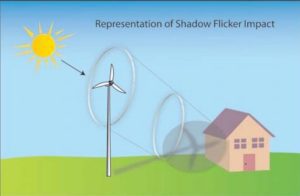
Shadow flicker—the strobing effect caused by rotating blades casting shadows on homes—has its own set of limits, often capped at 30 hours per year per structure. This phenomenon typically occurs when the sun is low in the sky—during early morning or late afternoon—and is most noticeable within about 1 to 1.5 kilometers of the turbine when there is an unobstructed view between the turbine and a building or receptor. Shadow flicker from wind turbines can distract drivers if the moving shadows pass across roads at certain times of day or year, creating a flickering pattern that changes as vehicles move through the area.
Many communities simply prohibit shadow flicker impacting homes or roads. Simulation models can help anticipate trouble spots, but real-world experiences often diverge from projections. These effects can be mitigated through smart siting and turbine shut-off protocols, but again, they add cost and complexity.
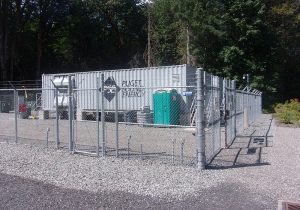
The Rise of BESS: Zoning for Energy Storage
As wind (and solar) projects increasingly add Battery Energy Storage Systems (BESS), zoning ordinances must address a new set of challenges.
Unlike turbines, BESS units are compact but chemically intensive. They require zoning rules that consider:
- Fire risk and thermal separation
- Chemical containment and environmental review
- Emergency access and response planning
- Visual screening and fencing
In many rural counties, these regulations are still catching up to the technology. Some jurisdictions bundle wind and storage into unified renewable energy ordinances. Others treat BESS separately, requiring distinct permits or conditional use reviews.
(Source: Ross and Vadli, Battery Energy Storage Systems, APA Zoning Practice, 2024)
Planning Ahead: Smart Zoning Strategies
Rather than react to each new proposal, rural leaders can take a proactive approach to wind zoning by:
- Working together over the long haul. Bring everybody together early, including the local Planner, Road Superintendent or County Engineer, Fire Chief, Emergency Manager, and others who will have to deal with a wind project over its useful life.
- Allowing tiered permitting, where small-scale or community wind is fast-tracked, and larger projects face fuller review.
- Creating overlay districts tailored to renewable energy may be a way to implement standardized permitting and performance-based setbacks.
- Incorporating post-construction monitoring and adaptive rules for flicker and noise.
- Developing regional zoning alliances with neighboring counties to reduce inconsistencies and attract responsible developers.
- Including BESS-specific provisions for safety, decommissioning, and lifecycle management in all wind-related ordinances.
One approach to more transparent regulation is to group renewable energy requirements in one discreet article in the local zoning code. The model we are working with includes:
- General Purpose. Group common renewable energy definitions and illustrations—a picture really is worth a thousand words.
- Battery Energy Storage Systems (BESS). Industry leaders suggest separating BESS regulations into Tier 1 (mostly small in-home devices) with minimal regulations, and Tier 2, with larger-scale energy capacity.
- Solar Energy Generation (SEG). As with BESS, break Solar regulations into small-scale (roof-top) for net metering and larger commercial and utility-scale operations. More on this topic in next week’s blog!
- Wind Energy Conversion Systems (WECS). Again, break down wind generation into small wind (generally under 100 kw eligible for net metering) and larger commercial and utility-scale wind turbines, in particular aggregated projects.
- Decommissioning. As solar farms have grown larger, the decommissioning process has converged with the established processes for WECS projects. A common process, negotiated up-front with bonded financial guarantees, removes uncertainty for all parties, public and private.
Final Thoughts on Zoning
Zoning isn’t just paperwork—it’s the framework that determines who benefits from wind energy, who bears the risks, and how rural communities grow. Zoning must have a rational basis, grounded in solid, well-researched comprehensive planning. In a moment when energy, environment, and economy are more intertwined than ever, smart zoning can be the linchpin of successful rural energy transitions.
Sources & Further Reading
U.S. Geological Survey’s U.S. Wind Turbine Database
Department of Energy: Local Wind Ordinances Database
Pacific Northwest National Laboratory (PNNL): Restrictions in Local Zoning for Wind and Solar Projects
Center for Rural Affairs: Wind Energy Ordinances: A Guide for Rural Communities
U.S. Department of Energy – WINDExchange: Noise and Shadow Flicker Resources
Michigan Sea Grant: Wind Power and Human Health and West Michigan Wind Assessment
APA Zoning Practice Battery Energy Storage Systems
University of Michigan Graham Sustainability Institute: BESS Guide for Local Officials
Foley Hoag LLP: Permitting Perils: Navigating Zoning Law Challenges for Battery Energy Storage Projects
US EPA: Battery Energy Storage Systems: Main Considerations for Safe Installation and Incident Response

Case Study: Altamont Pass, California — Repowering a Legacy Landscape
Nestled in the rolling hills of California’s East Bay, the Altamont Pass Wind Resource Area is both a landmark and a lesson. One of the first large-scale wind energy sites in the United States, Altamont Pass came online in the early 1980s, during the country’s first push toward renewables. For decades, it delivered clean energy to the grid—but at a high ecological cost.
A Collision of Energy and Ecology
From the start, the site became notorious for its impact on wildlife. With almost 5,000 small, fast-spinning turbines densely packed along key raptor migration corridors, Altamont Pass saw thousands of bird deaths each year—including golden eagles, red-tailed hawks, and burrowing owls. These weren’t just isolated incidents. Long-term studies showed persistent mortality, raising legal and ethical questions that could no longer be ignored.
Public concern mounted, and lawsuits followed. Residents voiced frustration not only over wildlife losses but also about noise, visual clutter, and degraded landscapes. What had once symbolized environmental progress now stood as a cautionary tale of outdated technology clashing with ecological reality.
A Turning Point: Repowering with Purpose
The breakthrough came not from abandoning the site—but from rethinking it. In a coordinated effort between developers, government agencies, and conservation groups, Altamont Pass underwent one of the most ambitious wind repowering efforts in the country.
Rather than simply upgrading technology, the process started with wildlife data.
- Thousands of legacy turbines were removed, replaced by a few hundred modern units—each more efficient, slower-rotating, and strategically sited to avoid key flight paths.
- The result: fewer turbines, more power, and dramatically lower bird fatalities—with some estimates showing a 50–80% reduction in raptor mortality.
Monitoring, Mitigation, and Mutual Trust
Repowering was just the start. Long-term wildlife monitoring programs were established to track population trends and turbine impacts over time. Seasonal curtailment strategies—temporarily halting turbines during peak migration periods—were introduced to further reduce risk.
Equally important was community engagement. The project team partnered with groups like the Audubon Society, U.S. Fish and Wildlife Service, and local stakeholders to ensure transparency and build support. Public input informed siting decisions, mitigation plans, and visual screening efforts. In parallel, mitigation funding supported offsite habitat restoration, helping to compensate for historical damage.
Local Benefits and Broader Lessons
By reconfiguring the site, the project brought new life to an old energy landscape:
- Local contractors and workers benefited from construction and operations jobs.
- Tax revenues flowed back into nearby communities.
- Residents who once opposed the project began citing it as a success story.
Today, Altamont Pass is no longer seen as an environmental liability. Instead, it’s a living example of how wind energy can evolve—technically, ecologically, and socially.
What Rural Leaders Can Learn
The Altamont case offers three powerful takeaways:
- Start with science. Planning for wildlife protection from the outset prevents conflict and improves outcomes.
- Repowering is a second chance. Outdated infrastructure doesn’t have to be abandoned—it can be redesigned with today’s best practices.
- Partnerships build resilience. Bringing together regulators, conservationists, developers, and communities creates better projects—and broader trust.
In an era where rural zoning, conservation, and clean energy increasingly intersect, Altamont Pass reminds us that old mistakes can lead to new models—if we’re willing to learn and adapt.

Leading the Way: Three Steps for Rural Wind Zoning
For rural leaders navigating the wind energy boom, the key is proactive, inclusive planning. Here’s how to get started:
| Step | What to Do | Why It Matters |
|---|---|---|
| 1. Assess Your Local Context | Map wildlife corridors, agricultural lands, and residential areas. Identify potential conflicts early. | Prevents costly delays and builds trust with developers and residents. |
| 2. Engage Stakeholders Early | Host public workshops, involve conservation groups, and consult with neighboring counties. | Ensures diverse perspectives are heard and reduces opposition. |
| 3. Adopt Flexible, Science-Based Zoning | Use adaptive setbacks, curtailment, and wildlife monitoring. Consider co-locating BESS for grid benefits. | Balances energy goals with environmental and community needs. |

International Context & Innovation Highlights
Wind energy is a global phenomena. In the current political environment in the US, it will be increasingly important to watch renewable energy trends overseas.
- European or Danish wind co-op models: communities that co-own wind projects and share returns
- Floating wind turbines: promising for coastal or lakefront zones
- Turbine blade recycling: new methods like pyrolysis or composite reuse
- Wooden towers: modular laminated timber towers reduce visual impact and transportation challenges
- AI & predictive systems: real-time wildlife detection, operational optimization, and condition monitoring
Many scientists believe climate change may shift wind patterns over coming decades, complicating long-term planning. Modeling shows that grid and fuel mix also influence how effectively renewables displace emissions. arXiv
A Glimpse Ahead: Wooden Wind Towers and the Next Generation of Rural Innovation
As rural communities take the lead in clean energy adoption, the future of wind infrastructure is also being reimagined—right down to the materials. Swedish startup Modvion has developed modular, engineered wooden wind turbine towers that offer a more sustainable and logistically flexible alternative to steel.
These laminated wood structures are not only lighter and easier to transport through narrow rural roads, but also emit up to 90% less carbon during production. Their latest tower design stands 119 meters tall and supports a 6.4 MW turbine—demonstrating that wooden towers are no longer conceptual novelties, but real contenders in utility-scale development.
For rural counties navigating siting, permitting, and land use challenges, innovations like this could offer new options—especially in areas where transportation logistics, local sourcing, or visual impact are key concerns.
Source: IEEE Spectrum – Wooden Wind Turbine Towers Reach New Heights
Conclusion: Wind Energy’s Rural Future
Rural America stands at the crossroads of wind energy development, conservation, and community planning—facing challenges that demand more than a one-size-fits-all approach. Wind projects bring undeniable economic benefits, yet they also introduce complex ecological and social questions, from wildlife mortality to property rights disputes. The lessons of landmark sites like Altamont Pass underscore the importance of science-driven planning and adaptive management—proving that old missteps can inspire innovation and resilience when communities commit to learning and collaboration.
Today, the new rules of rural zoning must balance the interests of landowners, neighbors, and the broader ecosystem. Effective ordinances neither rubber-stamp developments nor impose blanket bans, but instead draw on wildlife science, transparent community engagement, and flexible, evidence-based standards for setbacks, noise, and mitigation. Incorporating the latest technologies—such as curtailment, detection systems, and wooden turbine towers—helps rural leaders thread the needle between climate ambitions and conserving local character.
Looking ahead, the most successful rural energy transitions will stem from three principles: context-sensitive assessment, inclusive stakeholder engagement, and adaptable, science-grounded zoning. These steps empower rural communities to shape—rather than simply accept—the future of clean energy, preserving the landscapes and community bonds that define America’s heartland. As global trends and technological innovations continue to evolve, rural zoning will remain a key fulcrum, enabling local leaders to negotiate trade-offs, protect wildlife, and secure a resilient, equitable energy future for generations to come.
Coda: An energy expert explains why electricity prices keep climbing
Last week, we explored the mega-trends changing global power generation and demand, and their impacts specifically on small towns and rural places. This week, NPR talked to Robinson Meyer, founding executive editor of Heatmap News and a contributing opinion writer for The New York Times.
“The biggest driver of the run-up in electricity prices over the past four or five years is the grid itself,” Meyer said.
While power plants get most of the political attention, it’s the local distribution network of poles and wires — the “last mile” that carries electricity to homes and businesses — that has become a financial burden. Many of those lines were built nearly a century ago.
In some places, utilities are rebuilding them after hurricanes, wildfires or floods. In others, they’re replacing decaying equipment. And increasingly, new lines must be buried underground or reinforced to prevent future disasters.
“It’s a cost of climate change,” Meyer said. “We’ve had the grid for a long time, and it’s time for those systems to be replaced. And unfortunately, they’re beginning to be replaced at the same time as we’re seeing rising electricity demand for the first time in the U.S. in a generation.”

Read More about Rural Wind Energy
- Agri-Energy: Growing Power, Growing Food by Rebekah Pierce (Island Press, pre-order for 20 Nov 2025 publication)
- Rural Renaissance: Revitalizing America’s Hometowns through Clean Power by L. Michelle Moore (Island Press)
Guides & Toolkits
- US Energy Information Administration (EIA): Wind explained
- National Renewable Energy Laboratory (NREL): Wind Energy Zoning Ordinances
- American Planning Association: Wind Energy and Local Government
- U.S. Fish and Wildlife Service: Wind Energy Guidelines
Funding & Technical Assistance
- USDA Energy Programs: Funding and technical assistance for energy projects and planning.
- DOE Wind Energy Technologies Office: Research, data, and community support.
- National Association of Counties (NACo): Peer learning and policy templates.
Reports & Research
- “Wind Energy and Wildlife: A Review of Impacts and Mitigation Strategies” – National Wildlife Federation
- “Local Wind Ordinances: Trends and Best Practices” – Great Plains Institute
- “Battery Storage and Wind: Co-Location Opportunities for Rural Grids” – Clean Energy States Alliance
- “Battery Energy Storage Systems” – APA Zoning Practice
Note: Opinions expressed here are those of jcshepard.com’s contributors, and not necessarily those of any employers or clients past, present, or future. If you are interested in consulting services for energy planning or zoning, contact Marvin Planning Consultants of Nebraska.

What’s Next?
Get ready for Week 3: Solar Farms and Farmland—Can Rural America Have Both?
We’ll explore agrivoltaics, dual-use solar strategies, and how communities can balance clean power and farming. Join us next Sunday for the next chapter.
What’s your community’s approach to wind energy? Share your stories or questions in the comments, or reach out to explore how your region can plan for a sustainable renewable energy future.
Looking for more?
- The New Rural Playbook: Planning Trends That Matter
- Planning with Purpose: Emerging Trends in Rural and Small Town Planning
- Thriving Together: Proven Strategies for Sustainable Rural Economies in 2025
(As an Amazon Associate, we may earn commissions from qualifying purchases. Check your local library or bookshop, too.)

1 Comment
Study documents wind regulations across all Kansas counties, can help guide energy policies nationwide
https://news.ku.edu/news/article/study-documents-wind-regulations-across-all-kansas-counties-can-help-guide-energy-policies-nationwide