
Diary of Orrin Brown, New Bern, North Carolina
Monday–Apr. 17th
We have had a very cool night and it has been cool all day with a N. E. wind I have taken a pretty bad cold in consequence so I do not feel any better than I did yesterday. We drew a cup of Been Soup for our dinner today. The Sargent that came with us went to the Hospital today.
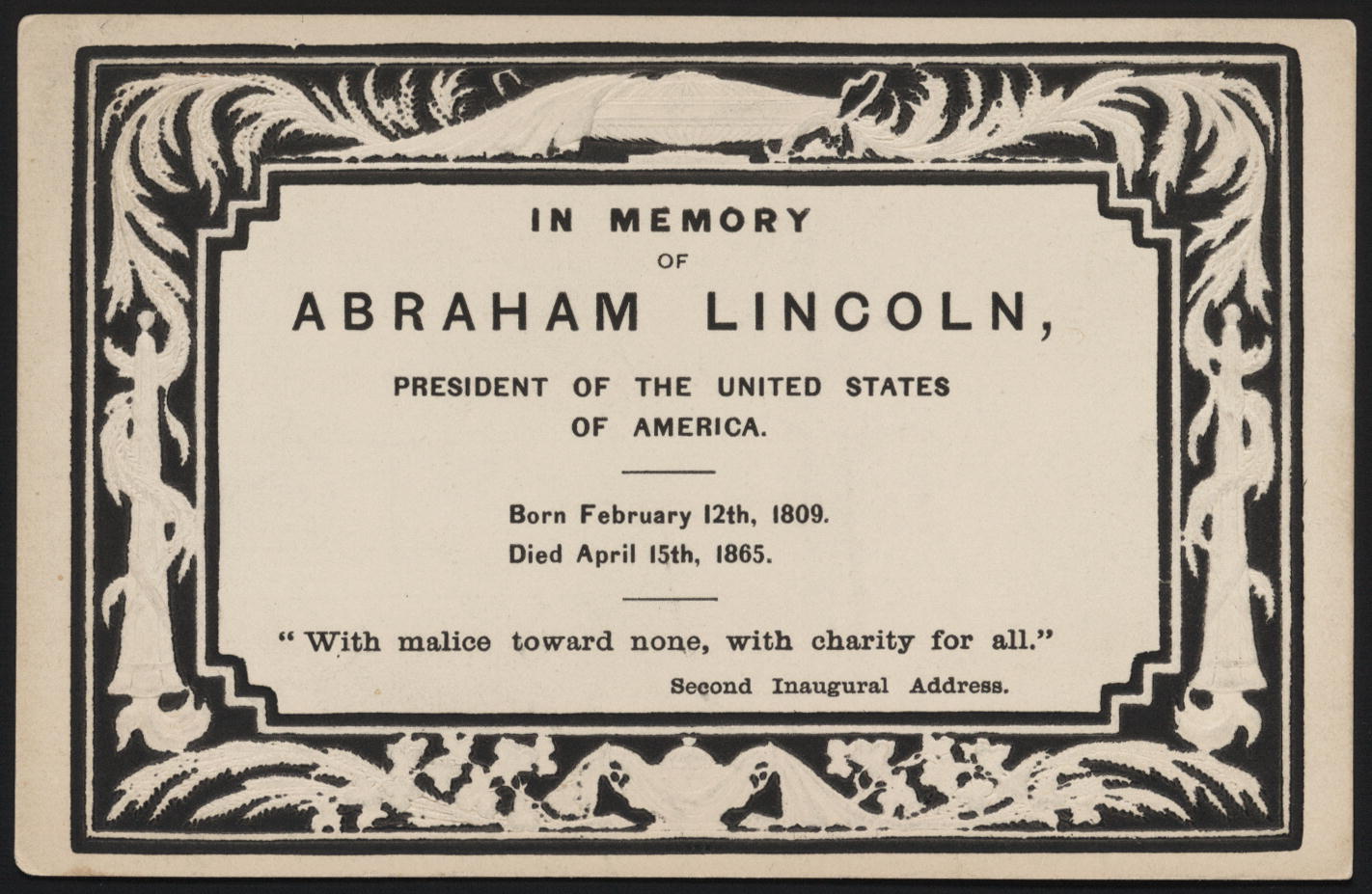
We received the sad news of the death of our President this PM which the most of the soldiers feel to be a great loss to our country just as Peace and Prosperity is about to return to our nation. The flags were all lowered to half mast. I read 3 Chapts. today.
17 April 1865 was the first time Gen. Sherman and Confederate Gen. Johnston met in person, at a farmstead near Durham, North Carolina. Angley, Cross & Hill describe the event:
News of the death of President Lincoln reached North Carolina, exciting concern about the impact on the talks and the possibility of retribution against Tar Heels by Union troops…
Just as Sherman prepared to enter the rail car to depart Raleigh for the talks, he was halted by a telegraph operator, who at that moment was receiving an urgent coded message for the general. For thirty minutes the train stood still. The message, from Secretary of War Edwin Stanton, announced the death of the president. Sherman swore the operator to secrecy and boarded the train.
Cavalry officers Gen. Judson Kilpatrick and Gen. Wade Hampton were both in attendance at the talks…to begin with. The two legendary hot heads soon got into it, and were both ordered to leave like spoiled children. Alone, Sherman shared the dire news of Lincoln’s death with Johnston, who quickly disavowed the assassination. Author Robert L. O’Connell suggests that, given their close post-war friendship, the two men likely got along from the start. Their talks would continue the next day.
News of the President’s demise was taken hard by the Union troops. If the conspirators’ aim had been to avenge the Southern cause, it seems they did the exact opposite, changing the general tiredness from four years’ constant conflict into a collective hardened heart, as reflected in many diaries and letters of the time. Yet Lincoln’s death also became a national catharsis—as Christ died for our sins, Lincoln died to save our nation.
Read More:
- Lincoln’s Peace: The Struggle to End the American Civil War by Michael Vorenberg (Knopf, 2025)
- Embattled Rebel: Jefferson Davis as Commander in Chief by James M. McPherson (Penguin Press, 2014)
- Ends of War: The Unfinished Fight of Lee’s Army after Appomattox by Caroline E. Janney (University of North Carolina Press, 2021)
- Joseph E. Johnston: A Civil War Biography by Craig L. Symonds (W.W. Norton & Company, 1994)
- Sherman’s March Through the Carolinas by John Gilchrist Barrett (Univ North Carolina Press, 1956)
- Fierce Patriot: The Tangled Lives of William Tecumseh Sherman by Robert L. O’Connell (Random House, 2014)
- The March to the Sea and Beyond: Sherman’s Troops in the Savannah and Carolinas Campaigns by Joseph T. Glatthaar (New York University Press, 1985)
- The Memoirs Of General William T. Sherman by W.T. Sherman (Library of America, 1990)
(As an Amazon Associate, we may earn commissions from qualifying purchases. Check your local library or bookshop, too.)
.

