
When the Hospital Becomes the Classroom: Bibb Medical Center and Shelton State, Alabama
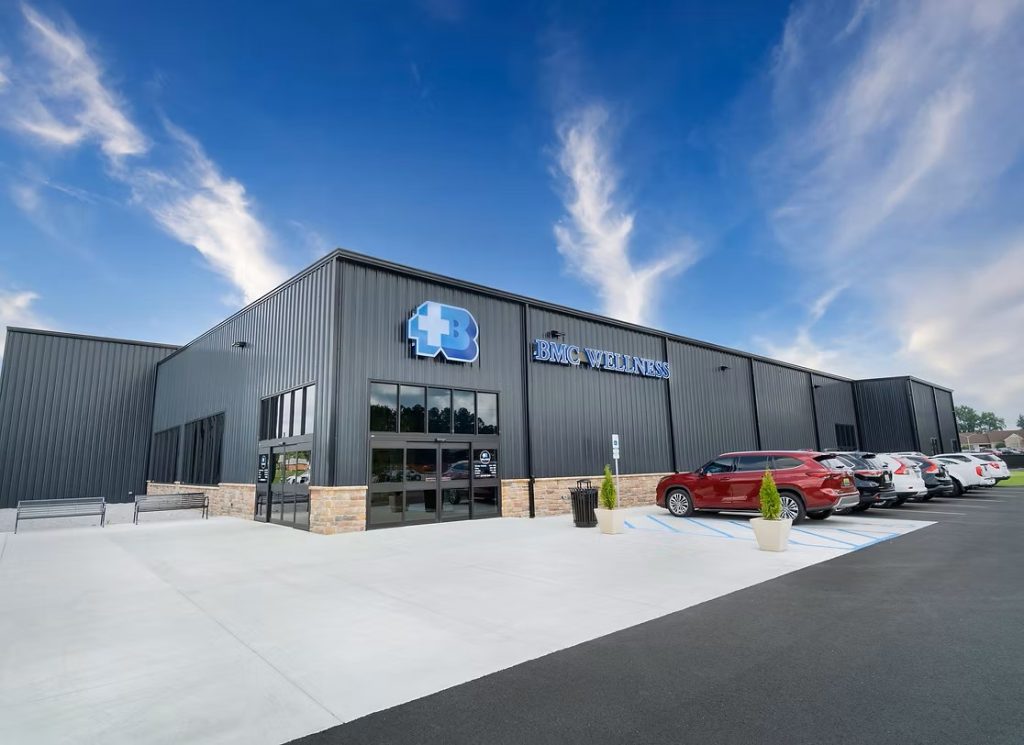
In this Rural Planning Example
| Location | Centreville, Alabama — county seat of Bibb County (pop. ~22,000; poverty rate ~20.5%) |
|---|---|
| Partners | Bibb Medical Center (BMC) + Shelton State Community College (SSCC) |
| Partnership launched | May 2022 (two years in the making); first cohort enrolled August 2022 |
| Model | BMC provides classrooms, labs, staff, scholarships, and job offers; SSCC provides accreditation and curriculum. BMC Wellness Center is an accredited campus of SSCC. |
| Program | Three-semester Practical Nursing (LPN) certificate program |
| Added layer | Alabama Student Nurse Apprenticeship: apprentices are employed by BMC, work paid clinical shifts alongside licensed nurses, and apply those hours toward their program requirements |
| First cohort outcome | 14 graduates (August 2024); 6 received BMC scholarships with 2-year employment commitment; all 14 received job offers from healthcare facilities in West Alabama |
| State context | Alabama is the first state in the nation to design a business-driven model for pre-licensure nursing apprenticeships; program grew from 2 colleges and 2 employers in May 2022 to 16 colleges, 5 universities, and 61 employers by 2024 |
| Learn more | bibbvoice.com; sheltonstate.edu; www.bmcwellness.com; birminghammedicalnews.com; accs.edu |
The community: where the need starts
Bibb County sits in central Alabama, about 35 miles south of Birmingham. Its county seat, Centreville, has a population of roughly 2,700. The county as a whole has about 22,000 residents. More than 20 percent of them live below the poverty line — a figure higher than both the Alabama state average and the national average. More than one in five children in Bibb County lives in poverty.
Bibb Medical Center is the county’s only hospital: a rural facility that serves as the primary point of care for a population that, by any measure of health determinants, faces significant challenges. Like most rural hospitals in Alabama — there are 54 rural county hospitals in the state, serving 42 of Alabama’s 58 rural counties — Bibb Medical Center has operated for years against the backdrop of a statewide nursing shortage that shows no sign of easing. The Alabama Board of Nursing estimates that RN and LPN vacancies in the state could reach 13,000 to 14,000 within a few years. Nurses are listed among the top 25 highest-demand occupations in Alabama, with more than 4,500 annual openings statewide.
For a small rural hospital in a high-poverty county, that shortage is not an abstraction. It is a daily operational reality. Every unfilled nursing position is a shift covered by overtime, a service constrained, or a patient referred elsewhere. And the conventional solution — recruit nurses from outside — has limited traction in Bibb County. The county’s median household income is $51,215. The distances to major population centres are real. The hospital could not simply outbid urban competitors for a workforce that was not being trained locally in the first place.
How the partnership came together
The partnership between Bibb Medical Center and Shelton State Community College was not a quick idea. It was, as The Bibb Voice — the county’s local news outlet — described at the announcement, “two years in the making.” Bibb Medical Center’s CEO Joseph Marchant approached Shelton State with a specific proposition: not a request for more clinical placement slots, but a structural offer. The hospital would provide the physical space — classrooms and labs at BMC’s Wellness Center — as well as hospital staff to support instruction. Shelton State would provide the accreditation, the curriculum, and the academic credential. BMC would become, in effect, an accredited campus of the college.
The proposal also included a financial commitment that went beyond what most hospital-college partnerships attempt. Bibb Medical Center agreed to cover the cost of books, tuition, school fees, and access to practice testing for enrolled students. Marchant’s framing of what the hospital was doing was deliberately simple. As he told the Birmingham Medical News: “We asked what they needed and gave it to them.”
Shelton State’s interim president at the time, Dr. Chris Cox, described the institutional logic on the college side equally plainly: “At the end of the day, a community college should focus on providing resources for its community.” The program that resulted — a three-semester, 12-month practical nursing curriculum leading to LPN certification — was built for students who were working adults, many employed full or part time while pursuing the credential. Classes were offered in the evening. Clinical hours were structured around BMC’s operational needs. The program was designed not for a hypothetical nursing student but for the actual people in Bibb County who needed a pathway into healthcare.
This mattered because Shelton State’s main campus is in Tuscaloosa, roughly 35 miles away. For working adults in Bibb County, that distance is a real barrier. Moving the classroom into the community changed who could participate.
At the end of the day, a community college should focus on providing resources for its community. — Dr. Chris Cox, Interim President, Shelton State Community College
The economic stakes of LPN certification
To understand why this program matters, it helps to understand what it offers to its students at the individual level. An LPN starting salary in West Alabama runs to roughly $38,000 a year, according to figures cited at the program’s launch. That figure is not remarkable in a national context. In Bibb County, where the median household income is just over $51,000 and more than 20 percent of the population lives below the poverty line, it represents a meaningful and stable income — a career, not a job.
Joseph Marchant described the population the program is designed to reach: people for whom the LPN credential “had seemed out of reach” — people working at the local gym or at a big-box retailer, with the aptitude and the motivation for nursing but without a viable pathway to the credential. The barriers were practical: cost, time, distance, and the difficulty of completing clinical hours without pay while also maintaining income. The BMC-SSCC partnership was designed specifically to remove each of those barriers.
Camille Gibson, Bibb Medical Center’s Chief Operating Officer and herself a Shelton State nursing program graduate, spoke at the launch about what rural healthcare work actually means for someone building a career: “I have done a little bit of everything and that is the great thing about Bibb Medical Center and rural health. There are so many opportunities. We have endless opportunities here if you want to grow and learn.” Her presence at the launch — as a BMC executive who had come through the local community college’s nursing program — was itself a statement about what the pipeline can produce.
The apprenticeship layer
The BMC-SSCC program launched in August 2022 as a practical nursing certificate program. What happened next expanded its significance considerably beyond Bibb County.
In March 2022 — the same month Shelton State announced the BMC partnership — the Alabama Board of Nursing enacted new rules permitting healthcare employers to enter into formal nursing apprenticeship agreements with community college nursing programs. Alabama was the first state in the nation to design what the Alabama Hospital Association describes as a “business-driven model” for pre-licensure nursing apprenticeships — open to both LPN and RN students, not just CNAs as in other states. The distinction matters: this is not a pathway for people who are already nurses. It is a pathway into nursing for people who are still in training.
Under the apprenticeship model, a student who is accepted as a nurse apprentice becomes an employee of the healthcare facility. They work alongside an experienced nurse on paid shifts during their clinical hours. The clinical hours count toward both their employment and their program requirements. The community college serves as the sponsoring entity — managing the application process, record-keeping, and administrative requirements. The Alabama Office of Apprenticeship coordinates the formal agreement structure.
The first cohort of apprentices statewide launched at Coastal Alabama Community College and Gadsden State Community College in summer 2022. By 2024, the program had grown to 16 colleges, 5 universities, and 61 healthcare employers, with nearly 600 nursing apprentices active across the state. Josh Laney, director of the Alabama Office of Apprenticeship, described the attention the model was receiving: “Not only is it the first of its kind in our state, but it’s a relatively new concept nationally. A lot of eyes are on this program.”
Bibb Medical Center added the apprenticeship option to the second cohort of its program in fall 2022. Nursing student Krista Yeager, who participated in one of the later signing ceremonies, described the appeal directly: “I feel like you kind of have an advantage when you’re in a clinical setting when you’re actually working. Whereas you know textbooks, you know school. I thought this would give me a little advantage in the field early.”
Alabama went from 2 schools and 2 employers in May 2022 to currently having 16 colleges, 5 universities, 61 employers, and nearly 600 nursing apprentices. — Alabama Board of Nursing, State Landscape Analysis and Playbook, 2024
The first graduating class
In August 2024, Shelton State’s Bibb Campus held two ceremonies in succession. On August 6, a Nurse Pinning Ceremony honored 14 graduates of the practical nursing program — students who had enrolled in August 2023 and completed a year of intensive study. The following day, those same 14 students participated in the official graduation ceremony at Shelton State Community College.
Six of the 14 graduates received scholarships from Bibb Medical Center with a two-year employment commitment — a direct pipeline from the program into the hospital’s workforce. All 14 received full-time job offers from healthcare facilities throughout West Alabama. Their next step was the NCLEX-PN exam, the national licensing examination that certifies practical nurses for independent practice.
Joseph Marchant described the hospital’s intent for the people who come through the program: “Life can get in the way. Our goal is to help them. And for them to want to be here for the long haul.” The Bibb Voice’s coverage of the graduation noted that the partnership had “reinforced its commitment to supporting the next generation of healthcare professionals and strengthening the quality of care available in West Alabama” — language that reflects how the hospital frames its own institutional identity. This is not simply a recruitment strategy. It is a community investment.
What made the model work
The BMC-SSCC model works because it solves a set of specific problems that neither institution could solve alone.
The hospital needed nurses who would stay. Bibb Medical Center needed nurses who would stay in Bibb County. Nurses recruited from outside rarely do. The hospital could not afford to keep competing for an external workforce that had no particular reason to choose a rural Alabama county over better-compensated alternatives. The only durable solution was to grow nurses from within the community — people who were already here, whose lives were here, whose families were here. For those people, a stable nursing career at the local hospital is not a fallback. It is a destination.
The college needed proximity. Shelton State Community College’s main campus is in Tuscaloosa, about 35 miles from Centreville. Distance is a real barrier for working adults in Bibb County. The college had the accreditation, the curriculum, and the nursing program infrastructure. What it could not easily offer was physical proximity. By accepting BMC’s offer of space and becoming an accredited satellite campus at the Wellness Center, Shelton State extended its reach into a county it had been unable to serve effectively. The arrangement cost the college very little and produced a functional new campus.
Students needed a realistic pathway. For a working adult in Bibb County who wanted to become a nurse, the barriers before 2022 were substantial: tuition costs, distance to the college, clinical hours that required unpaid time, and no clear path from completion to local employment. The BMC-SSCC partnership removed each of these in sequence. Classes were local. Tuition was covered. Clinical hours were paid under the apprenticeship model. And a job offer was waiting at the end. For many students, this was the first time all the pieces were in the same place at the same time.
A community college should focus on providing resources for its community. — Dr. Chris Cox, Interim President, Shelton State Community College
What the Bibb model teaches planners
The institution that acts first changes the dynamic. The defining feature of the Bibb model is that the hospital moved first. It did not wait for the college to design a program for its county or for the state to create a pipeline. It approached the college with an offer that made a new program viable: space, staff, scholarships, and jobs. Communities and planners often frame workforce development as something that needs to be built from the outside — a new program, a new institution, a new investment. The Bibb example demonstrates that a committed local institution can initiate that change by offering what it already has.
Proximity is a program design element. The fact that nursing classes meet at BMC’s Wellness Center in Centreville — and not at Shelton State’s campus in Tuscaloosa — is not incidental. It is central to who can participate. Evening classes at a facility in your own county, for students who are working during the day and have families to return to at night, are a fundamentally different proposition than a commute to a campus 35 miles away. Workforce programs that are designed without attention to the daily realities of their target participants tend to underperform. Proximity is access.
The apprenticeship layer changes the economics. The Alabama nursing apprenticeship model — in which student apprentices are employed by the hospital and paid during their clinical hours — transforms the calculus for students who cannot afford to give up income during training. It also creates a different relationship between the student and the employer: the apprentice is not just a student completing a clinical rotation. They are an employee developing institutional knowledge and a professional identity within the organisation that is most likely to hire them. The retention implications of that relationship are significant.
Community colleges are already there. One of the most transferable aspects of the Bibb model is that it did not require building anything new. Shelton State Community College already existed. Its nursing program already existed. Its accreditation already existed. What did not exist was a physical presence in Bibb County and a structure that made the program accessible to Bibb County residents. BMC provided the space; the college provided the institution. Communities that are looking for workforce development solutions often have the institutional infrastructure they need already in place at the regional community college. The question is whether a local partner is willing to do what BMC did: make the offer that brings that infrastructure closer to home.
The broader planning lesson is simple: rural workforce development is not only about education. It is about transportation, income, proximity, institutional trust, and whether local systems are designed around the people they claim to serve.
Sources & Further Reading
- Bibb Medical Center Partners with Shelton State to Offer PN Program — The Bibb Voice (May 2022)
- Shelton State Community College Announces Partnership with Bibb Medical Center — SSCC press release (May 2022)
- Healthcare Training Expands in Bibb County — WBRC (May 2022)
- Rebuilding the Nursing Workforce in Alabama — Birmingham Medical News (November 2023)
- Strengthening Local Healthcare: Bibb Medical Center and Shelton State Celebrate Nursing Program Graduates — The Bibb Voice (August 2024)
- Shelton State Recognizing Bibb Medical Center Apprentices — WVUA23 (January 2025)
- Shelton State Nursing Students Begin Apprenticeship at West Alabama Rural Hospital — WBRC (January 2026)
- Alabama Community Colleges Launch Nurse Apprenticeship Program — ACCS (March 2022)
- Nurse Apprenticeships: Alabama — Alabama Hospital Association
- What Does the Success of Alabama’s Nursing Apprenticeship Program Mean Nationwide? — Nursing CE Central (November 2024)
- Practical Nursing Apprenticeship — Shelton State Community College
Key Lessons for Planners
- A committed local anchor institution can initiate workforce solutions instead of waiting for outside intervention.
- Proximity matters: training programs work better when they are built around the daily realities of rural students.
- Paid apprenticeship changes the economics for working adults who cannot afford unpaid clinical hours.
- Community colleges already have much of the needed infrastructure; local partners can bring it closer to home.