
Klickitat County, Washington — Building Health Infrastructure from the Ground Up
In this Rural Planning Example
- The community: where the need starts
- The ACHIEVE model as a working method
- Building the Healthy People Alliance
- Measure before you build
- The trail as a public health project
- Community gardens as civic infrastructure
- Why employers became public health partners
- What made the model work
- What Klickitat County teaches planners
| Location | Klickitat County, Washington — Columbia River Gorge region (pop. ~20,700; 1,904 square miles) |
|---|---|
| Lead organizations | Klickitat County Health Department (KCHD) + Healthy People Alliance (HPA) coalition |
| Primary challenge | Limited walkability, high obesity rates, and lack of low-cost physical activity infrastructure |
| Timeline | NACCHO selection: 2008; coalition fully operational: 2009; projects implemented: 2010–2011 |
| Approach | Incremental rural health infrastructure improvements through trails, gardens, and employer wellness partnerships, structured through the five-phase CDC ACHIEVE framework |
| Key investments | Little Klickitat River Trail (gravel paths, ADA-accessible bridges, interpretive signage); 3 community gardens via Head Start and transitional housing partnerships; worksite wellness toolkit at 2 major employers |
| Funding support | NACCHO (with CDC backing); supplemental National Park Service planning grant for trail development |
| Why it matters | Demonstrates how rural counties can improve public health through small-scale, low-cost infrastructure — without waiting for large capital investment |
| Learn more | CDC Preventing Chronic Disease journal (doi: 10.5888/pcd10.120272); NACCHO ACHIEVE documentation |
The community: where the need starts
Klickitat County sits in the Columbia River Gorge in rural Washington State, covering 1,904 square miles — a large and geographically varied landscape with a population of roughly 20,700. Half of those residents live in the county’s three incorporated cities: Bingen, Goldendale, and White Salmon. The other half live in unincorporated areas, spread across terrain that makes access to services, groceries, and healthcare a recurring daily challenge.
The county’s economic history shapes its present. Since the collapse of the timber industry in the 1980s, Klickitat has carried higher unemployment than most Washington counties. In June 2012, the county’s unemployment rate stood at 10.8 percent against a state average of 9.6 percent. Nearly one in five residents lived below the federal poverty line. The county ranked 22nd of Washington State’s 39 counties in overall health — a middling position that obscures some specific and serious numbers.
County Health Rankings data showed that 27 percent of Klickitat adults were obese, and 23 percent reported no leisure-time physical activity whatsoever. Those figures are notably higher than in more urban parts of Washington, and they reflect a pattern familiar to rural health researchers: rural Americans are disproportionately affected by overweight and obesity, more likely to have sedentary lifestyles, and less likely to have access to health insurance and preventive care.
The food access picture was equally stark. A community food assessment conducted between 2007 and 2009 found that 27 percent of Klickitat residents travel more than 26 miles to shop for affordable, varied groceries. Fast food establishments made up 26 percent of all restaurants in the county. Community gardens in surrounding counties and a local food pantry served as the main alternatives for low-income families seeking affordable nutrition. A 2007 community environment assessment in several Klickitat towns found few safe places to walk or bicycle and almost no community groups supporting low-cost physical activity.
For younger residents, the numbers were particularly alarming. In 2002, 6.7 percent of Klickitat County tenth-graders were overweight. Within two years, that rate had doubled among the same cohort. The trajectory without intervention was not difficult to project.
The ACHIEVE model as a working method
Klickitat County did not develop its response in isolation. In 2008, the National Association of County and City Health Officials (NACCHO) selected the Klickitat County Health Department as one of 33 local health departments in Washington State to implement the ACHIEVE model — Action Communities for Health, Innovation, and Environmental Change — a framework developed with CDC support to reduce chronic disease risk through policy, systems, and environmental change rather than through clinical interventions alone.
ACHIEVE organizes community health improvement into five sequential phases: commitment, in which a coalition is established and a shared vision developed; assessment, a systematic analysis of health assets and needs across multiple community sectors; planning, in which findings are translated into a prioritized action plan with measurable goals; implementation, in which the plan is carried out; and evaluation, in which outcomes are assessed and the process reviewed. Each phase builds on the previous one. The model is explicit about this sequence: you do not start building until you have finished listening.
What distinguishes ACHIEVE from a standard grant program is its structural emphasis on durability. NACCHO provided not just funding but training, technical assistance, and a methodology designed to help communities build coalition structures capable of outlasting the program period. For Klickitat County — which had no prior history of coordinated, community-wide chronic disease prevention — that emphasis on institutional continuity was not incidental. It was the point.
Building the Healthy People Alliance
The first step was assembling a coalition. The Klickitat County Health Department began by inviting community leaders from public health, local government, and healthcare to participate. Eleven representatives made an initial commitment. In July 2009, those eleven attended a follow-up training led by CDC, NACCHO, and other national partners to ground themselves in the ACHIEVE model and adapt it to local conditions.
The coalition chose its own name: the Healthy People Alliance, or HPA. That decision matters more than it might seem. A name creates identity, and identity creates continuity. The HPA was no longer simply a working group convened by the health department. It was an independent community coalition with its own structure, its own mission, and its own accountability — to the communities it served, not just to the agency that initiated it.
The geography of Klickitat County posed an immediate governance challenge. The county spans a significant physical and cultural distance. The western end — near the Columbia River towns of Bingen and White Salmon — has a different character from the more rural, traditional central and eastern portions around Goldendale. Coalition members themselves described this plainly: the west as “modern and hip,” the center and east as more rural and traditional. The HPA addressed this directly by establishing two subgroups, one for each part of the county. Each subgroup elected a chair, co-chair, and secretary, and met monthly. Officers from both subgroups formed an executive board that met quarterly to coordinate county-wide activities.
That structure was not bureaucratic for its own sake. It was a practical acknowledgment that a coalition perceived as representing only one end of the county would lose the trust of the other. By investing in representation at both ends from the start, the HPA built legitimacy across a genuinely divided geography.
Recruitment remained a persistent challenge, particularly in unincorporated areas. The HPA built visibility through presence: hosting four screenings of Unnatural Causes, a documentary examining racial and socioeconomic health inequalities; attending eighteen community events where members distributed materials tailored to each event’s context; and launching a website and Facebook campaign to stay connected between in-person touchpoints. The coalition also briefed county commissioners regularly. Those commissioners were skeptical at first — understandably so in difficult economic times — but grew supportive as NACCHO funding materialized and the dedication of coalition members became evident.
Measure before you build
Before anything was constructed, data was collected. The HPA used the CDC’s Community Health Assessment and Group Evaluation (CHANGE) tool to conduct a structured assessment of health assets and needs across five sectors: schools, worksites, healthcare facilities, community institutions, and the broader community. Coalition members gathered data through interviews, observations, and surveys, supplemented by 2010 Census data, the 2002 Washington State Healthy Youth Survey, and local health data from KCHD and area healthcare organizations.
Three consistent themes emerged. First, access to healthy food was structurally limited — not for lack of local agricultural production, but because cost and distance placed affordable groceries out of reach for a significant share of residents. Second, physical spaces for activity existed, but the infrastructure to make those spaces safe and accessible did not. Third, major local employers had not yet engaged with chronic disease prevention — but they were not opposed to it. They were waiting to be asked.
On the basis of those findings, the HPA developed an action plan with three prioritized strategies: expanding coalition membership with broader cross-sector representation; establishing community gardens and developing a walking and cycling trail; and creating and promoting a local worksite wellness toolkit. For each strategy, the coalition identified measurable goals and specific data sources for evaluation — not as a bureaucratic formality, but as an honest commitment to knowing whether the work was producing results.
The sequence matters. Priorities were set by what residents and local institutions identified as real barriers — not by what outside policymakers found appealing or fundable. That is the difference between a program that gets used and one that gets written.
The trail as a public health project
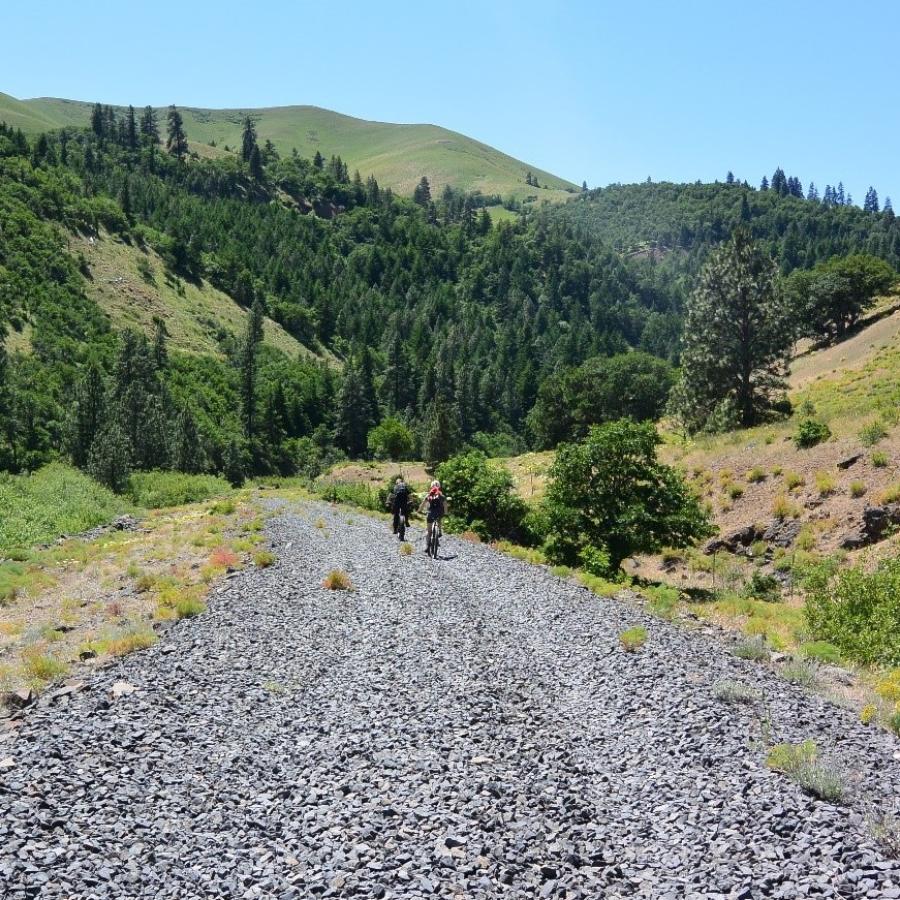
One of the HPA’s most visible achievements was the development of the Little Klickitat River Trail. A trail existed in rudimentary form, but it lacked the infrastructure to make it genuinely accessible and inviting for a broad public. In fall 2010 — with support from a National Park Service planning grant and the practical assistance of a National Park Service planner who lived in the county — the HPA conducted a recreational needs assessment in the Goldendale Parks and Recreation District.
What the assessment confirmed was a gap between available natural assets and the capacity to make those assets usable. Klickitat County has river, forest, and open landscape in abundance. What it lacked were gravel paths passable in wet weather, bridges designed for users with disabilities, and signage that oriented visitors and made the trail navigable year-round. The project addressed each of those gaps: accessible gravel walking paths, ADA-compliant bridges, interpretive plant identification signs, and a trail map designed for year-round public use.
The planning logic behind this investment is worth stating directly. In an urban context, a walking trail is a recreational amenity. In a rural county where nearly one in four adults reports no leisure-time physical activity, a well-maintained and accessible trail is something different: it is preventive health infrastructure. It lowers the barrier to physical activity for residents who have no gym membership, no reliable transportation to a recreation facility, and no safe route to walk independently from their homes.
The decision to build to ADA standards is more than a technical specification. It is a statement about who the infrastructure is actually for. Rural communities have disproportionately high proportions of older residents and people with mobility limitations. Designing for accessibility is not an optional refinement — it is the condition for genuine inclusion.
Community gardens as civic infrastructure
Alongside the trail, the HPA established three community gardens. The choice of partner organizations was deliberate: the gardens were sited through partnerships with local Head Start programs and a transitional housing initiative — organizations already working with residents who face the highest barriers to healthy food access and preventive care.
This was a direct translation of assessment findings into action. The data had shown that more than a quarter of Klickitat residents travel over 26 miles for affordable, diverse groceries. Community gardens do not solve that problem in full. But they create a local supply of fresh produce in places where such things are otherwise nearly unreachable — and they do so in a way that bypasses financial barriers. Access requires labor and involvement, not money.
The institutional anchoring of the gardens gave them functions beyond food production. By locating them at Head Start sites, the coalition embedded an educational dimension from the outset. Children learn how food is grown. Parents have a recurring reason to gather. The garden becomes a social space whose benefits extend well beyond its harvest. The connection to transitional housing adds another dimension: people stabilizing after disruption benefit from structure, shared responsibility, and a form of community connection — all of which a community garden, with its rhythms and collective care, can provide in a low-threshold way.
Why employers became public health partners
The third strand of the HPA’s strategy focused on worksites. That choice requires explanation, because worksite wellness can appear to be a different category of intervention from trails and gardens. In a rural context, the reasoning is unusually compelling.
In a county of 20,000 residents spread across nearly 2,000 square miles, there are very few places where large numbers of adults gather consistently. Schools reach children. Churches reach a portion of the adult population on a regular basis. But employers reach working adults in a structured, predictable way — every day, five days a week. If preventive health messages travel through employers, they reach people at a moment when those people are already present. There is no separate venue to attract them to, no additional barrier of time or transport to overcome.
The HPA identified two major local employers that were already in the early stages of wellness programming: Klickitat County government itself, and Klickitat Valley Health (KVH), the local hospital. Both had expressed interest in support for developing their programs further. The HPA created a worksite wellness toolkit focused on promoting physical activity, healthier habits, and preventive health engagement among employees — and both organizations adopted it.
The choice of county government and the local hospital as first adopters was strategically sound. Both are highly visible, locally trusted, and function as signals to other employers about what is worth doing. A toolkit used by the county government and the hospital carries implicit credibility that a toolkit distributed by the health department alone would not. The design of the toolkit was also explicitly transferable — built to work for any willing employer, not just the two that helped shape it.
What made the model work
The success of the Klickitat County model was not the result of a single decision or a single large investment. It came from a process that held several things in alignment over time.
The coalition was the infrastructure. The Healthy People Alliance was not simply an implementation vehicle — it was the institutional continuity of the entire initiative. By distributing responsibility across multiple organizations and sectors, the coalition created resilience that did not depend on any single person or any single funding stream. That is the structural difference between a project and a program: one ends when the grant ends; the other builds something capable of continuing.
The internal divide was addressed, not ignored. Creating two subgroups — one for the west, one for the center and east — acknowledged that Klickitat County is genuinely varied. A coalition that reflected only the western end would have been experienced as imposed in the eastern communities. Structural investment in representation at both ends built legitimacy across the whole geography from the start.
Assessment came before action. The HPA did not arrive with a predetermined solution and work backward to justify it. It began with a systematic inventory of what the community actually needed. The CHANGE tool required a grounded problem analysis before any action was taken. The three resulting priorities — trail, gardens, wellness toolkit — were not chosen because they were fashionable. They were chosen because the evidence pointed to them.
The projects built on what already existed. None of the three central initiatives began from scratch. The trail existed — it lacked infrastructure. The employers were already interested in wellness programming — they lacked support. Head Start and transitional housing were already working with the target populations — they lacked gardens. The HPA did not import something new from outside. It strengthened and connected what was already present.
Visibility built trust. Choosing projects that produced quickly visible results — a path you can walk, a garden you can see, a toolkit you can use — was not incidental. In communities where skepticism toward outside initiatives runs high and patience for abstract processes is limited, trust is built with concrete things that people can observe and use. Every finished bridge, every planted bed was evidence that the coalition was producing something real.
What Klickitat County teaches planners
Public health is larger than healthcare.
The most fundamental insight of the Klickitat County case is that health outcomes are shaped by conditions far outside the medical system: whether safe walking routes exist, how far affordable food is, whether an employer supports or undermines healthy behavior. Interventions that operate only within formal healthcare rarely reach the underlying determinants of chronic disease. Interventions that change the environment do.
Small projects are real projects.
Planners and policymakers tend to think in terms of scale: large projects, large budgets, transformative impact. Klickitat County demonstrates that a gravel trail, three gardens, and a worksite wellness toolkit can produce meaningful change in a community that had no coordinated health initiative of any kind a decade earlier. The question is not whether the investment is large enough. The question is whether it solves a real problem for real people.
Coalition structure determines lifespan.
The most vulnerable moment in any grant-funded initiative is when the funding ends. Programs that depend on a single institution or a single revenue stream disappear when those disappear. Coalition structures that distribute responsibility across multiple sectors are inherently more durable. The HPA was designed to persist after the NACCHO program concluded — and that design decision made the investments in trail, gardens, and toolkit sustainable in a way they would not otherwise have been.
Geographic diversity requires structural representation.
In a county spanning nearly 2,000 square miles with meaningful cultural and economic differences across its geography, a coalition that reflects only part of that diversity will eventually lose the legitimacy of the communities it claims to serve. The HPA’s two-subgroup structure was not a concession to complexity. It was the solution to a real governance problem.
Employers are an underused public health partner.
In urban areas, there are enough alternative channels to reach adults through community events, transit systems, and dense neighborhood institutions. In rural areas, employers are often the only institution capable of gathering large portions of the working adult population on a consistent daily basis. Health departments that do not treat employers as partners are leaving one of the most effective distribution mechanisms for preventive health largely unused.
The broader lesson is one of momentum rather than magnitude.
Klickitat County did not wait for a transformative investment. It built health infrastructure piece by piece — and in doing so created a framework capable of growing over time. In communities accustomed to being bypassed by large-scale policy, durable change begins with a willingness to start small and stay consistent.
Sources & Further Reading
- Horne L, Miller K, Silva S, Anderson L. Implementing the ACHIEVE Model to Prevent and Reduce Chronic Disease in Rural Klickitat County, Washington. Prev Chronic Dis 2013;10:120272. CDC Preventing Chronic Disease
- PubMed — PMID 23597394
- Central Klickitat Parks & Recreation — Community Recreation
- Washington State Parks — Klickitat State Park Trail
- Klickitat Trail Conservancy
Key Lessons for Planners
- Small-scale, incremental infrastructure projects can create meaningful public health improvements in rural communities.
- Coalition-based governance helps sustain projects beyond initial grant cycles.
- Rural employers can become critical public health partners when communities lack centralized gathering spaces.
- Accessible trails and community gardens improve both physical health and social cohesion.