
Vermont’s School Closure Crisis: The Governance Gap in Rural America
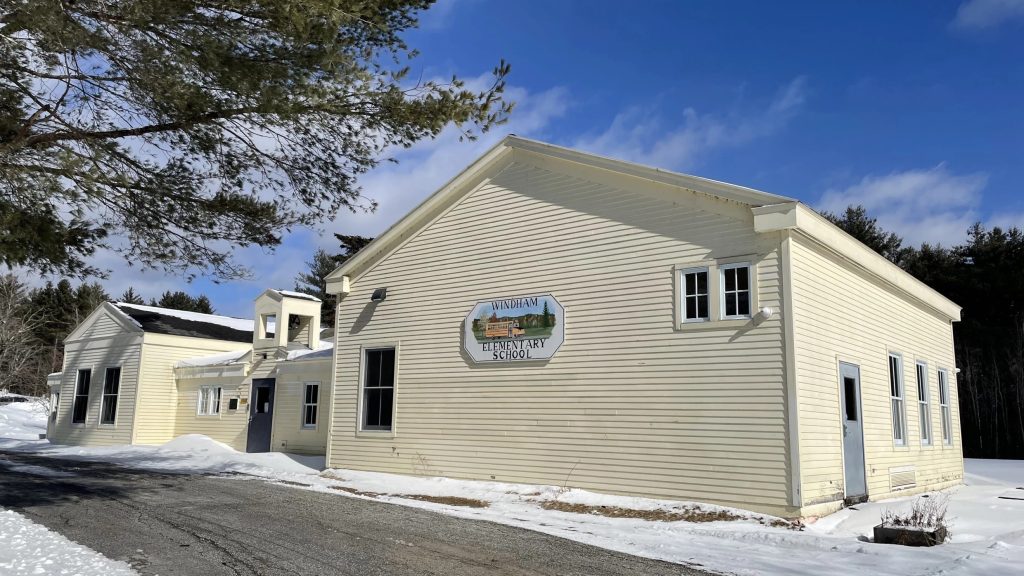
Vermont’s school closure crisis has become one of the most important rural governance and education debates in America.
Vermont’s School Closure Crisis and the Future of Rural Communities
| Location | Vermont (statewide, with specific examples from Roxbury, Calais, Westford, Peacham, and southern Vermont) |
|---|---|
| Core challenge | Accelerating school closures driven by declining enrollment, rising costs, and state-level consolidation pressure |
| Key legislation | Act 46 (2015 mergers) and Act 73 (2024 redistricting overhaul) |
| Scale | Vermont has lost ~20% of its K–12 public school enrollment in the past two decades |
| Key data point | 2024 analysis: Act 46 merger savings were largely absorbed by higher salaries and increased transportation costs |
| Governance issue | State-level consolidation mandates vs. local community resistance; school boards governing communities, not the other way around |
| Learn more | Hechinger Report / Chalkbeat (Jan 2026); VTDigger; Vermont Public; vtruralschools.org; Daily Yonder |
In this case study
The numbers that started the fight
Vermont’s school funding crisis has a specific arithmetic. The state has the lowest student-teacher ratio in the nation — 11 to 1 — and spends nearly $27,000 per pupil, a figure second only to New York. Over the past two decades, Vermont has lost roughly 20 percent of its K–12 public school enrollment. The problem is structural: when enrollment falls, most district costs — administration, facilities, special education, transportation — do not fall with it. Per-pupil spending rises automatically, and property taxes follow.
In 2024, that dynamic came to a head. Vermonters facing double-digit property tax increases rejected nearly a third of school budgets at the ballot box — an unusual and politically significant act of resistance. The revolts created a mandate for action, and Governor Phil Scott and his education secretary Zoie Saunders responded in January 2025 with a sweeping proposal: reorganise Vermont’s 119 school districts and 52 supervisory unions into five regional mega-districts, each serving at least 10,000 students. The consolidation would be the most dramatic restructuring of Vermont education in generations.
The proposal was met with immediate and sustained opposition from rural communities across the state. It was ultimately superseded by Act 73, a more measured bill that created a redistricting task force to develop consolidation maps — with a target of 10 to 25 future districts — for the legislature to consider. But the damage to community confidence was already done. Across Vermont, school boards and communities began making their own calculations: if consolidation was coming anyway, should they act first?
Every five or 10 years, we have to fight to keep this place, because people from away think, oh, that’s just a few kids we have to disperse. — Jessica Philippe, Peacham parent and former school board member
What Act 46 actually did — and didn’t do
To understand the current crisis, it helps to understand what happened the last time Vermont tried this. Act 46, passed in 2015, triggered a multi-year consolidation of Vermont’s school governance structures — first through voluntary mergers, then through required ones. Dozens of districts were eliminated. Many small schools closed as newly unified boards looked for efficiencies.
The law was designed to save money and improve educational outcomes. The evidence on whether it delivered either is sobering. The most comprehensive analysis was conducted by Grace Miller, a Vermont native, for her 2024 undergraduate thesis at Yale University. Examining 109 Vermont districts between 2017 and 2020, Miller found that Act 46 mergers did yield some savings — but those savings were largely absorbed by higher salaries in newly combined districts and increased transportation costs as students travelled farther to school. Net savings were minimal. Outcomes data was mixed.
A 2024 Vermont Agency of Education report, based on superintendent surveys from seven early-merger districts, found more positive evidence: merged districts had been able to add or restore programs such as literacy intervention, world languages, and after-school activities that smaller districts could not sustain alone. But education researchers cautioned against reading too much into this. Mara Tieken, a Bates College professor and one of the country’s leading scholars on rural school consolidation, put it plainly: students experiencing consolidation “are often going through an enormous transition, and there are a whole bunch of factors that can affect” their outcomes.
Crucially, neither the savings analysis nor the outcomes analysis captured what happened to the communities that lost their schools. That accounting — the effect on property values, household formation, community identity, and the long-term attractiveness of a town to young families — was simply not part of the ledger.
Four communities, four versions of the same story
Roxbury: The promise that wasn’t kept
When the Montpelier and Roxbury school districts merged under Act 46, Roxbury residents received explicit assurances that their rural school would receive equal treatment in the new unified district. The assurances did not hold. In 2024, the Montpelier-dominant board voted to close Roxbury’s K–4 elementary school — a decision made by a board whose membership was weighted toward the larger urban partner in the merger.
The practical consequences were immediate and specific. Young children in Roxbury — a 42-square-mile town with a network of dirt roads — now face long bus rides to school in Montpelier. But Montpelier’s school buses do not travel on dirt roads. The logistical reality is that for families living on unpaved roads, the closure means longer walks to paved roads to catch buses, or private transportation arrangements. Meanwhile, the town is still searching for a sustainable use for the school building that was once its community anchor.
Roxbury illustrates a specific governance risk in consolidation: when a smaller rural community merges its school governance with a larger neighbour, it takes on the political arithmetic of the larger jurisdiction. Promises made during merger negotiations are not binding on future boards. The community that gave up its independent governance in exchange for assurances has limited recourse when those assurances are not honoured.
Washington Central: A year of deliberation, a vote against even voting
In central Vermont, the Washington Central Unified Union school board spent a year deliberating over whether to close two of its five elementary schools — Calais Elementary and Worcester’s Doty Memorial School — and move all district sixth-graders into the union middle school at U-32 in East Montpelier. The superintendent projected savings of over $2 million.
On a Tuesday evening in October 2024, residents packed a meeting at Calais Elementary wearing red in protest. Parent after parent testified that their children thrived in the district’s small schools. Community members argued the elementary schools were integral to their towns. Some suggested that if consolidation was necessary, the district should look elsewhere — perhaps merging with Montpelier rather than closing rural schools that were serving their communities well.
The board voted 8–5 against even putting the measure on the November ballot. Even some board members who supported consolidation in principle said the administration had failed to make a convincing case. Daniel Keeney, a Calais board member who voted with the pro-merger minority, told the crowd he was “continue to be disappointed with the lack of articulation of benefits.” The process had consumed a year of community energy and produced no resolution — only deferred decisions and deepened distrust.
Westford: The spiral that everyone can see coming
In Westford, a small rural community in northwestern Vermont, the local school board announced plans to move sixth through eighth grade out of the Westford School and into Essex Middle School beginning in fall 2025. The stated rationale was consolidating resources. The community’s fear was something larger: that this was the first step toward closing the school entirely.
Rob Carpenter, chair of the Essex-Westford school board, said the quiet part out loud in an interview with VTDigger: “We know that the attractiveness of Westford for young families is our school, and if we no longer have a school, then Westford won’t be as attractive, and we’re worried that we will lose further population and lose some of our tax base. This just looks like a future spiral downward for our small town.”
Westford is not in crisis. It is a functional community with a functional school. But it is navigating a set of governance structures — a district board weighted toward the larger neighbouring community, a state-level reform process generating uncertainty about the future, and declining enrollment driven by demographic forces outside anyone’s control — that are pushing it toward decisions it did not choose and cannot easily resist.
The attractiveness of Westford for young families is our school. If we no longer have a school, Westford won’t be as attractive. This just looks like a future spiral downward for our small town. — Rob Carpenter, Essex-Westford school board chair
Peacham: What a school means to a town
Peacham Elementary School sits in a small Vermont village of the same name — a community of several hundred people in the Northeast Kingdom. The school has about 60 students in prekindergarten through sixth grade. It is the kind of school where all the children know each other, where parents show up for workdays to rake the wood chips around the playground, where the principal knows every family by name.
Peacham has been through this before. When Act 46 passed in 2015, Peacham residents feared the district would be swallowed up in a larger merger. Jessica Philippe, a parent who was on the school board at the time, recalled the fight. “It seems like this is a cycle we have to go through,” she told the Hechinger Report in late 2025. “Every five or 10 years, we have to fight to keep this place, because people from away think, oh, that’s just a few kids we have to disperse.”
Peacham survived Act 46. Whether it survives Act 73 remains to be seen. But what Peacham illustrates is something quantitative analysis consistently misses: the non-financial value of a local school to a rural community. The school is where the community gathers. It is the reason young families choose to live in Peacham rather than somewhere else. It is the signal that this is a place where children belong, where a future is possible, where the community intends to continue.
The costs that never appear in the budget
Vermont’s school closure debate has been conducted almost entirely in the language of fiscal analysis: per-pupil costs, district overhead, transportation savings, salary differentials. These are real and important numbers. But they are not the only numbers.
Research on rural school closure consistently documents effects that do not appear in district budgets. Property values in communities that lose their elementary school decline. Young families with children are among the most mobile demographic groups in rural America — and the most likely to leave when local schools close, and least likely to move to communities that lack them. The population loss that follows school closure reduces the local tax base, which further reduces the community’s ability to fund services, which makes it less attractive to the next family considering a move.
None of this is captured when a school board calculates whether closing a school saves $2 million. The savings belong to the district. The costs are borne by the community — and they extend over years and decades, not a single budget cycle.
This is precisely where planners belong in the conversation. The comprehensive planning process — which is about long-term community development, land use, economic viability, and population trajectory — is the appropriate forum for asking what school closure actually costs. Not just to the district, but to the community. Not just this year, but over the next twenty.
What Vermont teaches planners
Vermont’s experience offers a set of lessons that apply far beyond its borders. I am not a fan of school consolidation. Yet at least ten other states have considered similar consolidation measures in the past three years, and we all have to be prepared for that long-term push. The pressures driving Vermont’s crisis — declining enrollment, rising costs, aging infrastructure, healthcare premiums that are growing faster than any district can control — are not unique to Vermont. Our education system is stacked against rural America.
The first lesson is about governance design. When rural communities merge their school governance with larger neighbours, they trade local control for fiscal partnership. That trade may be necessary. But it should be made with clear eyes about what is being given up, and with explicit protections for the smaller community’s voice in future decisions. Promises made at merger are not binding on future boards.
The second lesson is about what gets counted. The fiscal analysis that drives consolidation decisions is real but incomplete. A full accounting of the costs and benefits of school closure requires inputs that school boards are not equipped to generate on their own — demographic projections, property value analysis, migration patterns, long-term tax base modelling. These are planning tools, and they belong in the planning conversation.
The third lesson is about timing. The communities that are best positioned to shape what happens to their schools are the ones that have planned for contingencies before they become crises. Once a closure decision is being driven by state-level redistricting, the window for community input narrows significantly. The Vermont communities that have fared best are the ones that arrived at the table with a clear vision for their schools’ future — not just a protest against closure, but a plan for what the school is for and why it matters.
The fourth lesson is the most uncomfortable: some schools will close, and planning for that is not a betrayal of the community. It is in service. A vacant school building in the centre of a small Vermont town is a planning problem. A community that has thought in advance about what that building could become — a daycare centre, a coworking space, a mixed-use hub for services the community still needs — is in a fundamentally better position than one that has not. Planning for reuse before closure is not conceding defeat. It is exercising agency.
Key Lessons for Planners
- School consolidation is not only an education issue; it is a long-term community development decision.
- Fiscal savings can be overstated when transportation, staffing, and community costs are not fully counted.
- Small towns need representation protections before entering merged governance structures.
- Planning for school reuse before closure is not surrender; it is community agency.